The best thing since sliced bread

This blog post has sat under my nose for about fifty years.  Just kidding.  My blog’s only been around for ten years.

To explain, it was 50 years ago that I lived in Davenport, Iowa, as a reporter and city editor for the local paper (called the Times-Democrat when I arrived and renamed the Quad-City Times during my stay).

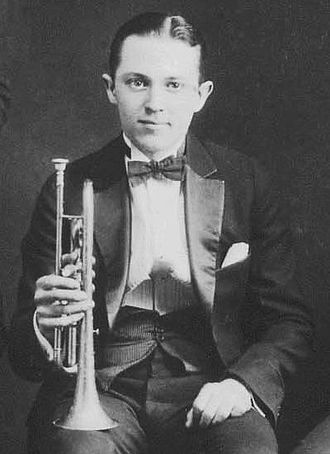
But it was only just recently that I discovered Davenport is the hometown of the man who invented sliced bread!330px-Bix_Beiderbecke_cropped

Davenport doesn’t boast as much about this, obviously, as it does about another native son, Bix Beiderbecke, the famed jazz cornetist.

The annual Bix Beiderbecke jazz festival was a big deal when I was in town, and probably still is, but I heard nary a whisper when I lived there about Otto Frederick Rohwedder, the man who invented the machine that gave us that great saying: “The best thing since sliced bread.”

There’s even a museum for the musician!  Where’s the sliced bread statue?

There aren’t many inventions that have had that kind of impact on our language over the years.

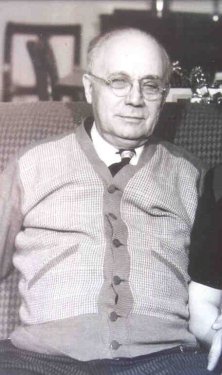
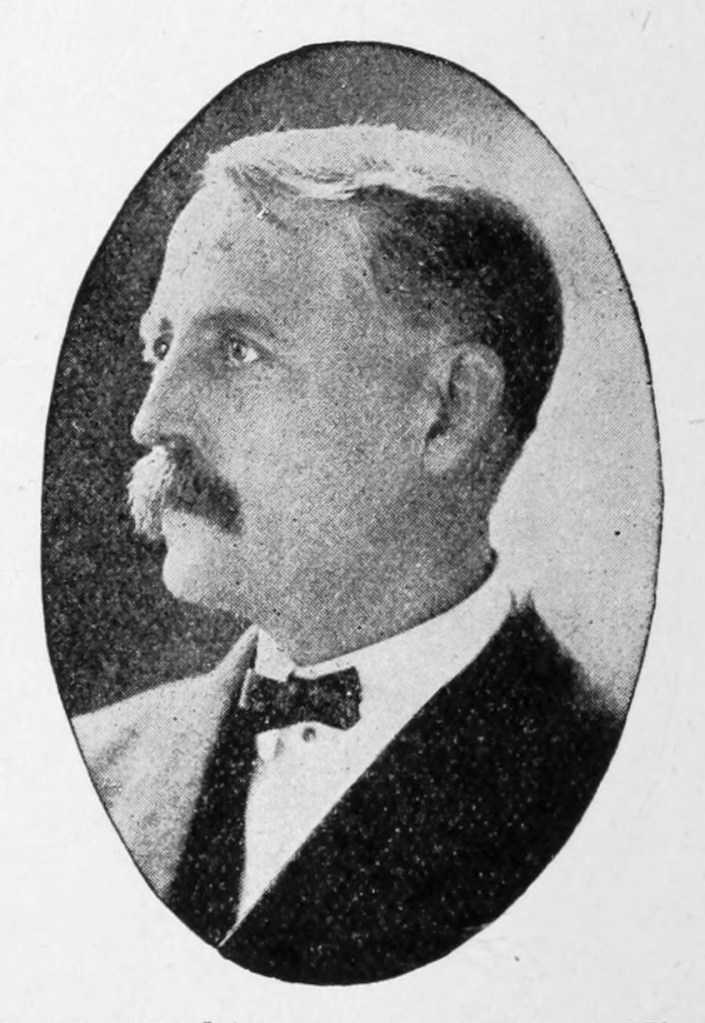
Otto_Frederick_RohwedderAfter graduation from Davenport public schools, Rohwedder studied optometry in Chicago and later apprenticed as a jeweler.   He became the owner of three jewelry stores in St. Joseph, Missouri, and used his talent with watches and jewelry to invent new machines.

In 1912 he started toying with the idea of a machine that would slice bread. He even did some market research, interviewing over 30,000 housewives “for the purpose of determining a thickness of slice which would be most nearly universal in acceptance.”

Convinced he could do it he sold his jewelry stores to finance the project and moved back to Davenport.  By 1916 he was building a prototype, but it all came to a halt in 1917 when a factory fire destroyed everything, including his blueprints.

It took him years, but he found more funding and by 1927 had a machine that not only sliced bread but wrapped it.  Rohwedder encountered some hesitation among bakeries about the machine, and he asked a friend, Frank Bench, who owned a nearly bankrupt bakery in Chillicothe, Missouri, to try it out.  Bread sales were up 2,000 per cent in a couple weeks and Rohwedder had no trouble interesting other bakeries after that.

W. E. Long, owner of the Holsum Bread brand, then a cooperative of independent bakeries, promoted the packaging of sliced bread in 1928.

Wonder Bread came along two years later and by 1933 American bakeries produced more sliced than unsliced bread.

Ten years later the march of bread handling progress came to a halt with a short-lived ban on sliced bread as a wartime conservation measure.  To stay fresh, went the argument, a sliced loaf must have a heavier wrapping than an unsliced one, thereby using up too many resources deemed valuable for war.

Pushback was swift, loud and widespread. Popular opinion ended the ban in just seven weeks.  Wrote a distraught housewife in the New York Times: “I should like to let you know how important sliced bread is to the morale and saneness of a household.  My husband and four children are all in a rush during and after breakfast. Without ready-sliced bread I must do the slicing for toast—two pieces for each one—that’s ten. For their lunches I must cut by hand at least twenty slices, for two sandwiches apiece. Afterward I make my own toast. Twenty-two slices of bread to be cut in a hurry.”

Of course, the official reason for lifting the ban didn’t mention the public outcry:  Said Food Administrator Claude R. Wickard, when he rescinded his order: “Our experience with the order leads us to believe that the savings are not as much as we expected, and the War Production Board tells us that sufficient wax paper to wrap sliced bread for four months is in the hands of paper processor and the baking industry.”

“Sliced Bread Put Back on Sale; Housewives’ Thumbs Safe Again” was the New York Times headline.

So, what on earth did we say before ‘The best thing since sliced bread’ came along to describe one’s enthusiasm for something new?

I don’t know, but here’s this:  A 1928 advertisement for sliced bread advertised it as “the greatest forward step in the baking industry since bread was wrapped.”

Posted in Uncategorized | 3 Comments

Mockingbirds vs American kestrel

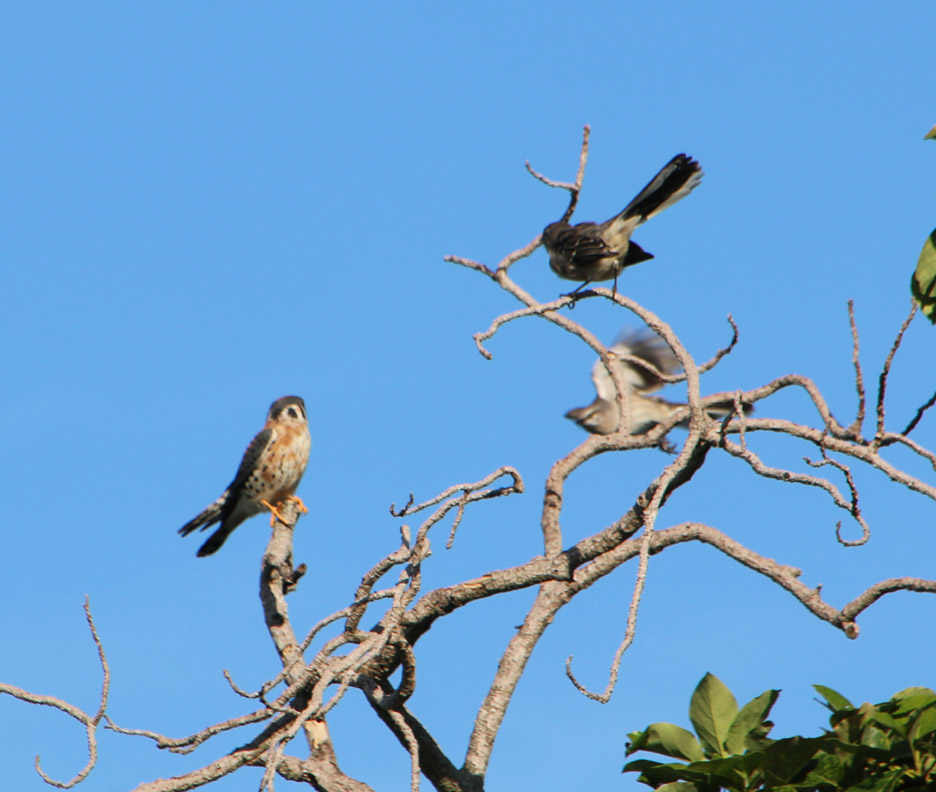
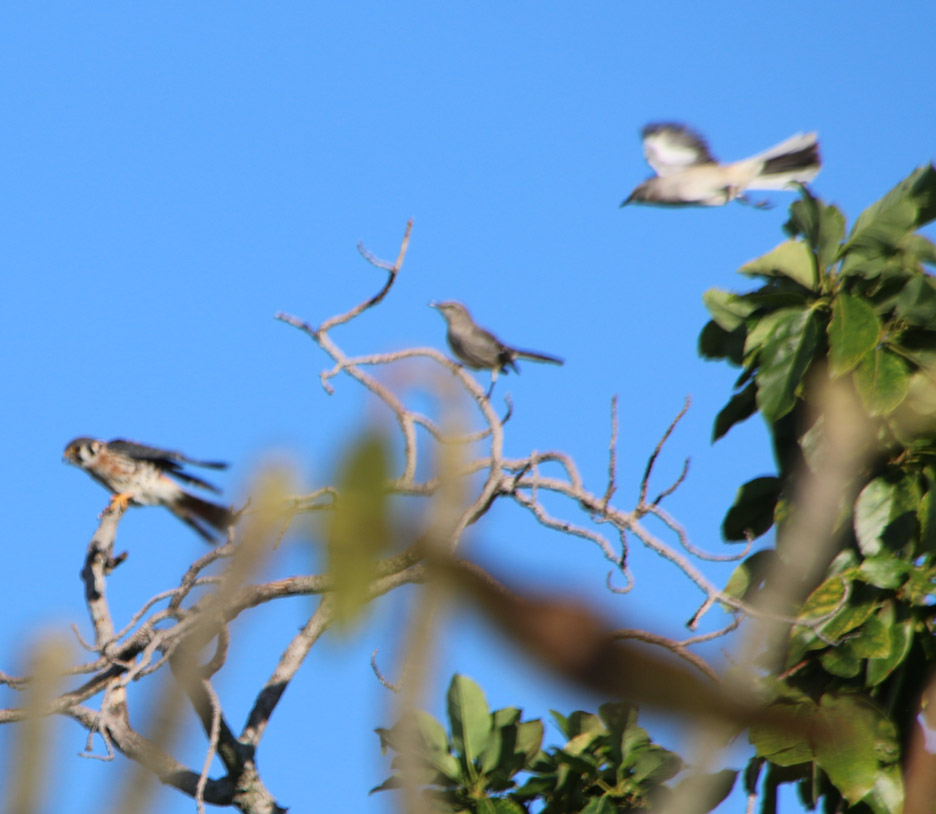
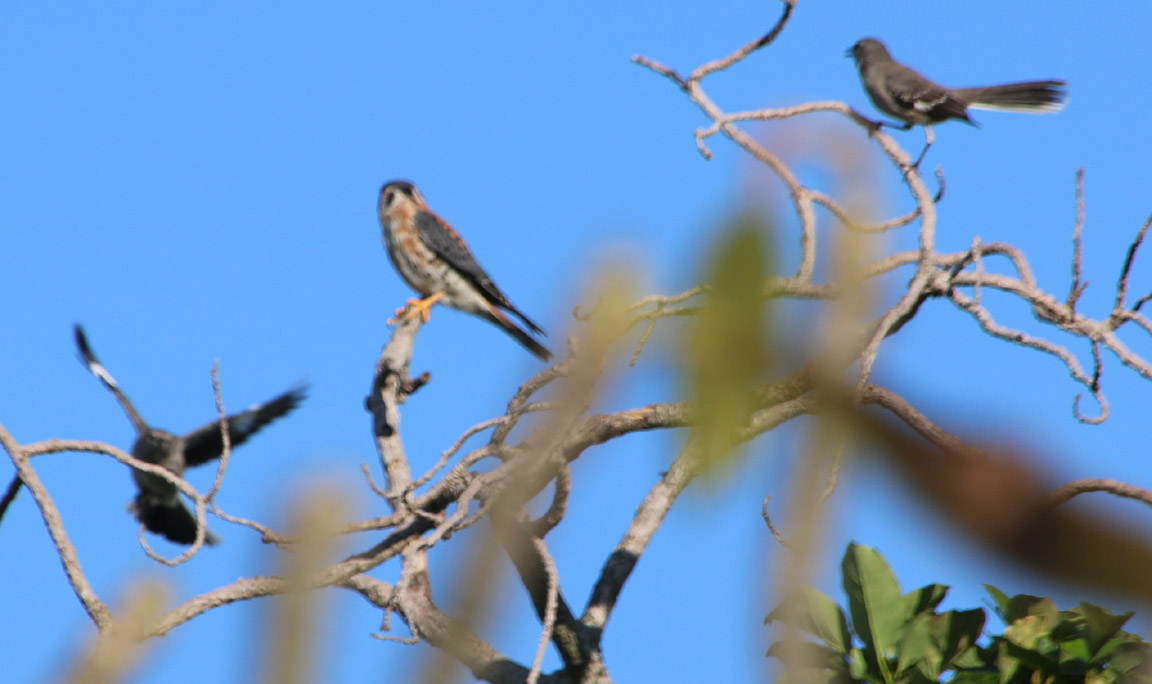
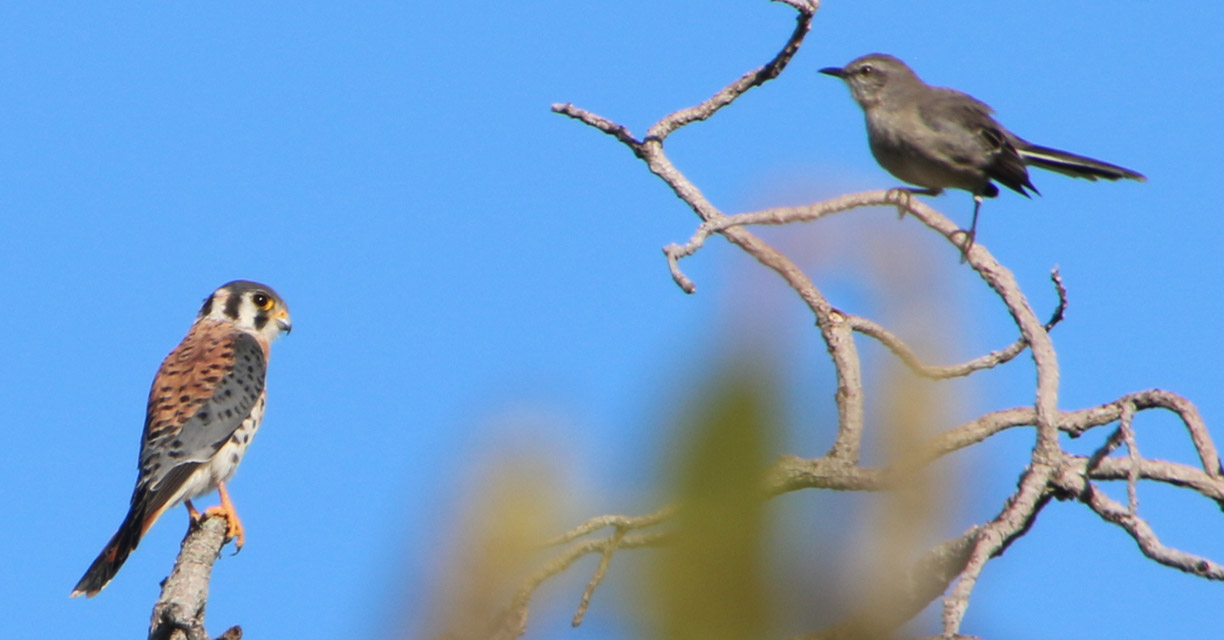
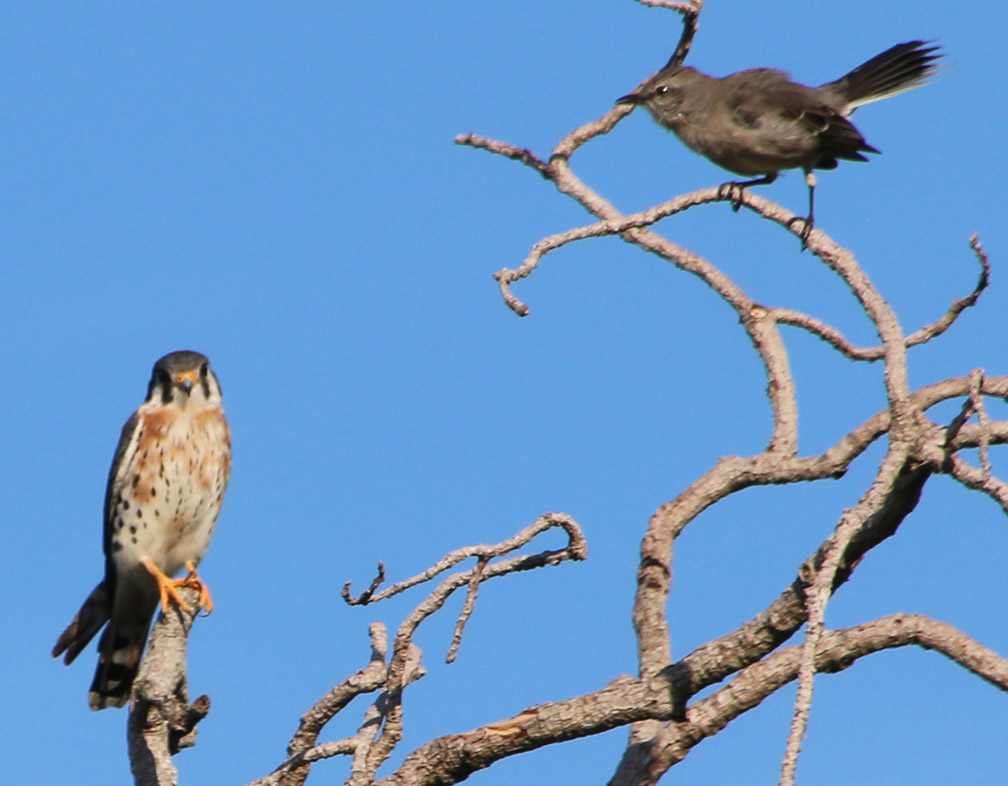
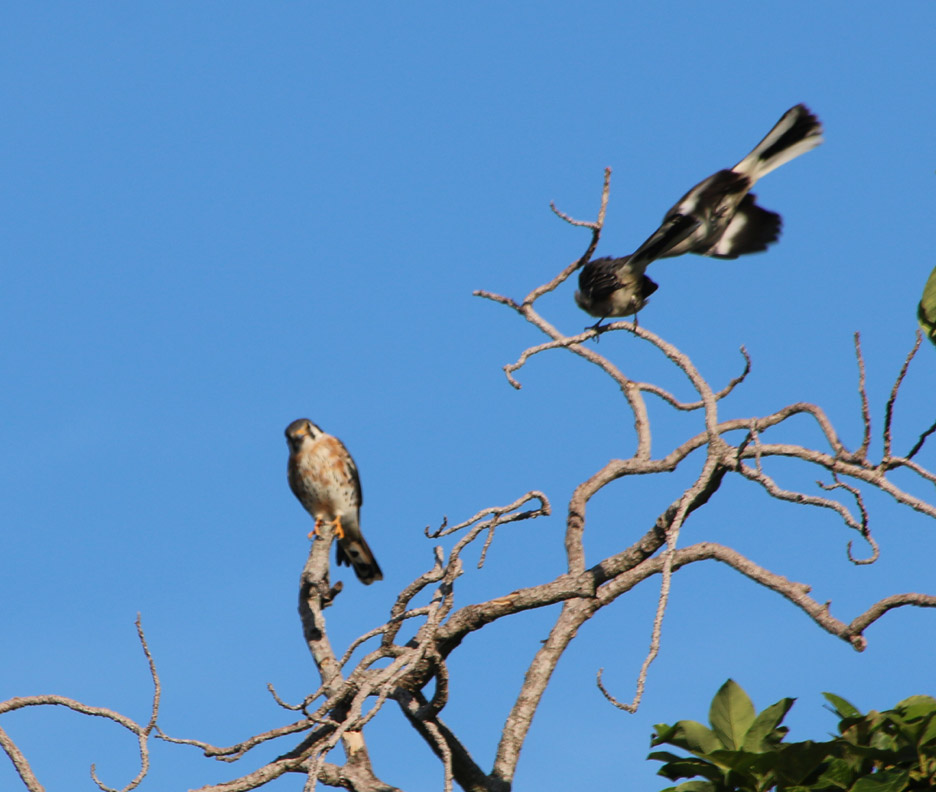
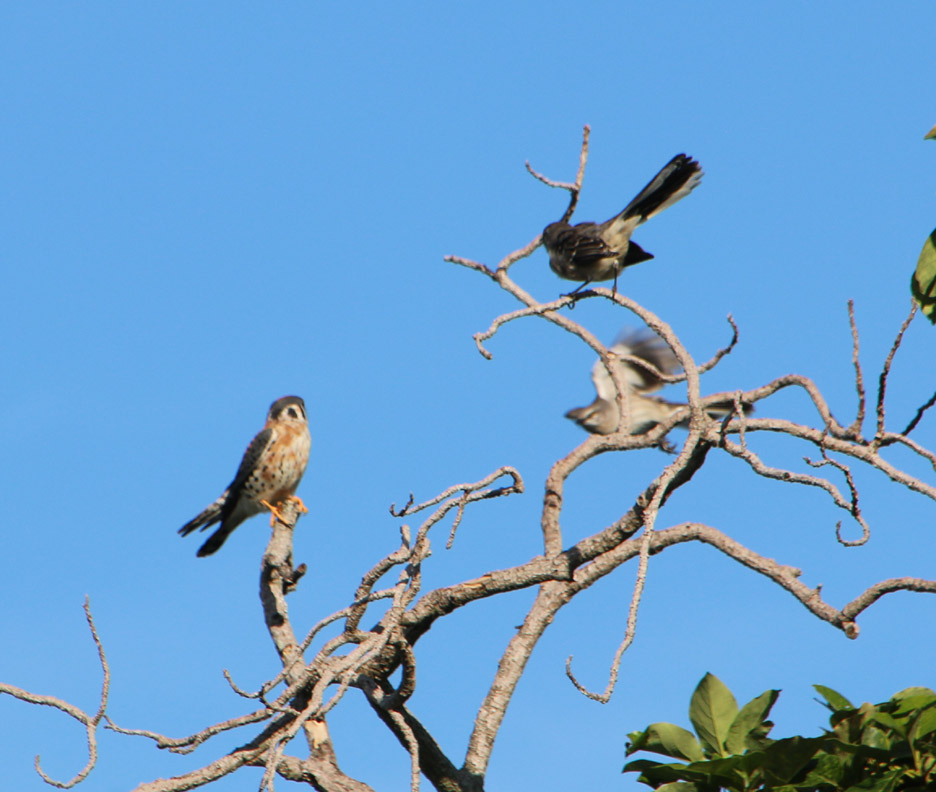
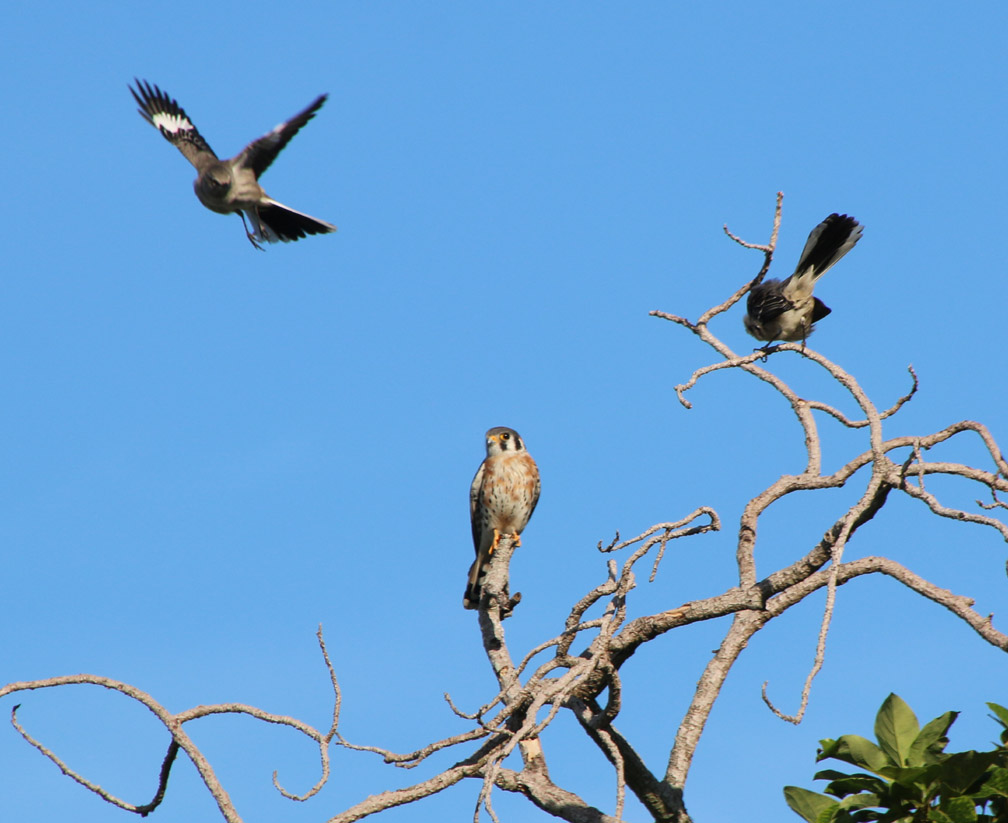
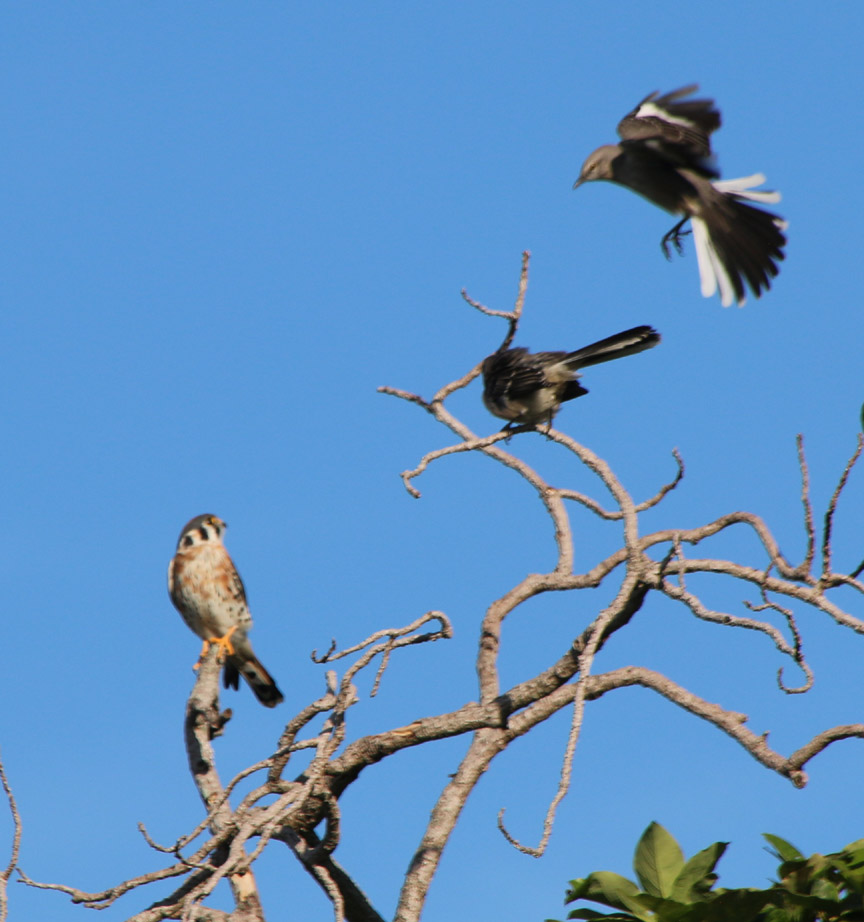
These two mockingbirds definitely did not want this American kestrel hanging around my yard, but all the dive-bombing they did hardly fazed it.

The kestrel sat there unruffled for a few minutes, then dropped quickly out of sight behind the house—to grab a lizard for lunch I hope—and did not come back.

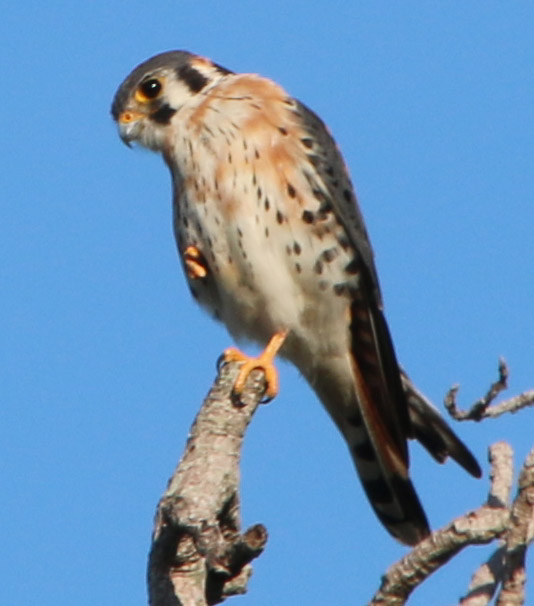
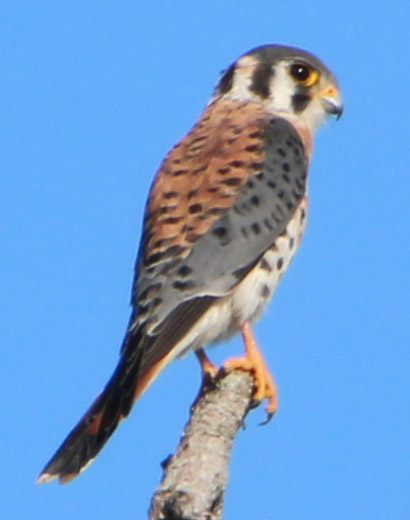
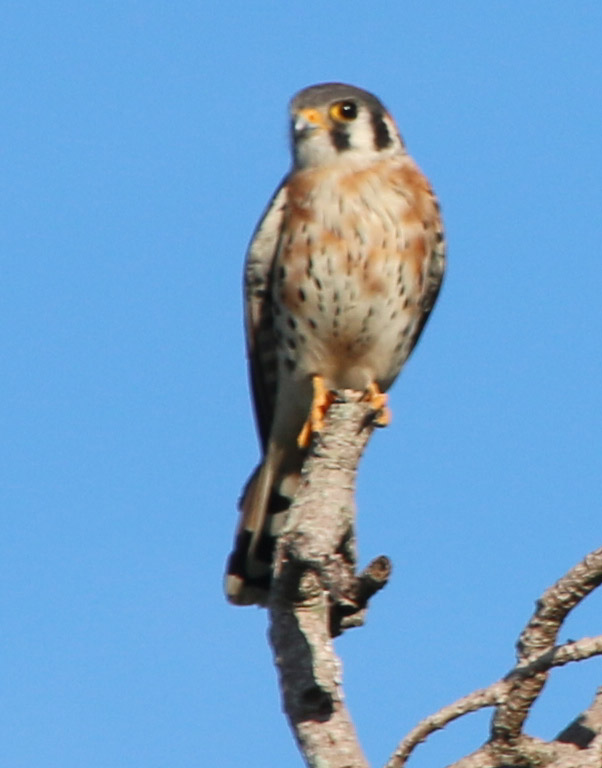
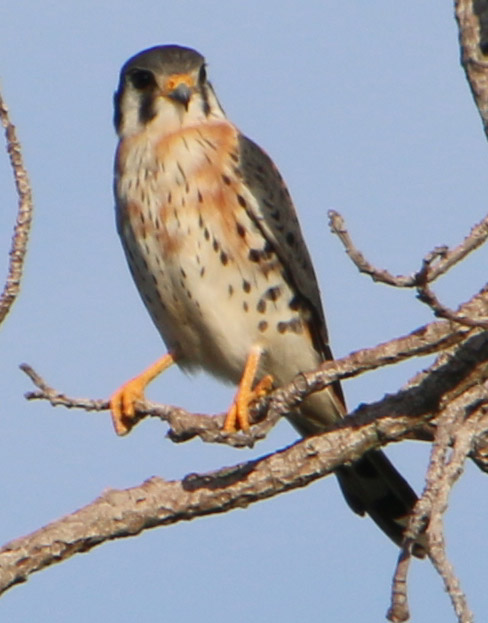
The American kestrel is actually a falcon and is North America’s smallest raptor.  It generally hunts in an energy-conserving fashion, sitting up high somewhere until it spots a mouse, lizard, grasshopper or a small bird to pounce upon.

Mockingbirds of course are the karaoke champs of the bird world. The one we see, the northern mockingbird, carries the moniker Mimus polyglottos. The Greek word polyglottos means “multiple languages.” And they can get very aggressive, especially if there is a nest at stake.

Did you know that a group of mockingbirds is called a mockeroserous?

Poet Walter J. Wojtanki had this to say about that in 2016:

Sounds quite prehistoric
rather almost reptilian,
a mockingbird cotillion
will bear your silly name.
Birds of a feather flock to-
gether, but this many-tongued
mimic is an odd gimmick with wings.
It will make a mockery of things!

© Walter J. Wojtanik – 2016

Here are several photos of the kestrel on his own and the encounter with the mockingbirds. Just click on any one to scroll through the larger versions.

Posted in Uncategorized | 2 Comments

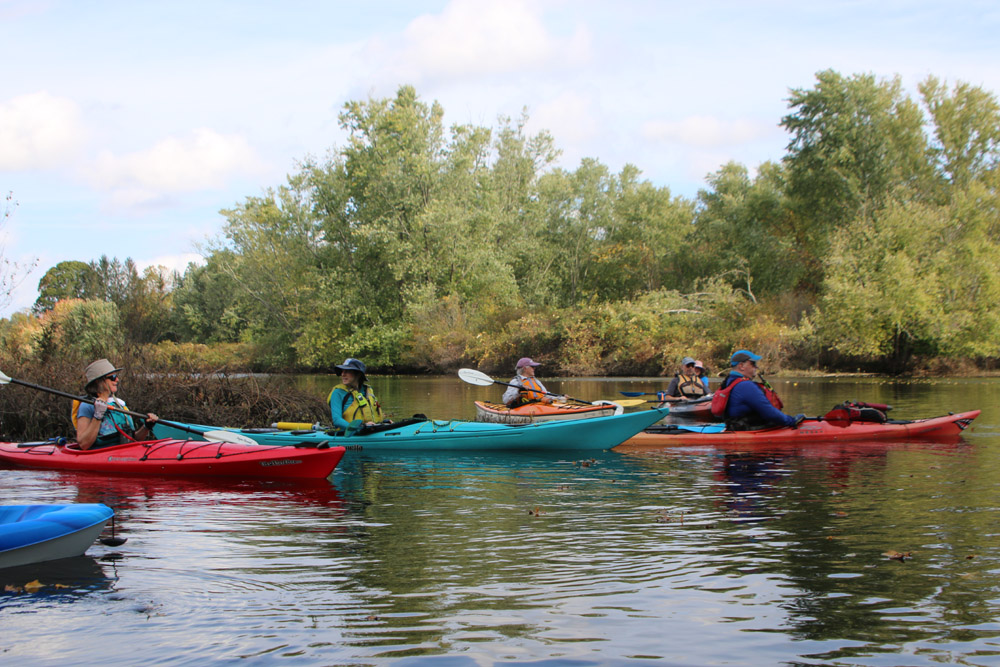
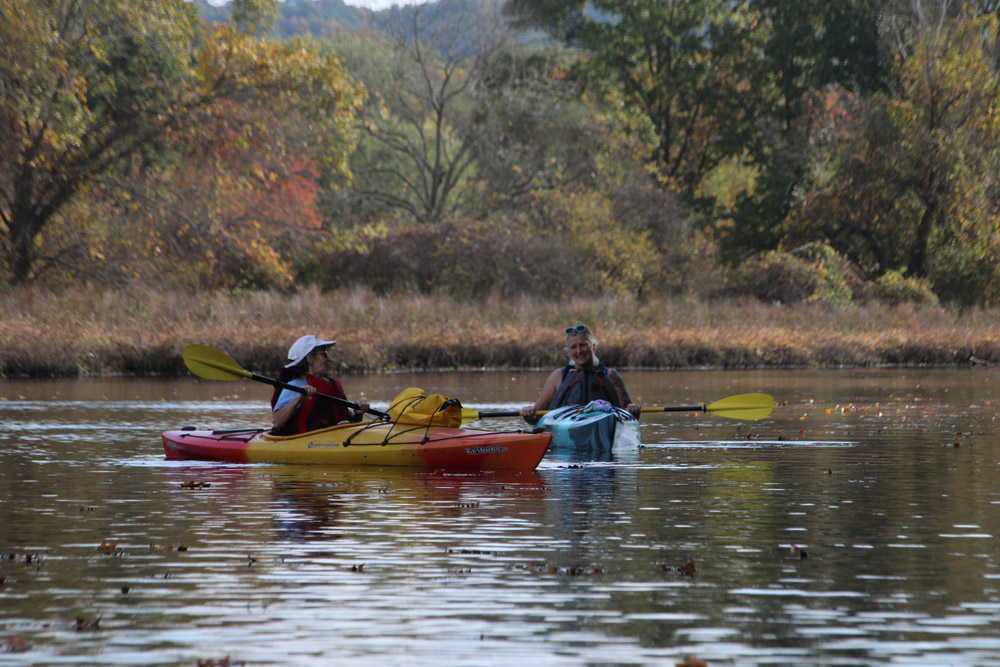
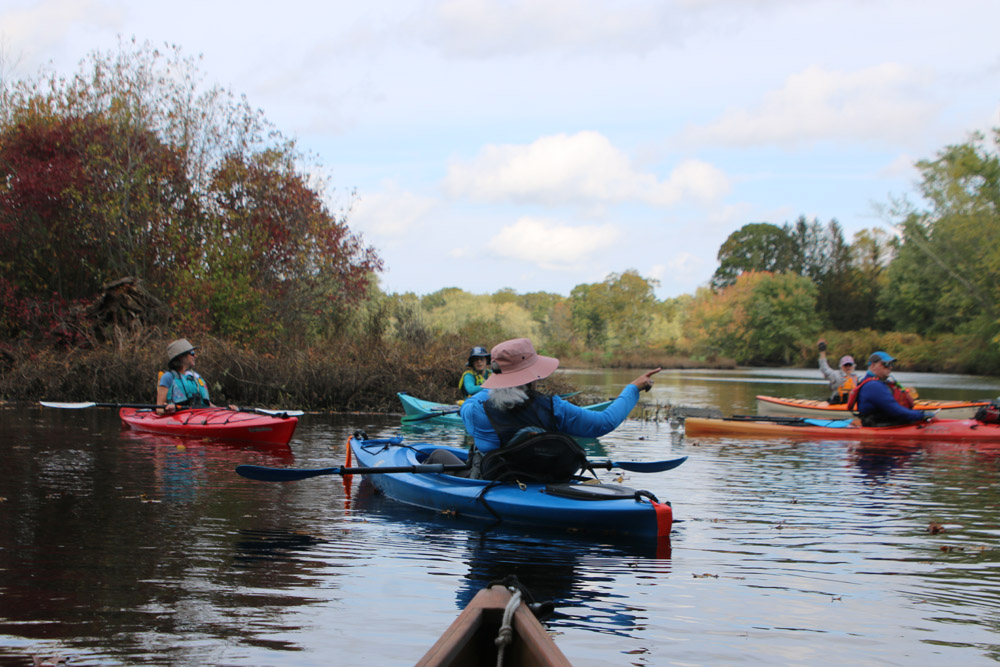
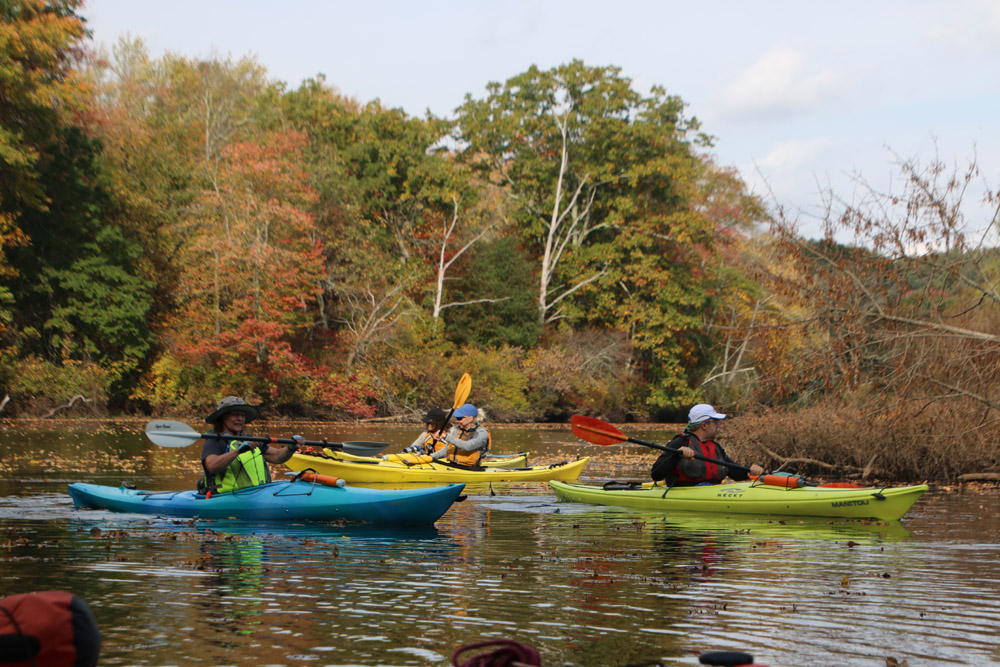
Northeast paddle season winding down

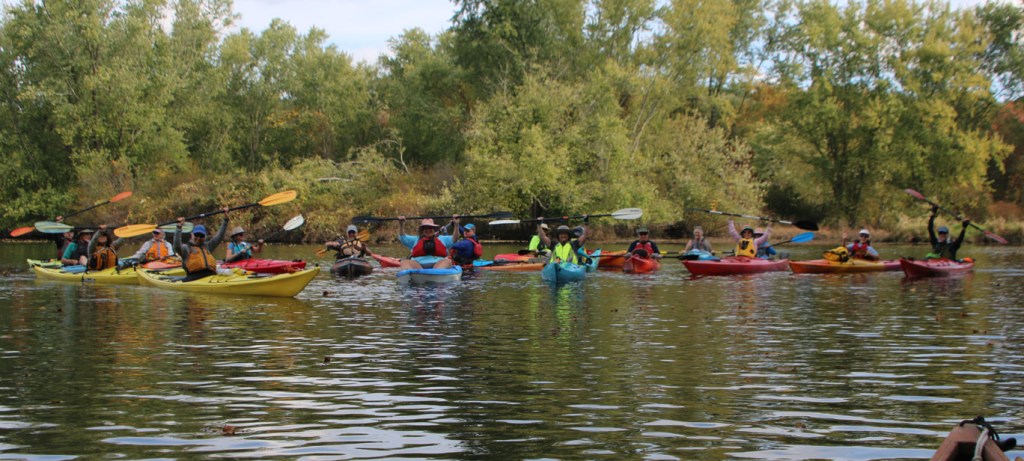
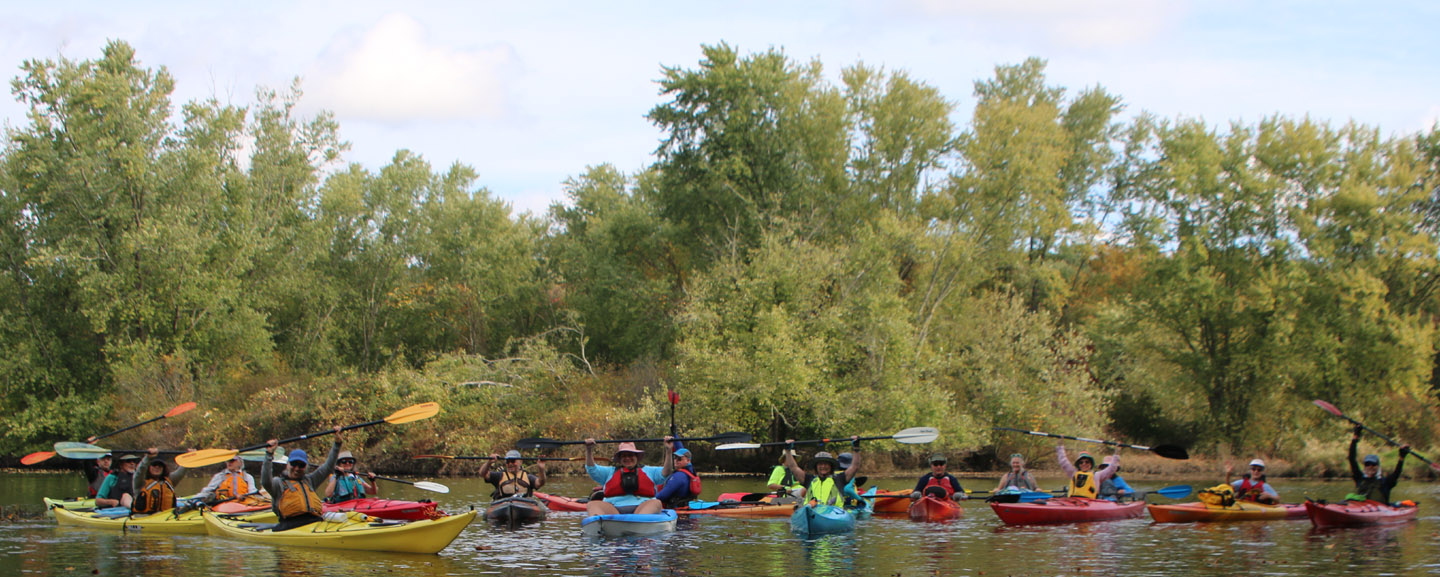
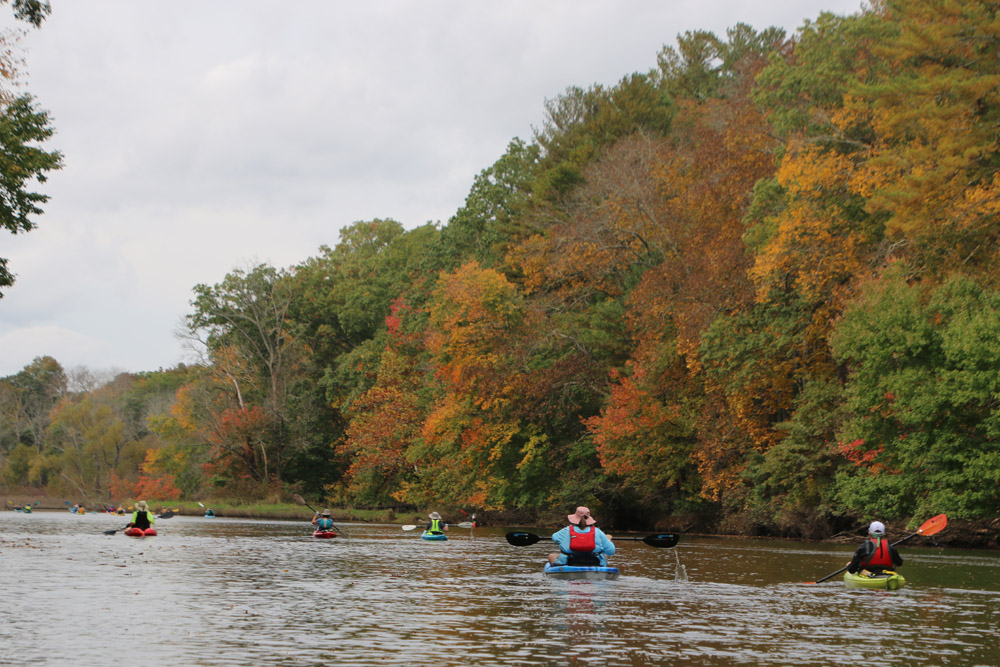
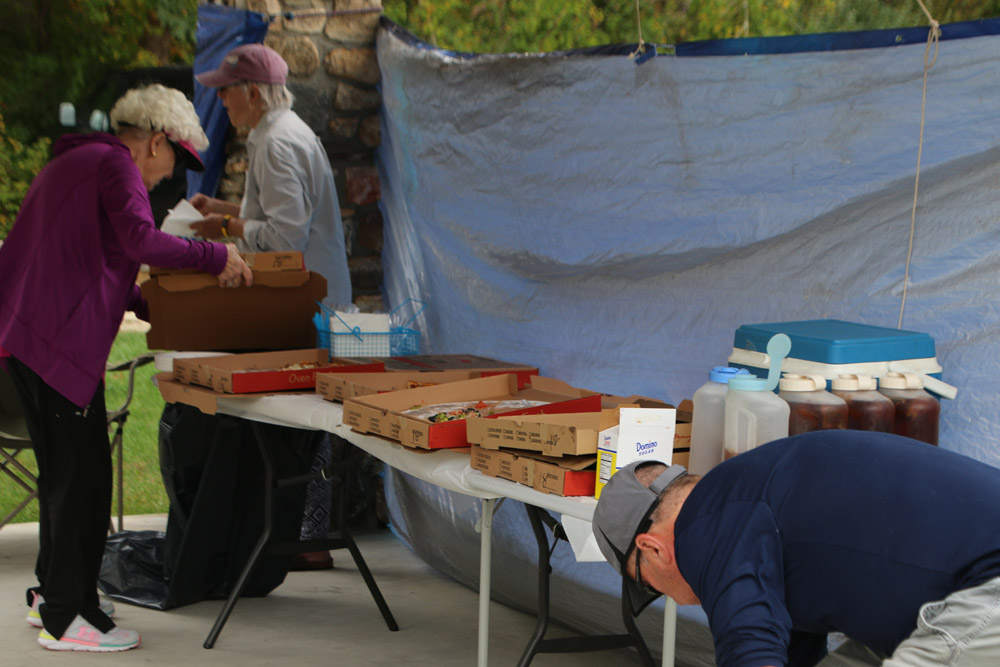
I know I’m getting to the end of my paddling season up here when the Paddle and Pizza Party for the Paddle Killingly Meetup Group rolls around.

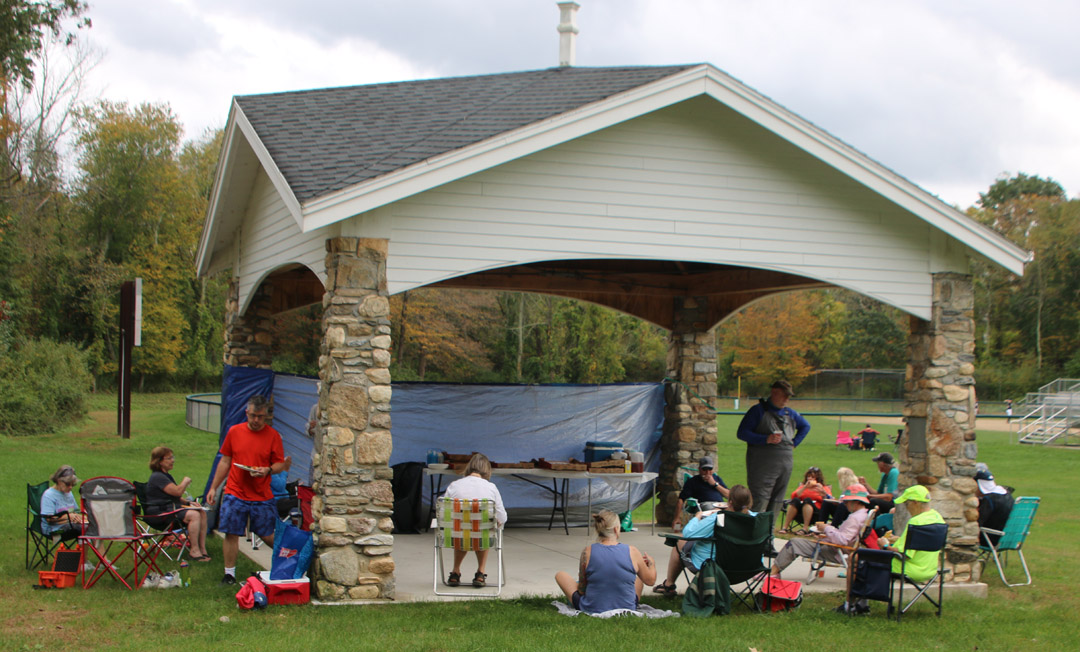
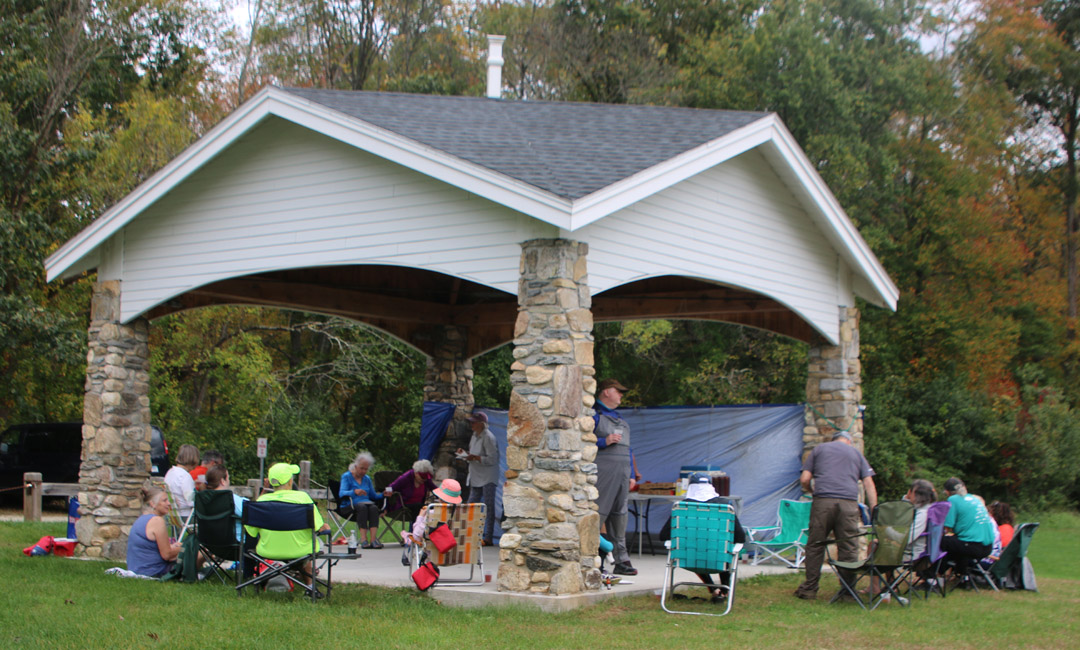
This year’s was a repeat of 2020, eating outdoors because of Covid.  Only this year our clever organizers came up with a huge tarp to block the wind from blowing the pizza boxes off the table. 

Our last time indoors at Classic Pizza, just up the street from where we paddle, was in 2019, when granddaughter Margeaux came along with me.  

The fall colors are just now starting to show and I may go paddling a couple more times before heading south, but I am truly a wimp.  When it gets much below 70 and stays cloudy and windy I’d rather be inside looking out the window.

Posted in Uncategorized | 2 Comments

Connecticut Pumpkins

It’s been a long while since I’ve updated the M and S photos on this website, so these from the local pumpkin patch this week will do quite nicely. As you can see, it’s more than just the pumpkins that’ve been growing around here.

It was my first encounter with a deep fried Oreo cookie. That’s what M has in her hand. She and I agreed there was nothing not to like about them.

Click on any photo to scroll through the large versions.

Posted in Uncategorized | 2 Comments

Rushmore and Crazy Horse

A couple of sizeable mountain carvings caught my interest during a western road trip a few years ago but it wasn’t until I did some research recently that I found out just how intertwined they are.

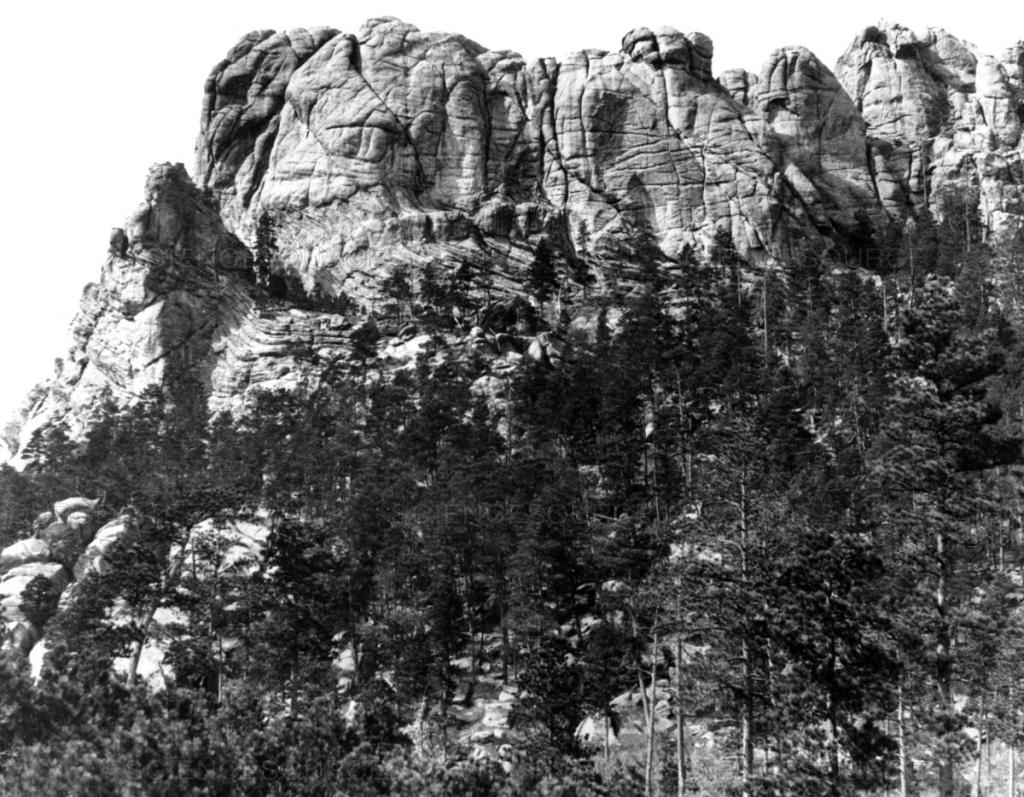
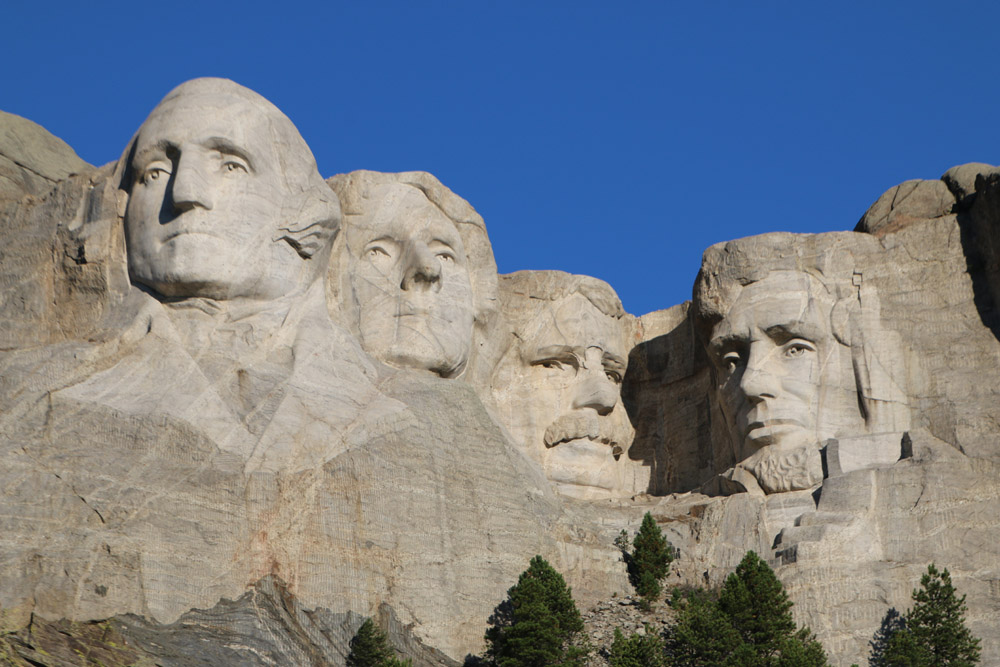
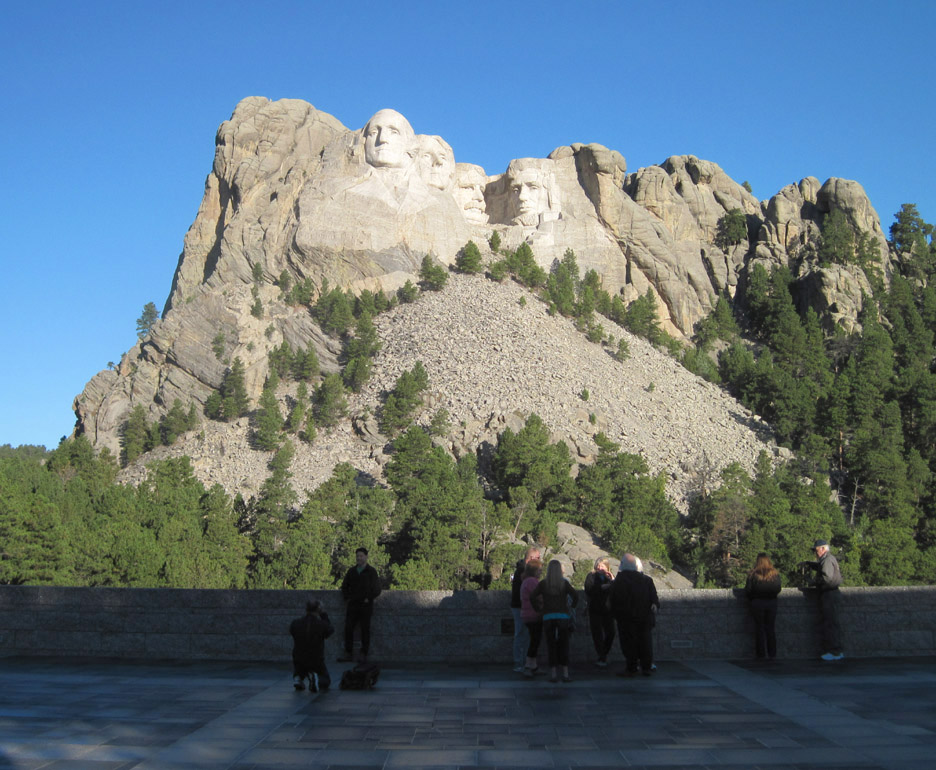
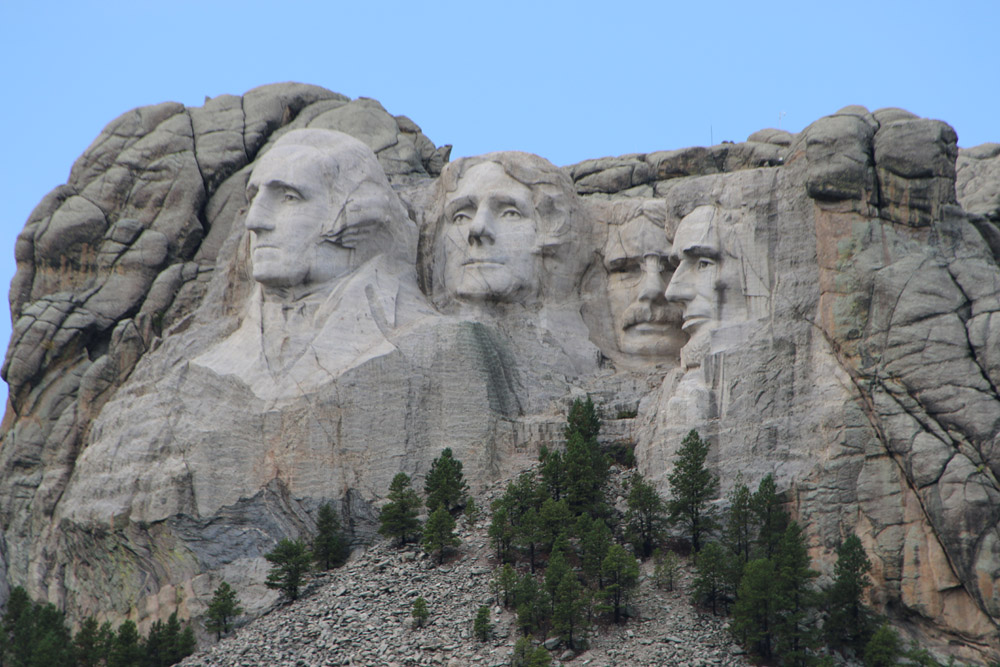
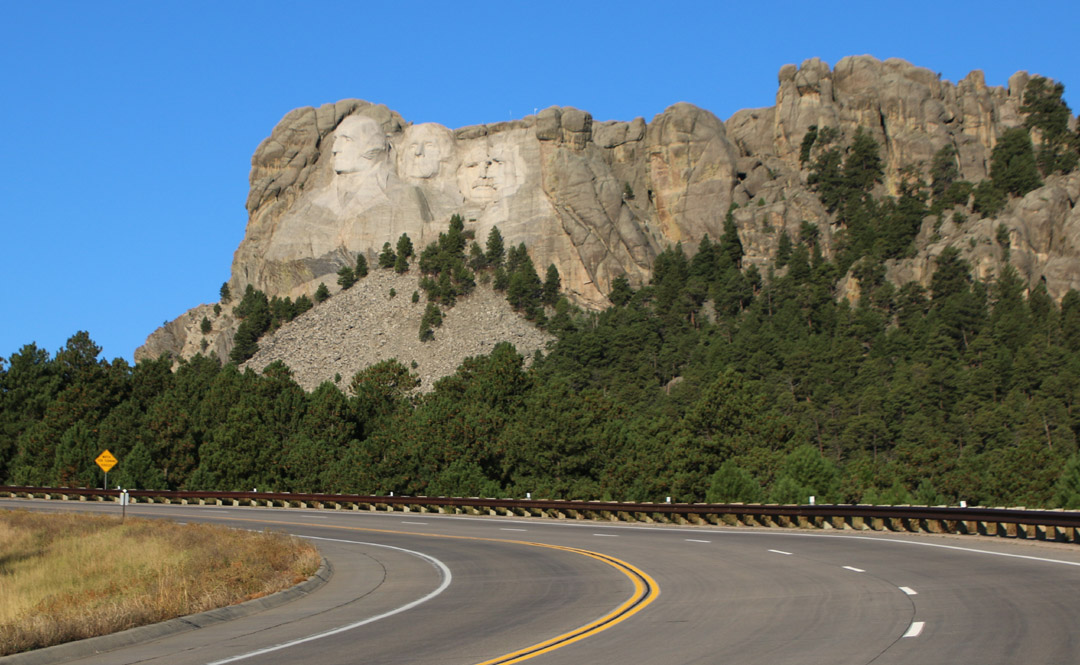
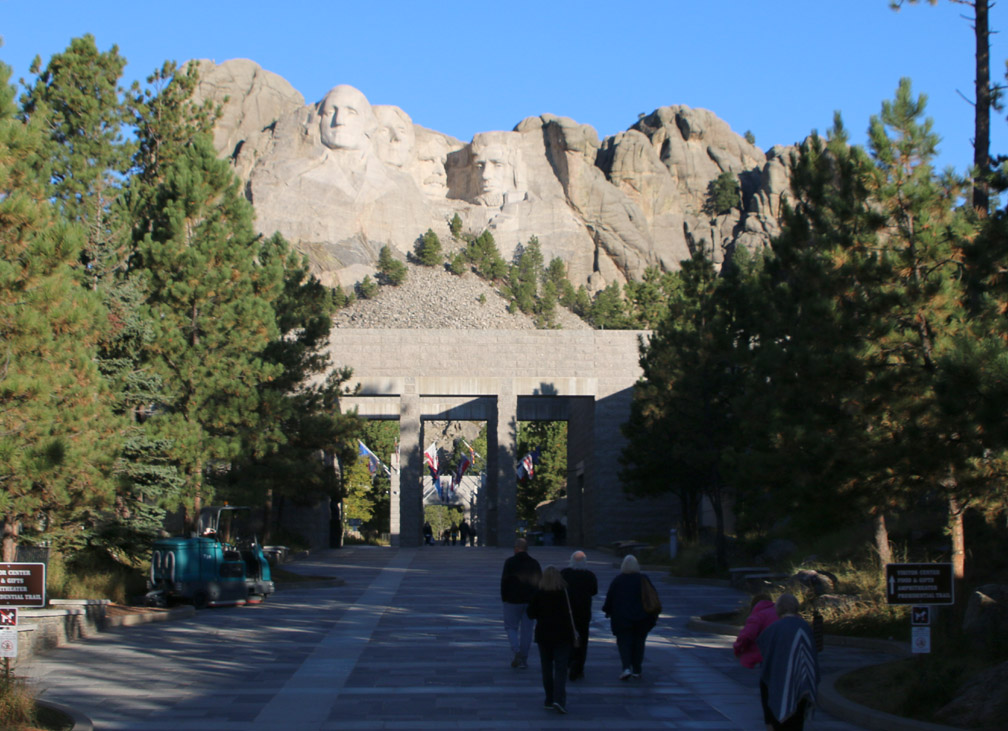
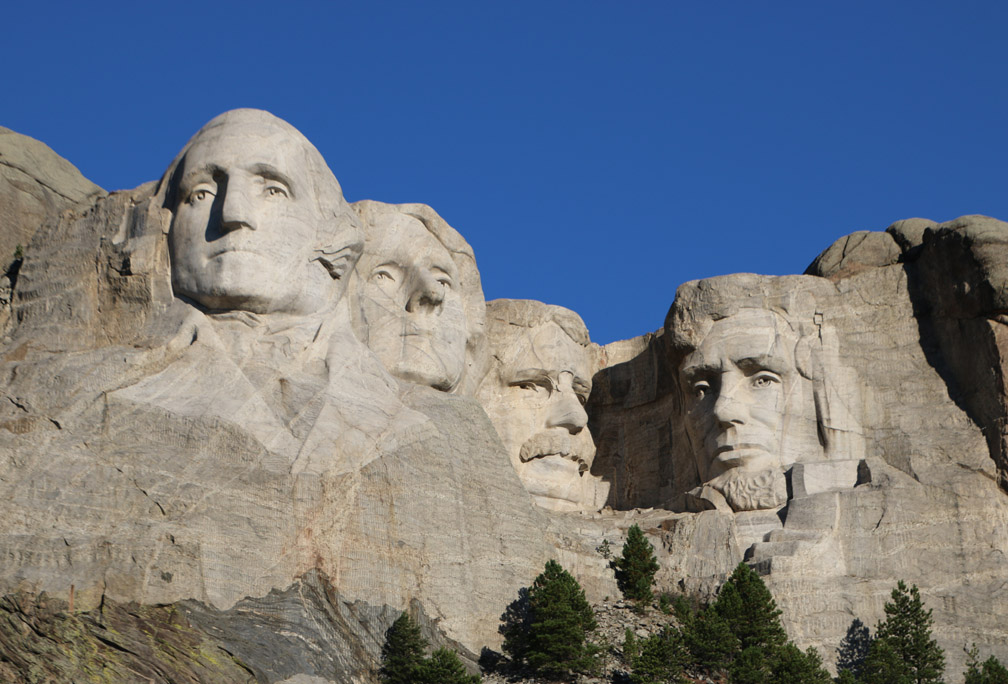
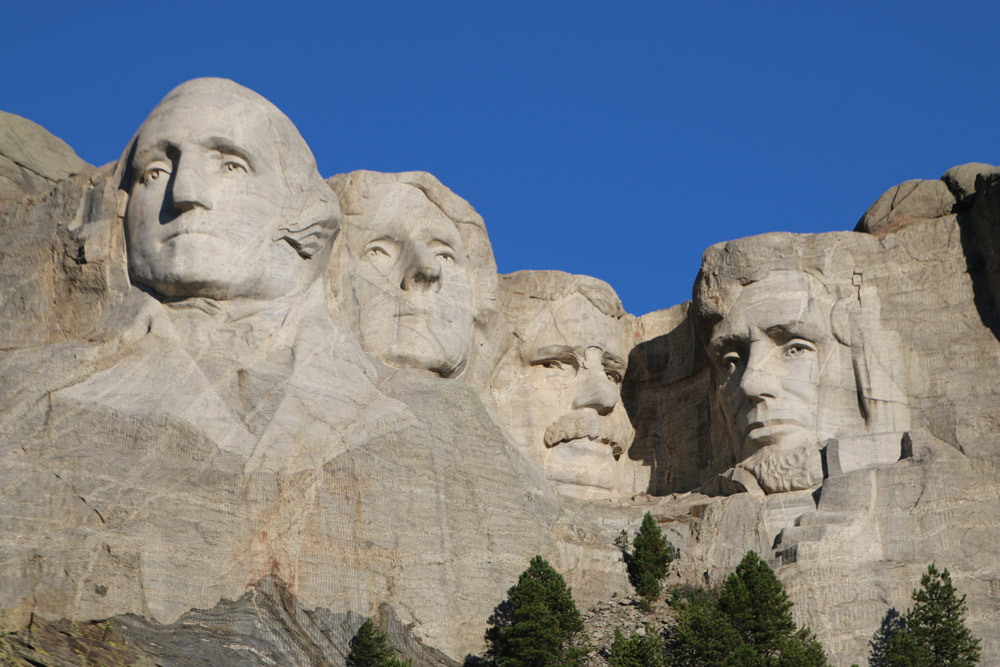
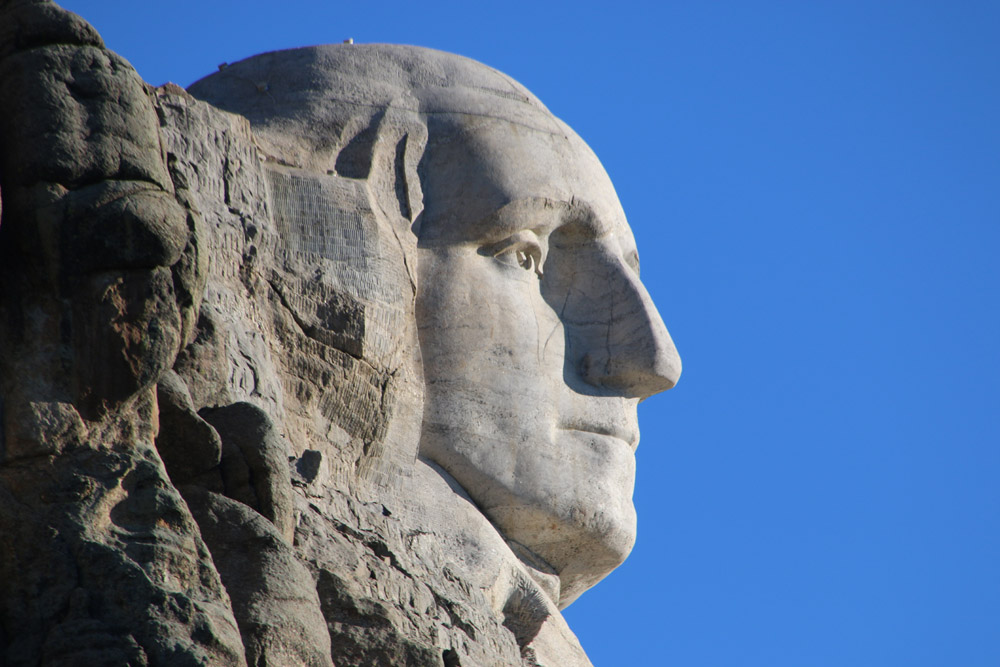
One of them, of course, is Mount Rushmore, the huge iconic stone carving of four former presidents in the Black Hills of South Dakota.  It’s just outside the town of Keystone, a settlement of some 300 persons that serves the traveling needs of the millions of tourists a year the site attracts.  Work on the monument started in 1927 and it was completed in 1941.

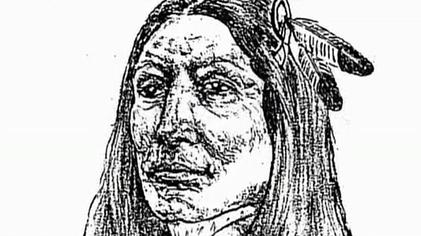
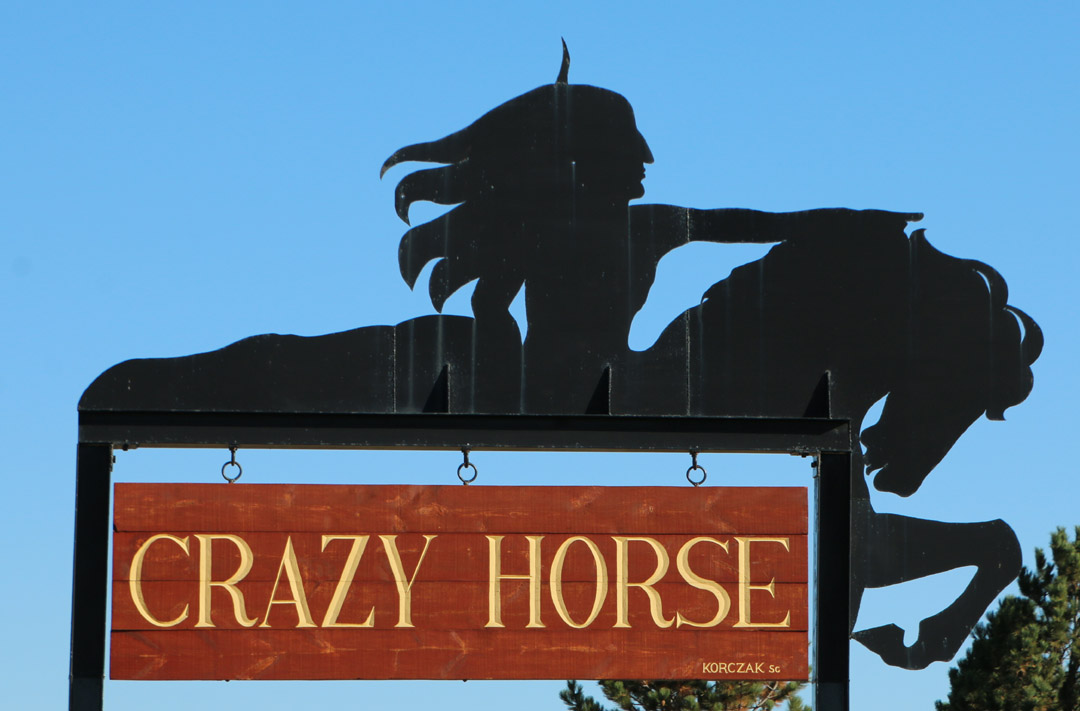
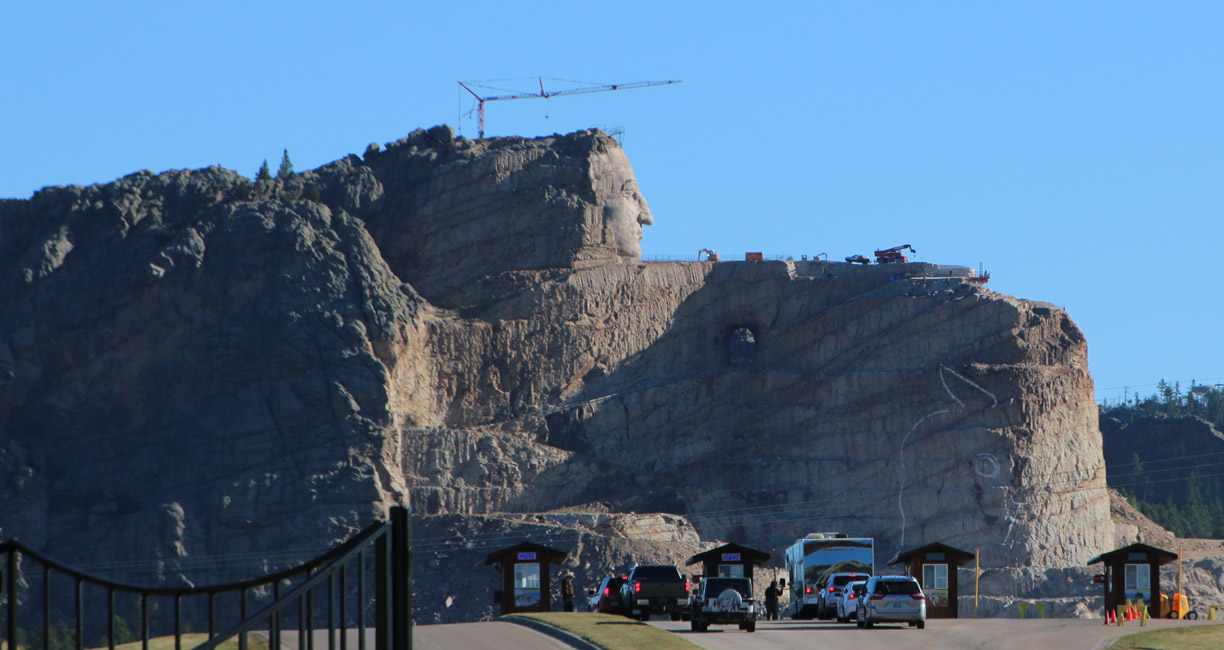
The second is just 17 miles away, also in the Black Hills, and is called the Crazy Horse Memorial.  It will depict the Oglala Lakota warrior Crazy Horse, riding a horse and pointing to his tribal land.  Work there started in 1948 and is far from finished.  Only Crazy Horse’s head and face have been completed and dedicated.

When finished, the Crazy Horse Memorial will dwarf Mount Rushmore; Crazy Horse’s head alone is bigger than the four presidential heads combined.

Here’s where the intertwining begins:  If the person who had come up with the concept of Mount Rushmore had had his way back in the early 1900s, the face of Crazy Horse would be among those looking at us from Mount Rushmore today instead of slowly taking shape over on Thunderhead Mountain.  

Yes, South Dakota state historian Doane Robinson had American West heroes in mind when he conceived of carving figures into a Black Hills mountain to attract tourists.  He was thinking along the lines of explorers Lewis and Clark and their guide Sacagawea, Buffalo Bill Cody, and a couple of Oglala Lakota chiefs, Red Cloud and Crazy Horse.

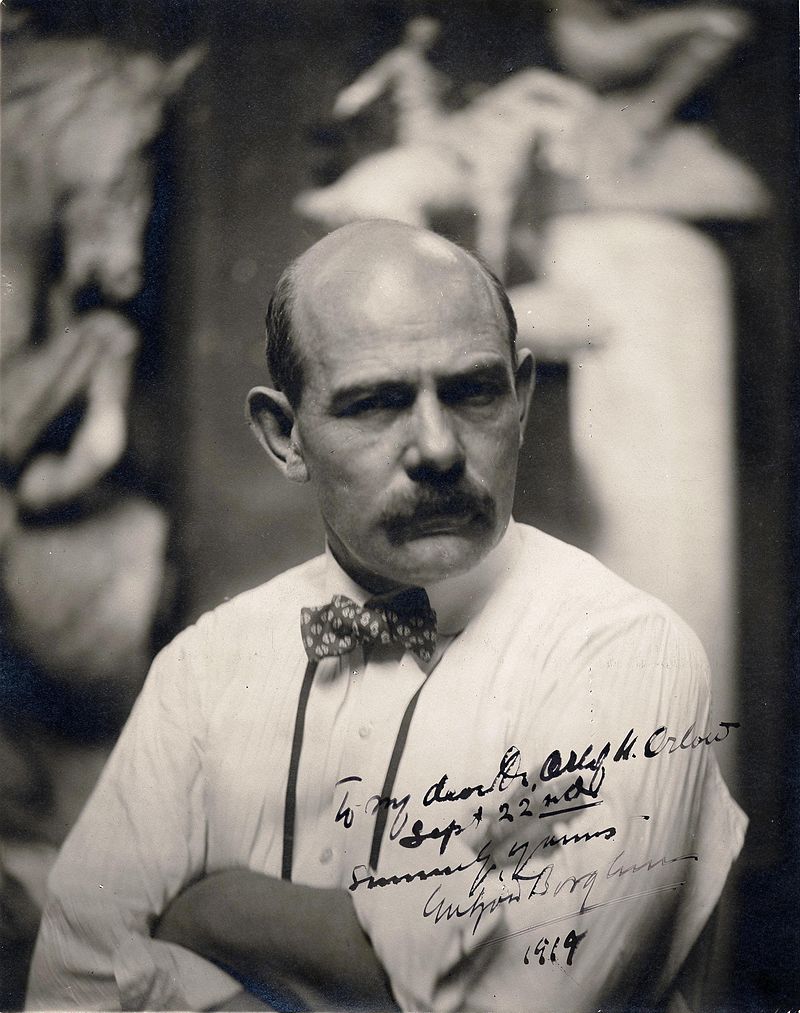
Robinson’s notion of a mountainside carving gained traction, but when noted American sculptor Gutzon Borglum got involved the subjects changed.  He was fascinated with gigantic scale and themes of heroic nationalism and his pieces around the country were increasing his popularity. 

Borglum’s opinions mattered.  He thought the western heroes appeal was limited and that the subjects of the sculpture should have broader interest.  He chose the four presidents, George Washington, Thomas Jefferson, Theodore Roosevelt and Abraham Lincoln. That’s the plan that got approved and national funding followed.

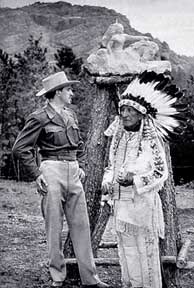
Efforts to get Crazy Horse up there continued, however. Henry Standing Bear, an Oglala Lakota chief and well-known statesman and elder in the Native American community, and his brother, Luther Standing Bear, continued to press for the inclusion of Crazy Horse.

In 1931 Luther wrote asking sculptor Borglum to include the Lakota chief.  He got no reply. The brothers’ campaign to authorities to force Borglum to include Crazy Horse went nowhere.

In 1939, Henry Standing Bear wrote the Department of the Interior proposing the trade of some farmland he owned for the use of the barren Thunderhead Mountain as a place to memorialize Crazy Horse.    The government agreed. Henry Standing Bear, who did not want to use any federal funds for the project, started looking for private funding and a sculptor.

Conveniently, a Polish-American sculptor, Korczak Ziolkowski, whose national reputation was on the rise, was available.  He’d been hired by Borglum to work on Rushmore, but they had a falling out when Ziolkowski realized he wouldn’t be the primary assistant.  That job went to Borglum’s son, Lincoln. 

Henry Standing Bear wrote to

Ziolkowski, saying, “My fellow

chiefs and I would like the white

man to know the red man has

great heroes, too.”

Ziolkowski met with the leaders shortly afterward and began planning a monument. Everything got put on hold during WWII, in which Ziolkowski served from 1943 until 1945, but in 1948 work began.

From the beginning the memorial seemed to become a Ziolkowski project.  Ziolkowski moved to the area at the outset and married and raised a family there and lived there until his death in 1982.  Through the years, his 10 children and several grandchildren have been involved.  Even today his widow and a daughter hold two of the three executive positions of the Crazy Horse Memorial Foundation, the non-profit that controls the project.

Some controversy has shadowed the monument.  Naysayers have touched on several points: Henry Standing Bear commissioning the work without consulting family members; the fact that Crazy Horse himself didn’t even allow himself to be photographed, much less would want to be so memorialized; the amount of control Ziolkowski and his family have had over the project, and the mere idea of altering sacred lands with a sculpture.

The Mount Rushmore project was not without some friction also.  Under the Lakota Sioux it was known as Six Grandfathers and was included in the Black Hills territory confirmed to belong to the Indians in an 1868 Treaty.

The discovery of gold and the push of western settlers resulted in a series of military campaigns from 1876 to 1878 and the United States claimed control of the Black Hills portion of the reservation, a claim that is still disputed under the terms of the 1868 treaty.

The mountain went by a variety of names– Cougar Mountain, Sugarloaf Mountain, Slaughterhouse Mountain and Keystone Cliffs. 

Lore has it that Charles Rushmore, a wealthy investor who frequented the mountain on hunting and prospecting trips in the late 1800s repeatedly joked with colleagues that the mountain should be named after him.

But it’s also true that Rushmore donated $5,000 to the sculpture project just five years before the United States Board of Geographic names recognized the place as Mount Rushmore in 1930.

And the question of who was going to be depicted on it continued.  In addition to the campaign to include Crazy Horse, there was a failed bill in Congress to include the likeness of Susan B. Anthony.  Other proposed additions have been JFK and Ronald Reagan.  Barack Obama was asked about being included one time, but said he thought his ears were too big. 

An engineering study in 1989 confirmed a 1941 opinion that there is not enough stable rock on the mountain to add another figure.

There goes my chance to be up there, I guess.

Below are photos of Mount Rushmore and of the Crazy Horse Memorial. Click on any image to scroll through larger versions.

Posted in Uncategorized | Leave a comment

Life Savers

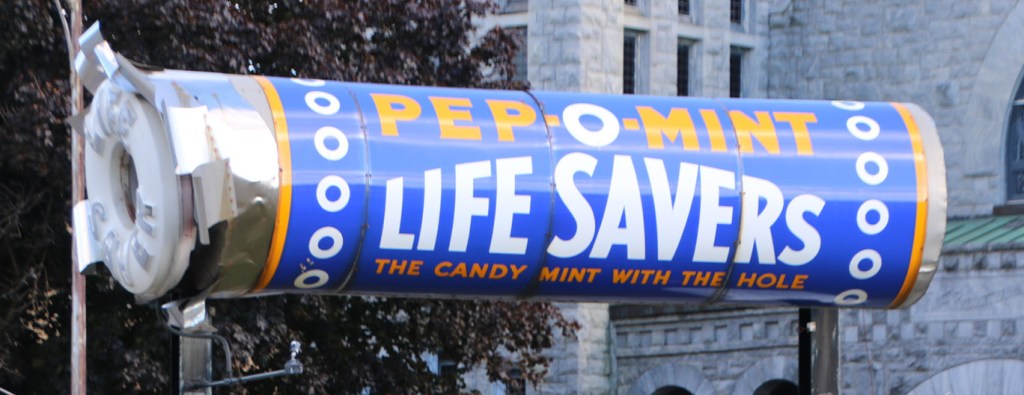
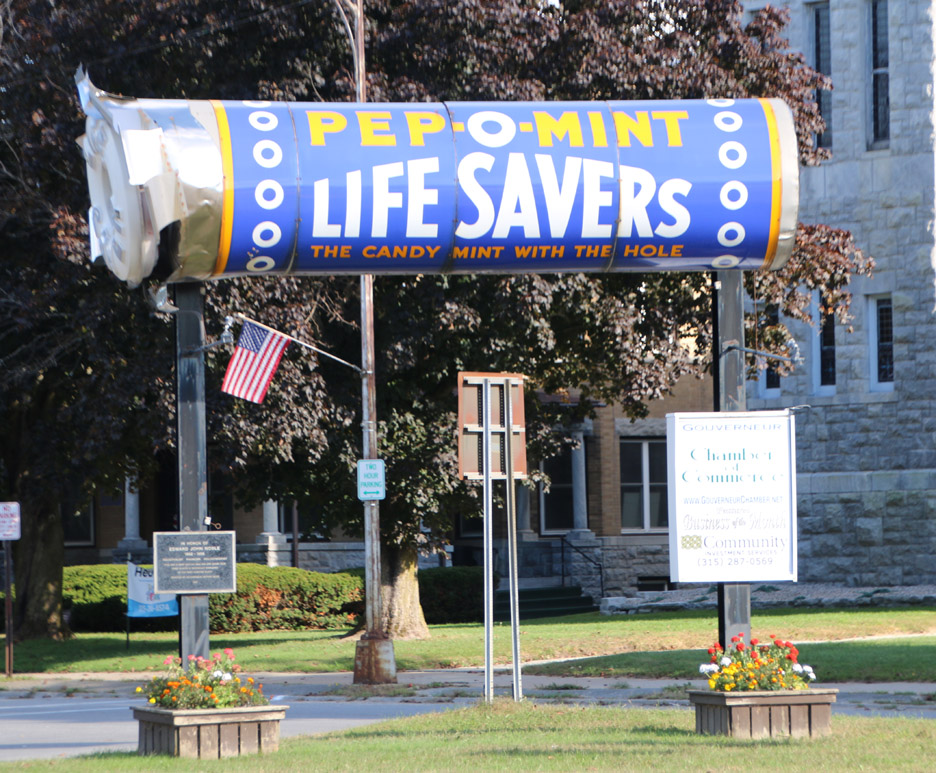
Wandering through Gouverneur, New York, a while ago I happened across this interesting monument along East Main Street in the center of town.

Gouverneur isn’t exactly a manufacturing hotspot.  A tiny place of some 6,500 people, it’s on the western fringes of the Adirondacks, not very far from the St. Lawrence River in way, upstate New York.

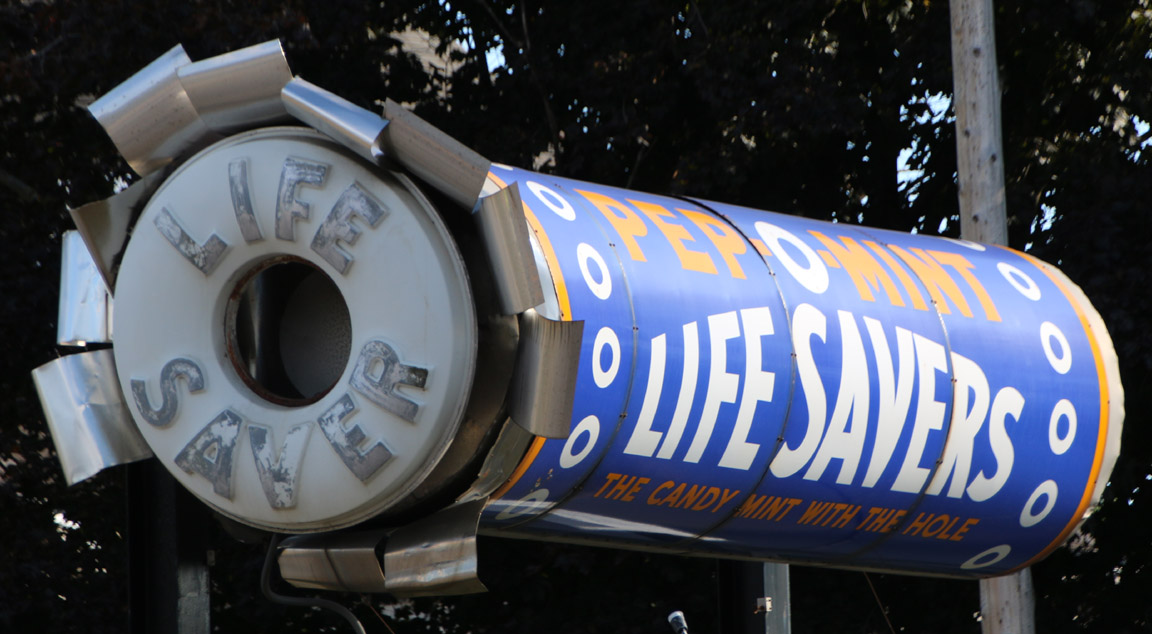
So, what’s that monument on Main Street all about?  Turns out it’s there because Gouverneur is the birthplace of Edward John Noble, the man credited with putting Life Savers on the map.  It used to adorn the headquarters of the Life Savers Candy Corporation in Port Chester, on Long Island Sound, some 350 miles south.

The candy was actually invented by maple syrup producer turned chocolatier Clarence Crane of Garrettsville, Ohio.  Crane, the father of American poet Hart Crane, was looking for a “summer candy” that would hold up in the heat better than chocolate.

To do that he used a machine that pharmacists used to manufacture round flat pills. He then punched a hole in the middle of the candy, making it resemble a life preserver and dubbed the result “Life Savers.”

They came only in mint flavor and were packaged in cardboard and marketed as breath mints.  The product remained only locally distributed until businessman and industrialist Edward Noble came along in 1913.

Noble bought the Life Savers business and trademark from Crane for $2,900.  He replaced the cardboard with tin foil to improve freshness. 

He significantly expanded the market for the product by installing Life Savers displays next to the cash registers of restaurants and grocery stores. He also encouraged the owners of the establishments to always give customers a nickel in their change to encourage sales of the five-cent product.
Sounds a bit like the 1970s tabloid wars for rack space at the supermarkets to me.

The brand exploded nationally when Noble brought aboard his engineer-brother, Robert Peckham Noble, who moved Life Savers from a handmade product into a modern automated manufacturing facility in Port Chester that churned out a variety of flavors and offshoots.  Robert remained chief executive until he sold the company in the late 1950s.

As with nearly all of the products that are still around from the early 1900s, Life Savors went through a dizzying array of corporate mergers and acquisitions through the mid-century.  Today it is part of Mars, Incorporated.

One interesting note is that during World War II other candy manufacturers donated their sugar rations to keep Life Savers in production so that the little candies could be shared with Armed Forces as a tasty reminder of life at home.  How quaint, and how foreign to the way we do things these days!

Edward Noble went on to become the first chairman of the Civil Aeronautics Authority and the nation’s first Under Secretary of Commerce. In 1943 he founded the American Broadcasting Company.

The Port Chester, New York, Life Savers headquarters building that his brother developed is now on the National Register of Historic Places.  Manufacturing there was discontinued in 1984 and it is now an apartment building.

The oversized roll of Life Savers that I encountered on Main Street in Gouverneur was one of several that decorated the headquarters building in Port Chester.

Gouverneur, by the way, was named after Gouverneur Morris, one of the signers of the Articles of Confederation and the United States Constitution, author of the preamble to the Constitution, one of the most outspoken opponents of slavery at the Constitutional Convention, and a United States Senator from New York from 1800 to 1803.  Most sources call him a Founding Father.

His first name, from the French for “governor,” today does not even rank among the 1,000 most popular boys’ names.  I have no idea where it ranked in 1872, when he was born.  It was his mother’s last name.

The family kept the name alive though.

His son was Gouverneur Morris, Jr., and a great-grandson, also named Gouverneur Morris, was an author of pulp novels, one of which was turned into the famous Lon Chaney film, “The Penalty,” in 1920.

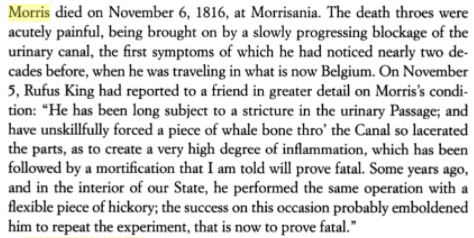
My sometimes dark sense of humor compels me to inform you of how he died, in 1816:  He attempted self-surgery with a whalebone to clear a blockage in his urinary tract and died of internal injuries and infection.

Here’s a more complete account, from “Gouverneur Morris, author, statesman and man of the world,” by James J. Kirschke, 2005:

Aren’t you glad you read this all the way to the end?

Posted in Uncategorized | 3 Comments

Farm accident

A farm accident spotted along a Minnesota highway a few years ago…

Posted in Uncategorized | Leave a comment

Deadwood

Every once in a while a traffic backup in a small town isn’t simply an annoyance, it’s also a bit of entertainment.

One such happenstance for me was in Deadwood, South Dakota, a now small, tourist-driven hamlet that drew its name from the quantity of dead trees the founders came across in the valley. 

In its heyday during the Black Hills gold rush of the 1870s, it was home to some 25,000 people and was the epitome of American west lawlessness.  It was visited by the likes of Wyatt Earp, Calamity Jane and Wild Bill Hickok (both Wild Bill and Calamity Jane are buried there). 

Today it contains about 1,200 folks and the entirety of the place is designated a National Historic Landmark District for its well-preserved buildings.  Throngs of tourists clog the streets and sidewalks.

An argument during a card game in a Deadwood saloon spelled Wild Bill’s demise in 1876. The hand he held at his death, two pairs; black aces and eights, is now known as the dead man’s hand.

It was a reenactment of his death that stopped me dead on my wheels in downtown Deadwood a few years ago.  There in the middle of the street, safely behind the orange cones that stopped the traffic, was a card game and some shooting and lots of shouting. 

The whole play took only a few minutes and happens several times a day.

Posted in Uncategorized | Leave a comment

The Popeye I never knew

I have always thought of Popeye as a cartoon character originating in my youth who started life as muscled, spinach-eating hero who always ended up with Olive Oil while rejected Bluto sat in the wings.

Not so.  He was basically a spinoff from a cartoon series that started way back in 1919, about the time my father was born.  He was a minor character who appeared in a couple panels and disappeared, but popular acclaim brought him back.   He’s been around ever since.

That 1919 series, published by King Features Syndicate, was called “Thimble Theatre,” the creation of cartoonist Elzie Crisler Segar, who was born in the Mississippi River town of Chester, Illinois. He was born in 1894 and died in 1938.   

In his teens Segar worked backstage and sometimes performed at the Chester Opera House. He took a correspondence course in cartooning from W. L. Evans, a former art director and cartoonist at the Cleveland Leader in Ohio, and at 18 he decided he wanted to become a cartoonist.

He moved to Chicago to follow his dream.  There he created two strips with newspapers before hooking up with King Features and moving to New York.

Segar was 25 in 1919 when “Thimble Theatre” started.  It featured slacker Harold Hamgravy, his flapperish girlfriend Olive Oyle and her brother Castor Oyle, and a variety of comedic misadventures.  It wasn’t a widely distributed comic strip but did OK.

A full ten years later, in 1929, the Popeye character made an appearance.  He was a mariner hired by Castor Oyle to sail him and Olive and Hamgravy to a crooked gambler’s island casino.

That adventure ended and Popeye exited the series.  But readers liked the guy, they wanted him back and they let King Features know.  He was brought back and as his role became larger the strip was picked up by more and more papers.

A star was born.  Popeye ended up with Olive Olye, Harold Hamgravy disappeared, and Popeye’s been a ubiquitous fixture in our culture ever since.

Chester has certainly done its bit to keep the character alive.  The annual Popeye Picnic and Parade the weekend after Labor Day draws folks from all over the world.  They can take the Popeye and Friends Character Trail, a series of statues of various “Thimble Theatre” characters.  The trail started in 1977 with a bronze of Popeye in a park by the river and now includes 16 figures around town.

Chester resident Frank “Rocky” Fiegel (1868-1947), a bartender and day laborer, was Segar’s inspiration for the Popeye character and William “Windy Bill” Schuchert, owner of the Chester Opera house, was the model for Wimpy.

Here are some photos from around town. Just click on one to see larger images.

In the Saving The Best For Last category, there is one final Chester claim to fame: 

It was a stop for yours truly in 2003 on my solo canoe trip down the Mississippi River. 

On the afternoon of October 6, I put ashore at the town’s Water Street boat ramp and walked up the steep incline to the railroad tracks at the top of the hill, expecting to find a town.

There wasn’t one. 

Repeated floods over the years had forced the town to abandon its 1800 riverside location and move further up the bluffs.  About all that remained near the river when I dropped in was the only part of the original town still standing, an 1830 building called the Landmark. 

In 2003, Pam Haley and her husband operated Ye Olde Landmark Inn in the building.  (It’s now the home of St. Nicholas Landmark, the second location of the St. Nicholas Brewing Company, headquartered in Du Quoin, Illinois.)

It was a Monday and the place was officially closed, but the river gods were with me. 

Pam was inside, doing some paperwork, and once she knew I was a river traveler she happily opened a couple beers, cooked me a great ribeye dinner, and insisted I use the small grassy patch behind the building to set up my tent for the night.

So I got to drink, eat and sleep in the only building left standing from the Chester of the 1800s!  As a bonus, Pam and her husband came by in the morning to make me some coffee and see me off.

Here are some photos of the building and surrounding area:

One last Popeye tidbit before I wrap this up.  “The Popeye” was a dance craze in the 1960s, one that fortunately I was completely unaware of.  

It originated in New Orleans around 1962 and was performed, according to Wikipedia, “by shuffling and moving one’s arms, placing one arm behind and one arm in front and alternating them, going through the motion of raising a pipe up to the mouth, and alternate sliding or pushing one foot back in the manner of ice skating, similar to motions exhibited by the cartoon character.”

I am glad I missed it.

Posted in Uncategorized | 6 Comments

Worse for wear

This Florida sign, kidnapped long ago from its nice warm home in Palm Beach Gardens and taken to Belchertown, Massachusetts, is not handling the harsh winters very well. I first spotted it in 2013 during a paddle on the Swift River.

I’ve been back to the Swift many times since then and have watched it getting older and older.

The top photo is from 2013 and the bottom photo is from this year.

Posted in Uncategorized | 2 Comments