Every once in a while a traffic backup in a small town isn’t simply an annoyance, it’s also a bit of entertainment.
One such happenstance for me was in Deadwood, South Dakota, a now small, tourist-driven hamlet that drew its name from the quantity of dead trees the founders came across in the valley.
In its heyday during the Black Hills gold rush of the 1870s, it was home to some 25,000 people and was the epitome of American west lawlessness. It was visited by the likes of Wyatt Earp, Calamity Jane and Wild Bill Hickok (both Wild Bill and Calamity Jane are buried there).
Today it contains about 1,200 folks and the entirety of the place is designated a National Historic Landmark District for its well-preserved buildings. Throngs of tourists clog the streets and sidewalks.
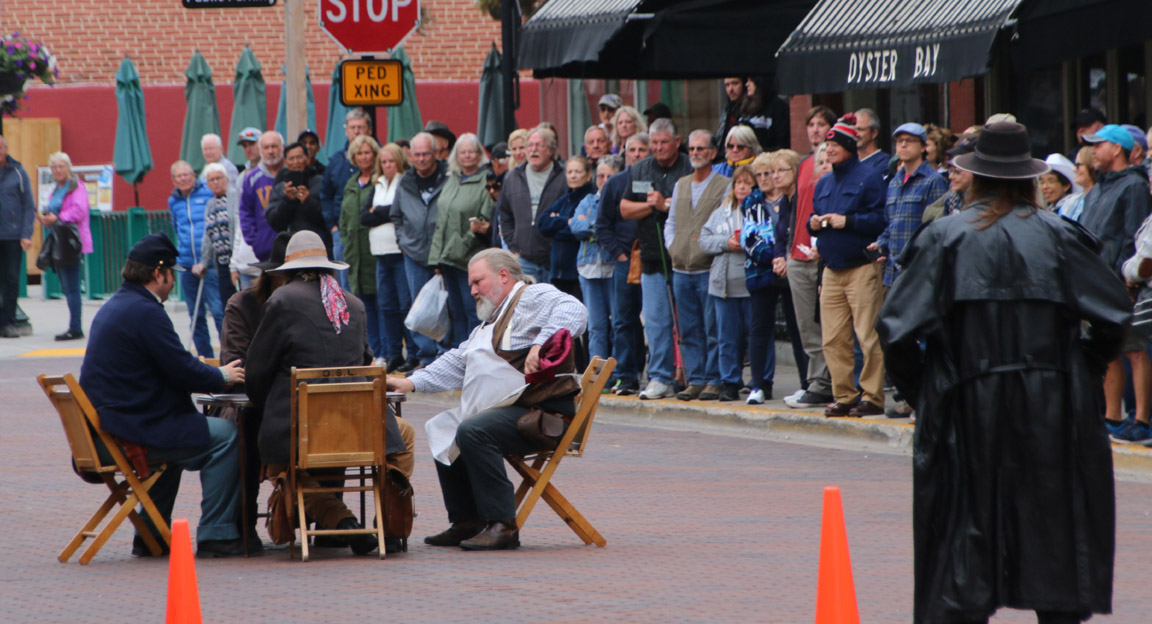
An argument during a card game in a Deadwood saloon spelled Wild Bill’s demise in 1876. The hand he held at his death, two pairs; black aces and eights, is now known as the dead man’s hand.
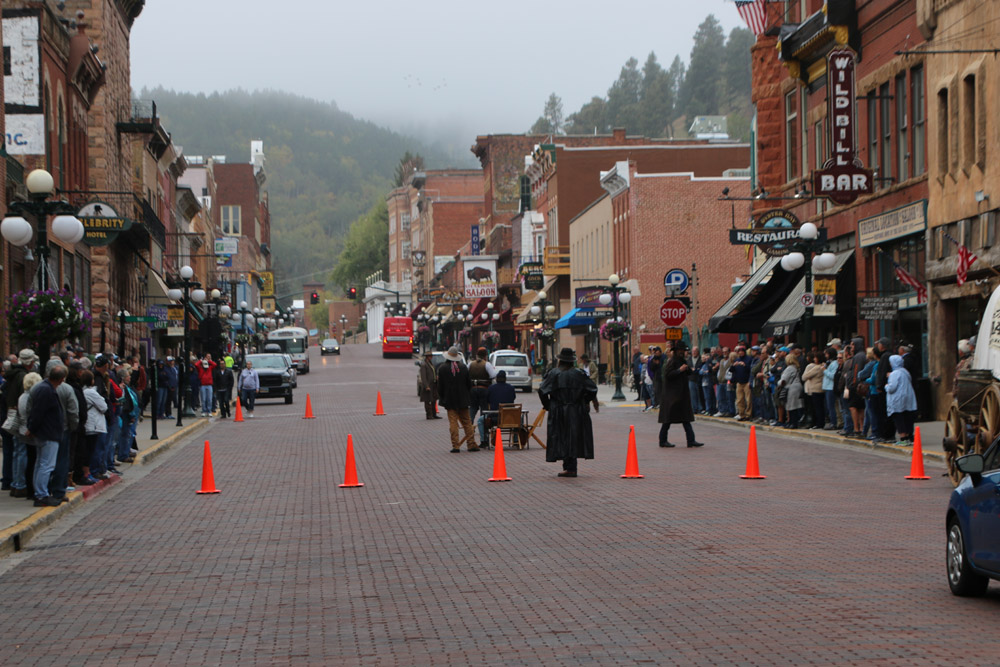
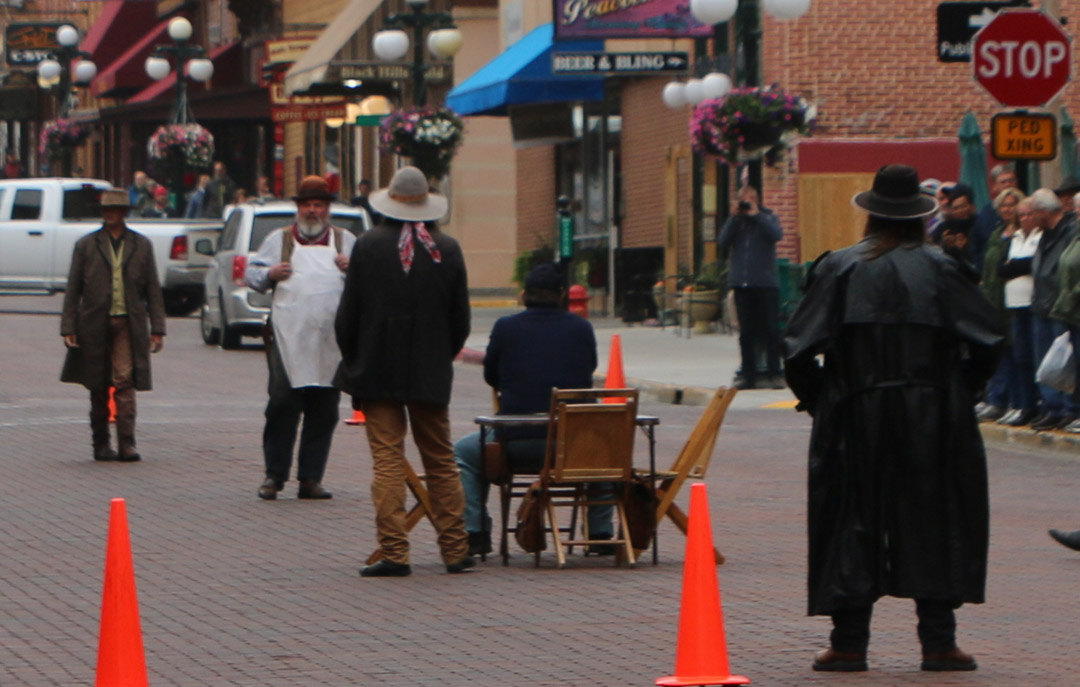
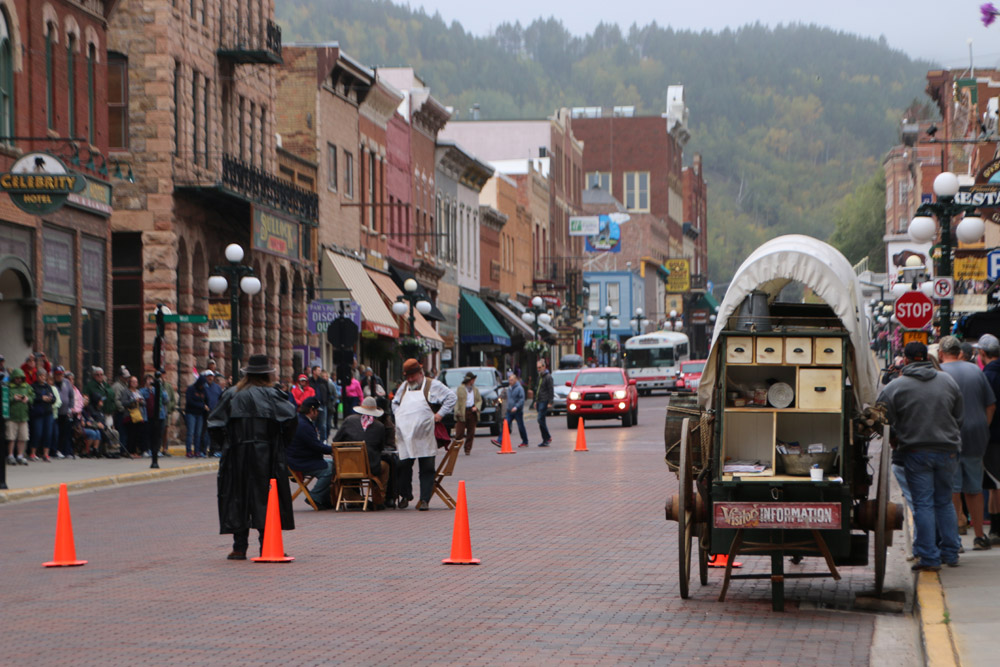
It was a reenactment of his death that stopped me dead on my wheels in downtown Deadwood a few years ago. There in the middle of the street, safely behind the orange cones that stopped the traffic, was a card game and some shooting and lots of shouting.
The whole play took only a few minutes and happens several times a day.
I have always thought of Popeye as a cartoon character originating in my youth who started life as muscled, spinach-eating hero who always ended up with Olive Oil while rejected Bluto sat in the wings.
Not so. He was basically a spinoff from a cartoon series that started way back in 1919, about the time my father was born. He was a minor character who appeared in a couple panels and disappeared, but popular acclaim brought him back. He’s been around ever since.
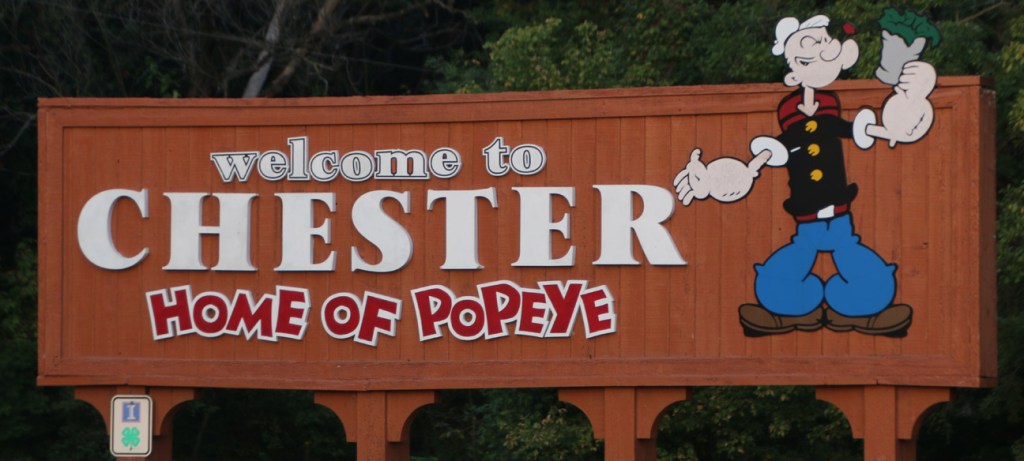
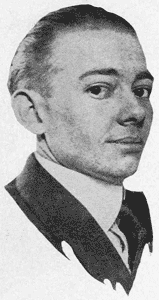
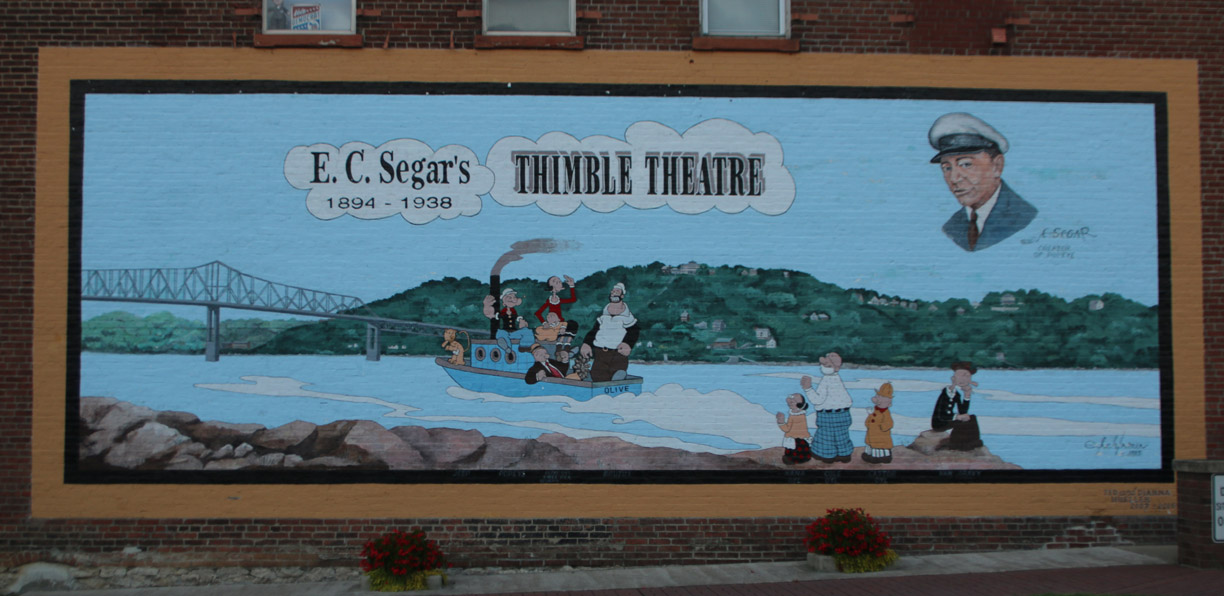
That 1919 series, published by King Features Syndicate, was called “Thimble Theatre,” the creation of cartoonist Elzie Crisler Segar, who was born in the Mississippi River town of Chester, Illinois. He was born in 1894 and died in 1938.
In his teens Segar worked backstage and sometimes performed at the Chester Opera House. He took a correspondence course in cartooning from W. L. Evans, a former art director and cartoonist at the Cleveland Leader in Ohio, and at 18 he decided he wanted to become a cartoonist.
He moved to Chicago to follow his dream. There he created two strips with newspapers before hooking up with King Features and moving to New York.
Segar was 25 in 1919 when “Thimble Theatre” started. It featured slacker Harold Hamgravy, his flapperish girlfriend Olive Oyle and her brother Castor Oyle, and a variety of comedic misadventures. It wasn’t a widely distributed comic strip but did OK.
A full ten years later, in 1929, the Popeye character made an appearance. He was a mariner hired by Castor Oyle to sail him and Olive and Hamgravy to a crooked gambler’s island casino.
That adventure ended and Popeye exited the series. But readers liked the guy, they wanted him back and they let King Features know. He was brought back and as his role became larger the strip was picked up by more and more papers.
A star was born. Popeye ended up with Olive Olye, Harold Hamgravy disappeared, and Popeye’s been a ubiquitous fixture in our culture ever since.
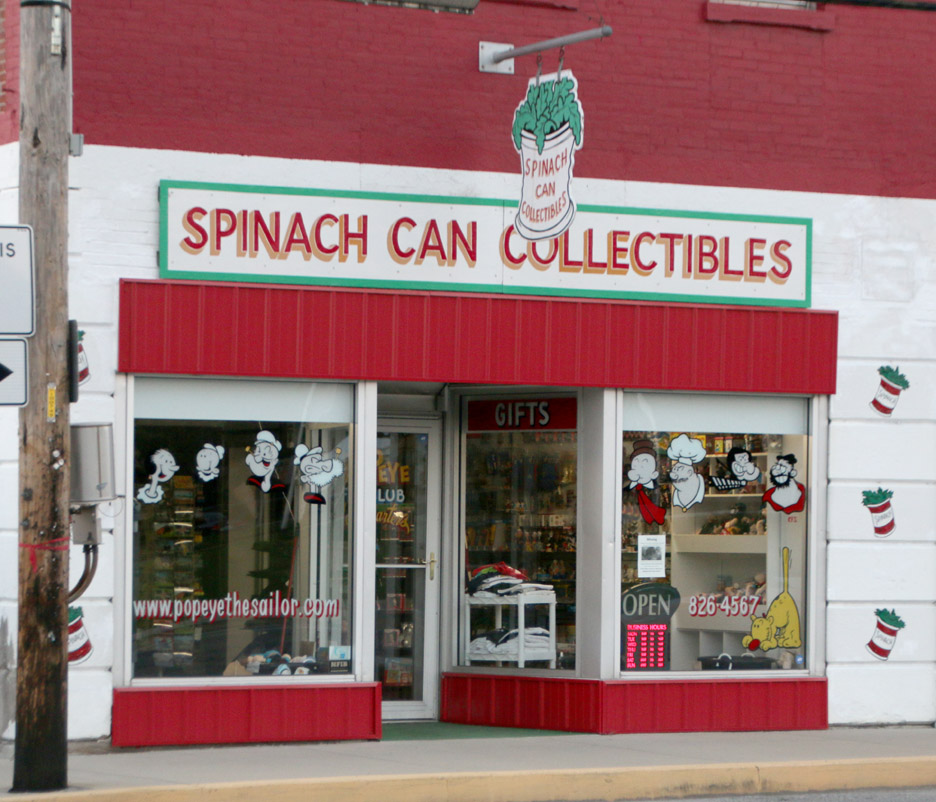
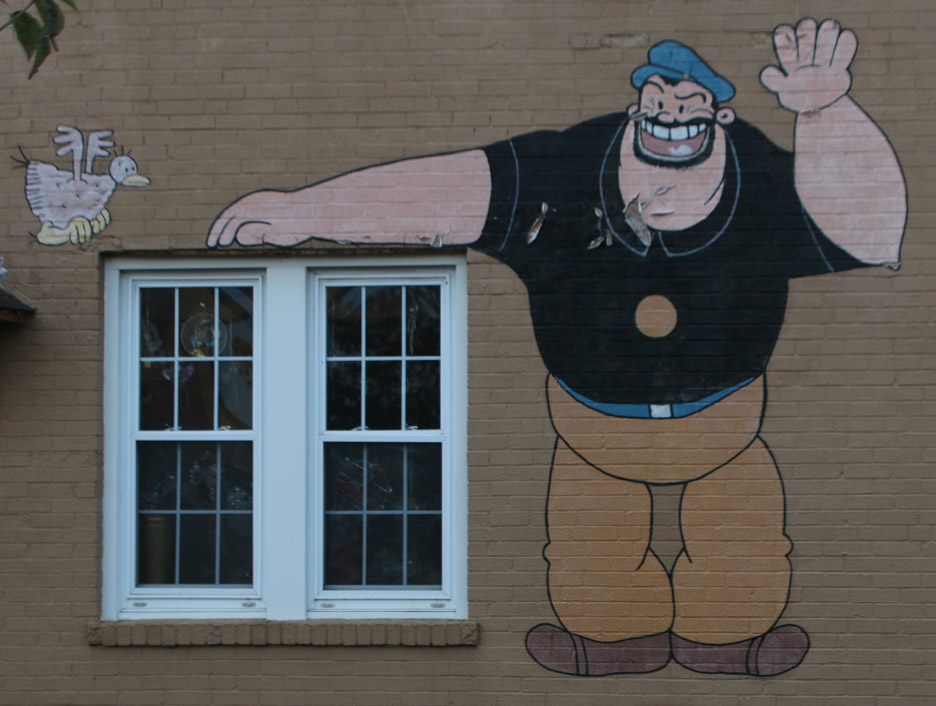
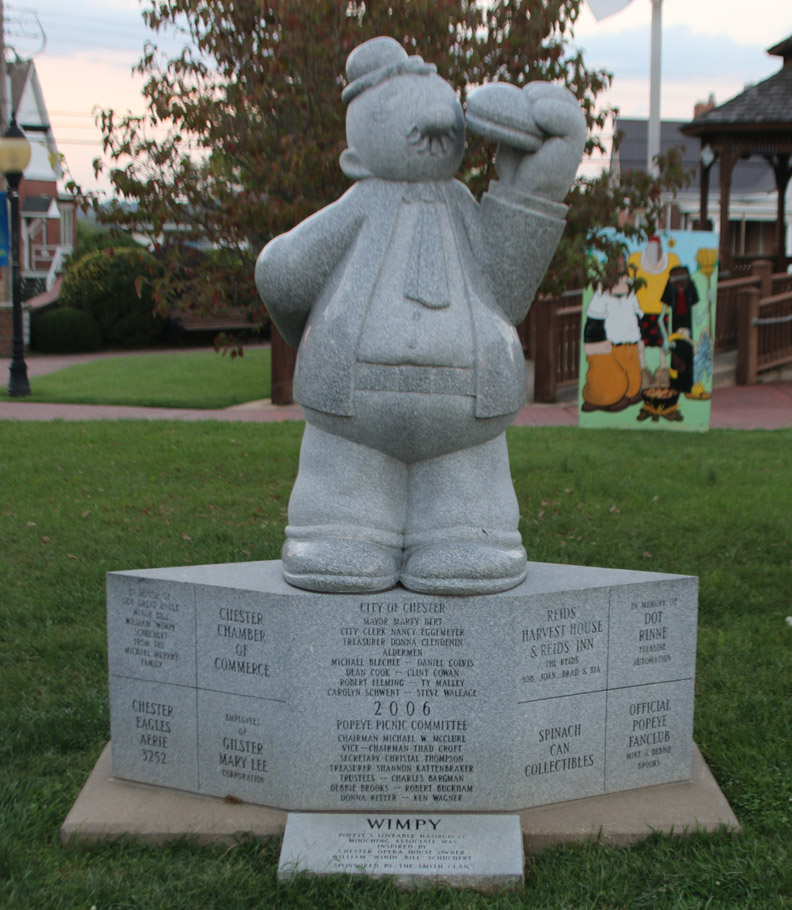
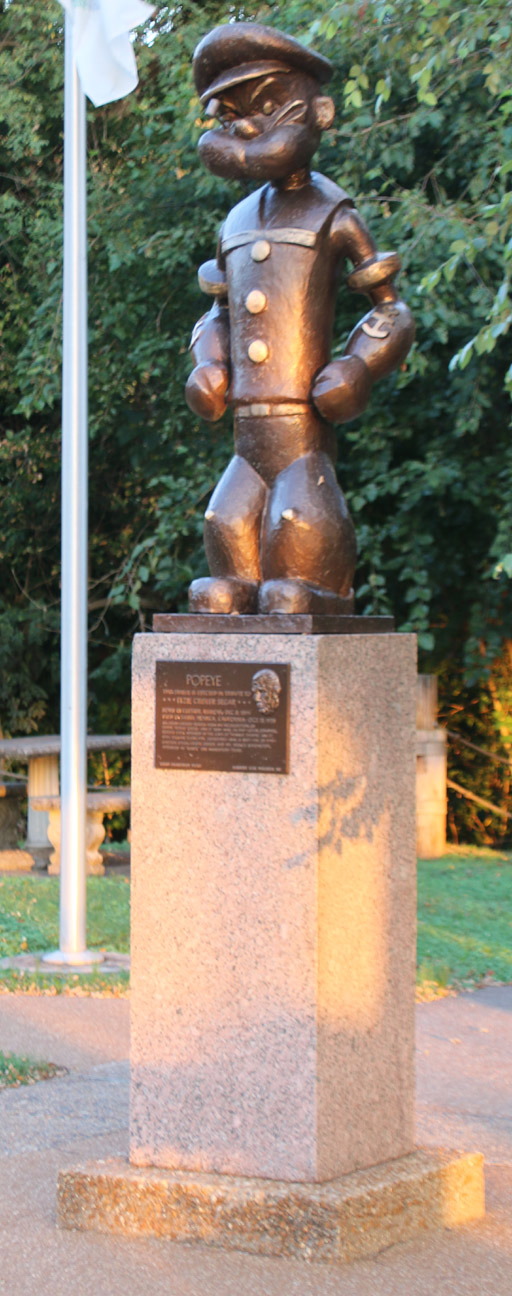
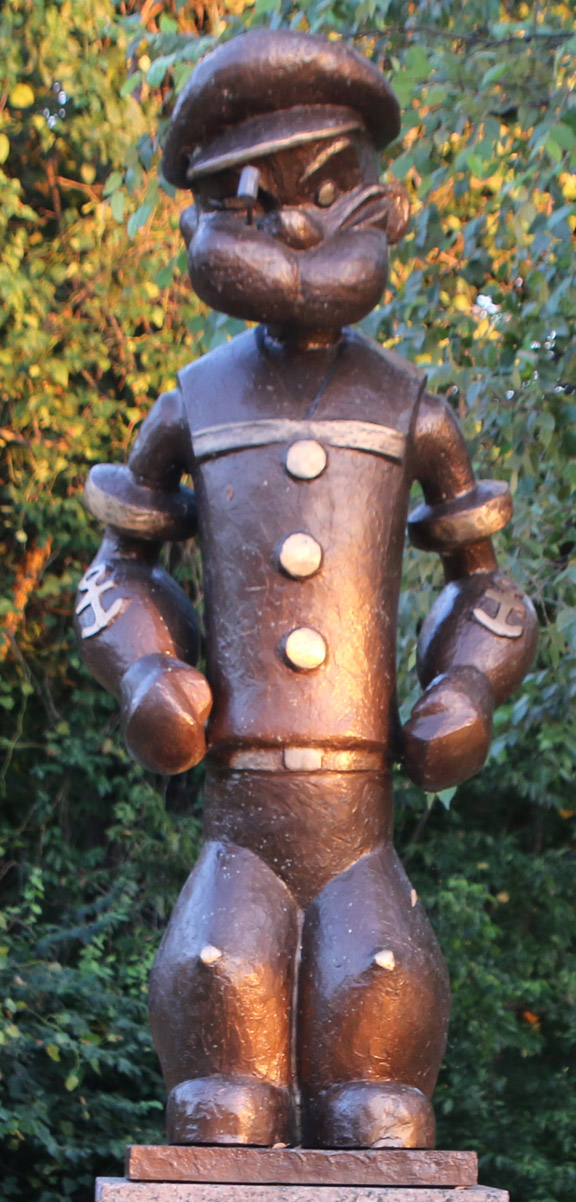
Chester has certainly done its bit to keep the character alive. The annual Popeye Picnic and Parade the weekend after Labor Day draws folks from all over the world. They can take the Popeye and Friends Character Trail, a series of statues of various “Thimble Theatre” characters. The trail started in 1977 with a bronze of Popeye in a park by the river and now includes 16 figures around town.
Chester resident Frank “Rocky” Fiegel (1868-1947), a bartender and day laborer, was Segar’s inspiration for the Popeye character and William “Windy Bill” Schuchert, owner of the Chester Opera house, was the model for Wimpy.
Here are some photos from around town. Just click on one to see larger images.
In the Saving The Best For Last category, there is one final Chester claim to fame:
It was a stop for yours truly in 2003 on my solo canoe trip down the Mississippi River.
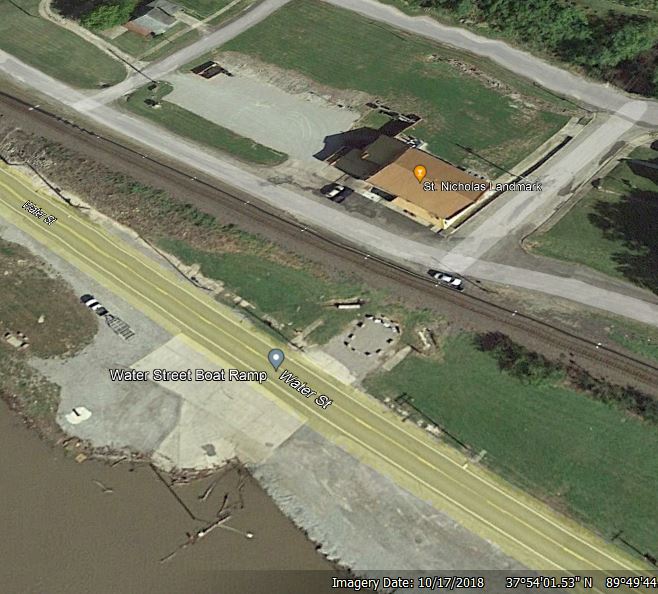
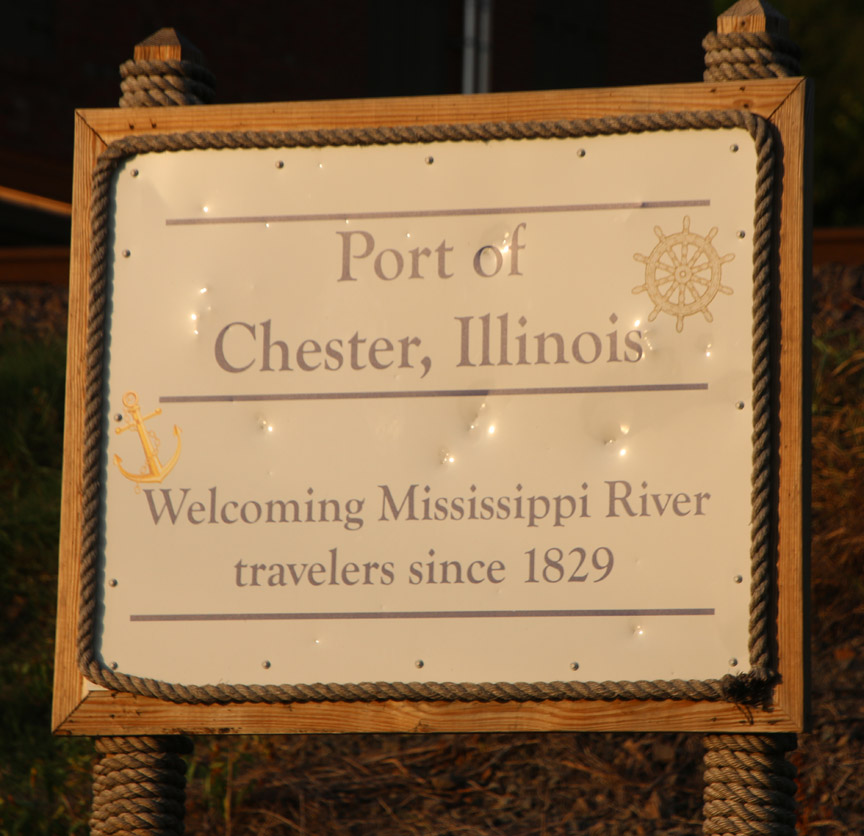
On the afternoon of October 6, I put ashore at the town’s Water Street boat ramp and walked up the steep incline to the railroad tracks at the top of the hill, expecting to find a town.
There wasn’t one.
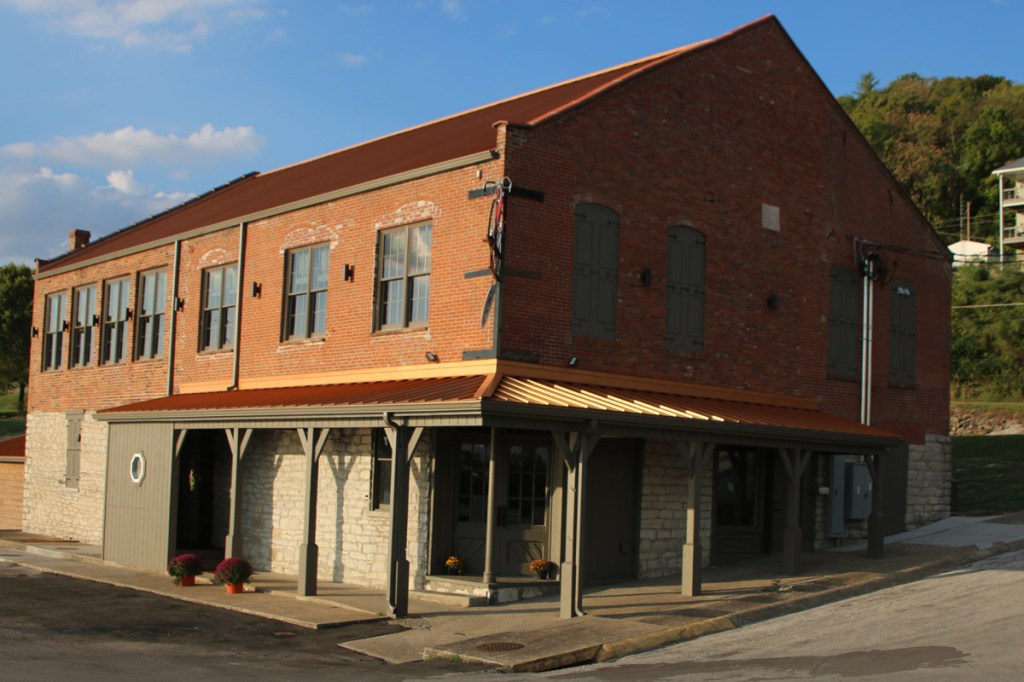
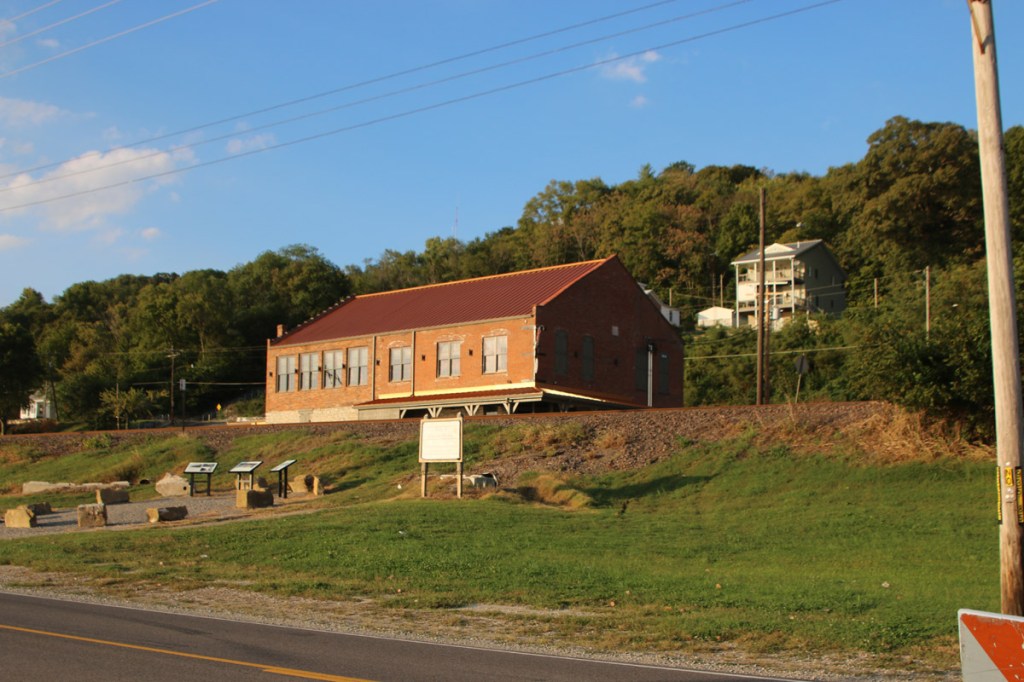
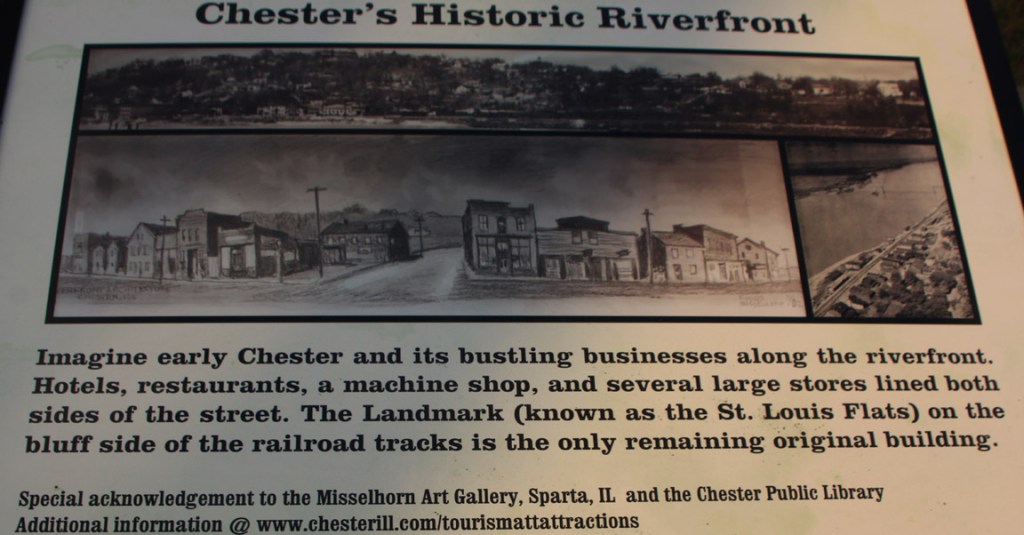
Repeated floods over the years had forced the town to abandon its 1800 riverside location and move further up the bluffs. About all that remained near the river when I dropped in was the only part of the original town still standing, an 1830 building called the Landmark.
In 2003, Pam Haley and her husband operated Ye Olde Landmark Inn in the building. (It’s now the home of St. Nicholas Landmark, the second location of the St. Nicholas Brewing Company, headquartered in Du Quoin, Illinois.)
It was a Monday and the place was officially closed, but the river gods were with me.
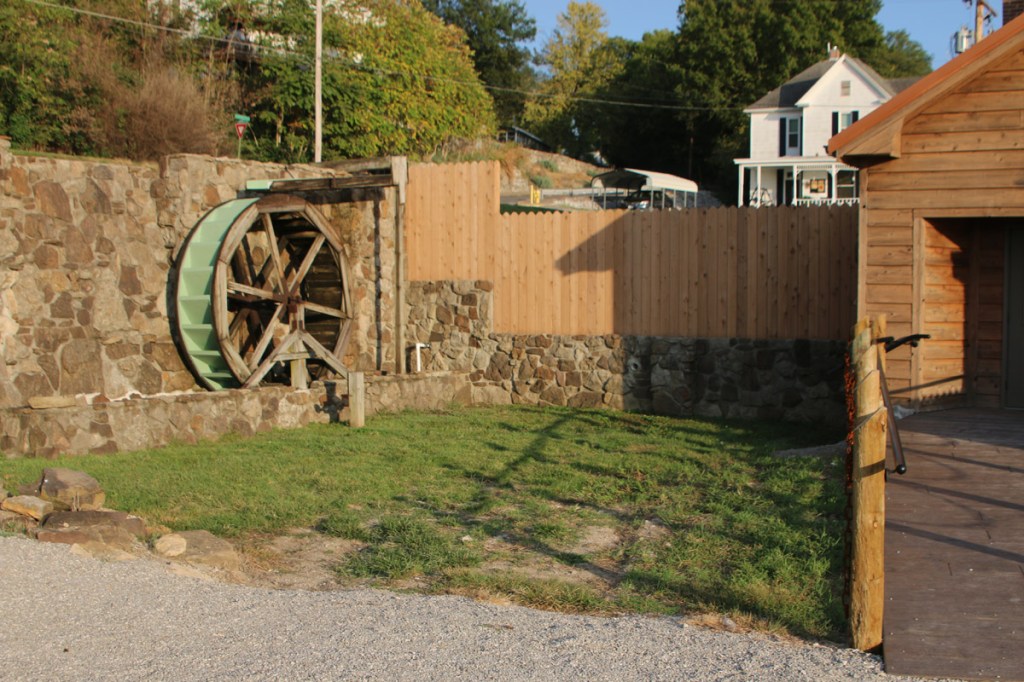
Pam was inside, doing some paperwork, and once she knew I was a river traveler she happily opened a couple beers, cooked me a great ribeye dinner, and insisted I use the small grassy patch behind the building to set up my tent for the night.
So I got to drink, eat and sleep in the only building left standing from the Chester of the 1800s! As a bonus, Pam and her husband came by in the morning to make me some coffee and see me off.
Here are some photos of the building and surrounding area:
One last Popeye tidbit before I wrap this up. “The Popeye” was a dance craze in the 1960s, one that fortunately I was completely unaware of.
It originated in New Orleans around 1962 and was performed, according to Wikipedia, “by shuffling and moving one’s arms, placing one arm behind and one arm in front and alternating them, going through the motion of raising a pipe up to the mouth, and alternate sliding or pushing one foot back in the manner of ice skating, similar to motions exhibited by the cartoon character.”
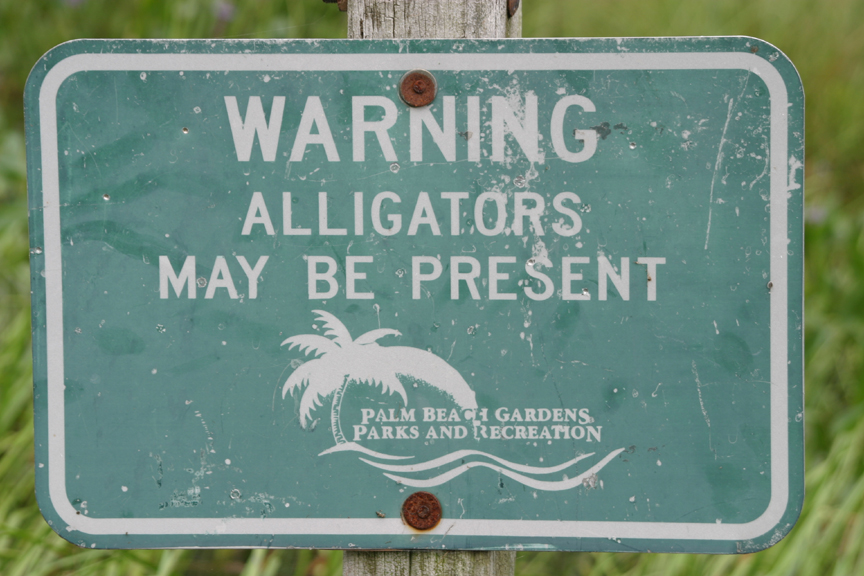
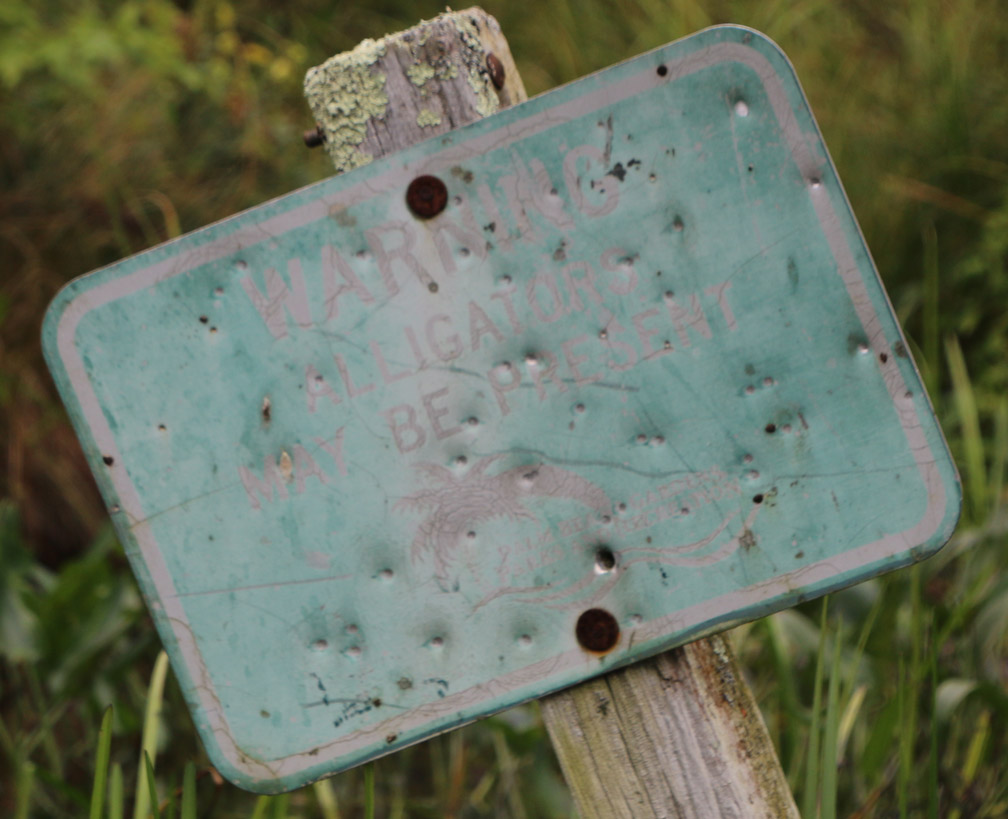
This Florida sign, kidnapped long ago from its nice warm home in Palm Beach Gardens and taken to Belchertown, Massachusetts, is not handling the harsh winters very well. I first spotted it in 2013 during a paddle on the Swift River.
I’ve been back to the Swift many times since then and have watched it getting older and older.
The top photo is from 2013 and the bottom photo is from this year.
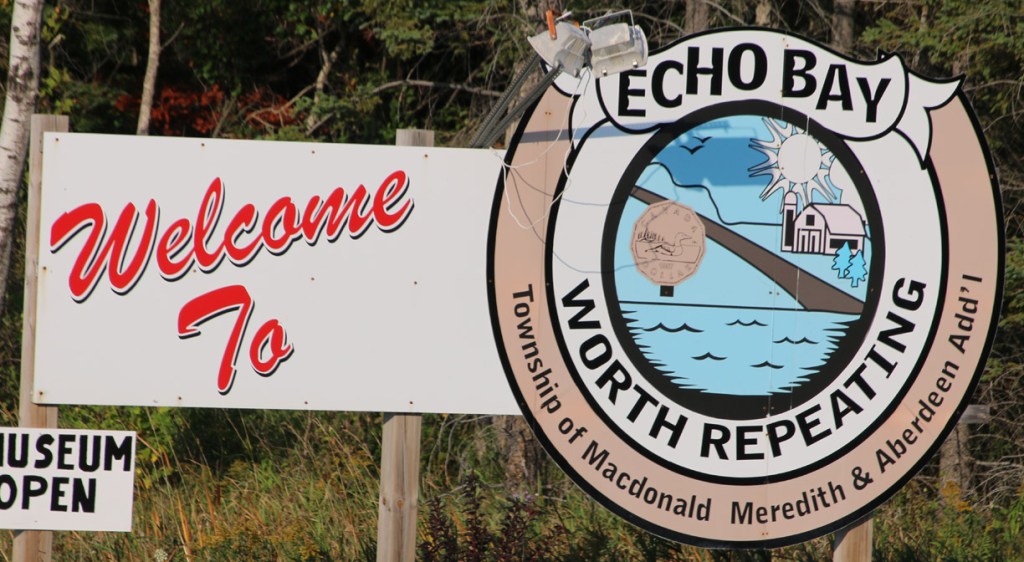
This is one of the cleverest town signs I’ve seen in my travels. It welcomes one into Echo Bay, Ontario, a small Canadian hamlet on Lake George.
It’s situated near where lakes Huron, Michigan, and Superior almost meet.
I passed through there about three years ago on my way from Connecticut to Colorado. Yes, I am just now finally going through the many photos I took on that trip.
Echo is in the awkwardly-named township of Macdonald, Meredith and Aberdeen Additional (a consolidation of three different townships). It started life as many small towns did in the 1800s, as a railroad station serving the small mining industry. It has since evolved into a lumber and agriculture area.
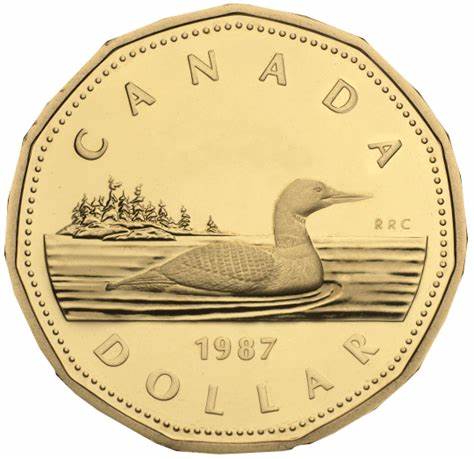
Echo is also the birthplace of Robert R. Carmichael, the artist who designed Canada’s “loonie,” the one-dollar coin introduced in 1987. It replaced the paper version of the Canadian Dollar and the nickname became so popular that Canada trademarked it in 2006.
Meanwhile, the best real echo I’ve found lately is the one I discovered in the covered entryway at Manchester Memorial Hospital in Manchester, CT. The first time I was there with granddaughter Margeaux and we passed under it I stopped, and said to her, “Listen to this,” and demonstrated.
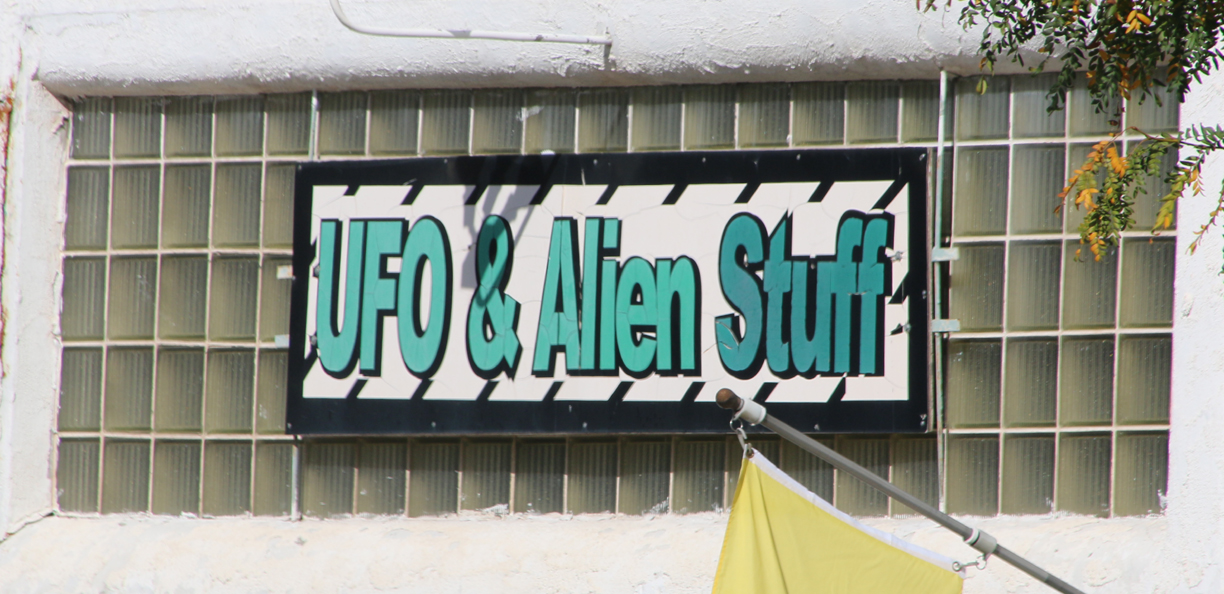
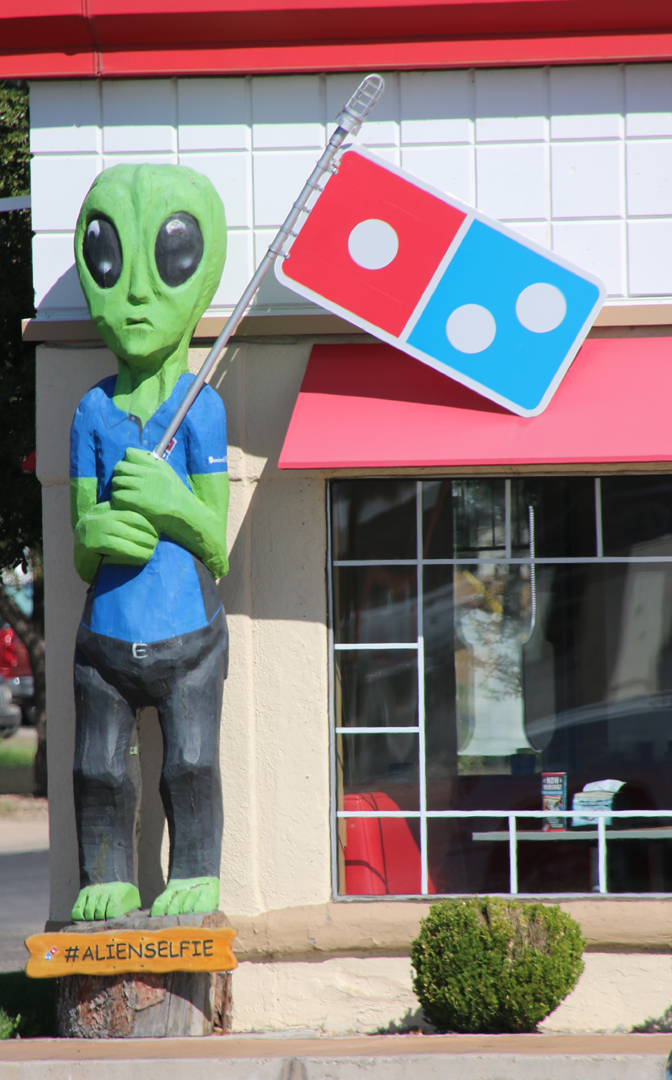
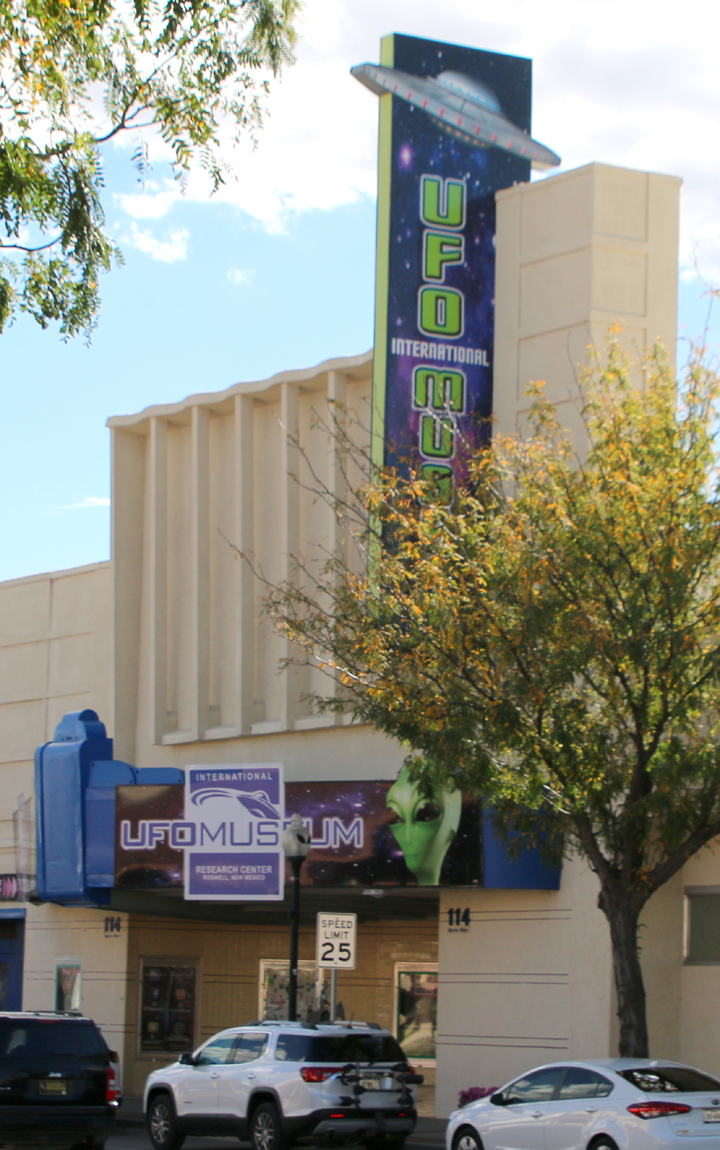
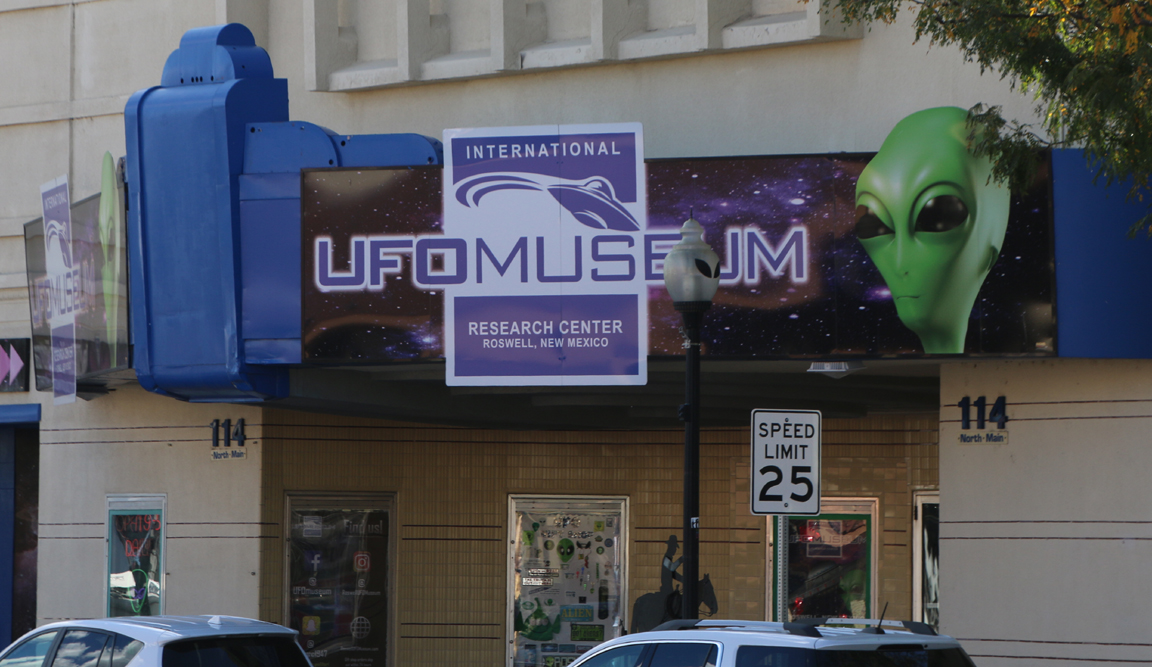
Roswell, New Mexico, was a couple hours out of my way. But something drew me there…
No, it wasn’t my tabloid background. As a reporter for the National Enquirer in the late 1970s, I did work alongside many of the real reportorial talents on the alien front, but my meagre experience in that field consisted of a few wasted evenings in an Ohio reader’s backyard waiting for the UFO to show up. It never did.
So, what supernatural force was drawing me….
It wasn’t on my way, that’s for certain. It was two hours or more south of old US Route 66, the path I was taking eastward through New Mexico on my way back to Connecticut.
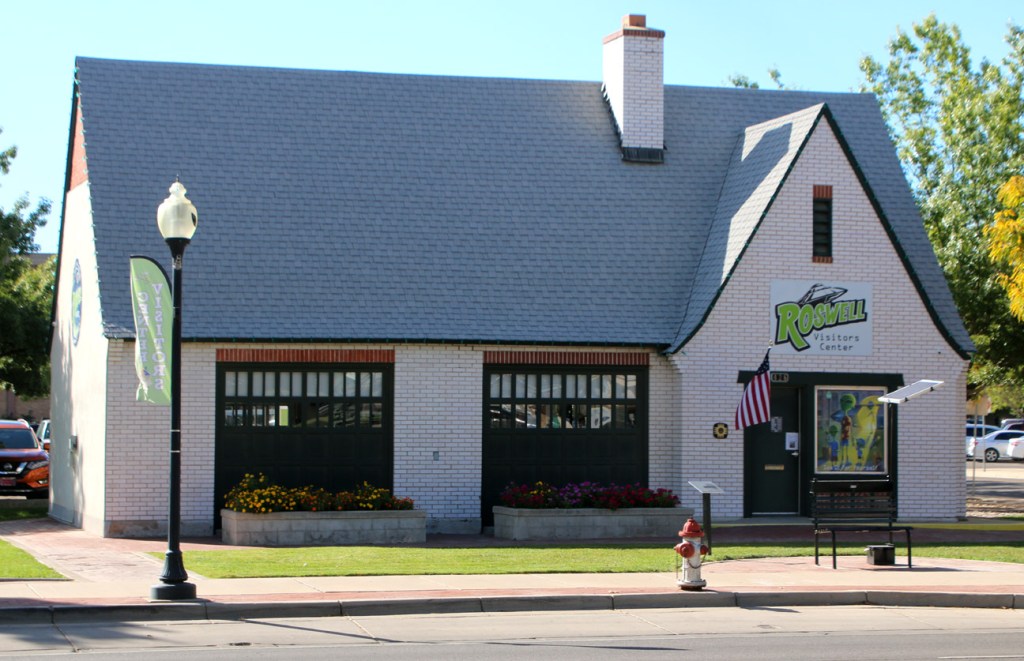
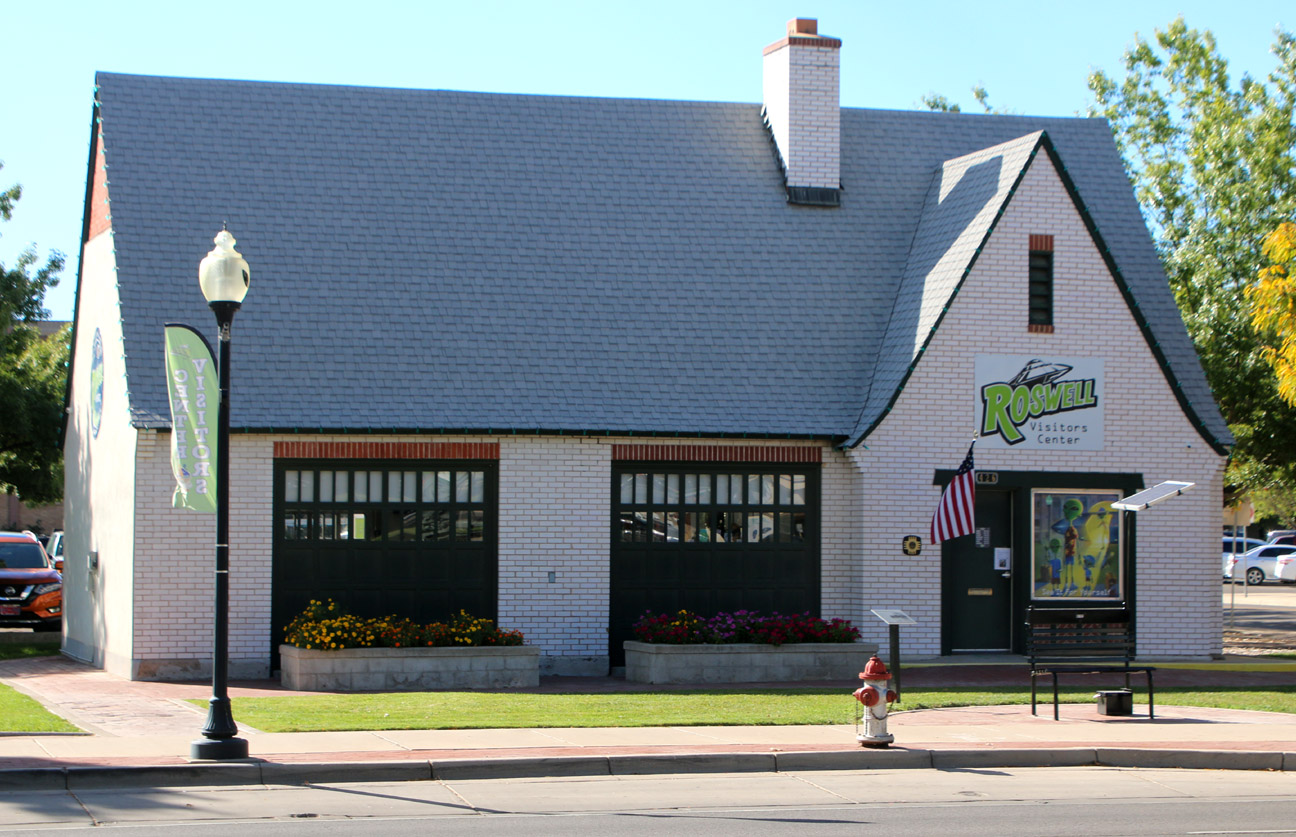
It was only when I got there that I realized the power that had pulled me: the town’s visitor center was in a very nicely recycled gas station! Another one for my collection!
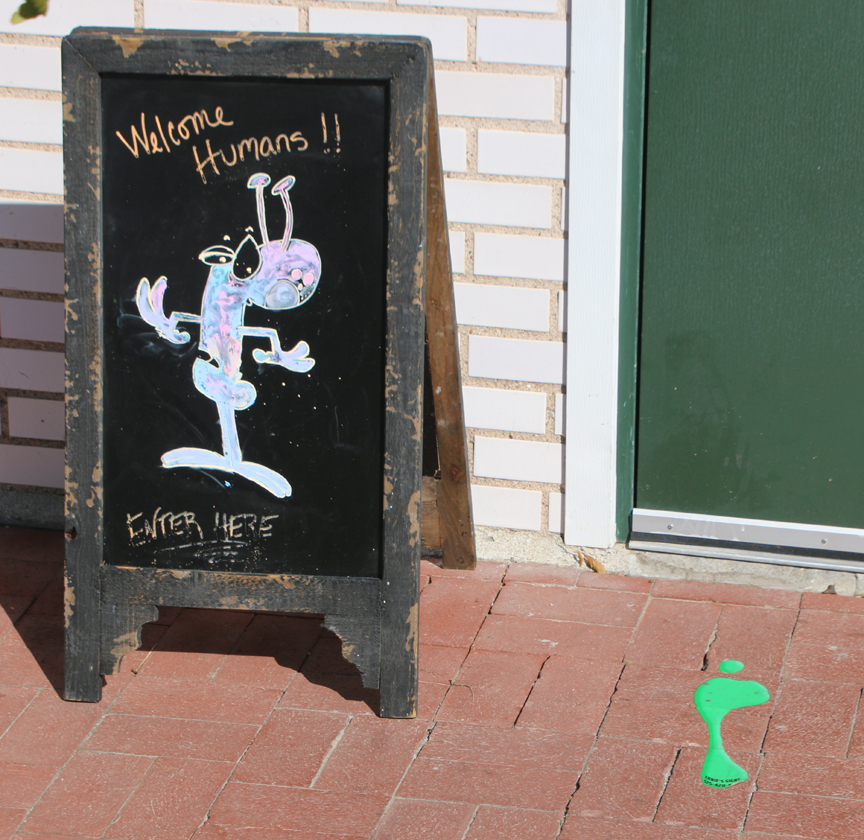
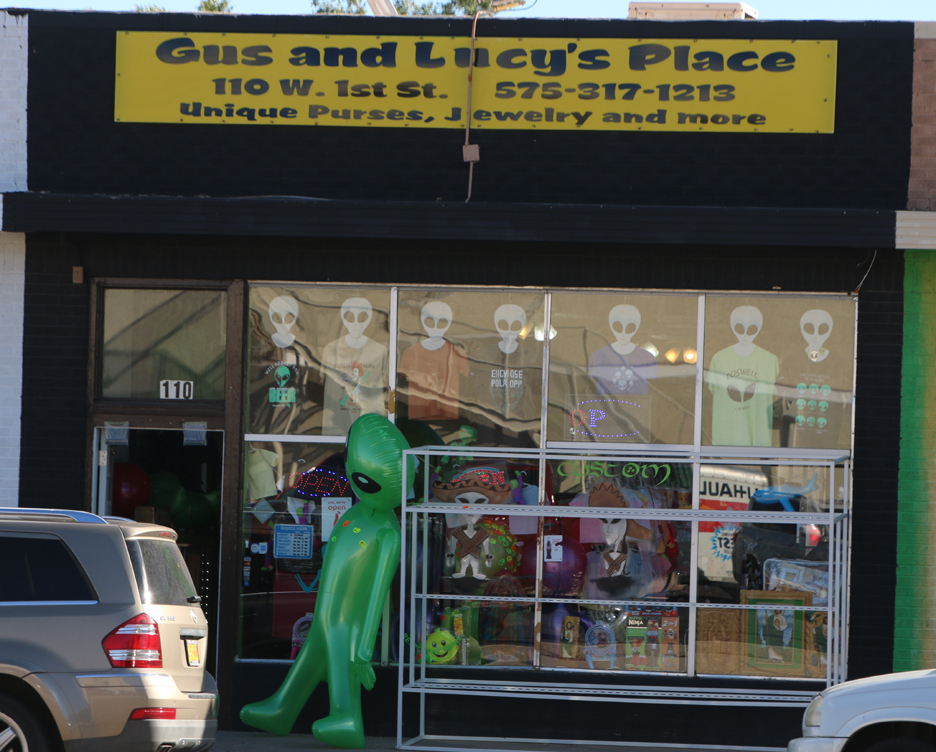
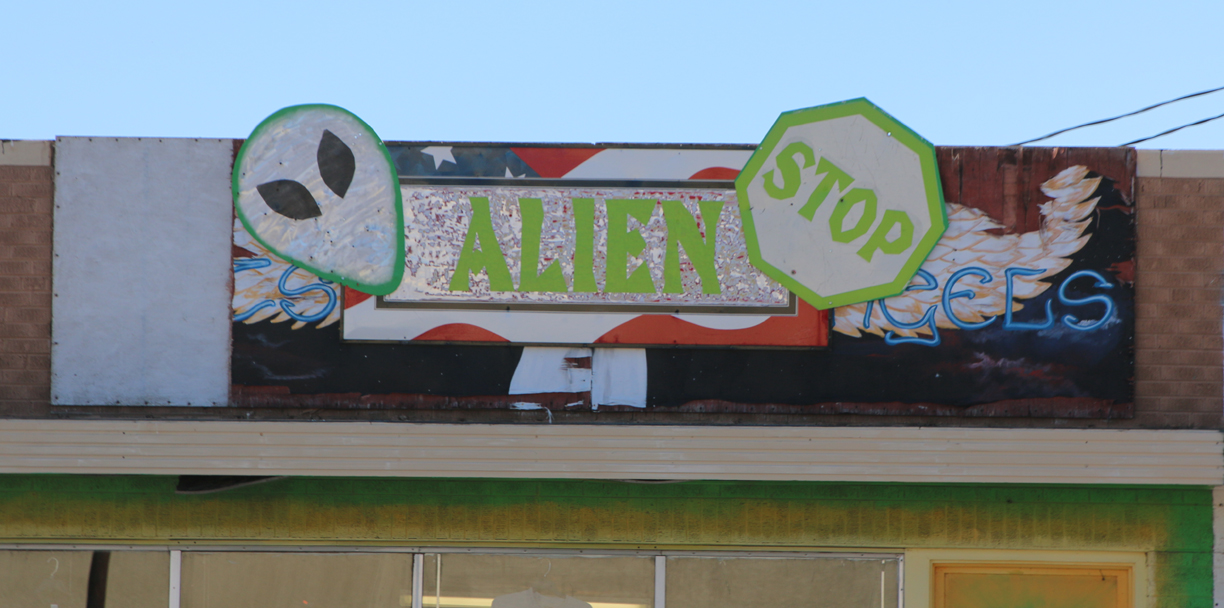
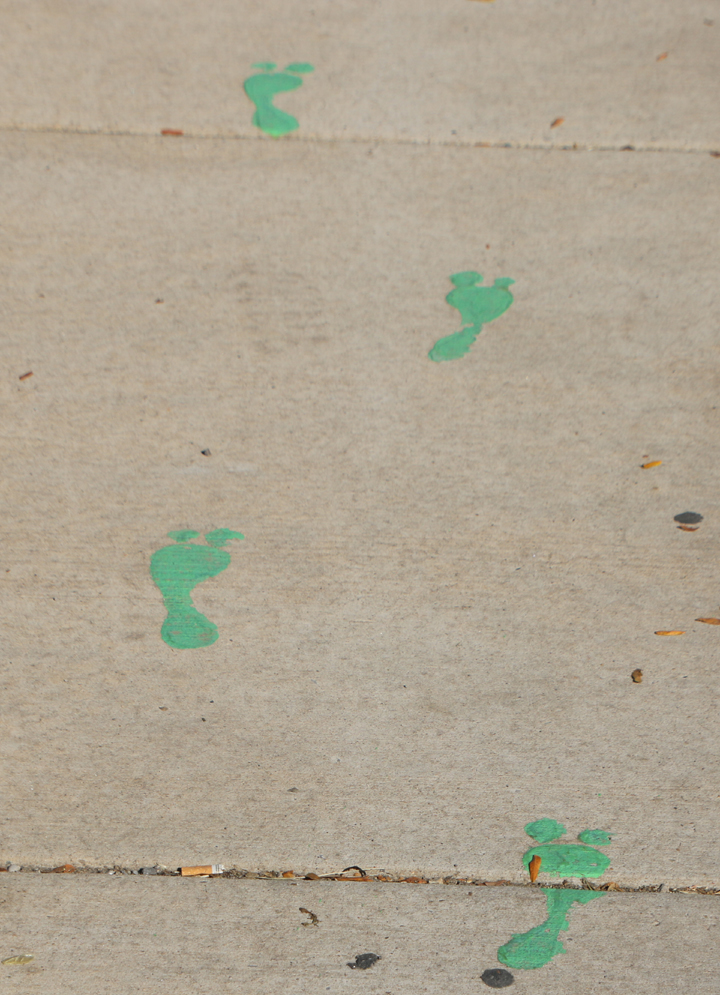
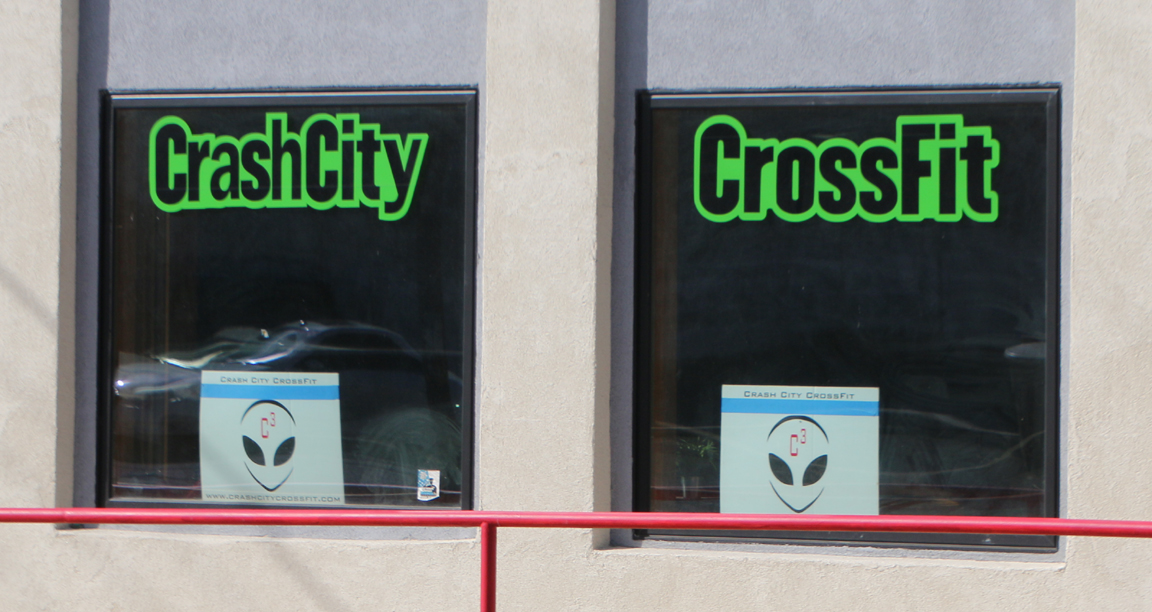
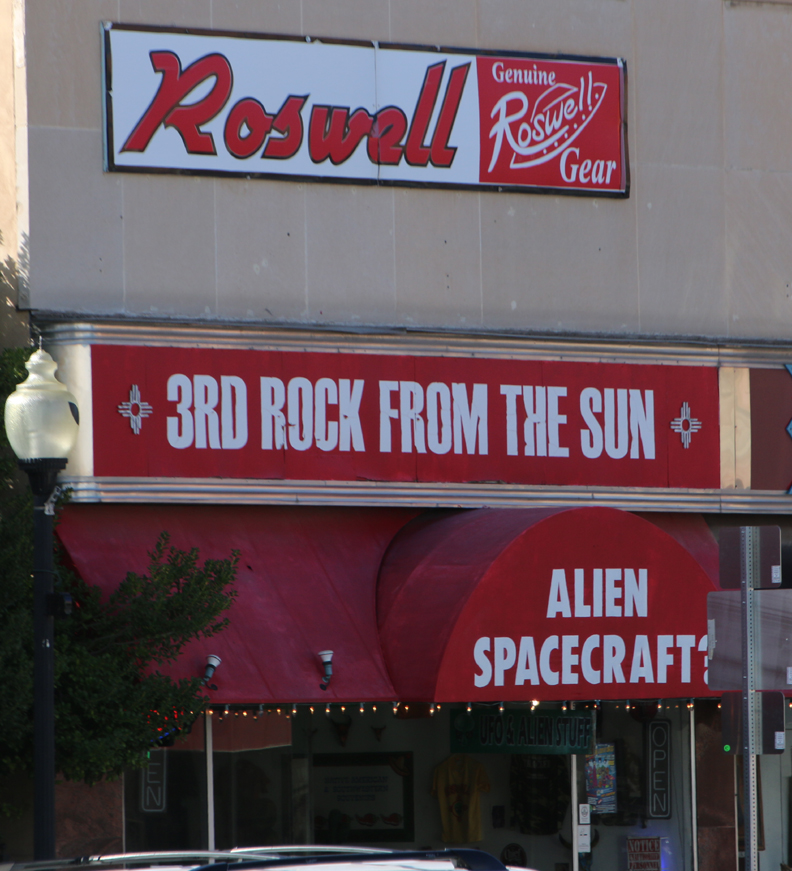
But seriously, Roswell was All Things Alien, as I had hoped. A day on the road for me is complete only with a stop at an interesting town.
Even staid Wikipedia sums it up thusly: “Roswell’s tourism industry is based on aerospace engineering and ufology museums and businesses and well as alien-themed and spacecraft-themed iconography.”
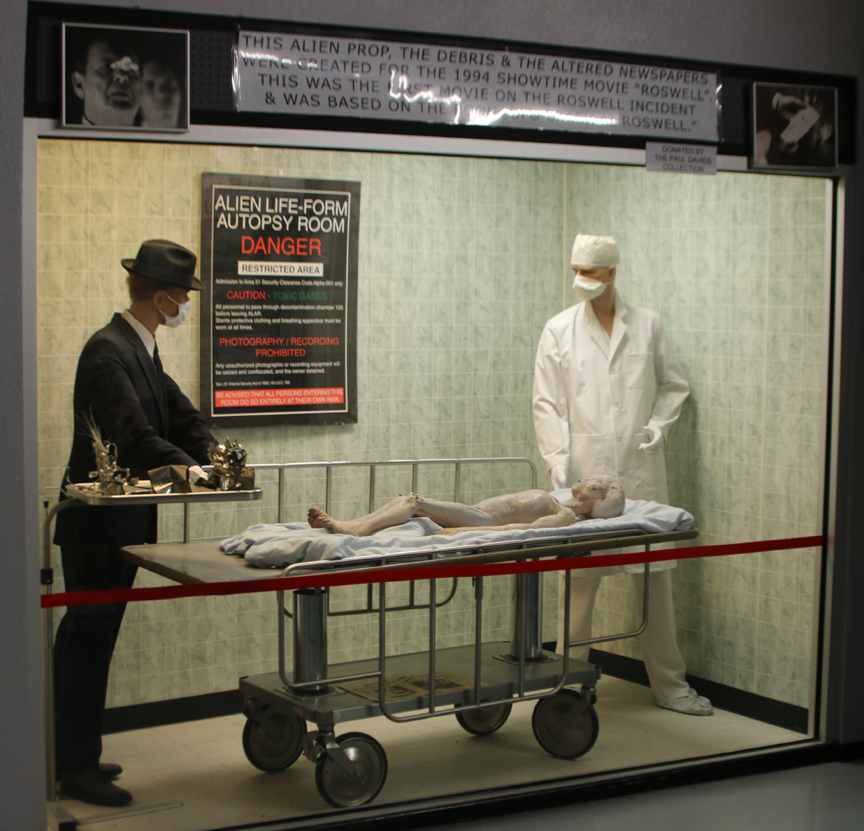
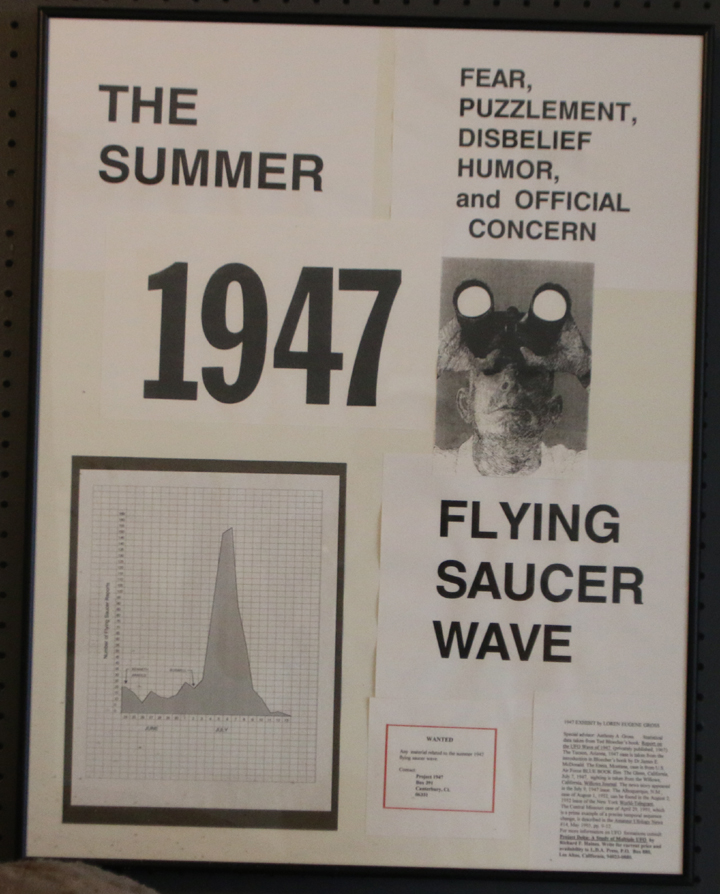
Roswell, of course, is famed for the reported crash of a flying saucer on the Foster ranch, about 30 miles outside of town, in 1947.
Briefly, here’s what happened back then: On July 6, a ranch foreman reported debris on the property to the local sheriff, who notified the Roswell Army Air Field (RAAF).
The next day RAAF officials went to the ranch and brought the debris back to Roswell and on July 7 announced they had recovered a “flying disc,” but the Army quickly retracted the statement and said instead that the crashed object was a conventional weather balloon.
And there the story died, basically. It was off the national scope for nearly 30 years, until the 1970s, when a retired lieutenant colonel stated that the weather balloon account had been a cover-story.
The “Roswell Incident” then blew up, blossoming over the ensuing years into a full-fledged media extravaganza, with enough conflicting theories to suit every UFO conspiracy theorist and naysayer in the land. The circus included countless experts, real and self-described, and an official government investigation.
To simply read Wikipedia’s digest of all the claims and counterclaims from the 1970s to today is exhausting and confusing.
I am not going to attempt to summarize it all, so let’s move right on to the photos. Clicking on one will open up the slide show.
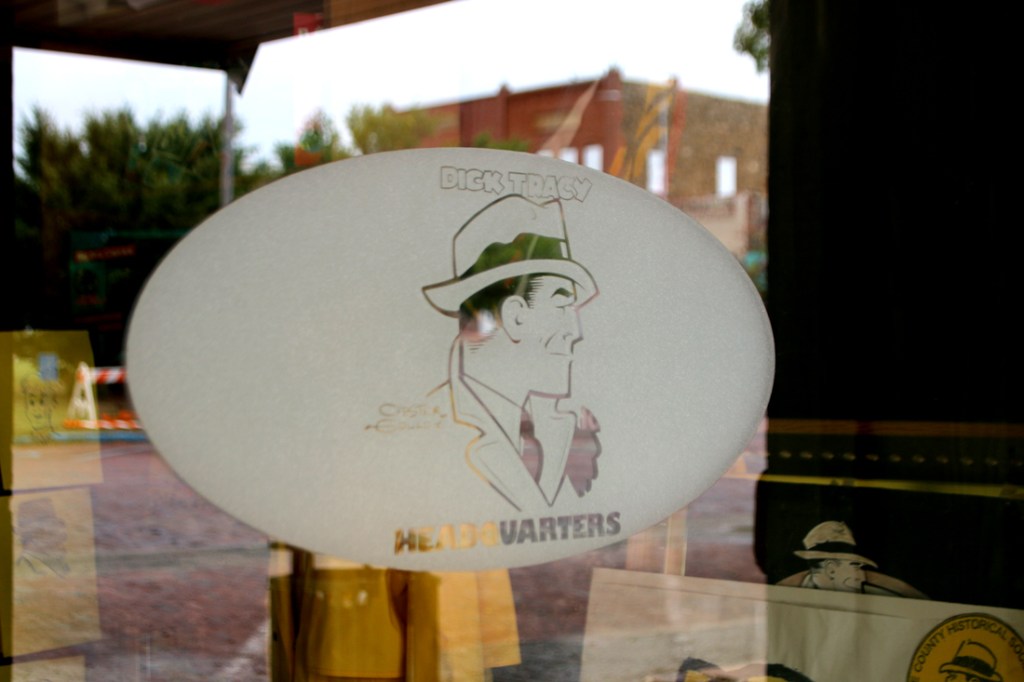
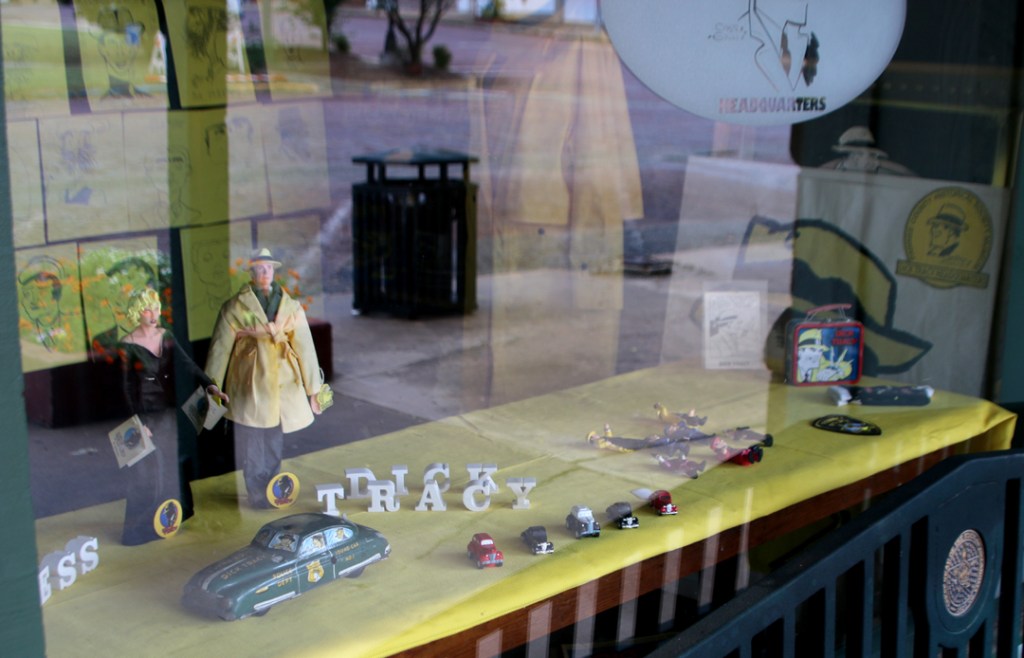
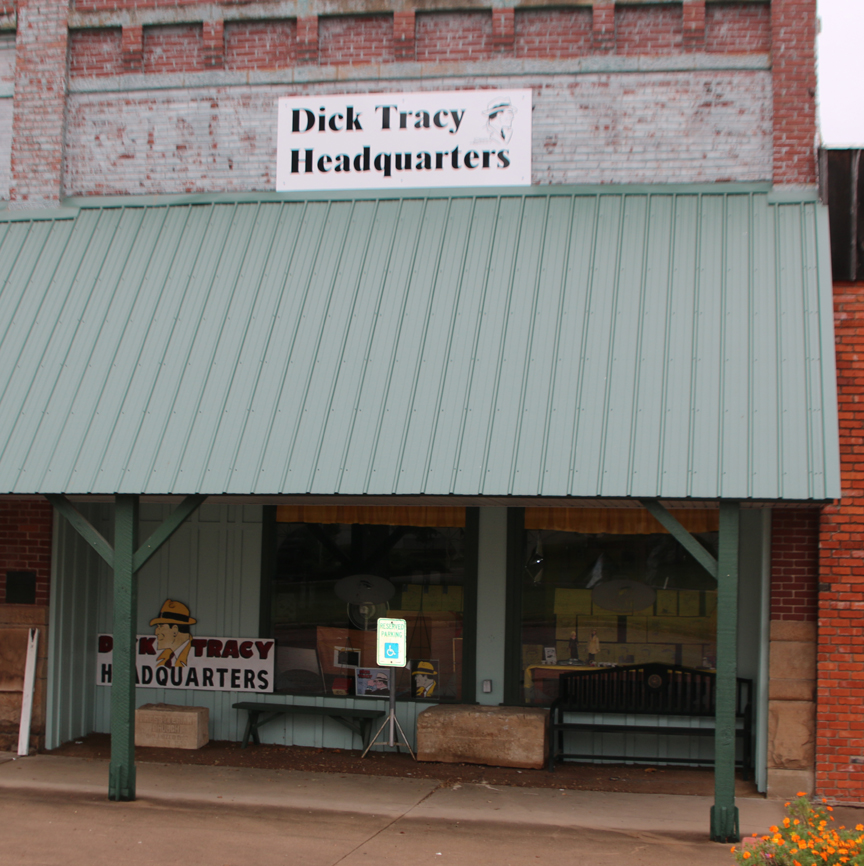
I stumbled across this Dick Tracy Museum a few years back in Pawnee, in north central Oklahoma. The place wasn’t open the day I drove by, so I had to content myself with a few outside shots.
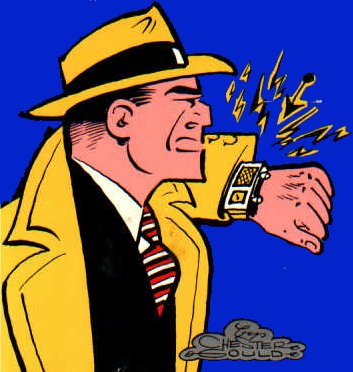
Connection? Pawnee is the birthplace of Chester Gould, the creator of the Dick Tracy character.
Born in 1900, Gould moved to Chicago in 1921 to pursue his dream of becoming a cartoonist with the Chicago Tribune. It took ten years, but finally the paper accepted one of his many cartoon strip ideas and Dick Tracy was born.
Gould authored the strip from 1931 to 1977. The franchise continued after that with various artists and writers.
I cannot look at an Apple Watch without thinking of the famed cartoon detective.
I will admit that although I read the comic pages avidly in my youth I only once in a while read an entire Tracy installment. My aversion to continuing storylines, be they in print or on TV, continues to this day.
There’s also a Dick Tracy Museum in Woodstock, Illinois, where Gould lived after retirement and died in 1985.
I like to spend July 4 in Contoocook, New Hampshire, the home of Brother Rick and his family.
The tiny town is also home to a nice, all-inclusive kids’ holiday parade and a comfortingly traditional regular parade, complete with a local band, fire engines, a few antique cars and the throwing of candy to onlookers in lawn chairs along the route.
It’s a pleasant, comfortable routine I have been in for about the last decade, ever since I started spending summers in Connecticut, where daughter Jennifer and company live. New Hampshire’s just a couple hours away.
The parade was cancelled in 2020 because of Covid, and I ended up staying in Florida anyway, so I didn’t miss much.
I went to Contoocook for the Fourth this year, but it was very different.
There was no parade, a victim once again of the uncertainties of Covid, but there was something even more significant missing.
There was no brother Rick. He left us earlier this year.
He was not there, sitting in his chair by the window looking out at the trees and the fields and the pond he so enjoyed. He was no longer there to explain to us what happens to those trees, fields and pond in the harsher months, when we’re not there to witness it.
He was not there to chat with about the many things we have talked about over the years. I couldn’t watch him as he patiently explained various kinds of berries to my grandchildren. I could no longer watch him interacting with his own children and his granddaughter.
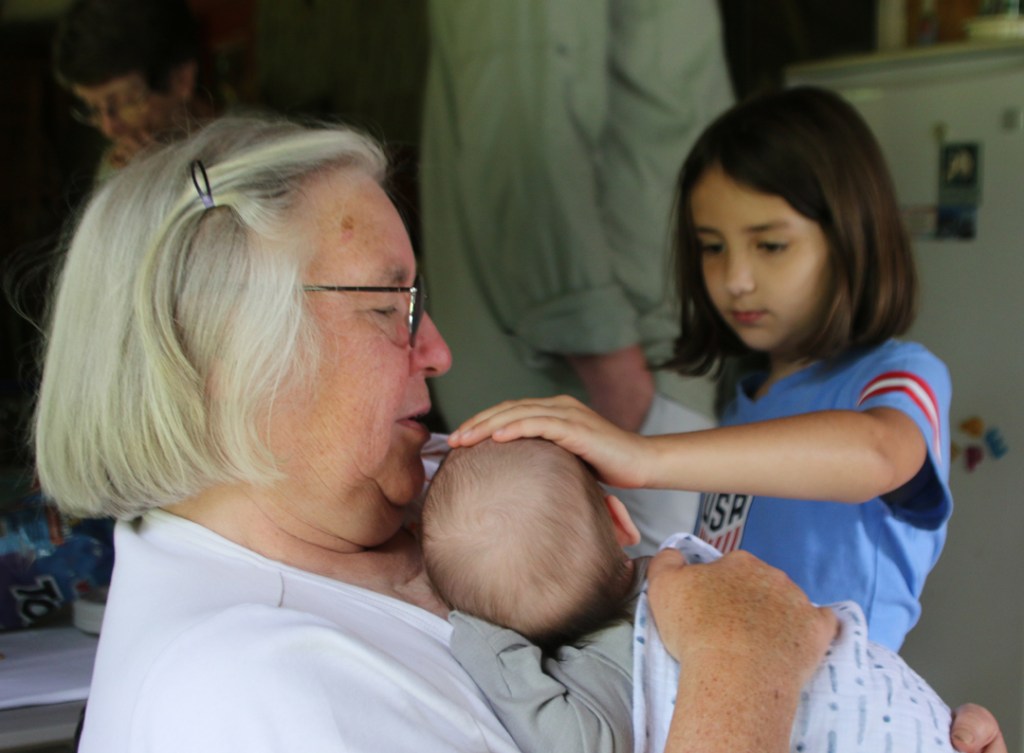
And I couldn’t watch him meet his newborn grandson.
But it’s not that simple. He was absent but he wasn’t. He wasn’t NOT there this year. He was just sort of somewhere else.
He was still very present in the home that he and his partner, Ginni, built and he was present most definitely in the family they created, and for that I am grateful.
But I just wish I could call him up and ask him how he’s doing and what things are like where he is. Maybe he will leave a comment below….
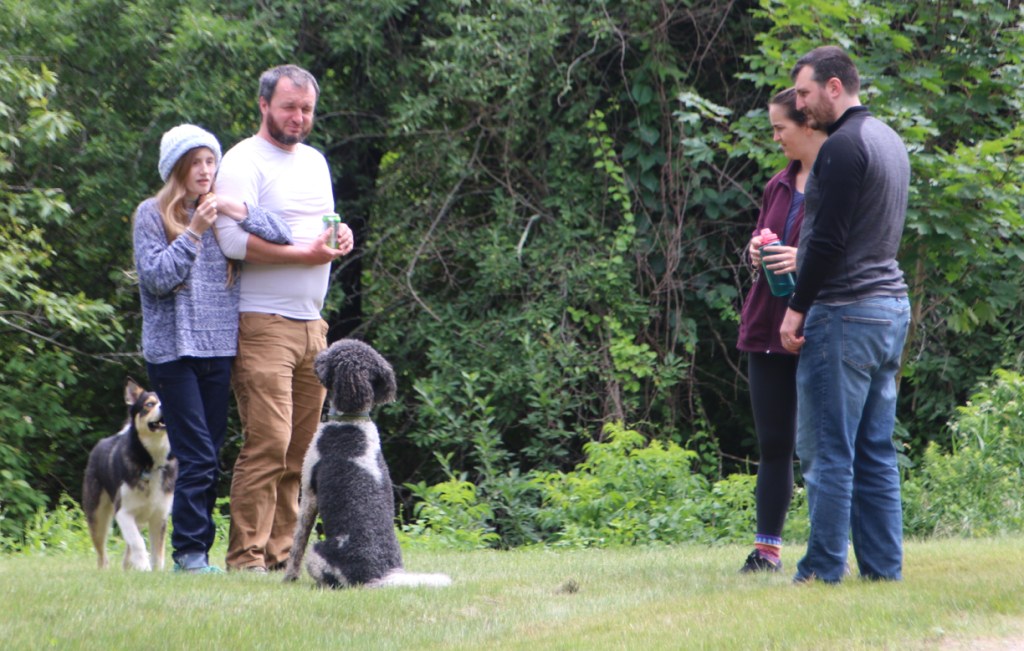
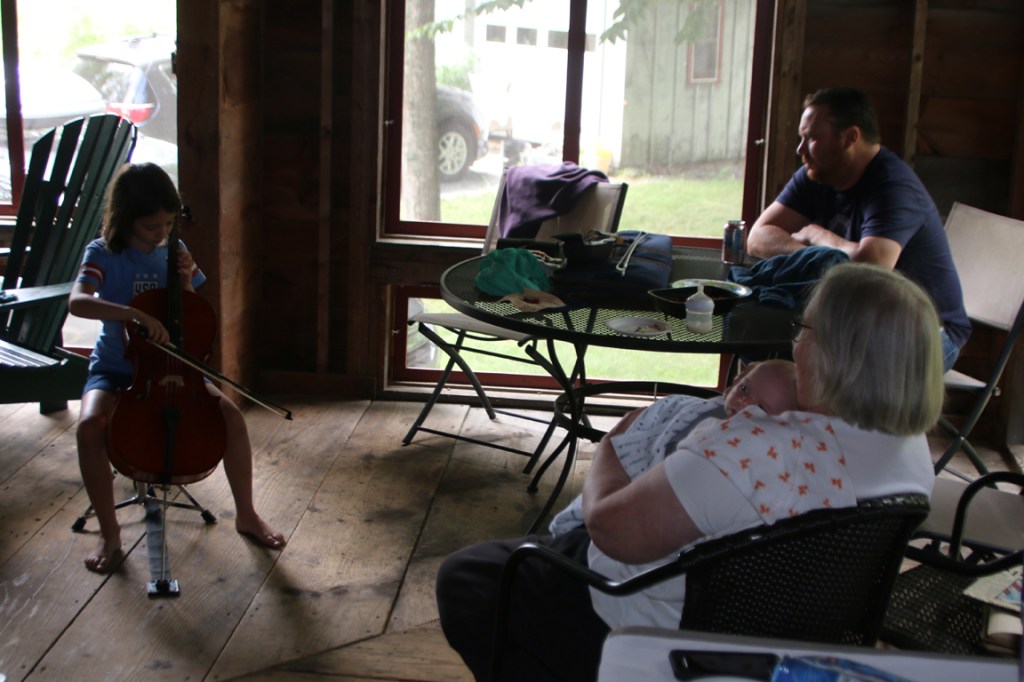
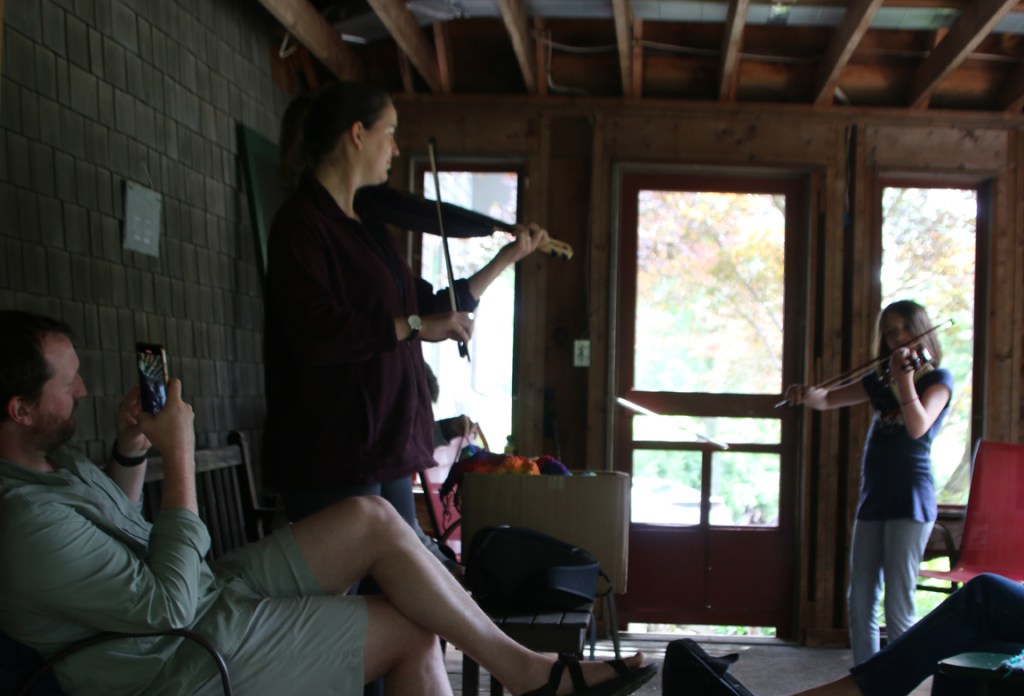
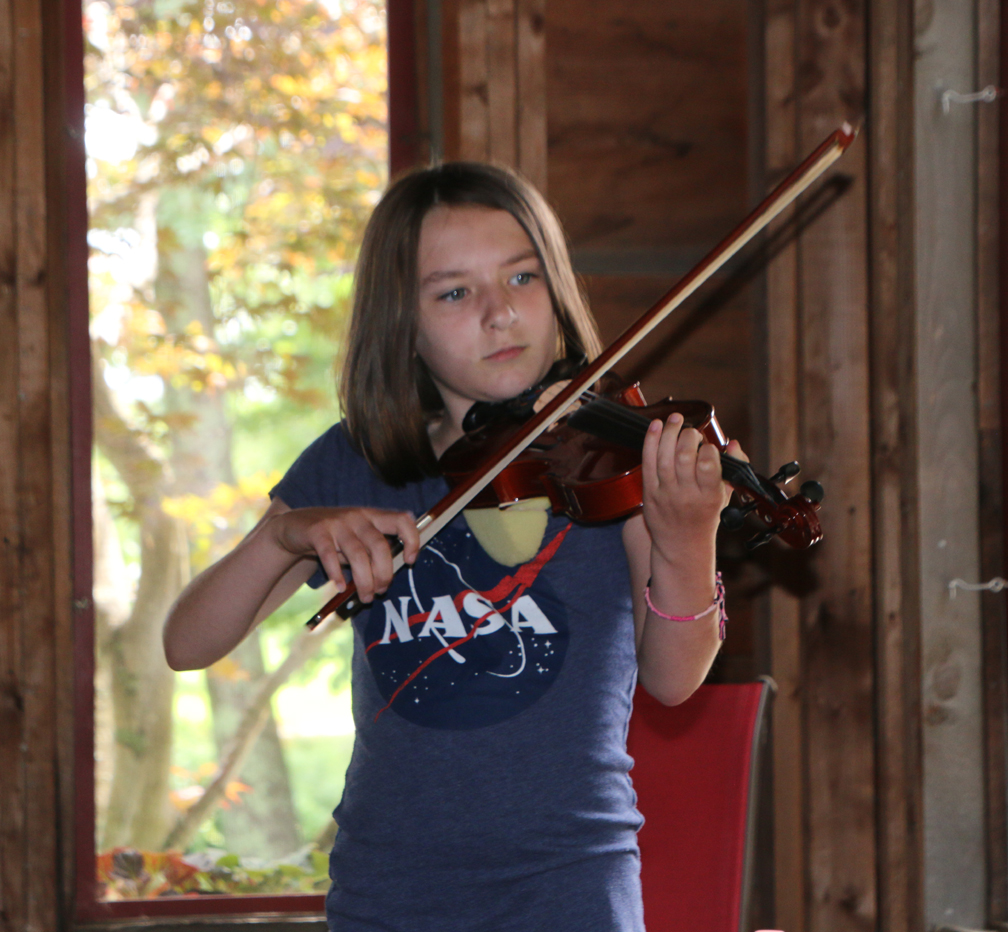
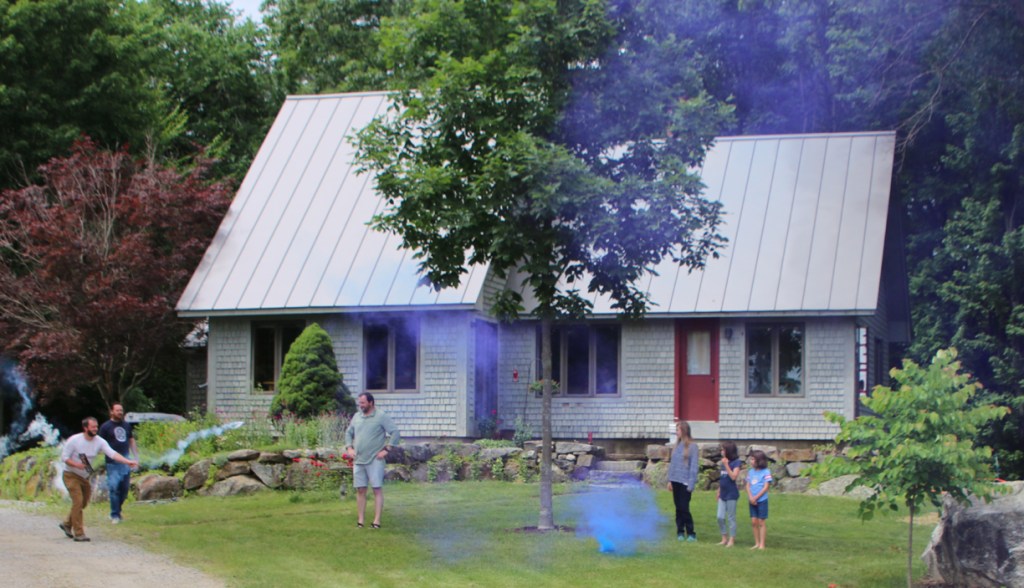
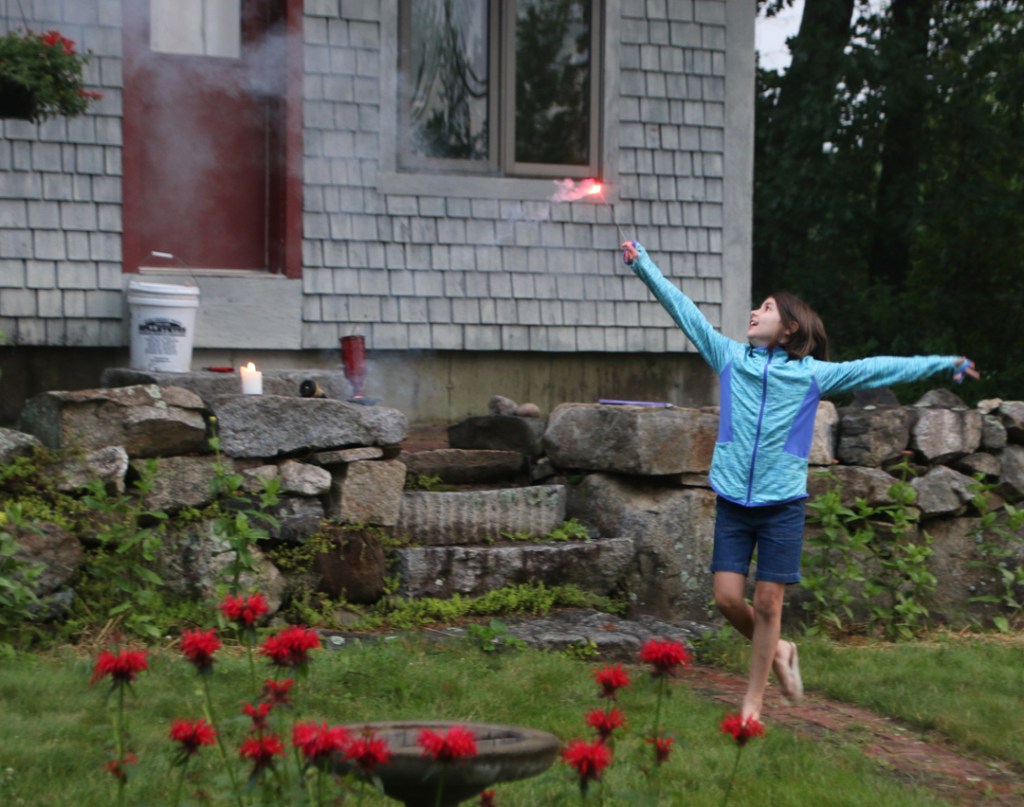
Here are some photos from this year’s Fourth. It wouldn’t be a Fourth in Contoocook without some stringed instruments, would it?
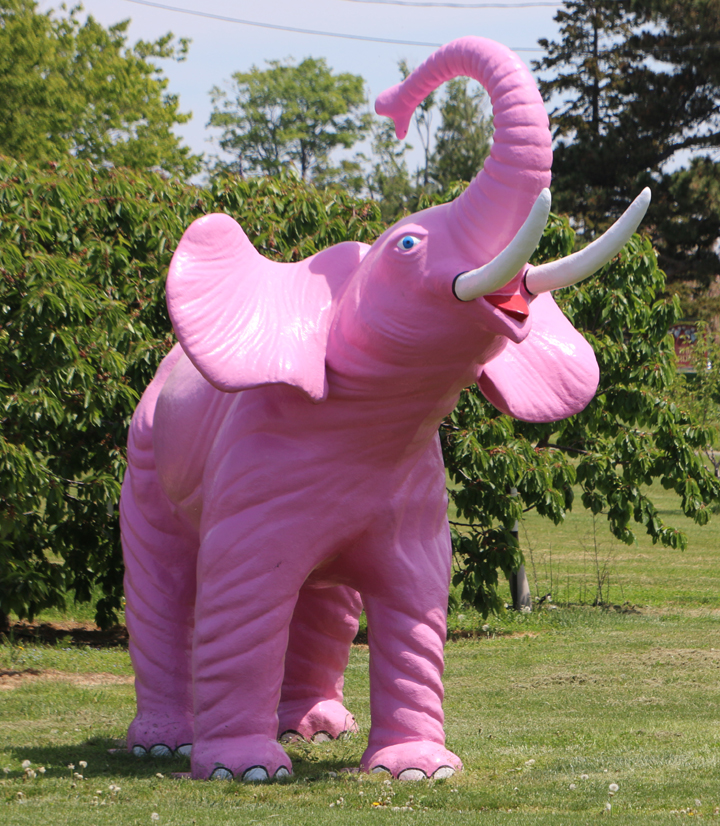
Dubbed Ella, this statue was acquired by 21 Brix Winery in Portland, NY, way back in 2011, and placed at the entrance to the parking lot on Highway 20 to make it easier for customers to find the place.
She was originally grey, and the plan was to paint her a different hue every few months. Before she became pink she was yellow, to match the winery’s grape harvester.
In 2012, however, the winery launched a pink catawba wine and ran a naming contest for it on Facebook. “Ellatawba” was the winner.
Ella went in for a paint job, came out pink, and has been pink ever since!
I ran into a baby boom over at John Prince Park on one of my paddling trips the other day.
This large county park, real close to my house in Lantana, FL, has always been my year-round, go-to spot for birds, but it was only last spring, when Covid kept me pinned in Florida year-round for the first time since I’d retired, that I realized it was also a pretty good nesting spot in April and May.
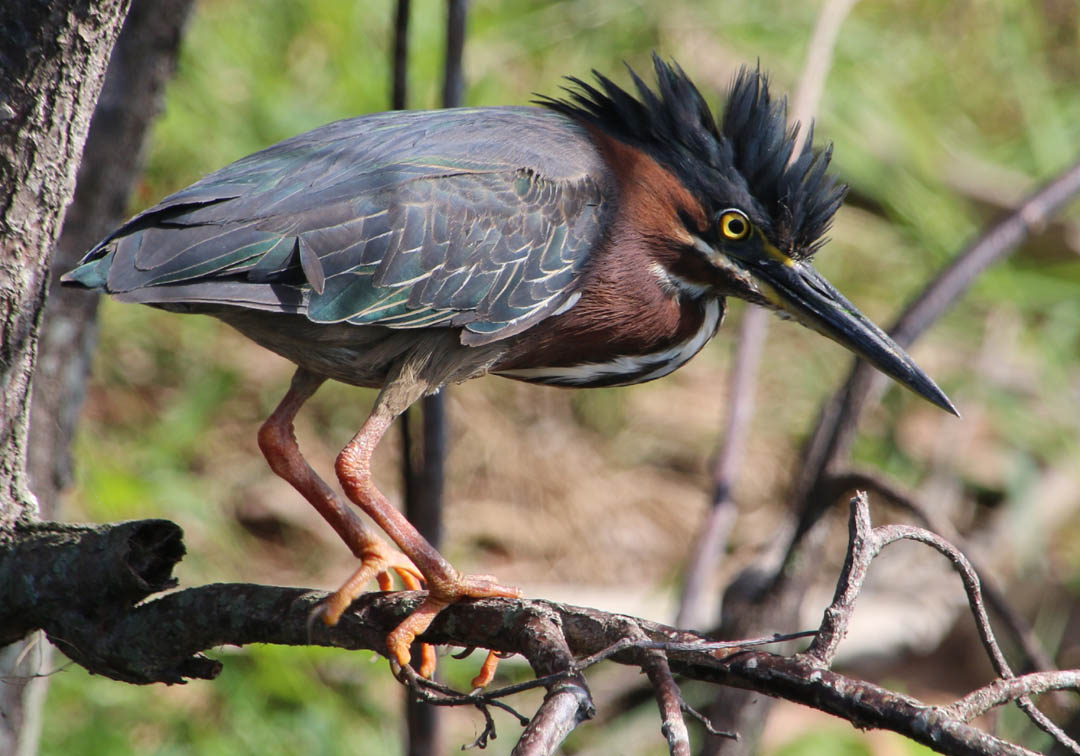
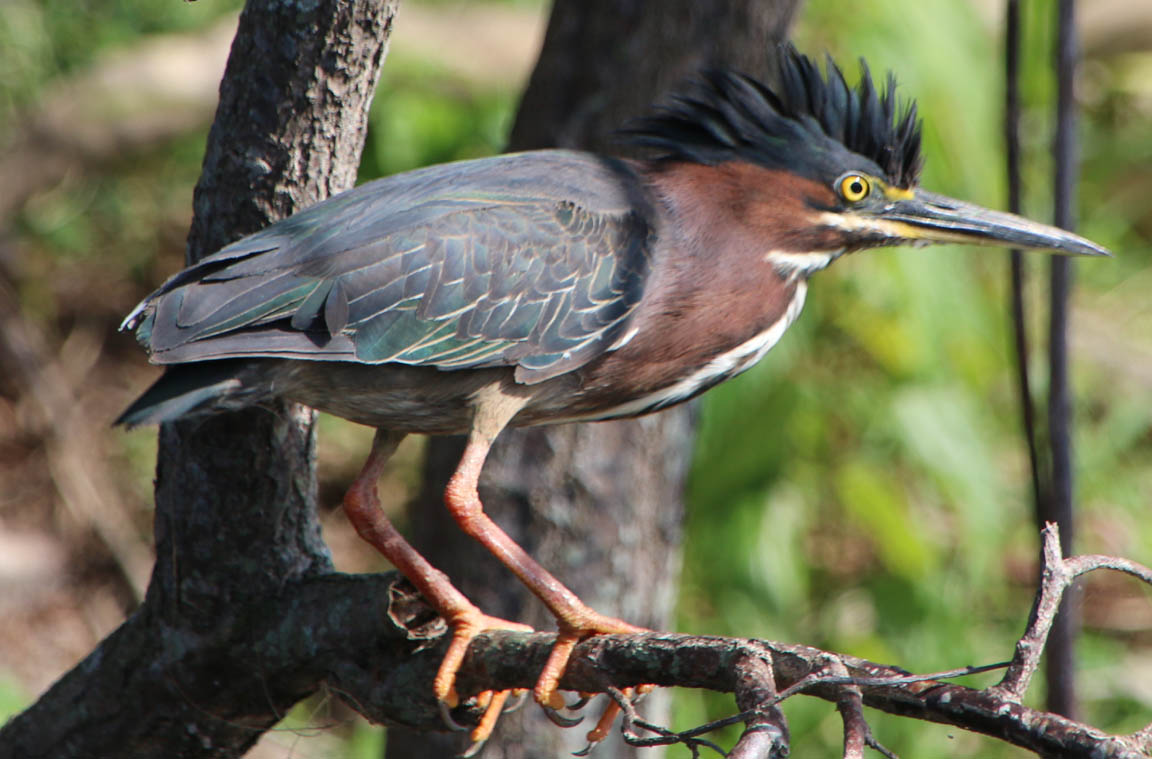
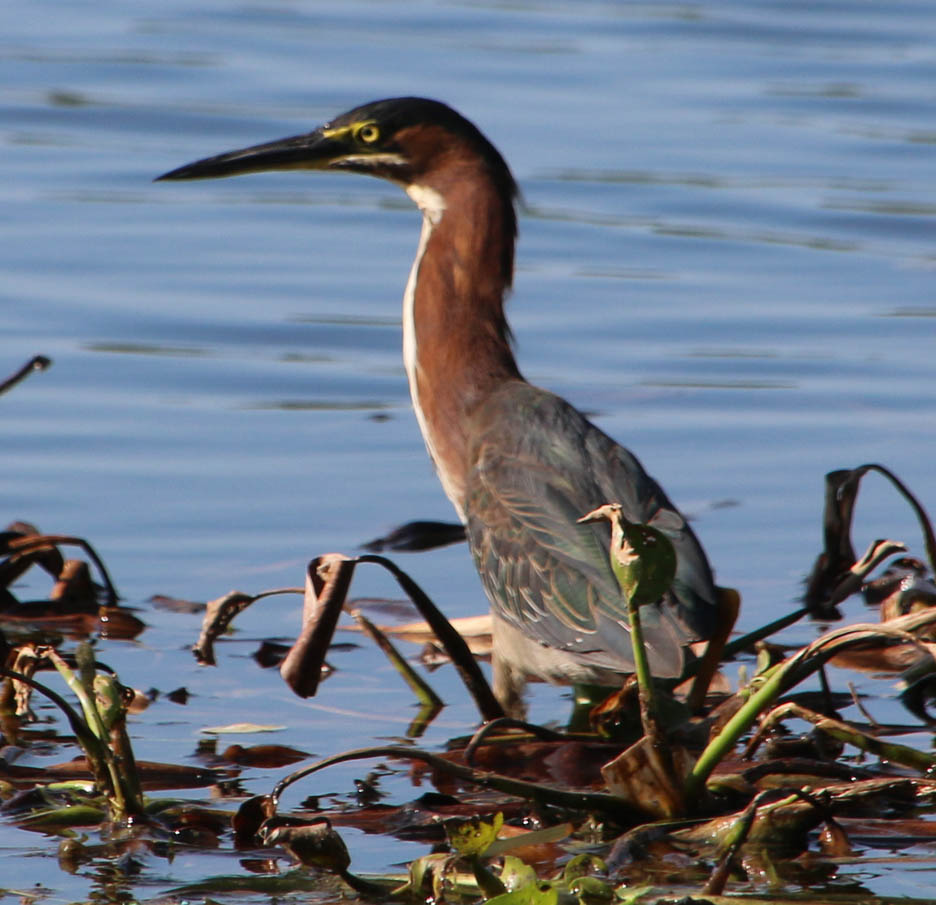
Last spring I discovered a bunch of baby green heron hanging out around the dead-end lagoon over close to Congress Avenue and JFK hospital. There aren’t any babies visible back there yet this year, but judging from the amount of adults I saw last week there should be a bumper crop of green heron young coming along soon.
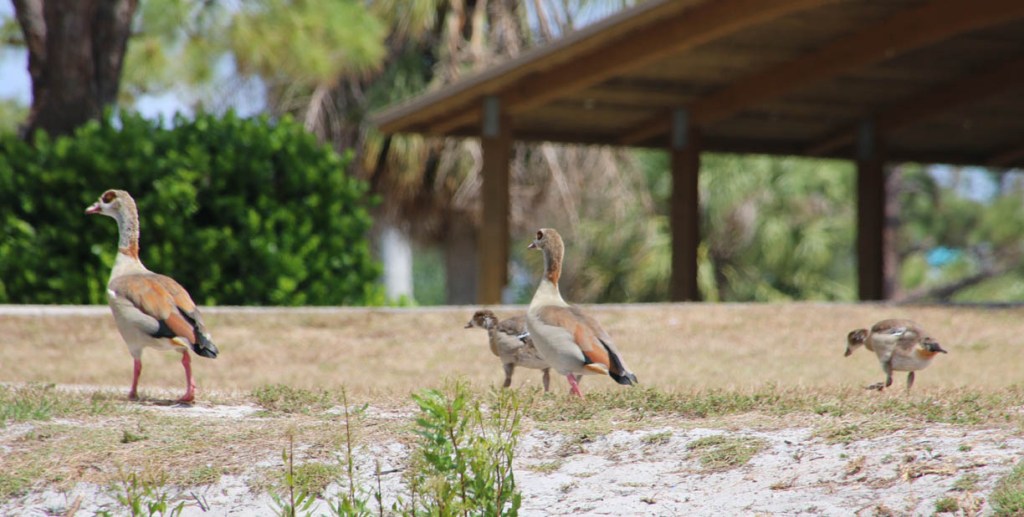
But back to the babies that are there now. On the boring, mundane side there was this family of Egyptian geese. See more about these geese here.
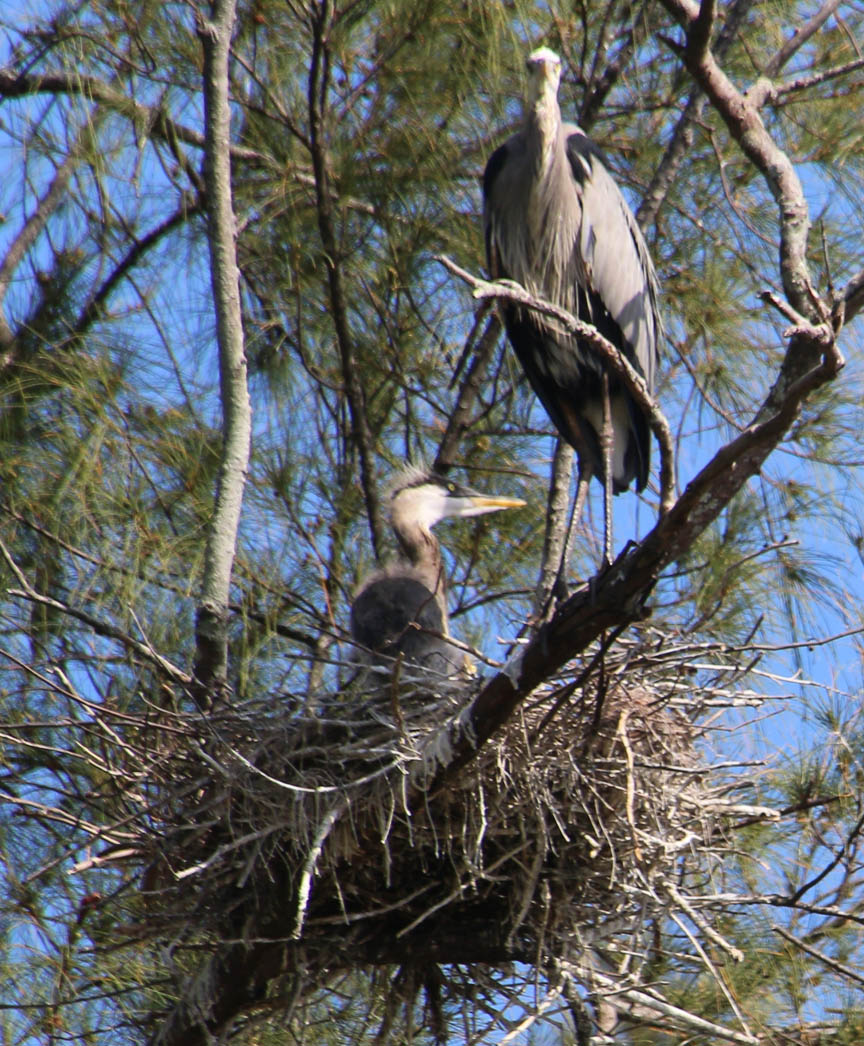
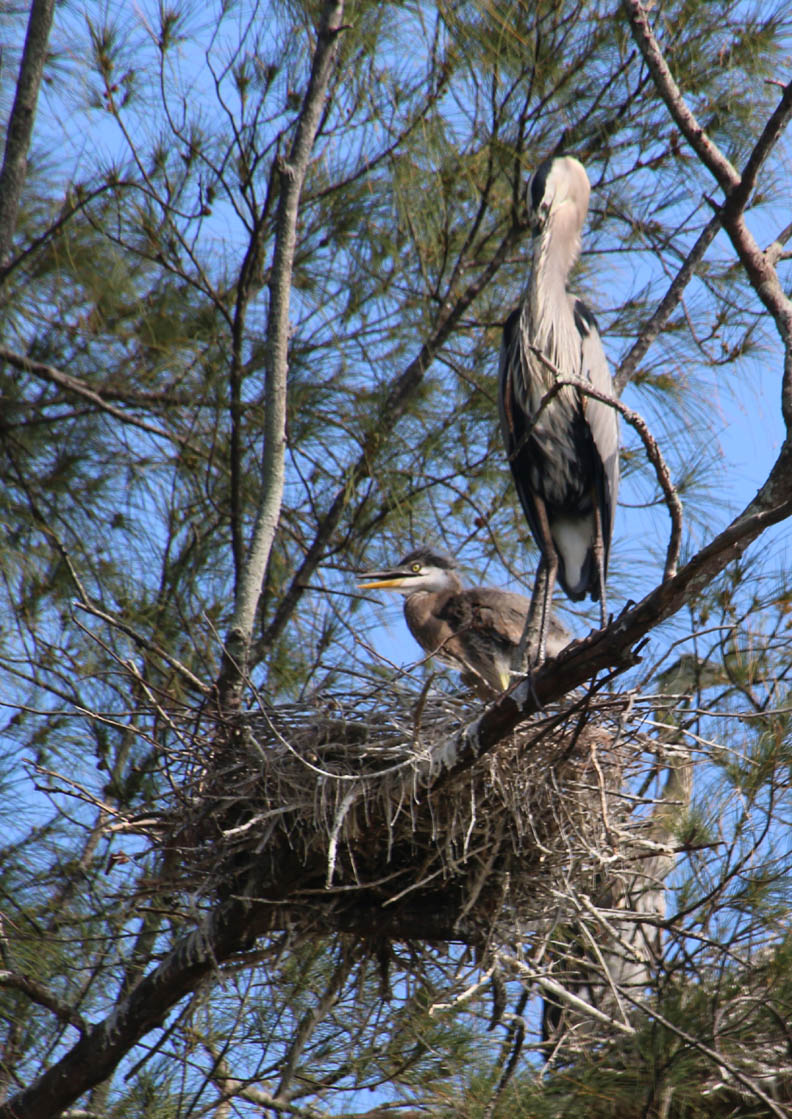
More exciting to me were the large nests in the tall Australian pines lining the water south of the Sixth Avenue South bridge. I had looked up there to watch the pelicans that usually roost precariously on the thin branches with their webbed feet.
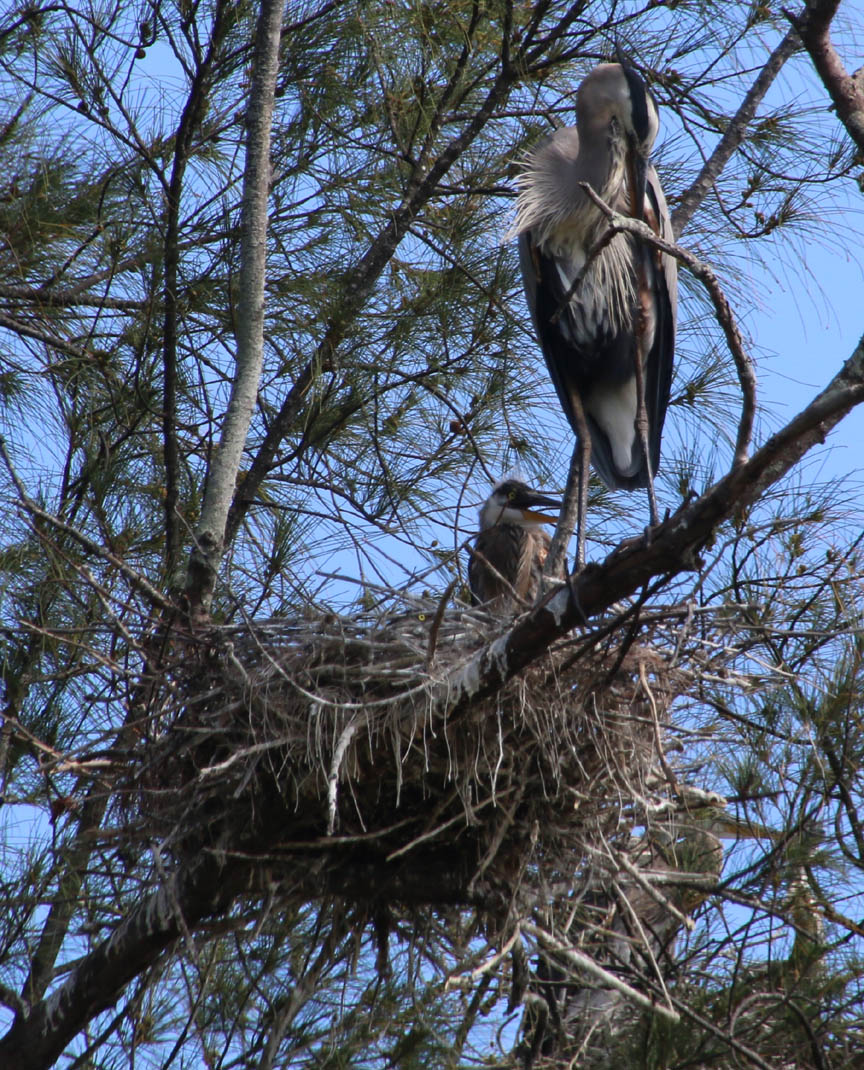
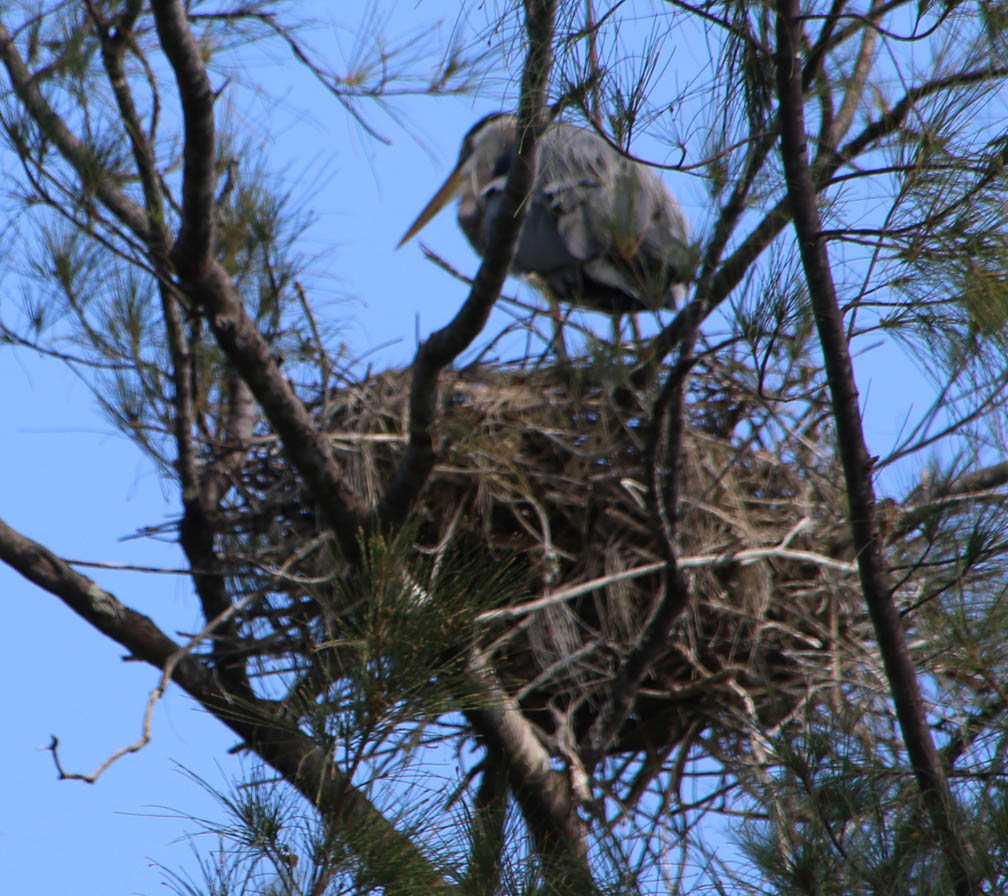
Looking closer I realize there were blue heron adults on two of the nests and in one there was a baby or two. This is the first time I’ve seen blue heron nesting in the park. I’d seen blue heron scrounging for nesting material in the tiny patch of scrubby land next to my house several weeks ago but until now didn’t know where the nest building was happening. (Just click on any photo to scroll through the larger images)
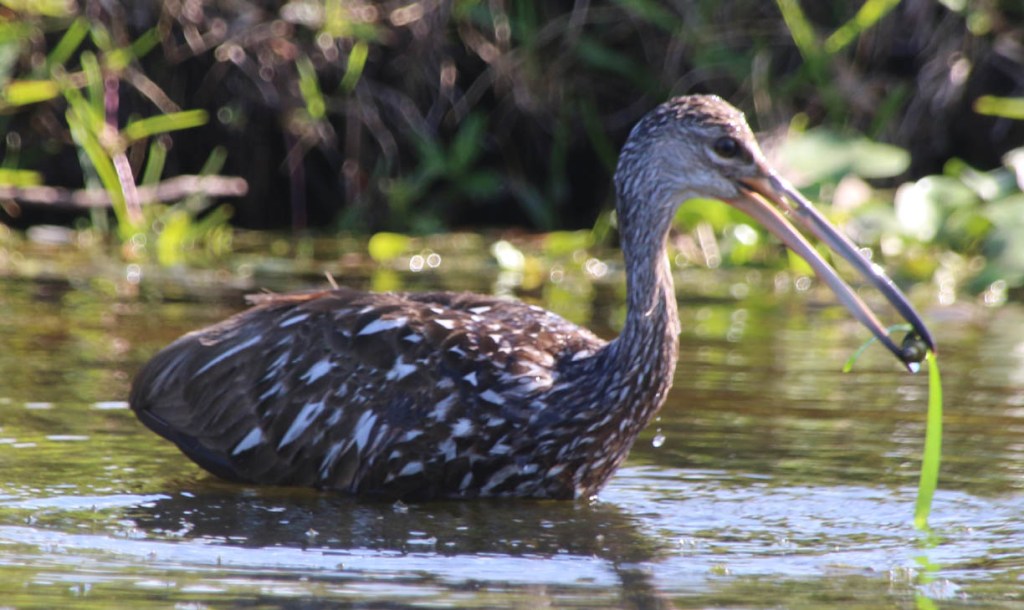
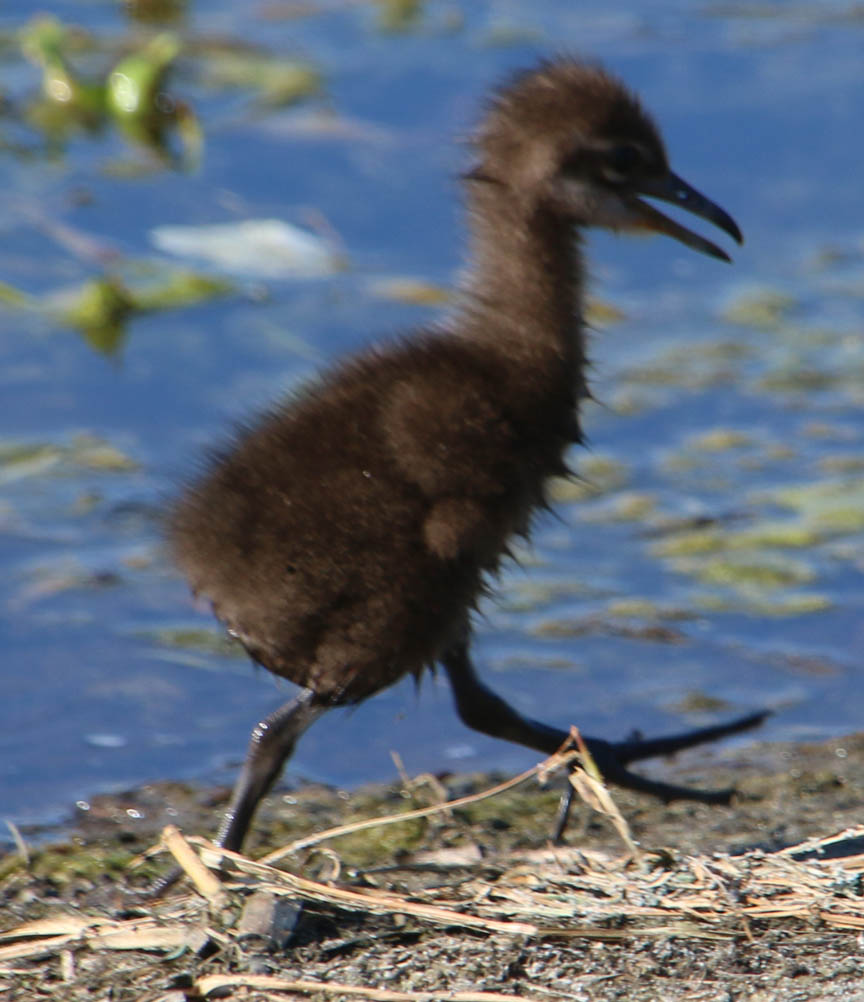
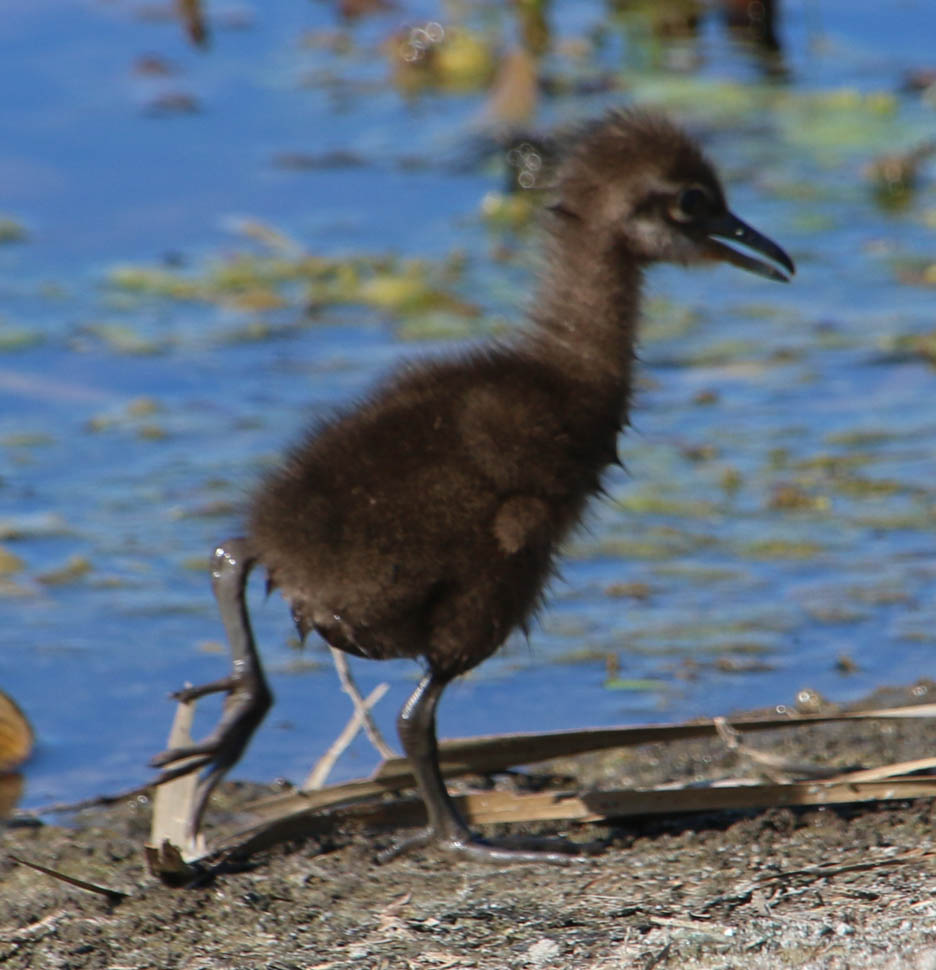
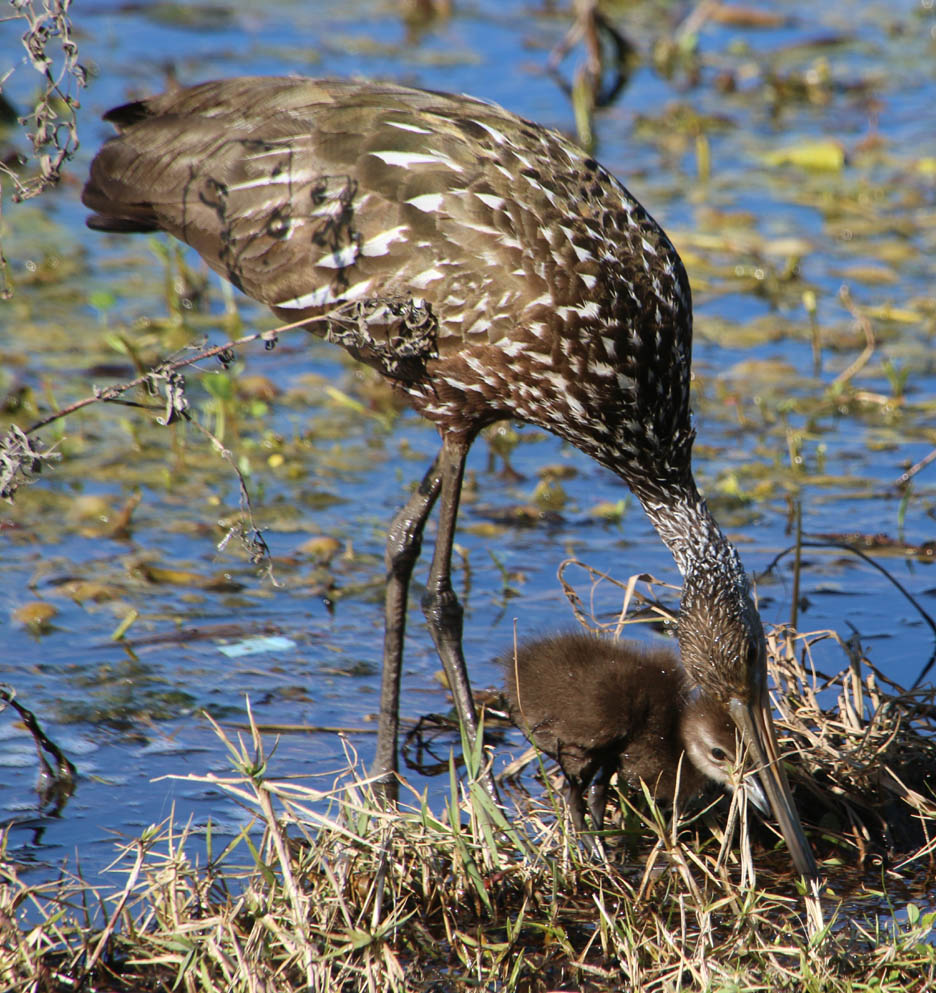
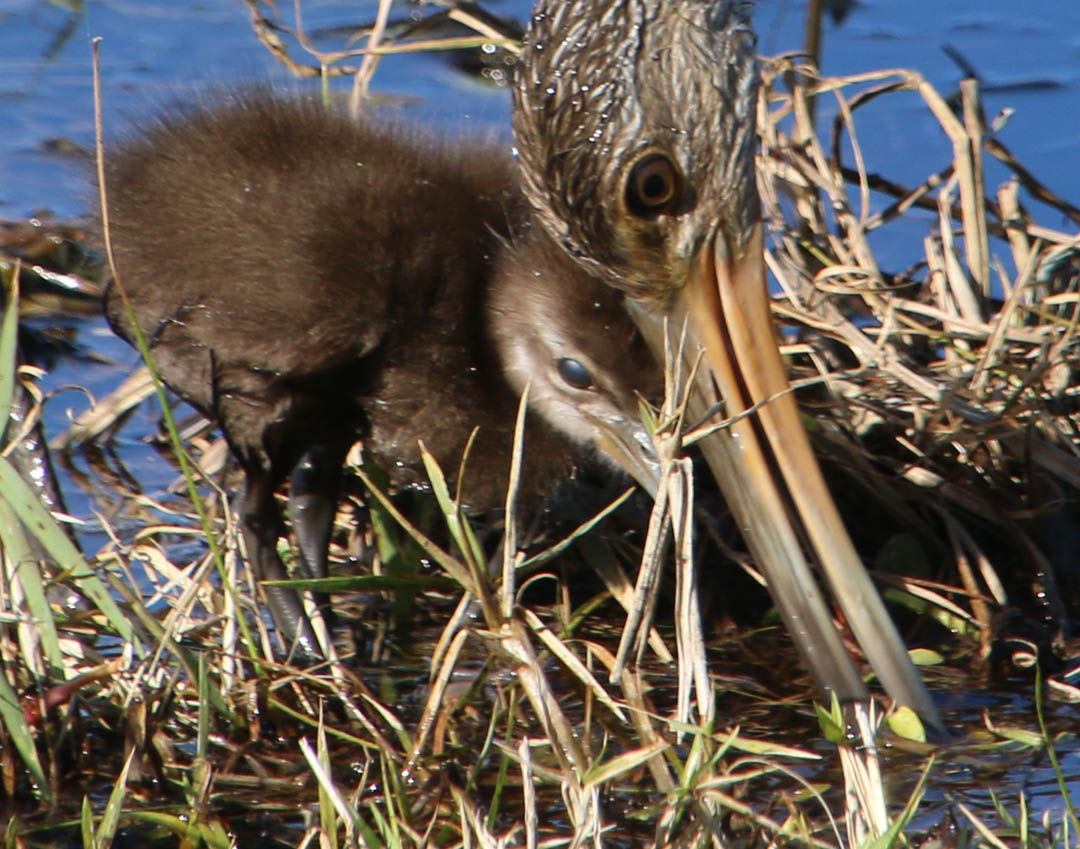
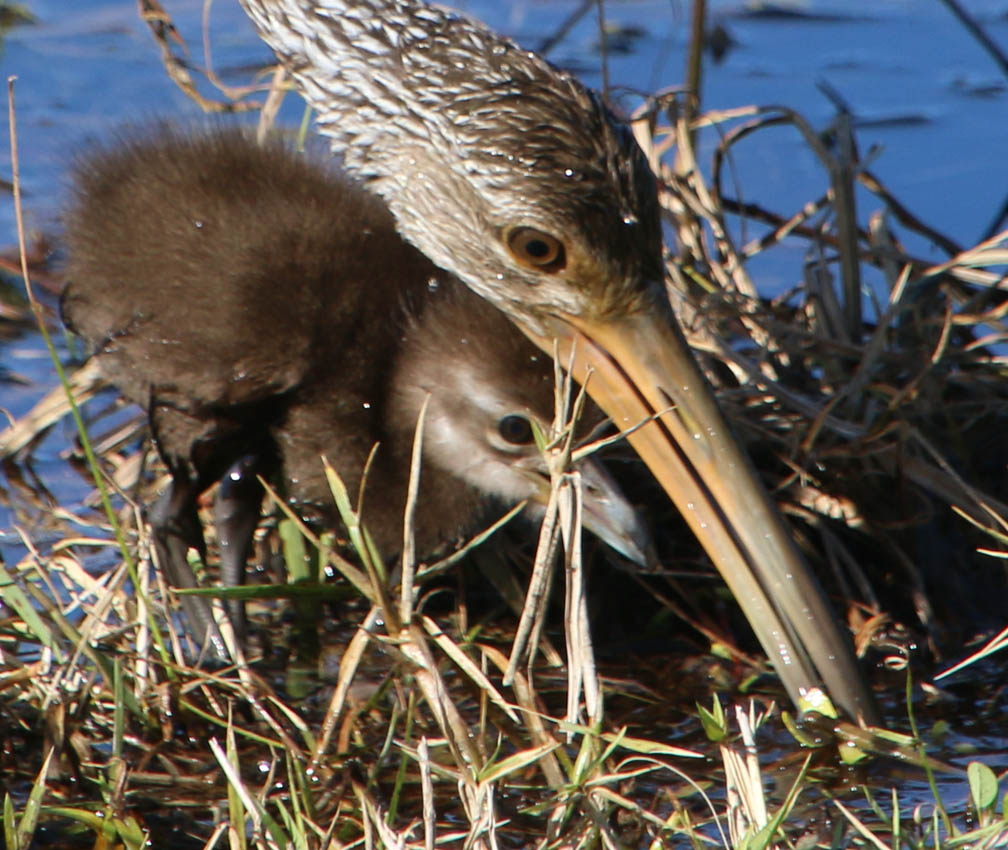
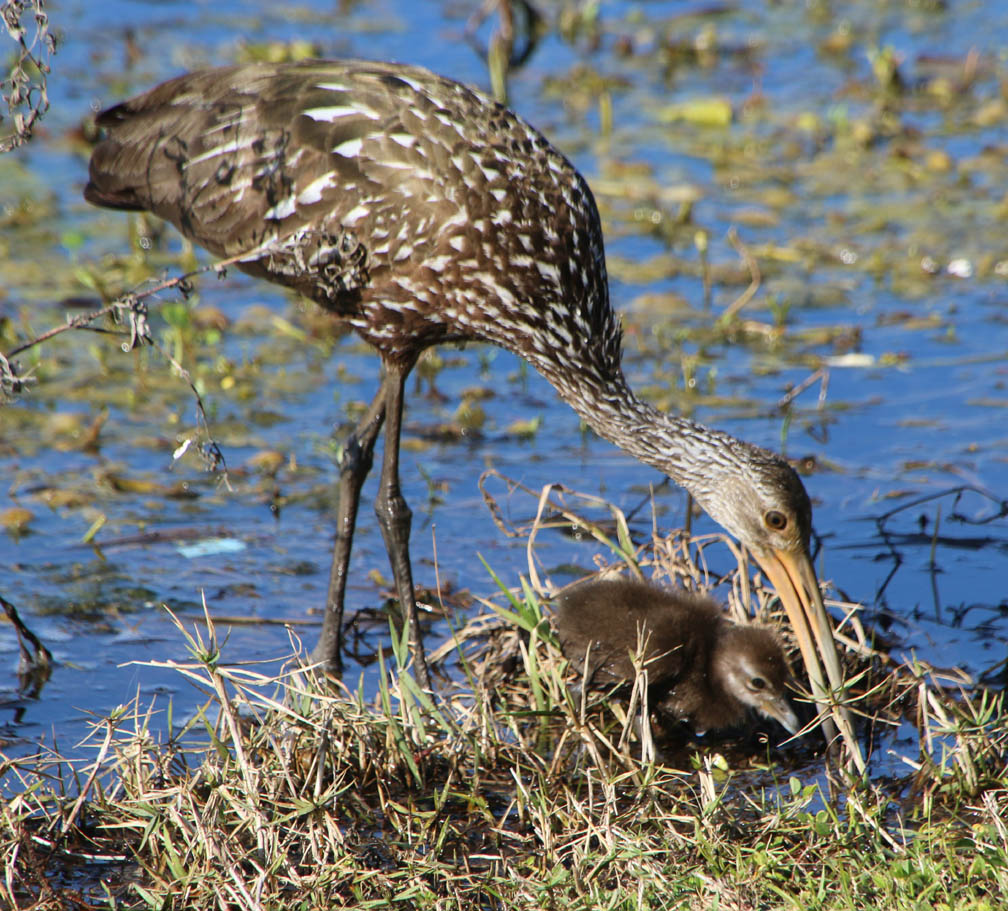
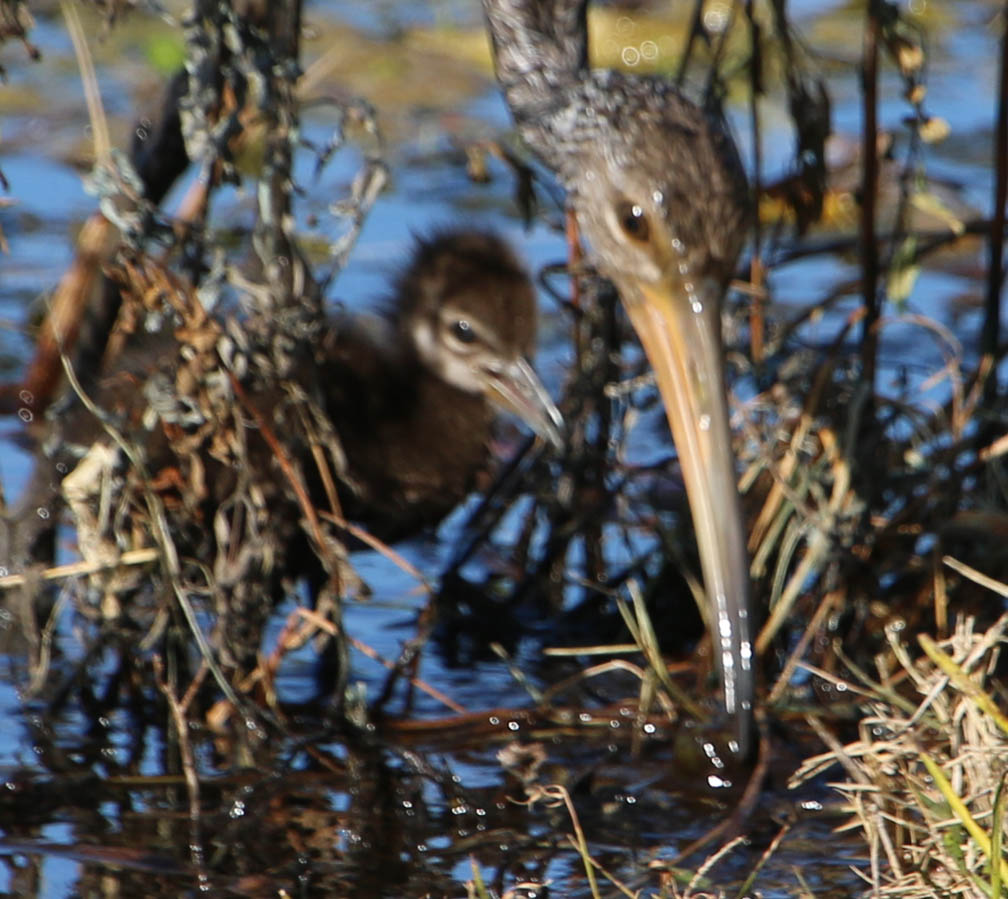
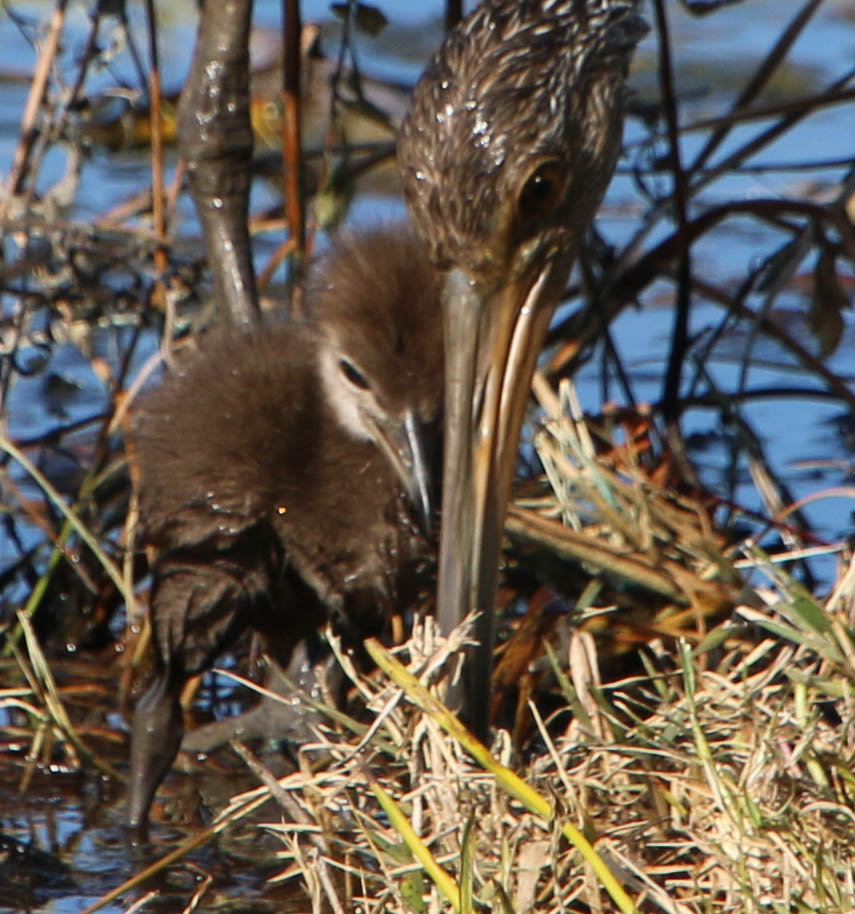
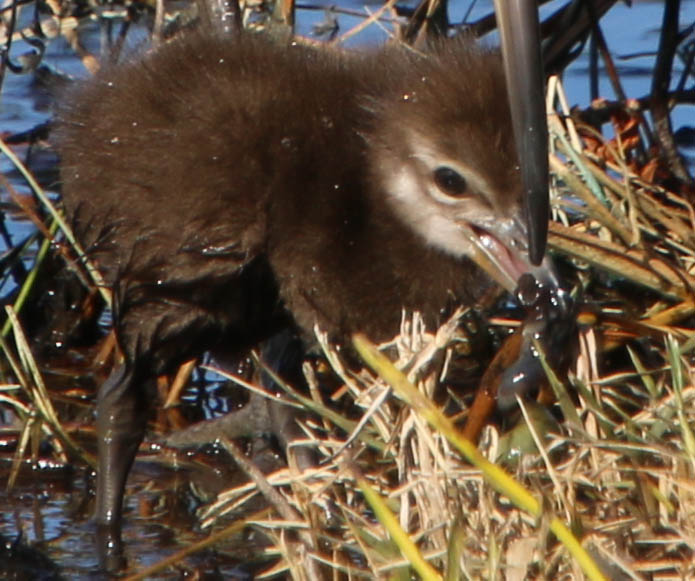
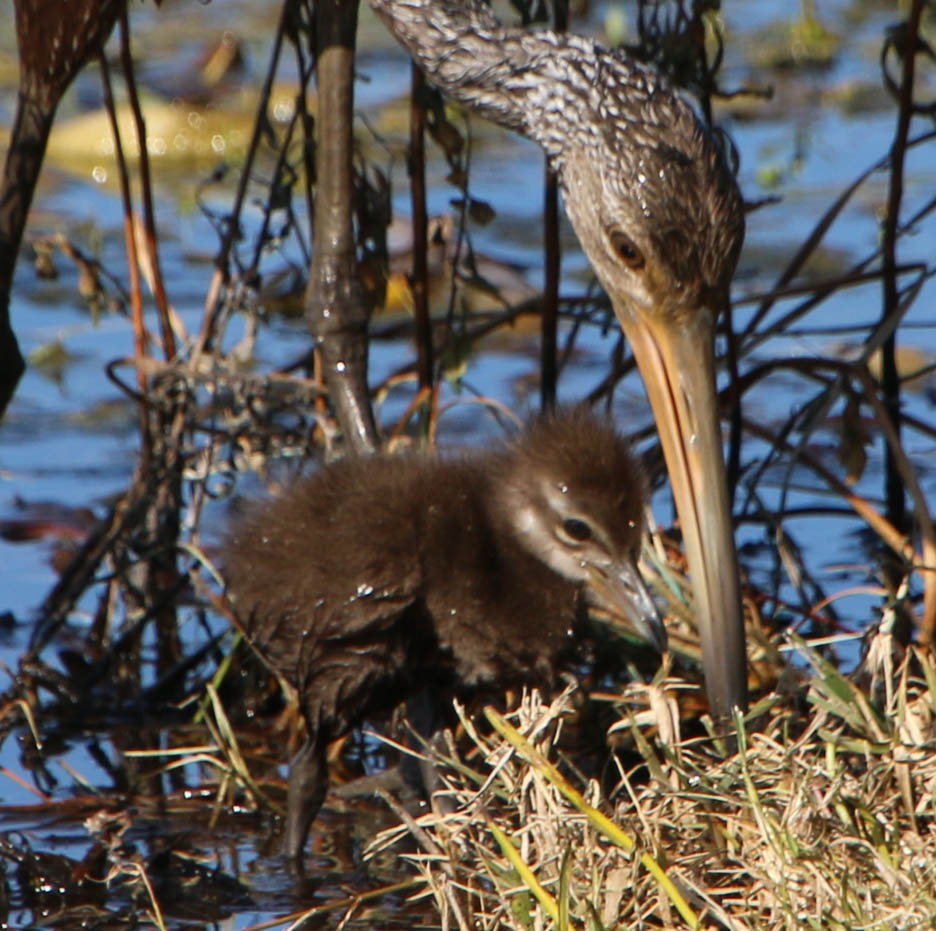
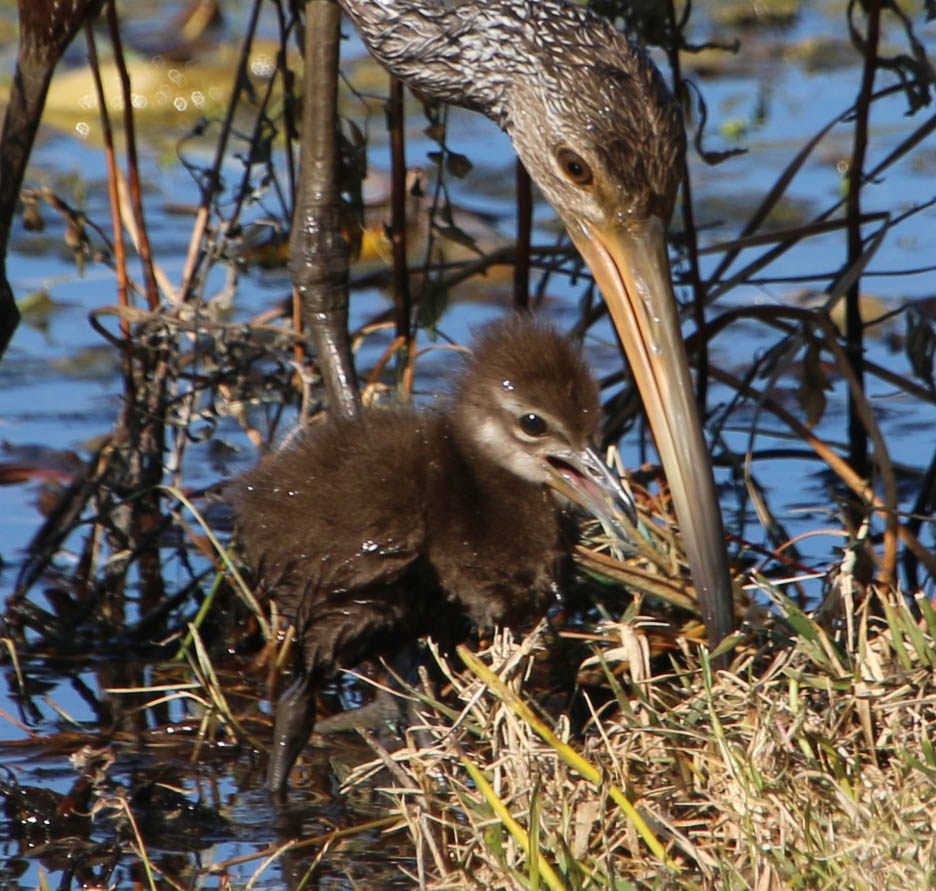
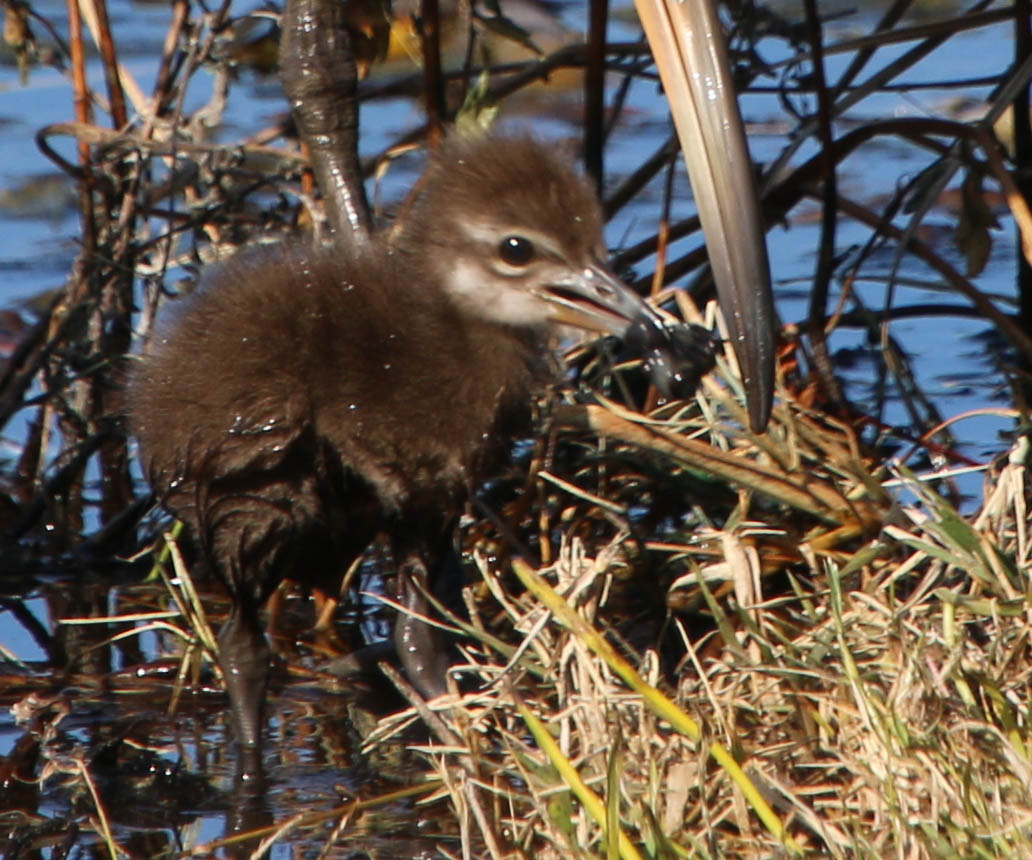
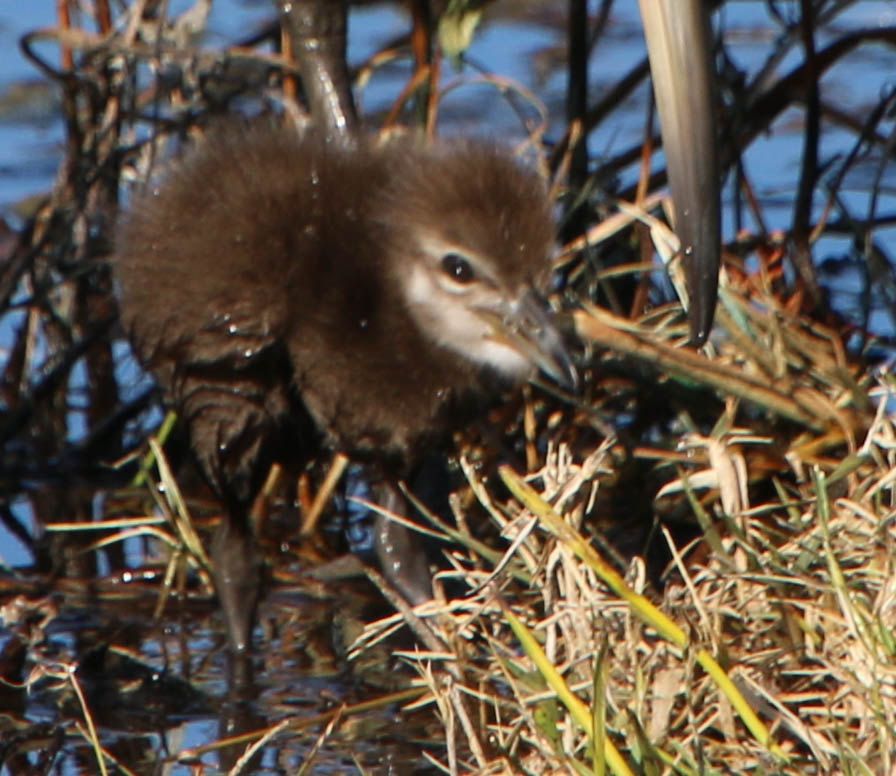
Even more fun were the limpkin babies. I’ve seen babies around in previous years, even in my backyard, but I was lucky enough to see a youngster being fed. Limpkins feed mainly on snails, which they find by pushing their beaks around into the bottom in shallow water.
In this instance, the baby would wait on the shoreline while the adult went wading out to find food. The adult brought the snail back to the shore, extracted the meat of the snail and gave it to the youngster.
I’d like to say I hid in the shallows in my canoe for days, subsisting on crackers and water and peeing in a jar, to get these photos, but the reality is that I was loading the canoe on the car, walked around to the back to get some rope and there they were, fifteen feet away. Sitting limpkins so to speak.
Here’s a shot of an adult limpkin with a small snail (and a bit of weed stuck to it):
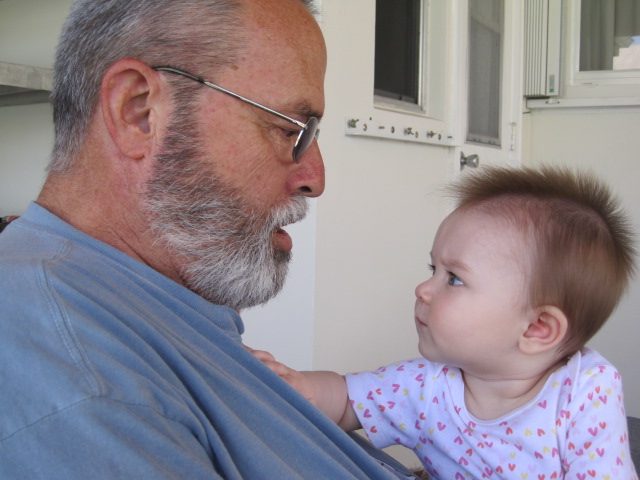
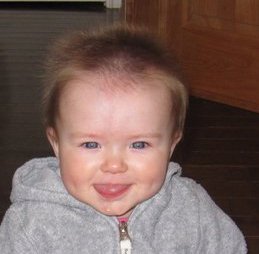
And here’s a couple photos of a baby limpkin. Coincidentally, baby limpkins go through the same frizzy phase my granddaughter Margeaux went through about ten years ago, so I’ve tossed in some photos of that.
In the gallery below are some up close and personal shots of adult and baby. This is what happened every time the adult returned to the shore with a snail. The baby kept an eagle eye on the adult’s beak as it extracted the meat of the snail and passed it off to the baby. The snail itself is down in the grass and not visible, but in a couple of the photos you can see the snail meat in the baby’s mouth. Click on any image and you can scroll through the larger versions of all of them.
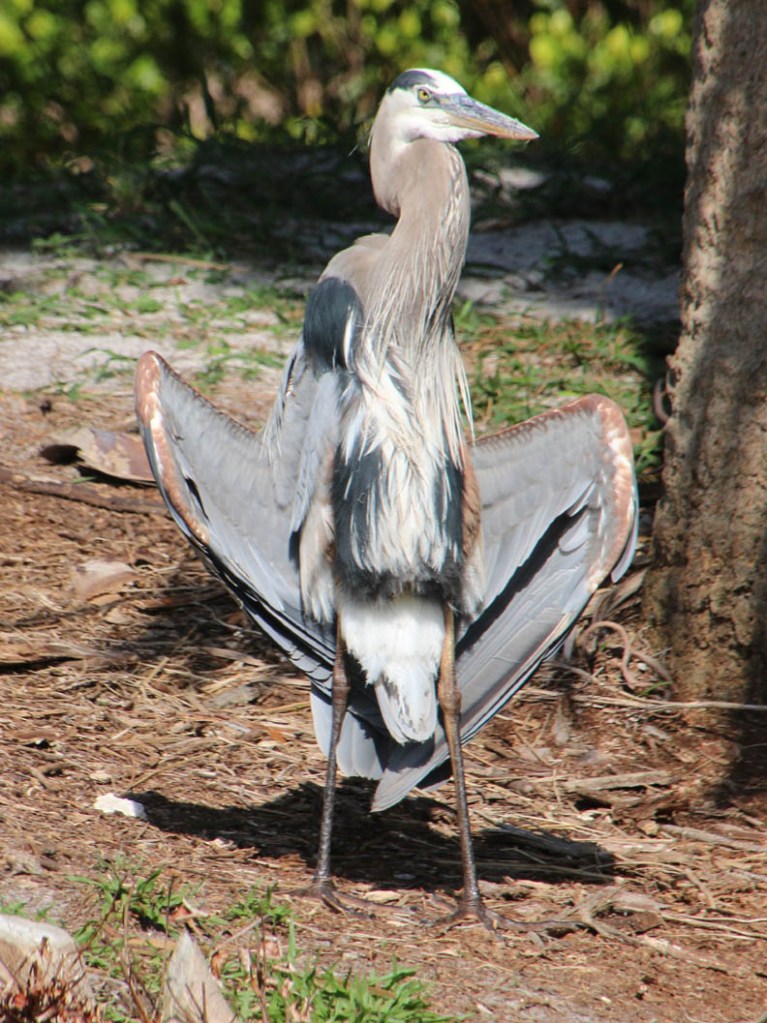
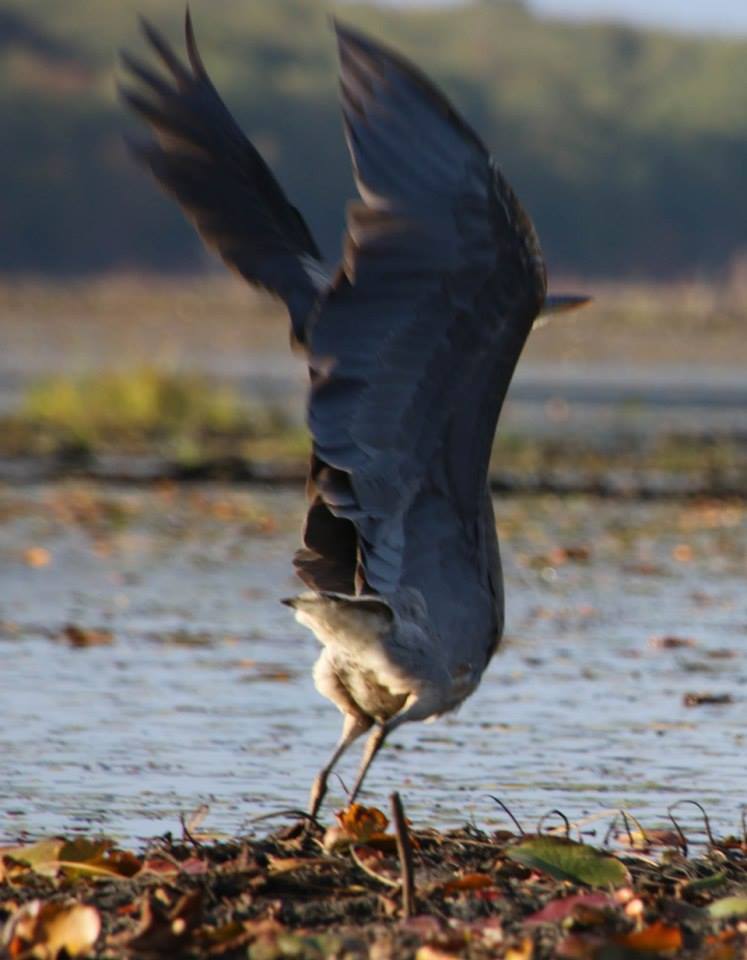
And, finally, we saw a flasher in the park. I’ve been mooned by a blue heron before (photo included below) but this flashing was a first.
OOPS. I’ve forgotten to include some photos of the green heron over at the park who I hope are busy getting ready to have babies. Here they are:
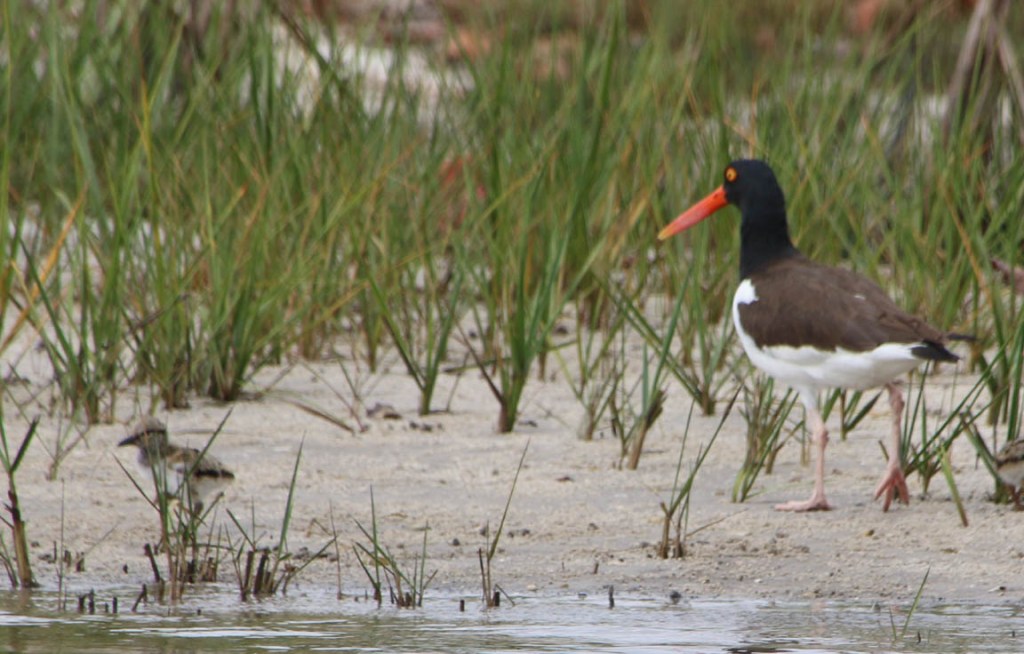
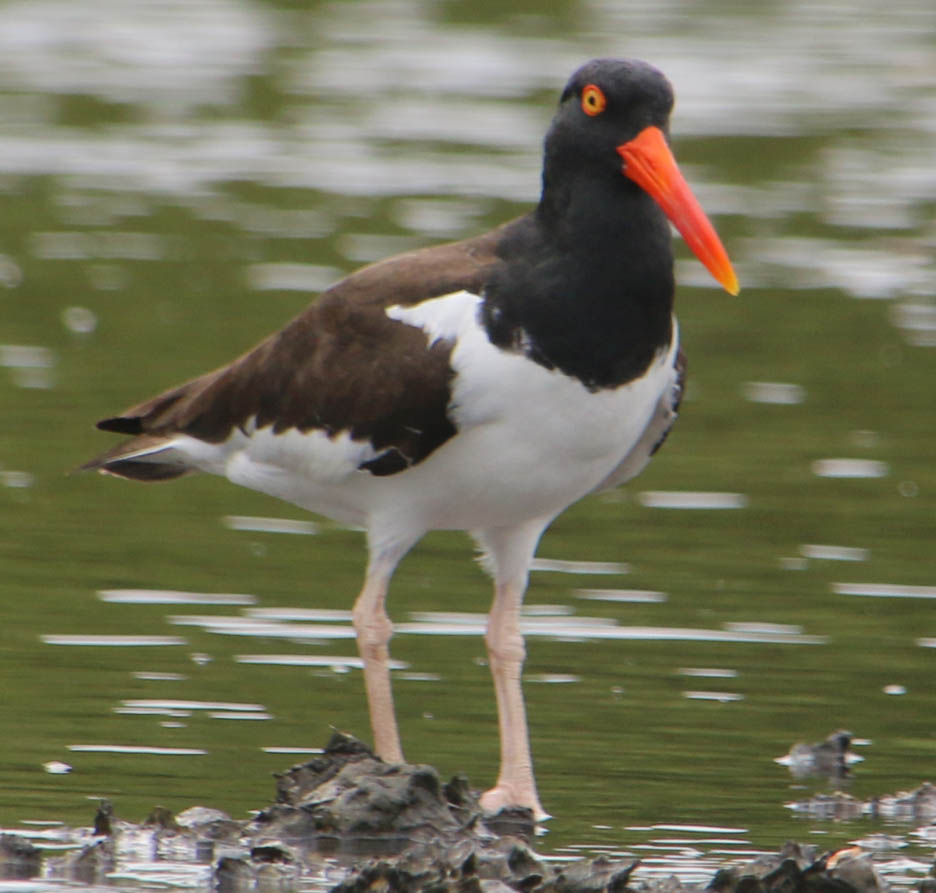
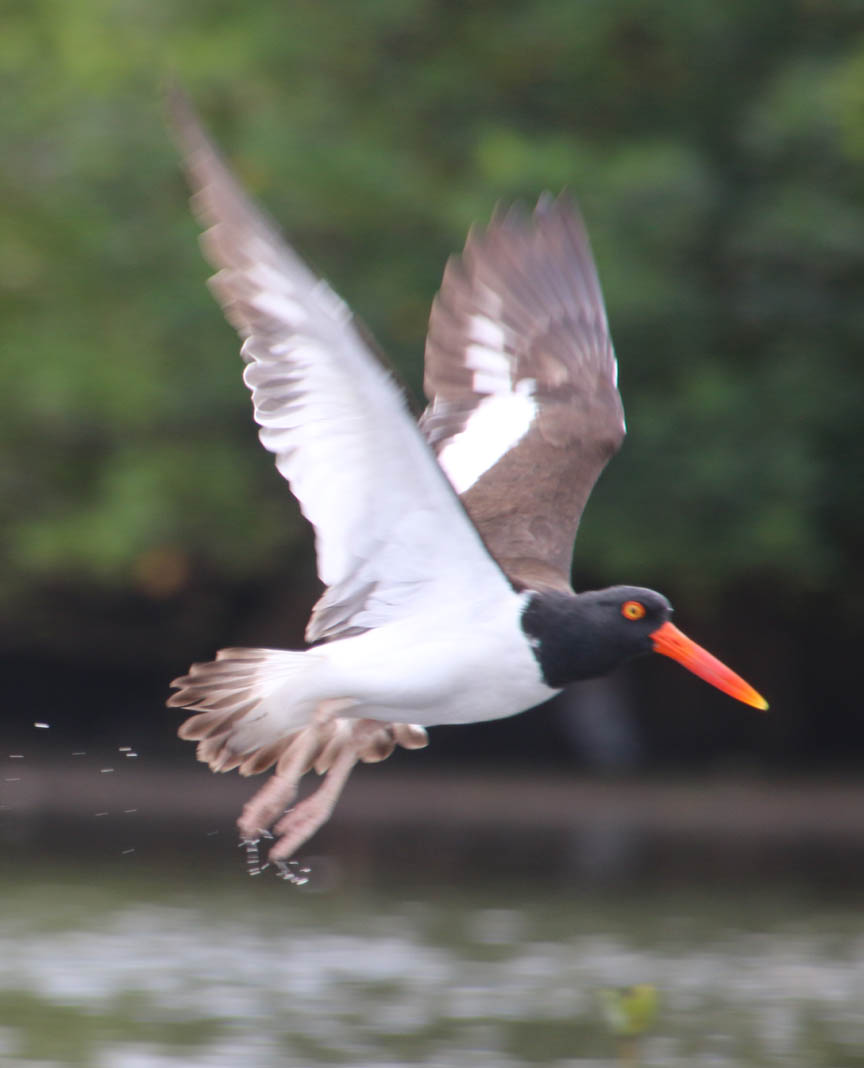
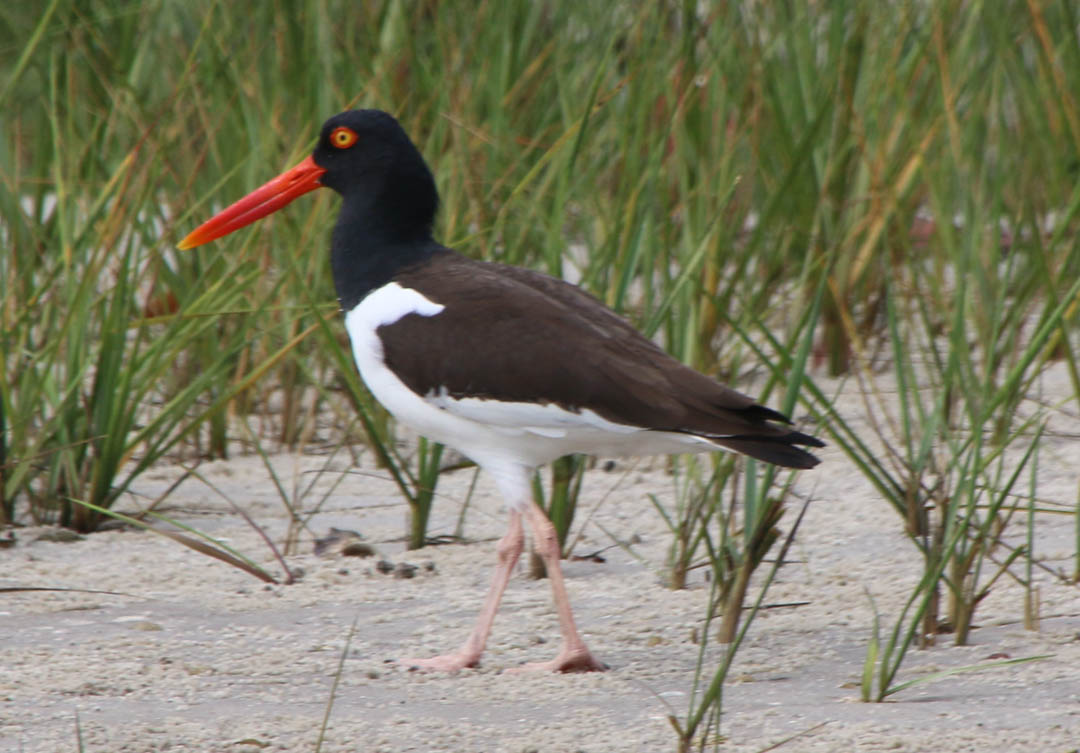
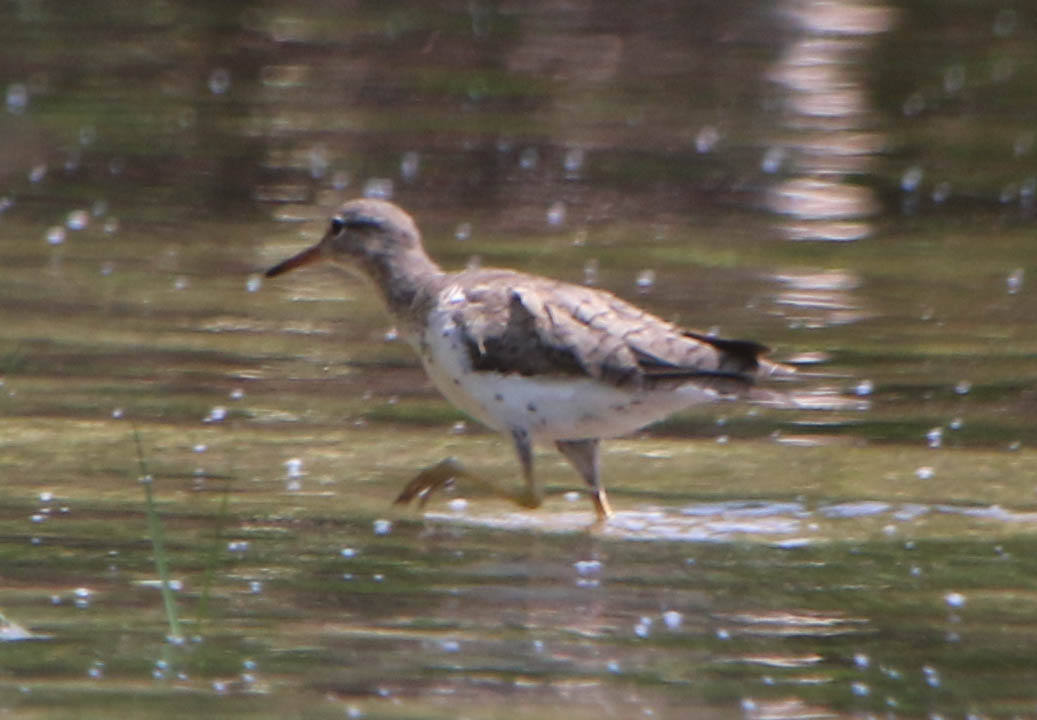
But let’s continue the baby theme, in a different locale, I spotted a baby American oystercatcher a couple days ago with an adult on one of the islands along the eastern shore of the intercoastal south of the Lake Worth Bridge. There were two babies, but they scattered to the weeds really fast and this was the only shot I got. Following is a gallery of some of the other shots of the day.
American Oystercatcher and offspring (Photo by Ron Haines)
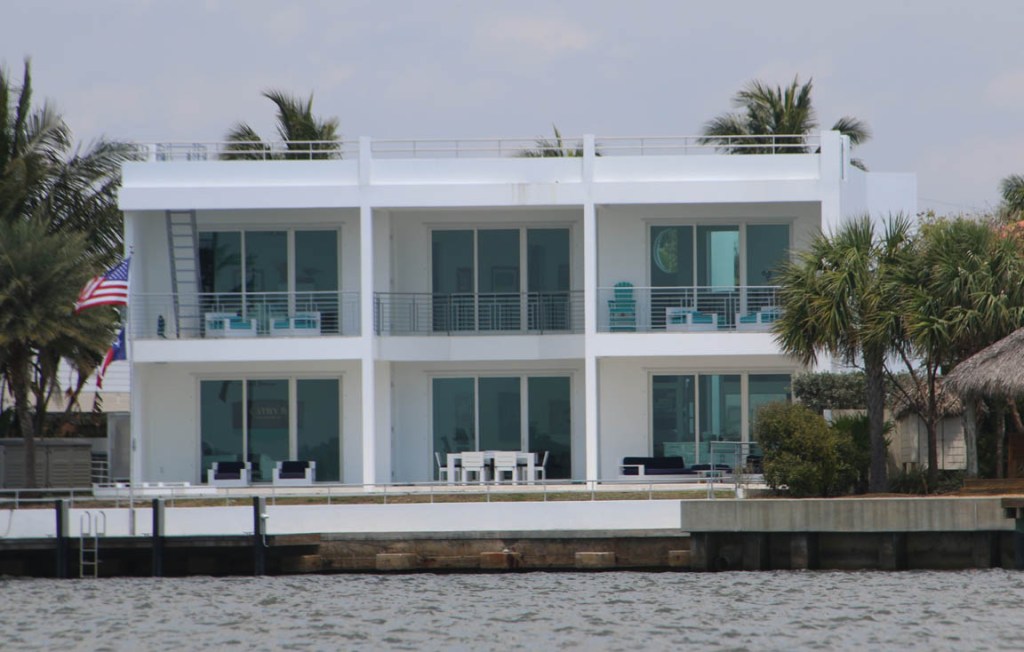
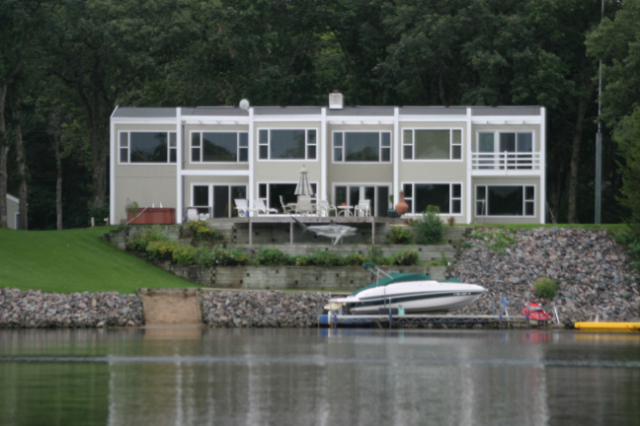
And finally, the house below on the western shoreline caught my eye. I had seen one like it on my trip down the Mississippi River in 2003, north of Minneapolis.
So I found that 2003 photo in my files. Here it is, with the photo of the West Palm house. Very close design, different sizes.
House along the intercoastal in West Palm Beach on left and a similar house along the Mississippi River in Minnesota. (Photos by Ron Haines)
























 The Urge to be Someplace Else