Six days on the road…and a new canoe to show for it

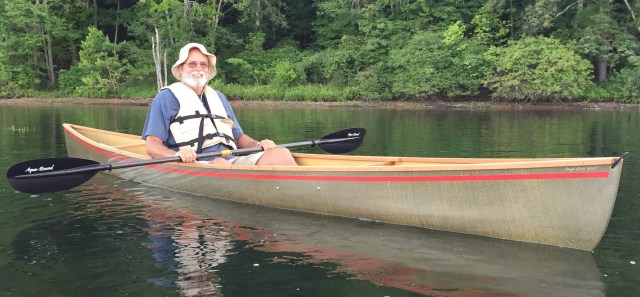
(UPDATES:  1. There is now a photo below of me in my new canoe.   2. Peter Hornbeck, who figured large in my new boat purchase, died in December of 2020.  His obituary.)

Ok, I really don’t have it yet, so can’t show you a photo. I’ll take possession in June.

It all started with the notion of getting a very light, solo canoe, one I could pick up with one hand and carry around. (But I’ll use two hands when I put it on top of the car.)

The problem is that as one gets older everything just weighs so much more!

When I canoed only once or twice a month, using a trailer to transport my 74-lb, 17-foot Grumman aluminum canoe and the 40-lb jug of water I have to use as ballast in the front of it when I solo, was fine. But now that I am paddling once or twice a week it has become tedious, along with the need to make sure I’ll have parking for the trailer and also a smooth path to the water so I can use the canoe cart if I can’t get the vehicle near the water.

And then there are the steep river banks. It’s simple to get a heavy canoe down to the water, just give it a push. Harder, though, to get it back up to the road. I am usually with other paddlers, so there is always help, but even with two or three people, lugging it back up through the woods is not the sort of thing I want to do at the end of a nice paddle.

So I decided to cash in all those chits I have from not getting myself a birthday present for the last 30 or so years and get something really light (loose translation: really expensive). I will keep the Grumman. We’ve have been together for thousands of miles since 1974. There’s no parting ways now. It’ll be relegated to trash trips and when I am carrying a passenger. And for sailing trips, of course.

I started my internet research into light solo canoes months ago, when I was in Florida. It didn’t take me long to realize South Florida is not the best place to shop for one. Nobody makes them there. Nobody sells them there.

The Northeast, however, is a different story. Here in Connecticut there’s at least one major retailer selling lightweight solos, and a few hours away in upstate New York there are people who have been making them for decades. Canton is the home of famed, turn of the century designer J. Henry Rushton. The Adirondack Pack Canoe and its derivatives were born and raised there, special craft made light enough to carry around with ease on portages.

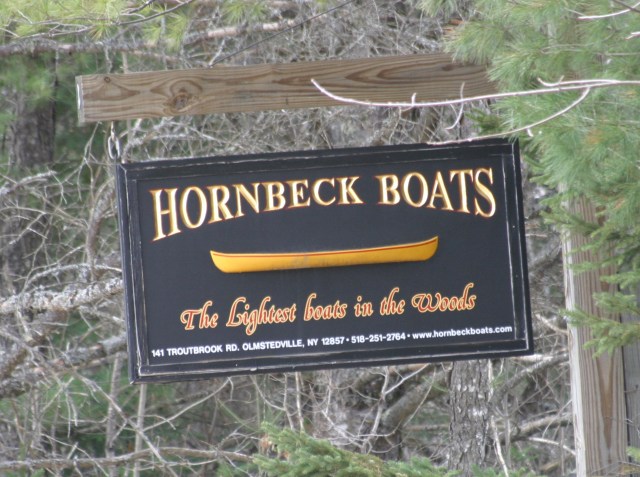
In six days of traveling, shopping and test-paddling in New York I visited Hemlock Boat Works in Hemlock, Hornbeck Boats in Olmstedville, and Placid Boat Works in Lake Placid. In addition to those three brands, I went to Oak Orchard Canoe and Kayak in Waterport, the 2015 Saratoga Springs Paddlefest and Collinsville Canoe and Kayak in Collinsville, CT, to take a look at Swift, Wenonah, Slipstream, Mad River and Northstar (where designer Ted Bell has ended up).
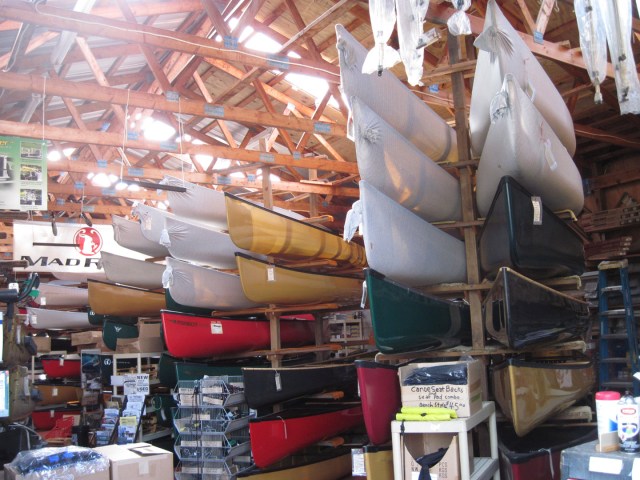
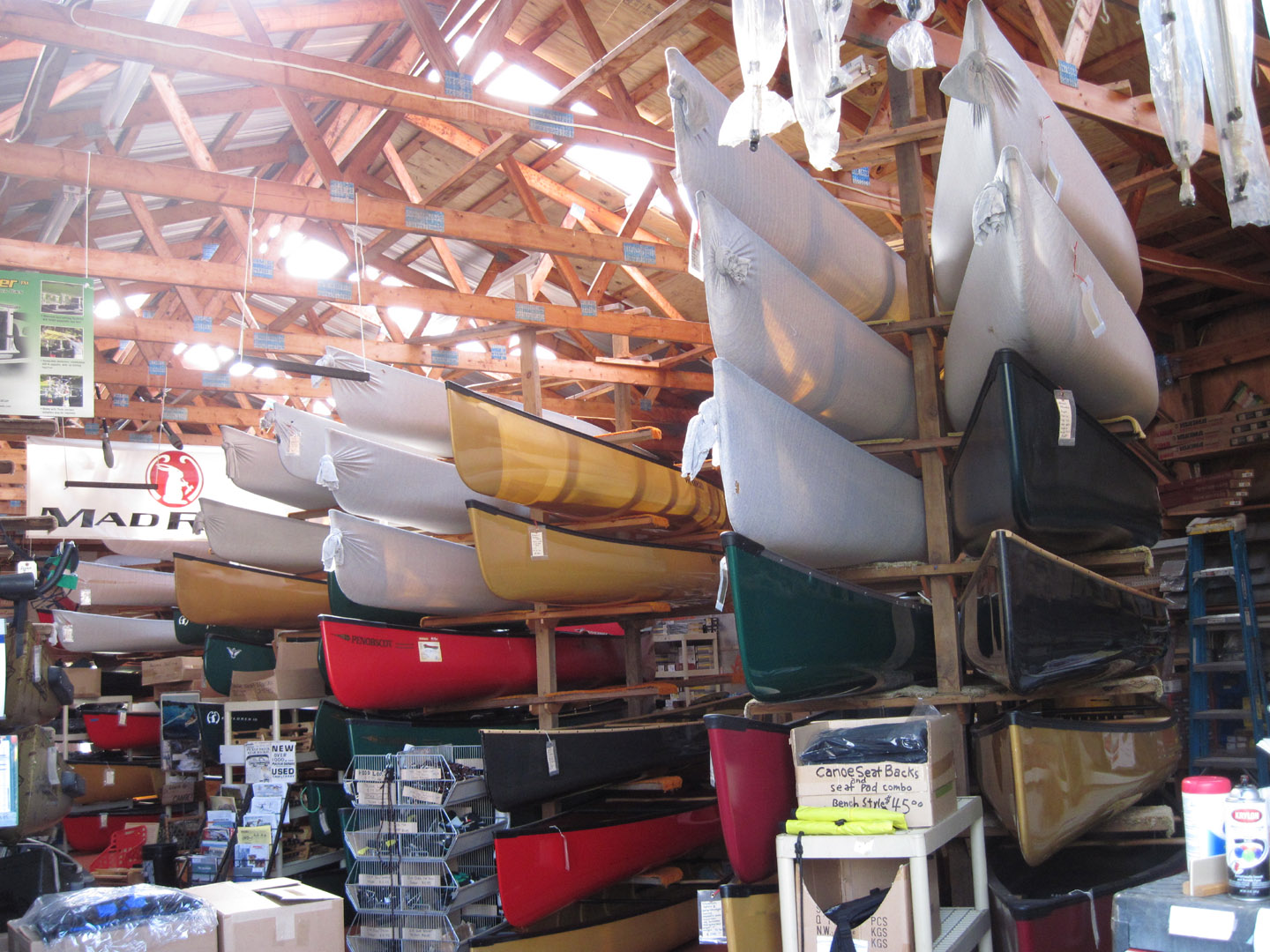
A small section of the inventory at Oak Orchard in Waterport, NY

A small section of the inventory at Oak Orchard in Waterport, NY

The search involved lots of thinking and rethinking about what I thought I wanted and gave me a fascinating glimpse into a small industry where practically everyone knows everyone else and everyone’s been around for a long time. At the end of the week I ended up back where I had started, at Hornbeck Boats in Olmstedville, NY, where I ordered a 15-foot New Trick model. It weighs 24 pounds. It’s made for double-bladed paddlers and the seating is similar to a kayak, on the bottom of the boat.
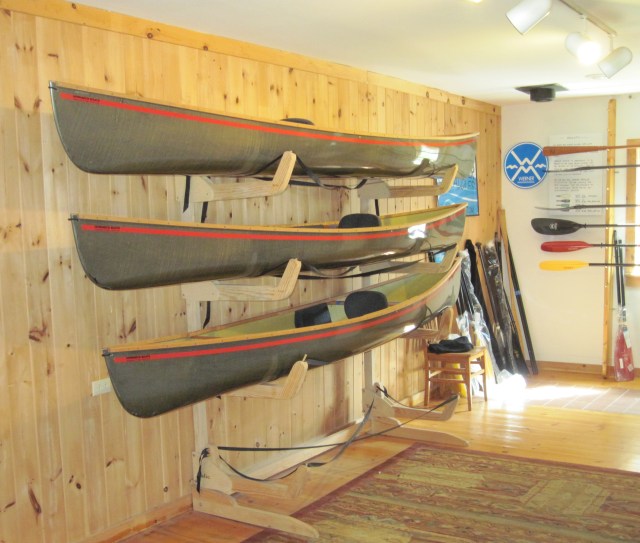
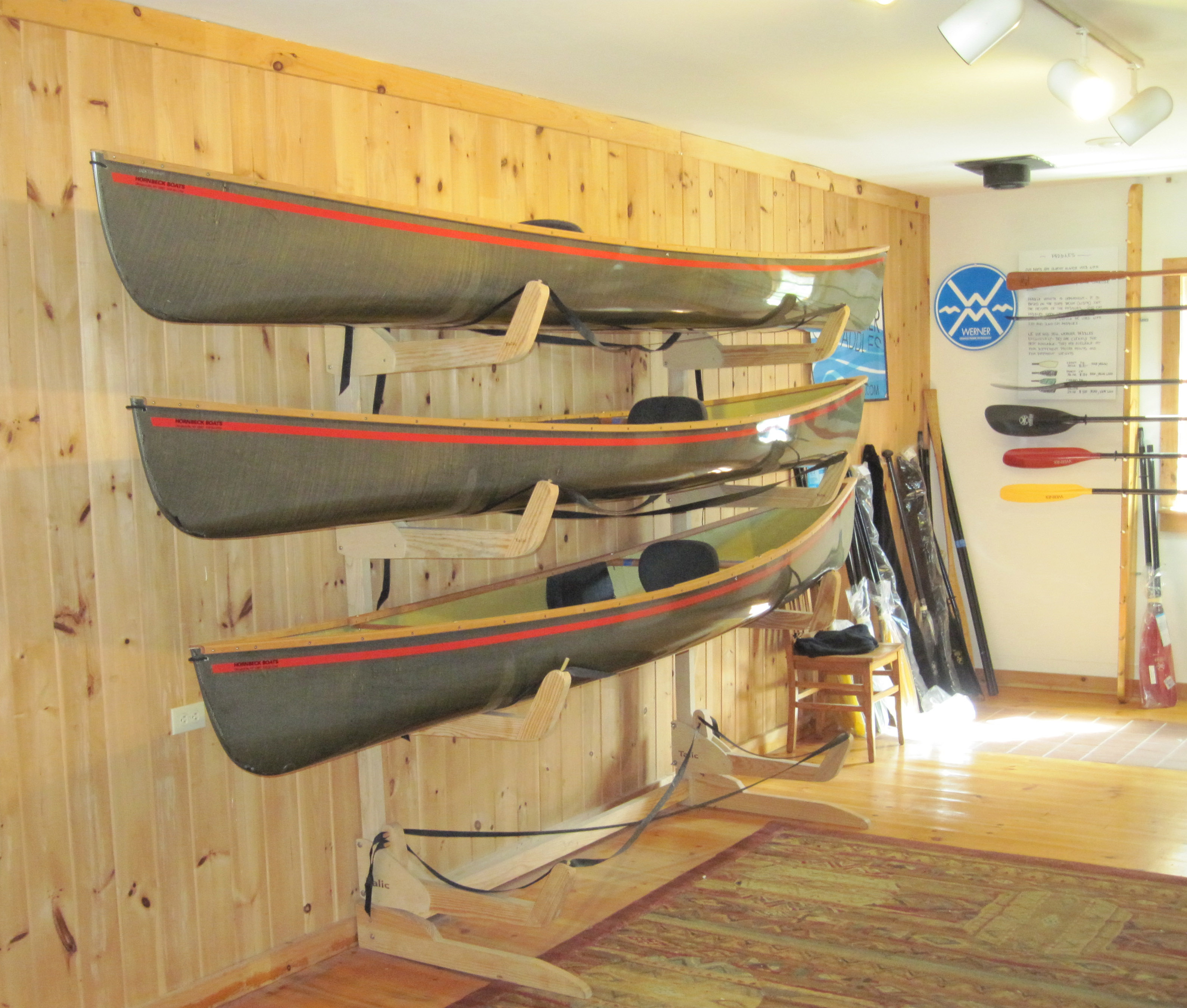
Mine will look identical to the one on the top of this rack in the Hornbeck store.

Mine will look identical to the one on the top of this rack in the Hornbeck store.

Before I start talking about what I was looking for in a new canoe, let me state that what I know about the materials being used in these boats could fit into a thimble and there would still be room for everything that I know about hull configuations and dynamics. I have after all, owned one canoe for 41 years, and I bought that untested and sight unseen. That said, I DID go into this wanting a boat that was comfortable and plain, paddled straight and on the fast side, wouldn’t cost me an arm and a leg and was LIGHT!

I learned a lot along the way. Much of what I thought I wanted changed as the week went on and I tested boats and talked to people.

Seating.   I thought I wanted a standard canoe-style seat, like I am used to. I wasn’t against sitting in a low, kayak–style seat on the bottom of the boat (I do so when using the sail rig on my canoe), but figured it would be a harder position for me to get in and out of than sitting on a seat, so I sort of ruled it out at the beginning. A third position choice, kneeling, I had dismissed long ago as just really uncomfortable.

Paddling style comes into play here too. Some in the industry have accepted the use of double-bladed paddles in canoes, which makes the concept of sitting down in a canoe and paddling workable. Some just still philosophically oppose them, and design boats for use with the traditional single-bladed paddle. I have happily used a double-bladed paddle for a couple of years. (If you want to take a look at some hard-core single bladed paddlers, google Free-Style Canoing sometime.)

The boats I tested ran the gamut. Some were just for traditional-style sitting, some for kneeling only and some for just kayak-style. In some cases, the style reflected the brand owner’s proclivities. One told me he just didn’t believe in sitting down in a canoe as one does in a kayak and his boats reflected that. The larger outfits make something for everyone. Wenonah even has a seat that adjusts easily from a ‘sitting’ seat (four or five inches off the bottom of the boat) to a ‘kneeling’ seat (sits higher and is canted forward so the paddler can put his feet under it and rest his butt against/on the front edge).

I soon found that sitting wasn’t the best choice for me in this type of boat (shorter, narrower, and with lower sides than my Grumman) because my center of gravity was uncomfortably high, increasing the sense, though not necessarily the reality, of ‘tippiness.’ And the ‘sitting’ seats weren’t nearly as high as on my Grumman, so I couldn’t curl my legs under me, which had been my posture in a canoe for decades.

Wow, that caused a sea change in my thinking. Maybe the sit down in style would be the best for me? Turned out that it was. What I had pretty much dismissed at the beginning of the week was looking better and better as the days went by.

At Peter Hornbeck’s place I practiced his methods of getting into and out of the boat and gained some comfort level. The boat I bought is narrow enough (two feet maximum) that I can easily straddle it to get in and out, just gliding it between my legs. My getting out, laughed one of Peter’s employees, looked like ‘giving birth to a canoe.’ Whatever works!

Length. After trying out some very small boats I quickly discarded the notion that I would be happy in one of them. I am not a lightweight person and I am used to seeing 17 feet of boat. I tried out various lengths and realized my best fit, physically and psychologically, was around 15 feet. I found the longer boats tracked in a straight line better than the shorter ones too, an important factor for me. And long and lean usually means better speed than short and wide.

Weight. This is why, after all, I was shopping for a new canoe. To. Get. A. Light. One. Hefting a few soon brought me to the realization that I didn’t want to get one even close to 30 pounds, much less over that. That started limiting my choices considerably.

Price. I had no ‘budget,’ but knew from my research I could end up spending from less than two thousand dollars up to well north of three.

In the end, once I got over my hesitation about committing to kayak-style seating, and taking in the weight and price factors, the clear choice for me was the 15-foot Hornbeck New Tricks.   And it didn’t hurt that owner Peter Hornbeck’s laid-back, welcoming style fit in nicely with what I look for in people when I am on a road trip.

I earlier told you that this trip offered me a fascinating glimpse into a small industry where practically everyone knows everyone else and everyone’s been around for a long time. I won’t pretend to undertake a history of it, and choose instead to just look at some of the people still in it, several of whom I met along the way.

Charlie Wilson has come from being a free-style canoe promoter in the early 1980’s to a consultant for a relatively new outfit, Colden Canoe. Along the way, he worked for Bell Canoe (founder and designer Ted Bell closed that up long ago and he came back to the business seven years later with Northstar) and went on to co-found Placid Boatworks. Co-owner Joe Moore bought him out in 2009 and is still there (he was busy working on the interior of his new building when I dropped by. A massive fire destroyed the old one and its contents a few years ago). Stan Zdunek of Slipstream Watercraft began as a racer in the 1970’s and ‘80’s and went on to building boats (I met him at the Saratoga Springs Paddlefest). Bill Swift Jr. of Swift, in Canada, has been building canoes for 20 some years. His father started Algonquin Outfitters in Ontario in 1960 and when the company got into making canoes, its first product was Sawyer Canoes, under a license with the popular US brand.   Peter Hornbeck’s a former white water kayaker who started building kayaks and then pack canoes. He founded Hornbeck Boats in 1971. A huge force in the industry is designer David Yost, known as DY, who works for Swift (I met him at the Swift display in Collinsville, CT) and also Colden. Colden also sells a boat model designed in the 1980’s by the Curtis Canoe Co. Owners Dave Curtis and David Yost (yes, that’s DY again) sold Curtis Canoe Co. in the late 1980’s. Curtis later started up Hemlock Canoe (where I visited him on my shopping trip). Yost, by the way, is called the most prolific designer of human powered watercraft of all time, with nearly 80 designs having been produced by a multitude of companies over the years, starting with racing canoes in 1973. It’s pretty hard to turn around in the canoe world without bumping into one of his designs. And David Yost lives just down the road from Dave Curtis’ Hemlock Boats, in Hemlock, NY.

Got all that straight?
img_1788c

I have updated this post with this photo of me in my new canoe. (Photo by Lance Collins)
IMG_6456c

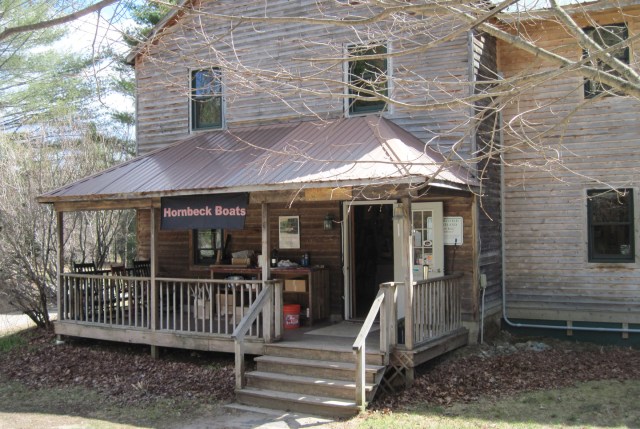
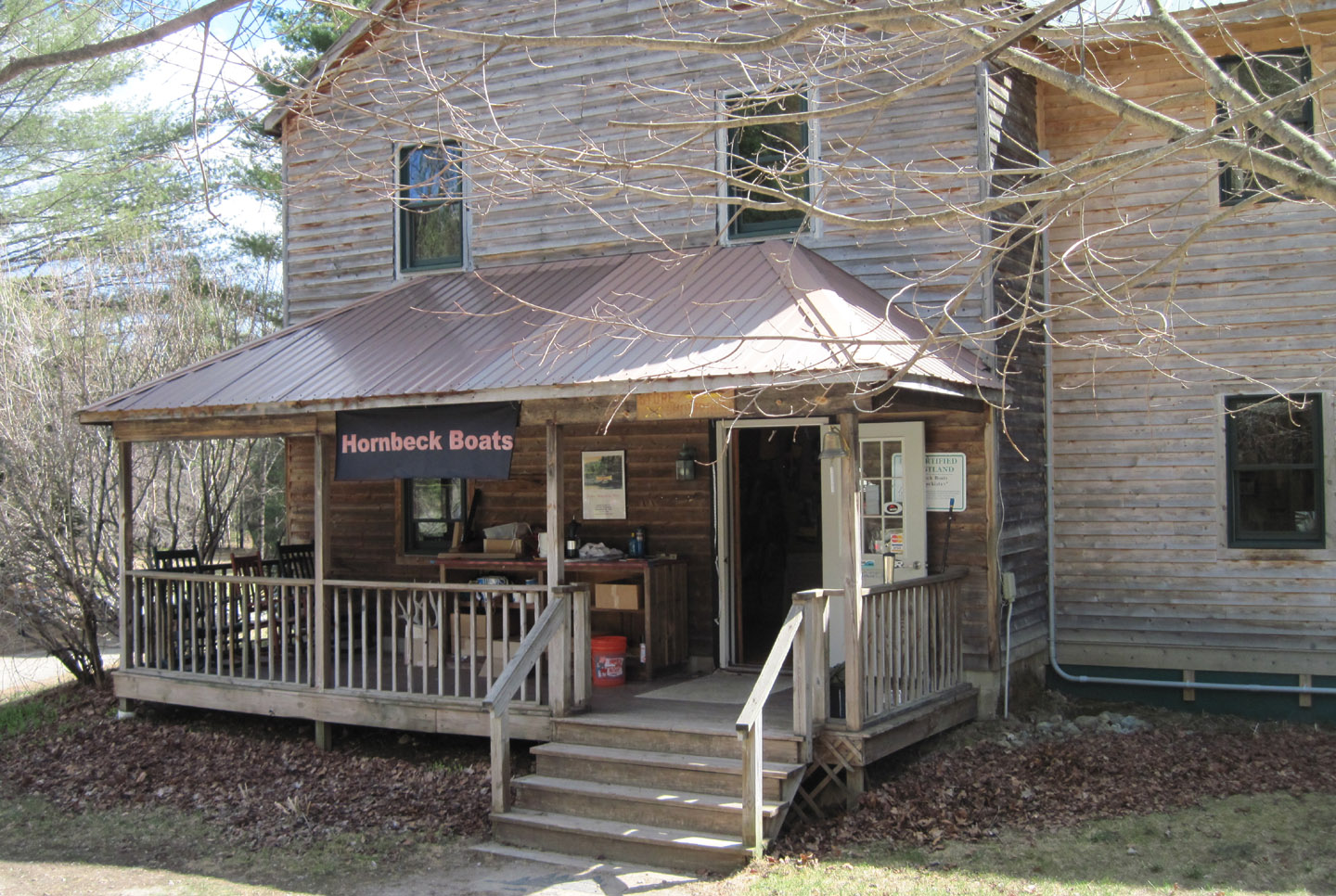
Store and office at Hornbeck Boats.

Store and office at Hornbeck Boats.

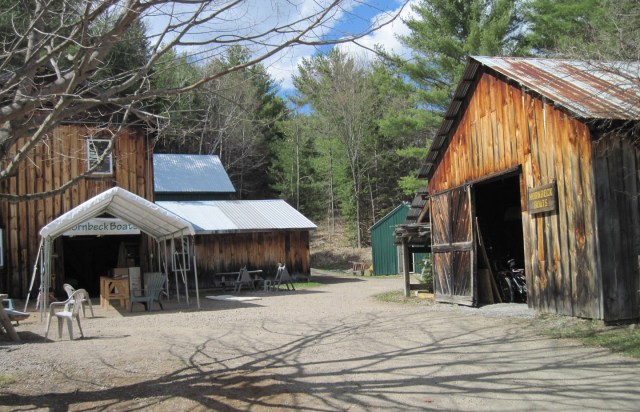
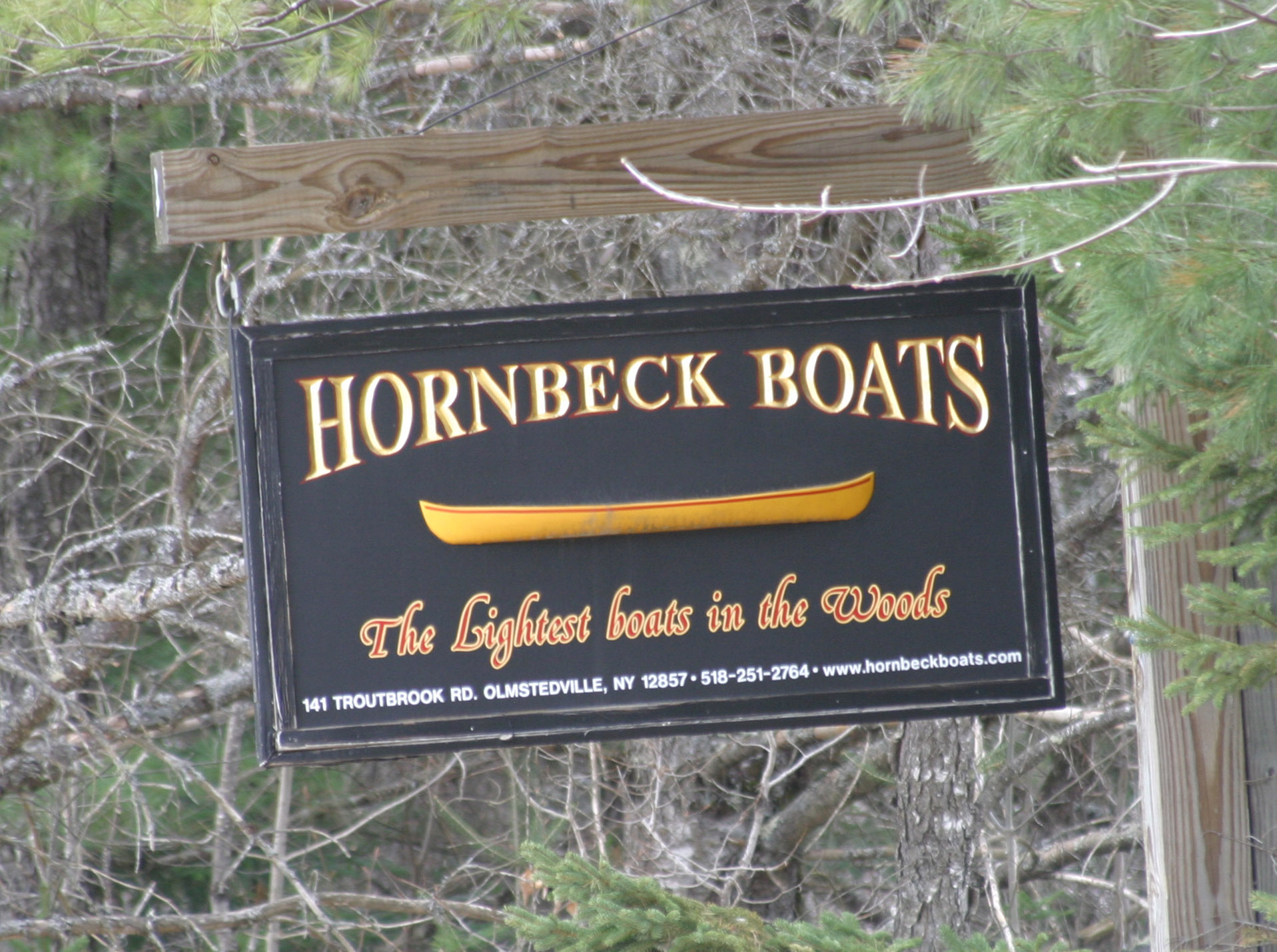
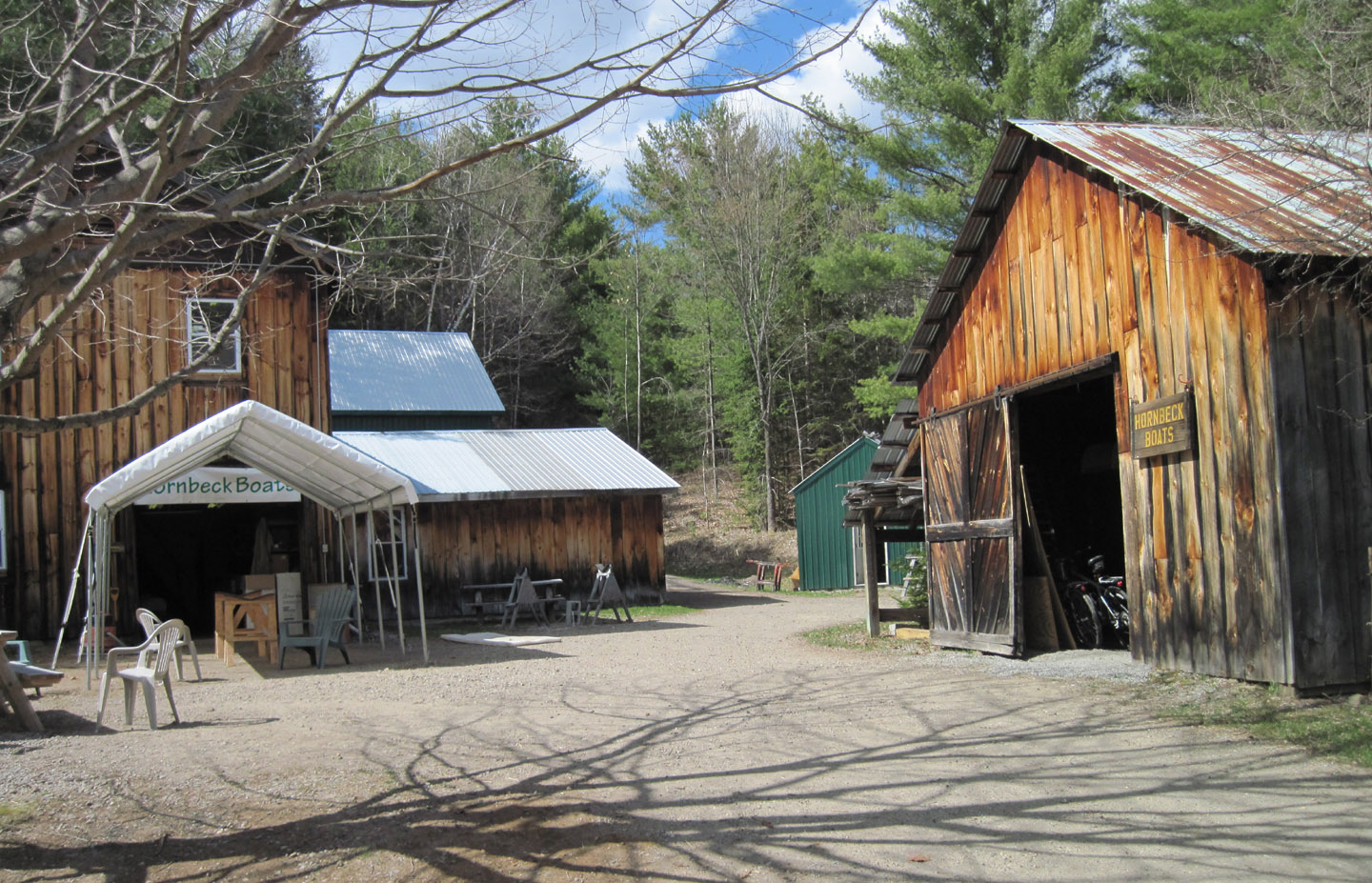
View from the driveway entrance at Hornbeck Boats

View from the driveway entrance at Hornbeck Boats

Posted in Grumman canoe, Hornbeck canoe, Paddling | 14 Comments

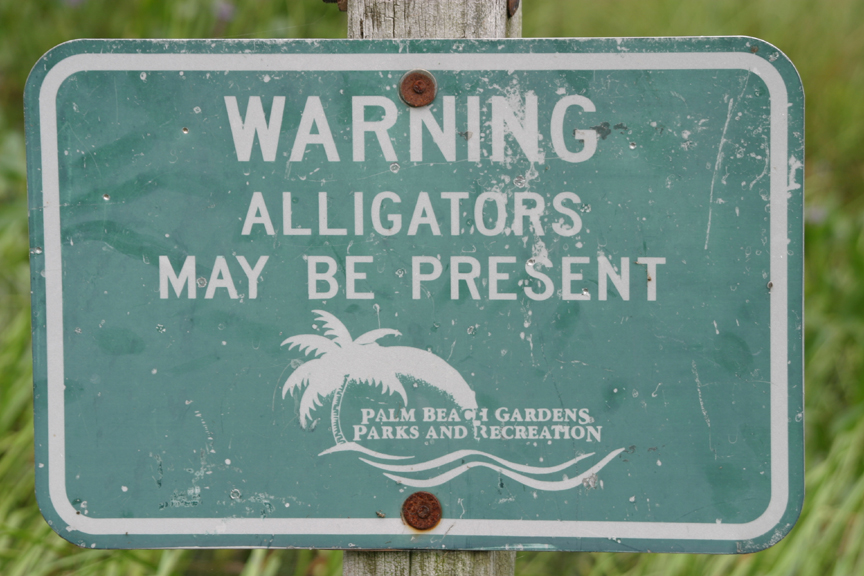
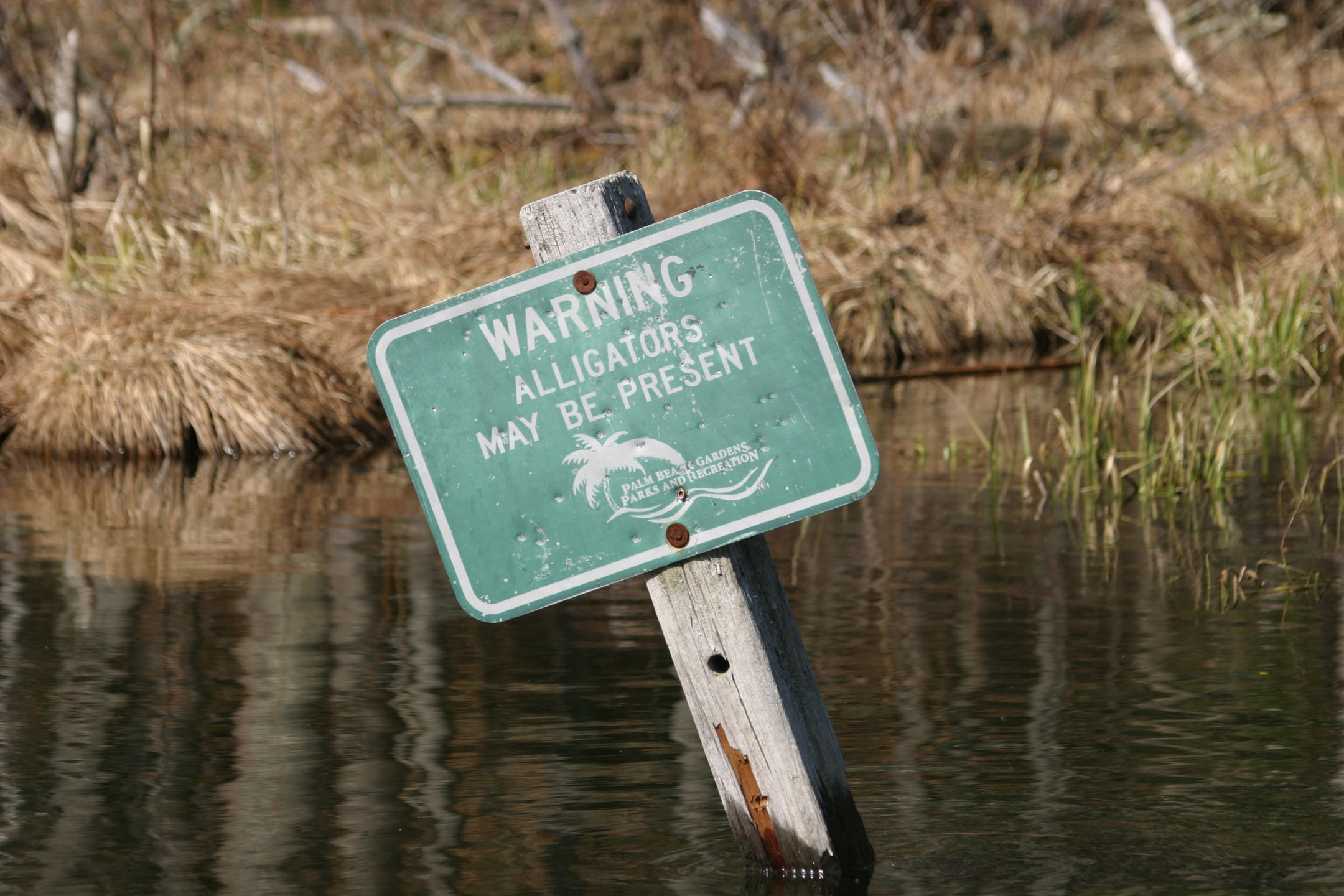
A useful sign

I took this photo back in 2013 on the Swift River near Belchertown, Massachusetts. Originally from Palm Beach Gardens, Florida, the sign obviously took a prankster’s ride to the alligator-unfriendly climes of the Northeast, where it was planted as a joke, and remains to this day a useless yet charming and chuckle-provoking feature of a very pleasant river.

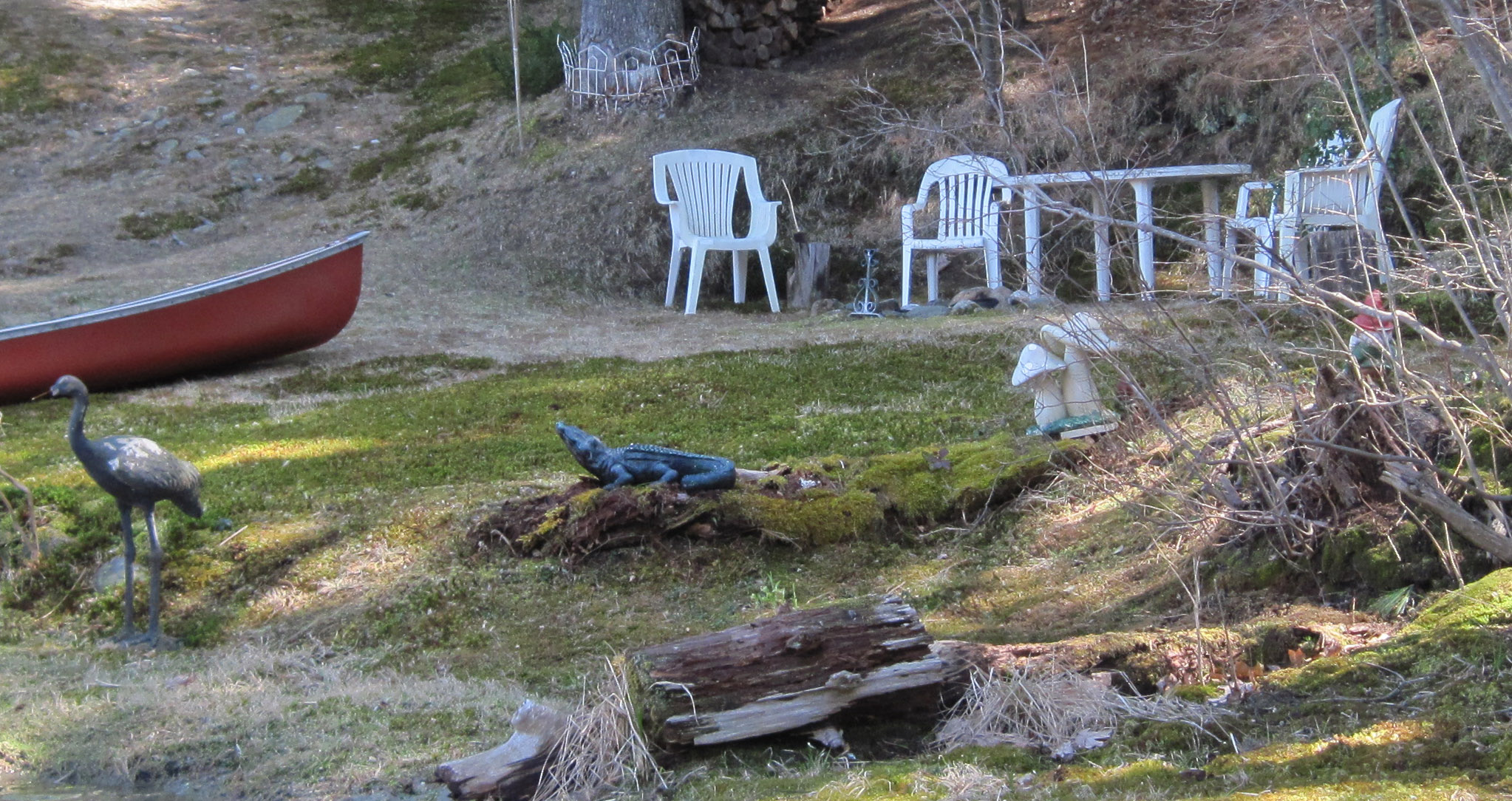
IMG_2009cUseless until 2015 that is! I paddled down this river just last week (on the only day in the past ten where the temperature actually approached 70, by the way), and look what I found, lurking on someone’s riverside patio.

IMG_6408cThe sight of this alligator didn’t alarm me in the least, however. I had fortunately seen the warning sign.

Below is the complete riverside patio, and a photo of the sign as it appears in 2015.  It appears to be weathering the Northeast well.

IMG_1409cIMG_6391c

Posted in Offbeat, Paddling, Signs | Leave a comment

Dueling violins

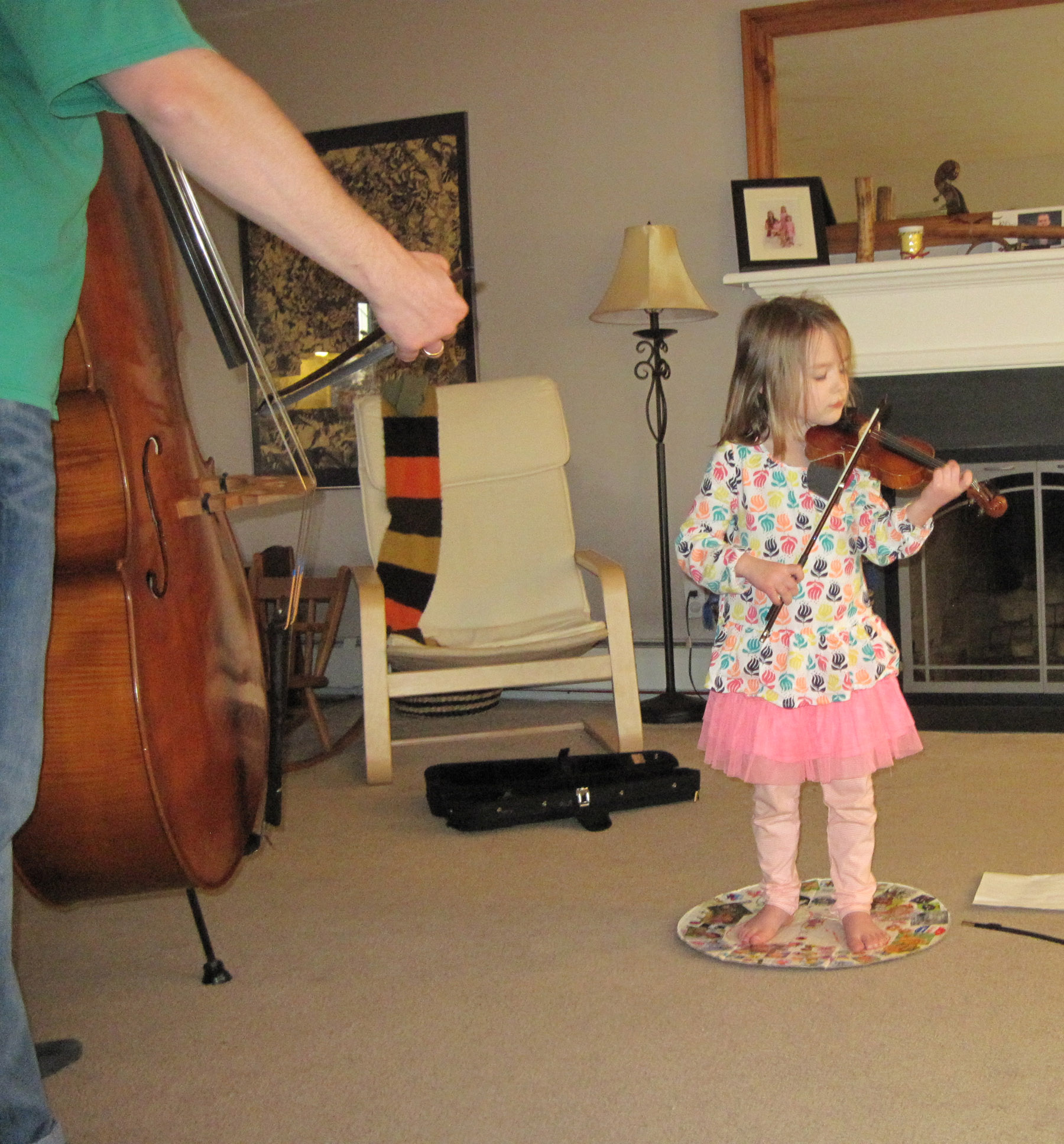
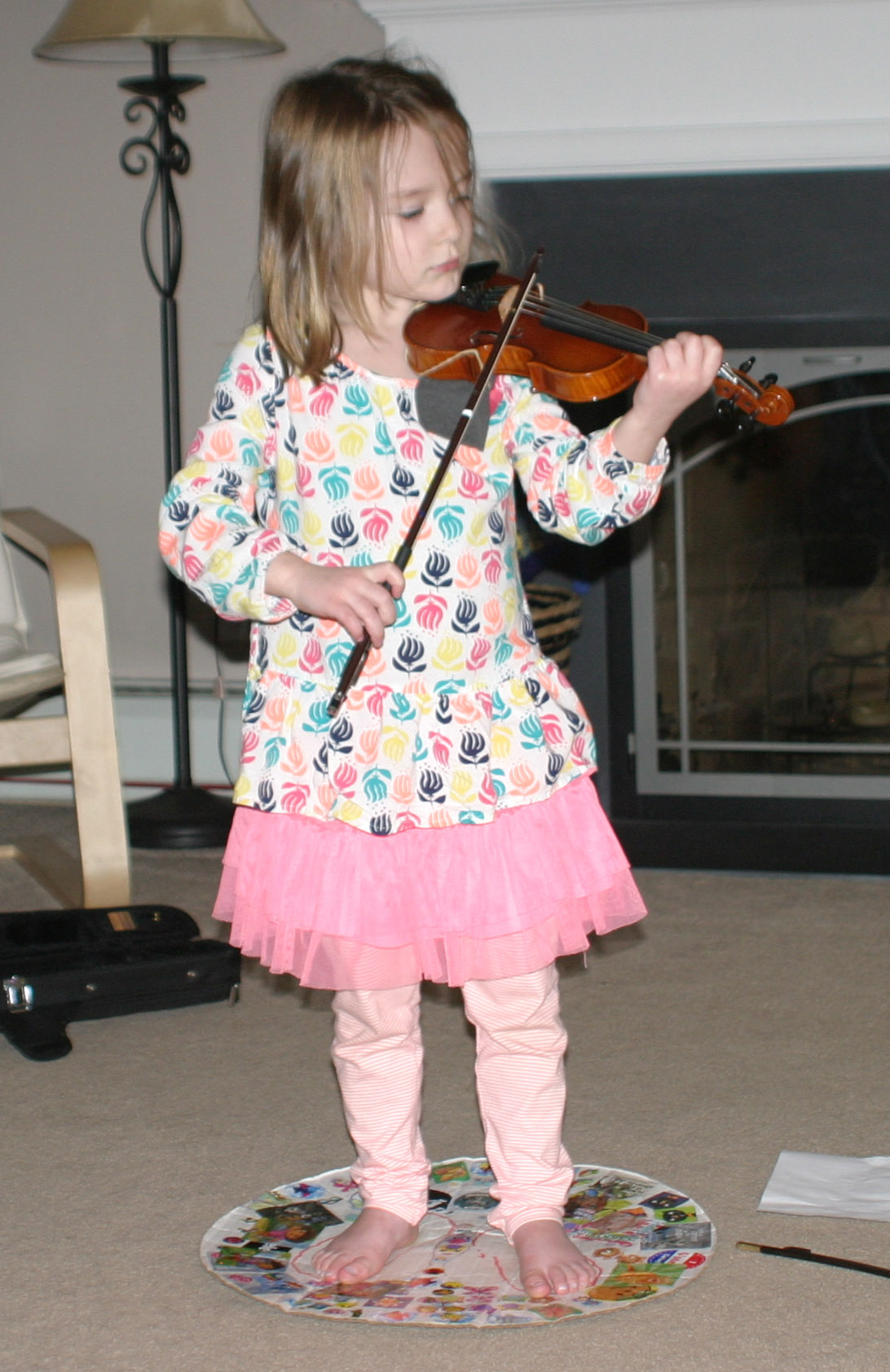
Whatever musical talent granddaughters M and S possess does NOT come from me, I can assure you. My career ended after a kindergarten piano recital, my only recollection of which is that my fingers were numbered in pencil to correspond to the numbers on the keys. Plunk. Plunk. Plunk.

So I take no credit at all for this. Dad Ryan’s genes are to thank, along with his patience, talent and teaching ability. M is coming along well with the instructions and seems to really enjoy showing her stuff to us when we’re around to watch a lesson. Young S of course is right in there, albeit silently, as her violin is mainly for show, for now anyway.

IMG_6353cDad Ryan, bass accompanist, can be seen at left in the photo below.

IMG_6357c IMG_6354c IMG_1405c

Posted in Grandchildren | 3 Comments

Pushing the season

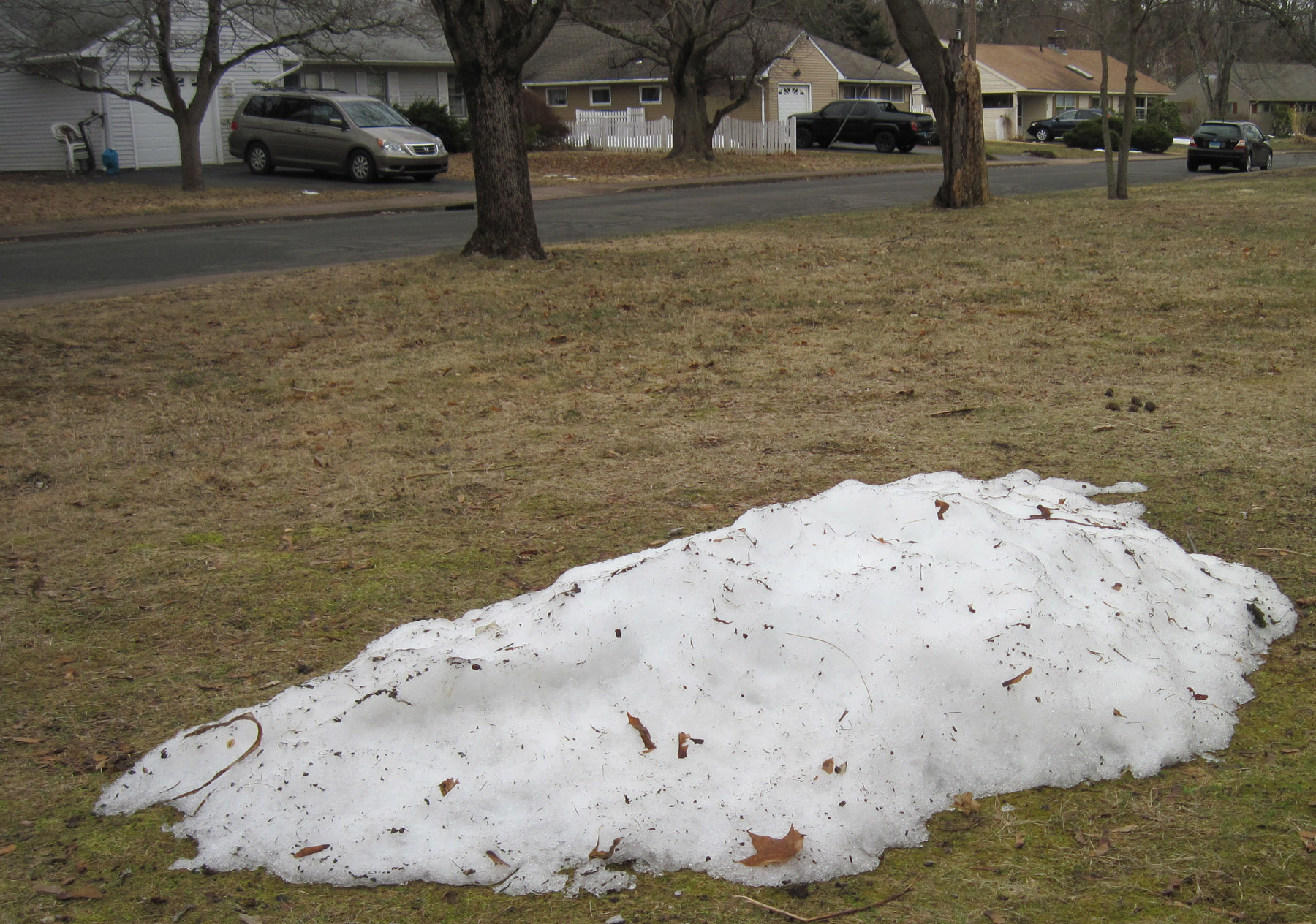
The grass is still brown and there’s the occasional pile of white stuff laying around.  It must be Connecticut in April!  Too early in April for serious spring, apparently.  Can’t complain a whole lot I guess.  Last year it snowed here in April.  For a while at least, I’ll be inside, sitting next to a sunny window.

IMG_1403cHere’s the flashback to one year ago, April 16, 2014, to be exact:IMG_3892c

Posted in Snow | 2 Comments

New kid on the block

A fire hydrant’s been a fire hydrant for a long time. In fact, they’ve all looked and functioned basically the same for 100 years, according to ABC.

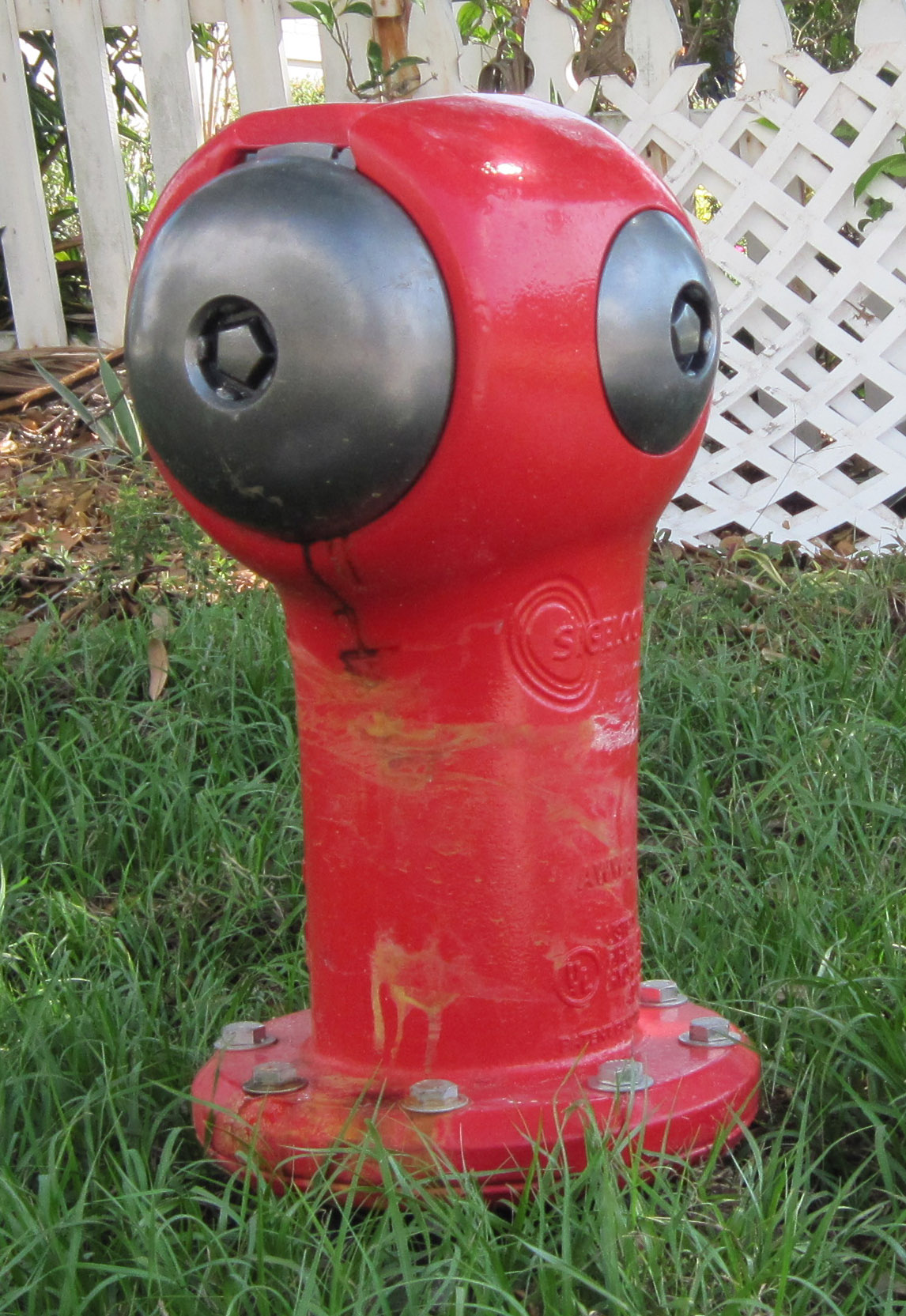
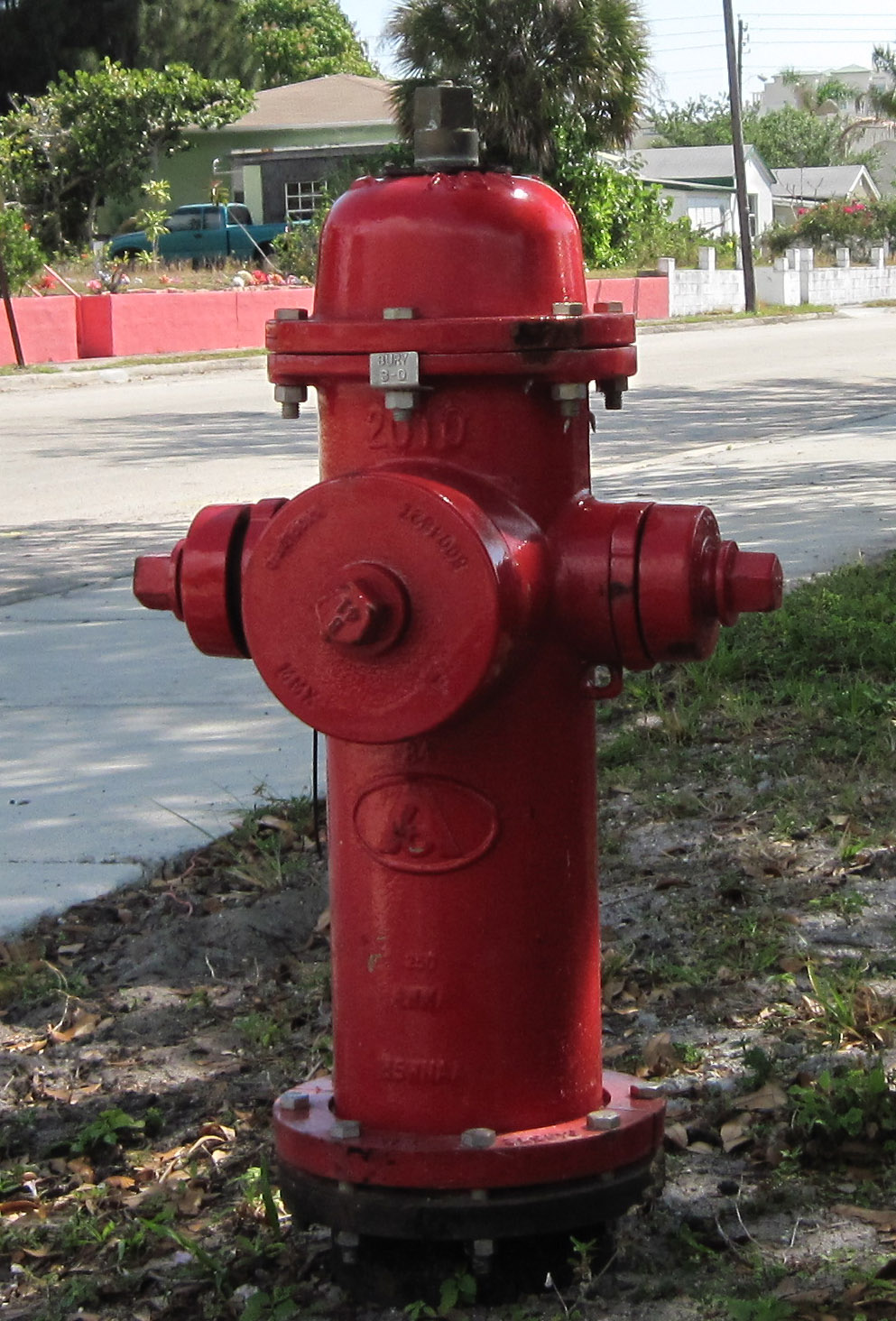
That has changed. Here’s the new kid:

IMG_1395cAnd the old fart:IMG_1398cI noticed the new guy when I was driving through Boynton Beach, FL the other day. It’s the Sigelock SPARTAN Hydrant, designed by veteran New York City Firefighter George Sigelakis. It’s been around for a year or so and is made of stainless steel and ductile iron and has a powder coating that makes it resistant to rust and corrosion.

And, of course, not any old pipe wrench will work on it. It needs a special, Sigelock opening tool.

I wonder how long before those special opening tools are on sale at the hardware store? The company is apparently confident the answer is NEVER. According to its website: “Sigelock Systems’ Spartan fire hydrant system has become UL certified. With this certification, the Spartan is now recognized as the most secure fire hydrant in the world.” That’s a pretty big leap that I am not sure even UL would agree with. I took a look at the UL certification and the best I could find is that it was “Tamper-Resistant,” nothing there about most secure in the world.

But, whatever. It’s the first new design in 100 years, so why quibble with a little bragging? Below is what the bragging rights look like on the company website. The device shown is the special opening tool. Most folks wouldn’t have one laying around I suspect.bannerAnd all my nitpicking aside, the Spartan does appear to be way more functional than the old design. For the curious, there is tons of technical info on the website.

In case you’re wondering why I’m spending my valuable time writing about this new hydrant design, let me explain:

I spent one summer, in my college years, painting every fire hydrant in the town of Kankakee, Illinois, for the Kankakee Water Company. I probably knew at the time just how many there were, but my memory of it all is fuzzy and that fact is now missing. I do remember driving a small dump truck all over town carrying out this job because that was the only spare vehicle they had available for me.

My memories of that dump truck are vivid, because it was the first time I had ever been presented the challenge of driving a stick shift. And there I was, at 8 am my first day on the job, being handed the keys in the busy water company garage and being told to take it out right away because they needed the space for something else. I remember to this day thanking my stars for that booklet in high school driver’s education class that explained, complete with illustrations, just how a clutch worked and how to manage the clutch, gearshift and gas pedal all together.

So, with visions of spinning clutch plates dancing in my head, I climbed into the driver’s seat, started the engine and crept away down the alley very slowly in first gear, afraid to try to shift into second gear while still within sight and sound of the garage. Once around the corner I found a parking lot and practiced a bit before heading out into traffic. By noon I was a pro.

And I also recall carrying around a large map showing each hydrant, color coded green or yellow, according to pressure I guess. So I had three cans of paint with me, green and yellow for the tops, depending on what the map specified, and red for the bottoms.

And all summer long that’s what I did. Paint fire hydrants. That and listen to folks plead with me not to turn their water off when I pulled up in my water company truck.

So, yes, I still notice fire hydrants, even now.

Posted in Offbeat | 2 Comments

Recycled gas station

I happened upon this nicely recycled gas station last week along Tamiami Trial in North Fort Myers, FL.  I’m always on the lookout for a good one.  This one is the home of Anna’s Produce and Groceries.  Go here to see my entire collection of recycled gas stations.Anna's Produce and Groceries, North Fort Myers, FL

Anna’s Produce and Groceries, North Fort Myers, FL

Posted in Gas stations, Road trip | Leave a comment

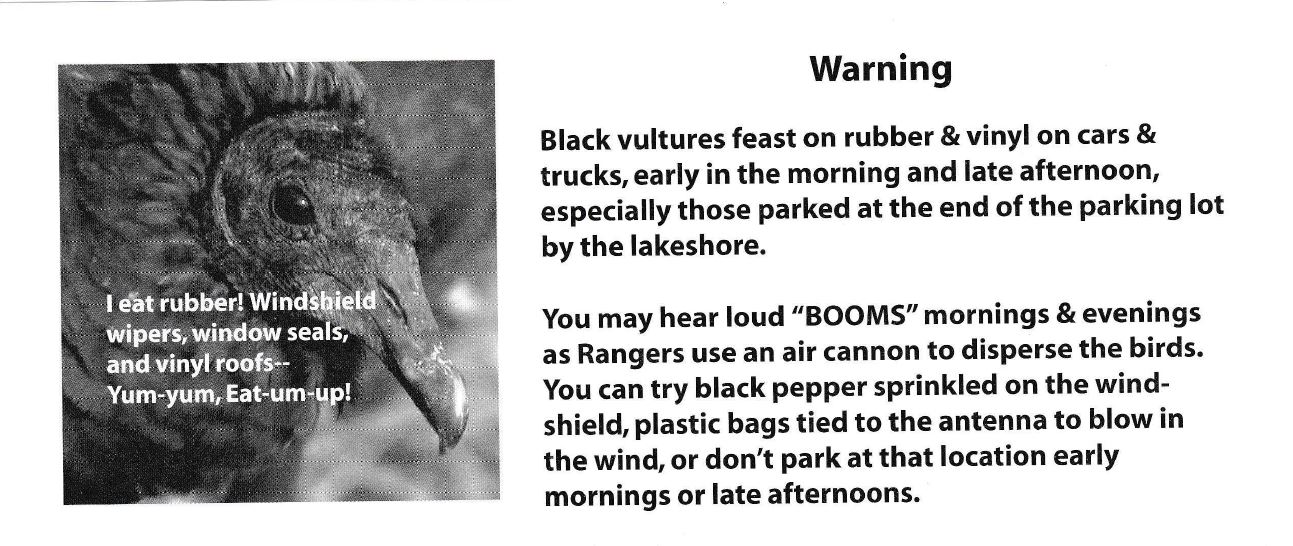
They eat cars, don’t they?

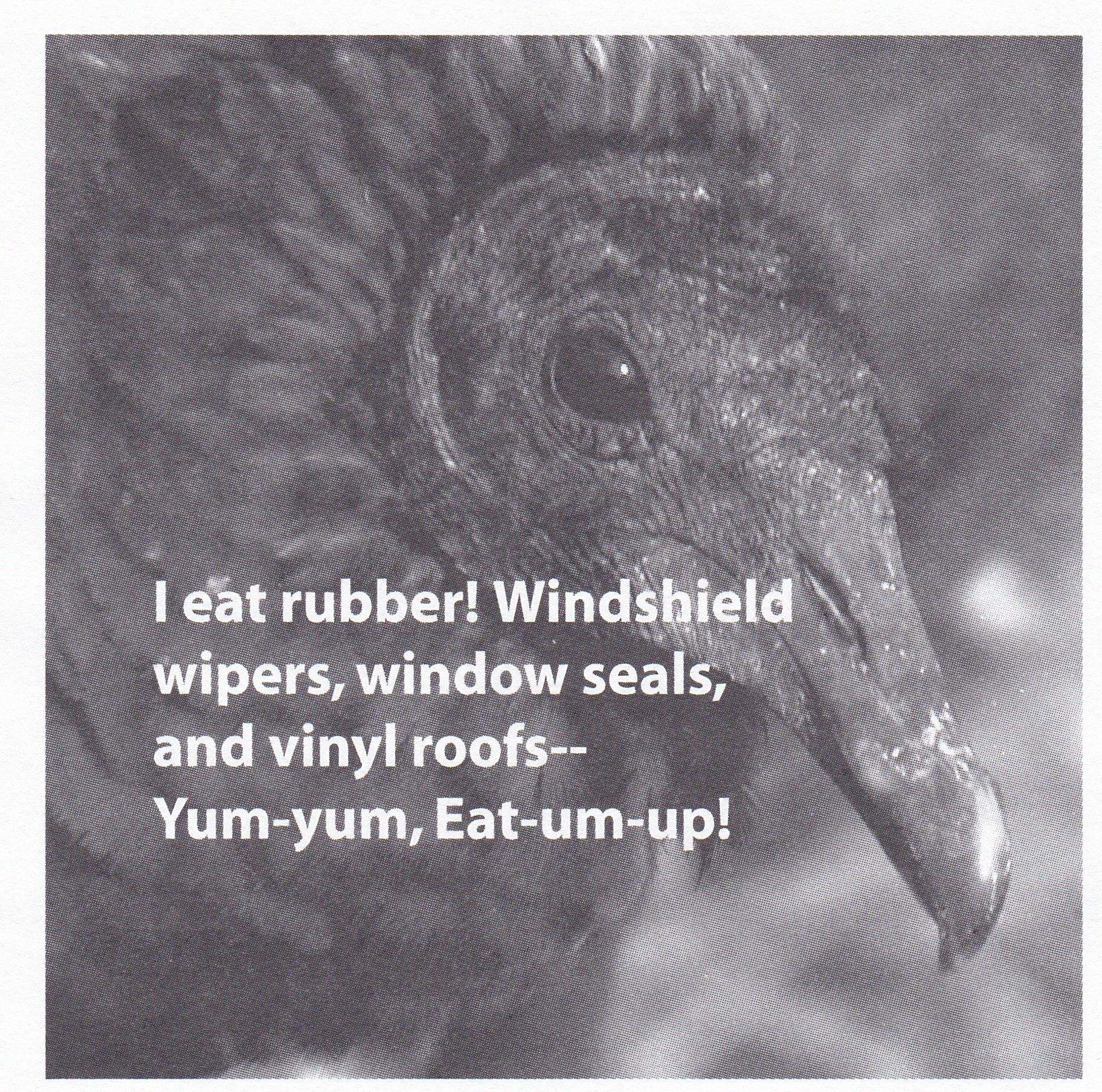
IMG_20150303_0001Northerners have snow, Californians have earthquakes, Floridians have vultures that eat cars.

OK, they don’t actually eat them, they just nibble on them, particularly the rubber and vinyl bits, like the windshield wipers and weather stripping around doors and sunroofs.

There are actually signs in some park and wilderness areas warning of this. I was handed a flyer about it on a recent visit to Myakka River State Park in Sarasota, FL. And park rangers sometimes set off loud cannons to shoo them away. I am not sure how long the latter would be effective though.

I was 50 yards away from a blast the other day at Myakka and it scared the crap out of me because I’d never heard it before and didn’t know it was going to go off. The second blast didn’t alarm me as much and by the third I wasn’t fazed.  And I noticed that the vultures that were near me, as far away from the noise as I was, didn’t move at all. The ones down in the parking lot by the lake, where they were using the cannon, moved up into the trees though.

From my observation, plastic bags are pretty effective, especially on a windy day. The noise and motion of a half dozen of them tied to a car and flapping around appears offputting to the vultures, who generally like their prey quiet and not moving.

WHY seems to be the big unanswered question. “It is believed by some that these products release some chemical cue that is appealing to the birds through UV or heat degradation, though that has yet to be proven,” says a USDA National Wildlife Research Center official.

Here’s what the Everglades National Park website says about them: “Vultures are attracted to the rubber on vehicles and have been know (sic) to cause severe damage to windshields, sun roofs, and windshield wipers. Vultures are a federally protected migratory species and may not be harmed.”

The fact that this has been going on for many years but seems to be limited to the national and state parks is heartening. At least I don’t have to sit on my porch guarding my house from them.

On the other hand, if it were more widespread maybe we’d finally find a use for all those insidious plastic bags we are surrounded by.

By the way, vultures have disgusting habits like crapping on their legs to keep cool and vomiting when they are harassed.   Despite that, they have lots of fans. There is even an International Vulture Awareness Day, celebrated on the first Saturday of each September. Here’s a roundup of last year’s festivities around the globe. And, for kicks, try google imaging ‘vulture awareness day T-shirts.’

And here’s a nice tidbit: A group of vultures is called a committee, venue or volt. In flight, a flock of vultures is a kettle. My favorite: When the birds are feeding together at a carcass, the group is called, get this!, a wake. I am not making this stuff up, folks.

This flyer comes with other park information when you enter Myakka River State Park in Florida

This flyer comes with other park information when you enter Myakka River State Park in Florida

Posted in Nature, Offbeat, Road trip | 2 Comments

Blame it on the reporter

This sign caught my eye the other day as I drove along Tamiami Trail (US 41) through the greater Port Charlotte metro area over on the west side of Florida.IMG_1360cI spent my career dealing with professional photographers all over the world so I knew the Blade was the daily paper in Toledo, Ohio, and not a sharpened piece of metal in the town of Toledo, Spain. (Digging even deeper, I can also recall that the Blade was one of the hundreds of papers in the Midwest I sent resumes to in my tough journalism job hunt in the early 1970’s)

And I knew the west coast of Florida has been heavily settled by retires from the Midwest (as opposed to the east coast of the state, where the migrating population comes traditionally from the Northeast.) So an Ohio impact on the nomenclature wasn’t surprising.

I was curious, though, about how it happened. Following my motto of Why Do My Own Research When I Can Find Someone Who’s Already Done It, I tripped over one account of it all by editorial writer Lindsey Williams.

One has to delve into ancient Florida history. Go back all the way to the 1950’s. That was when swampy land was being gobbled up, drained, surveyed and divided into small lots all over the state to sell to Northerners. A company called General Development Corporation was in full charge of tens of thousands of acres of prime real estate along Tamiami Trail on Florida’s west coast, and they touted lots for sale heavily in Midwestern newspapers, with the Toledo Blade getting the lion’s share of the advertising dollars. (Explains the heavy influx of Ohioans into that area of the state)

At the same time, all those streets being plotted out needed names. ‘Easy Street’ was taken quickly of course (I saw that sign too, but traffic was too heavy for me to stop for a photo). As all the likely candidates (think plants, animals, places, etc) were being used and the need for more names continued, General Development encouraged its employees to make suggestions.

One man, Thomas A. Ferris, who was an executive of one of the companies General Development used to be and who went on to become a General Development director, pushed hard for the name Toledo Blade for a long winding street that ran through two counties. He had also lobbied earlier for the company to spend a lot of advertising money with the Blade.

And Toledo Blade Boulevard came into being. Who was Tomas A. Ferris and why the newspaper connection? Well, at one point in his life he was a reporter for the Toledo Blade.  The Lindsey Williams account of all this has him beginning his “successful career” there at the paper.

But, as with all tales involving reporters, there is an unvarnished version. This one was penned by Associated Press writer Ben Funk and appeared in the February 15, 1959, issue of The Miami News under the headline, “Publicist Preys on Vanity.”

In this account, Ferris started his career as a hand on seagoing freighters and then moved on to the Newark Ledger, Toledo Blade and the Associated Press, before hooking up with a publicity firm in Miami Beach. He soon opened his own firm, made enough to retire, lost his money in lousy investments, bounced back, then fell again, ended up jobless in Pompano Beach, FL, drove a cement truck for a while and then landed a job at a small development company called Mackle Brothers in Miami. Sounds like a reporter to me.

Mackle Brothers grew fast and became General Development Corporation, and Ferris’s publicity skills blossomed, according to Funk in the Miami News article. In it, he describes Ferris as a publicity genius ‘whose wise counsel can be worth millions to his employer.’

He says Ferris came up with a scheme to send letters to newspaper publishers, editors, columnists and reporters, advising them that a street in Port Charlotte was going to be named after them.

Soon there was a rash of stories in papers all over the country praising Port Charlotte. As one editor explained: “If you think I am going to say that a street named after me is not in a desirable place, you’re crazy.”

As Funk put it: “It was the kind of publicity windfall every business concern dreams about but rarely gets—unless it happens to have a public relations man with the ingenuity and know-how of one Thomas Addis Ferris.”

Well done Mr. Ferris.

Posted in Offbeat, Road trip, Signs | 8 Comments

It’s no fun being a plastic duck…

…Other birds just walk all over you.

Anchored in place to mark the presence of an irrigation pipe, this plastic duck makes a good perch for his living counterparts on Lake Osborne near Lantana Road.

IMG_6135c IMG_6120c

Posted in Nature, Offbeat, Photos mostly | 1 Comment

Lunch anyone?

This Osprey was kind enough to pose for me today near Munyon Island at MacArthur Beach State Park in North Palm Beach, FL.

IMG_5824cc

Apparently this is a pretty common osprey ‘pose,’ as evidenced by the photo below, taken in my backyard in 2005:115_1543crop

Posted in Nature, Photos mostly | 3 Comments