Rustbucket

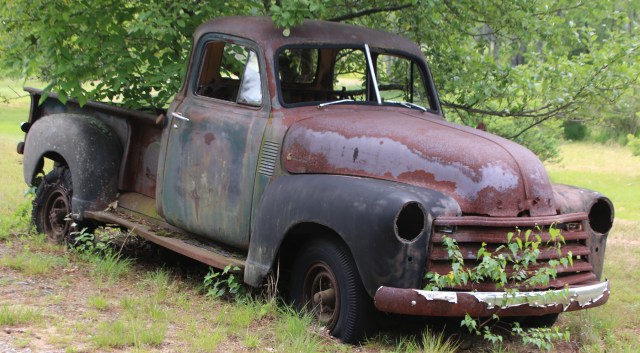
About 30 yards off of Royalston Road outside of tiny Fitzwilliam in rural New Hampshire sits this pickup truck.
IMG_5266c

From the looks of it, it’s been there a while.  It has snow chains on, all ready for winter.IMG_5268c
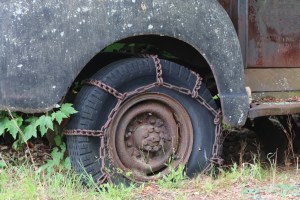
The word ‘rustbucket’ sprang to mind when I saw it.  This is a fitting example of the word.  A few more decades of oxidation and it’ll be a pile of rust that you can carry around in a bucket.

Rustbucket is a word I haven’t used or heard for a long time.  Coined in the 40s, it is usually applied to a car, ship, or other vehicle that is old and badly rusted.

But modern vehicles don’t seem to rust out with the vigor of the ones from my youth.  The rustbucket experience is pretty much a thing of the past.

I remember owning a 1969 Ford van that I ran for a hundred thousand miles on the salted winter roads of the Midwest before I moved to Florida with it.

After a short time in rainy, humid Florida, there was a rectangular, vehicle-sized pattern of rust staining the white concrete driveway where I parked that truck. In 1980, the steering gear box rusted off the frame and had to be welded back on.  That was a serious rustbucket.

In my musings about the word “rustbucket,” I googled it to see if it was even used much anymore.

Wow!  It’s alive and well, just not so much in the old-fashioned sense.

In the computer gaming world of Adventure Quest Worlds, for example, there is an armorrustbucket armor copy called Rustbucket.  Here’s the description:  “Don’t let the nickname fool you. The Rustbucket is not the prettiest armor, but it’ll help you in battle. This Class can be obtained by completing the “ProtoSartorium Parts” quest in the Crash Site. Rustbuckets are a hybrid Class, relying on their Strength, Intellect, Endurance, and Dexterity stats. Hybrid, Fighter, Wizard, and Lucky Enhancements work well with this bucket of rust.”
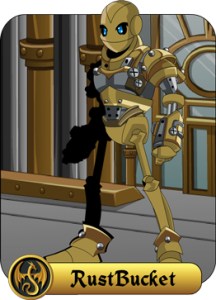
Also in the gaming context, Rustbucket seems to be a popular screen name for folks who play the many World of Warcraft titles.  Either that or it’s the name of one or more of the actual characters in the games.  I know so little about that stuff that I could not figure it out!
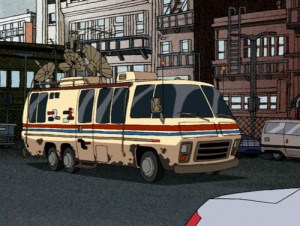
Rust_Bucket_005 copyAnother modern day rustbucket is a little truer to the origins of the word.  Rust Bucket is the name given to the rusted-out, 70s-era motor home that appears in the Ben 10 series of cartoons, animated films and merchandise, including Legos. The franchise has been around for a decade, has won critical acclaim and three Emmys, and has grossed billions of dollars worldwide.


And finally, there is Rust Bucket the video game, made by Nitrome especially for mobile devices.

link_rustbucket

Here’s the description: “Rust Bucket is a turn based dungeon crawler that is built with mobile in mind. Game play is fast and death is never far away so it’s perfect for your daily commute.”

Particularly when you play while driving I suppose.

Posted in Offbeat, Road trip | 1 Comment

Tribbles

If you’re of a certain age and watched a certain TV show you know the word and what it means:  small, voracious, constantly-multiplying, creatures that take over everything and scare the crap out of everyone because of the trouble they can cause.   But also in a way  cuddly and likeable.

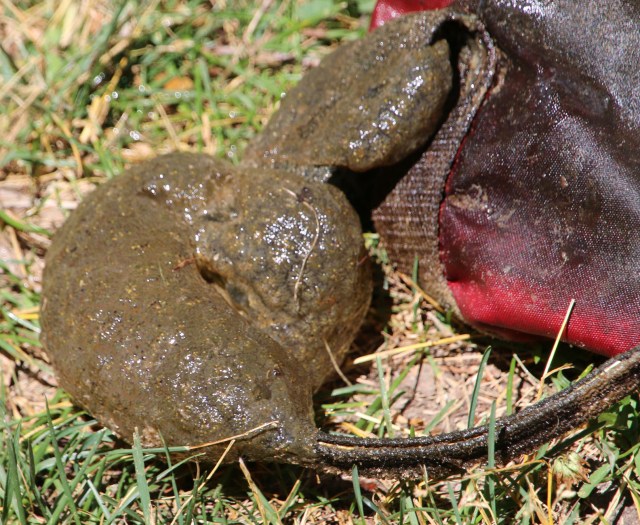
That was my first thought when I saw this blob attached to the strap of a old backpack that’d been abandoned long ago in the Merrimack River.

IMG_5163c

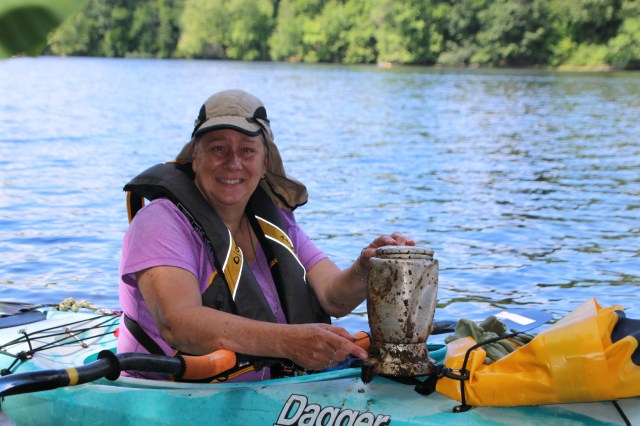
One of my friends along on the monthly trash paddle trip with the Appalachian Mountain Club had fished it out of the water.  She was in a kayak, with limited space, and I was in my canoe, AKA the trash barge, so she tossed it in.

ST_TroubleWithTribblesNo, I didn’t scream.  I am a reasoning human being after all.  I am not a Klingon, in whom, you may recall, the mere presence of a tribble produced a convulsive, shrieking reaction.
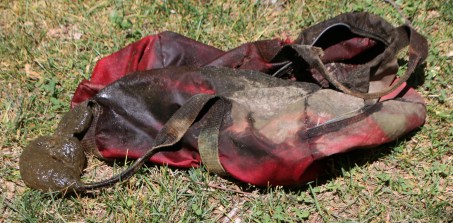
I just eyed it carefully for a while.  It didn’t move, it didn’t multiply. Didn’t make a sound. So far so good.  But it was still a creepy looking unknown thing, a brown, slimy glob, sitting there in the boat with me. I wasn’t thinking cuddly and likeable, more like scary.

And the question amongst us, as we paddled along looking for more trash, was obvious:  What was it?  Now aware of them and on the lookout, we spotted more, just under the surface of the water, usually attached to the submerged branches of downed tree limbs, looking like partially inflated, dirty white plastic bags about half the size of a soccer ball.

“Tuna cakes,” someone said, describing them as a living mass of small invertebrateIMG_5165c organisms.  That may be their nickname, but not that I could find in my research. Try looking that up on the internet sometime.  I did when I got home later on, and came up with a lot of fish recipes.

Fortunately, I got a clarifying email a day or so later.  Someone had done some proper research and let the rest of us know what she’d found out.

We had come across the magnificent bryozoan (Pectinatella magnifica), a family of small filter feeding invertebrates that live as colonies in aquatic habitats. And even more comforting, they actually belong where we found them.

Most bryozoans live in salt water environments, but this one lives in fresh water and is native to North America, usually found in the calm water of rivers and reservoirs east of the Mississippi. The colonies can get to more than two feet across and are usually attached to something underwater but are sometimes found free floating.

And,  just like those tribbles could clog the warp drive, bryozoan have been known to stop up drains and water pipes.

untitledWondering what ever happened to the tribbles?
Here it is, from 1967’s Star Trek: The Trouble with Tribbles:

[all tribbles have been removed from the Enterprise, but nobody seems eager to tell Kirk what happened to them]

Capt. Kirk: Mister Scott. Where – are – the tribbles?

Scott: I used the transporter, Captain.

Capt. Kirk: You used the transporter?

Scott: Aye.

Capt. Kirk: Well, where did you transport them?  Scott, you didn’t transport them into space, did you?

Scott: Captain Kirk! That’d be inhuman!

Capt. Kirk: Well, where are they?

Scott: I gave them a very good home, sir.

Capt. Kirk: WHERE?

Scott: I gave ’em to the Klingons, sir.

Capt. Kirk: [whispering] You gave them to the Klingons?

Scott: Aye, sir. Before they went into warp, I transported the whole kit ‘n’ caboodle into their engine room, where they’ll be no tribble at all.

Below are some more photos from the trash paddle, sponsored by the New Hampshire Chapter of the Appalachian Mountain Club.

IMG_5136c

Trash paddle organizer Denise Hurt proudly displays the gorgeous coffee pot she found in the Merrimack River.  Below are a couple other finds from the day and yours truly in the garbage scow.


Posted in Appalachian Moutain Club, Grumman canoe, Nature, Offbeat, Paddling, Trash Patrol | 2 Comments

Good marketing

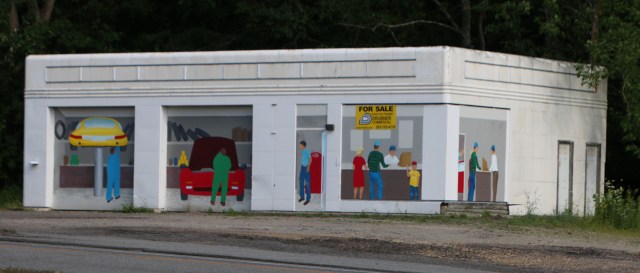
The paint job on this former gas station building up for sale in Ashford, CT, is certainly eye-catching. The number to call if you want to buy it is 203 753-4116, ask for John Famiglietti.  I’ve added this gem to my collection of recycled gas stations across the country.

IMG_6093c

Posted in Gas stations, Road trip | 1 Comment

Swan song

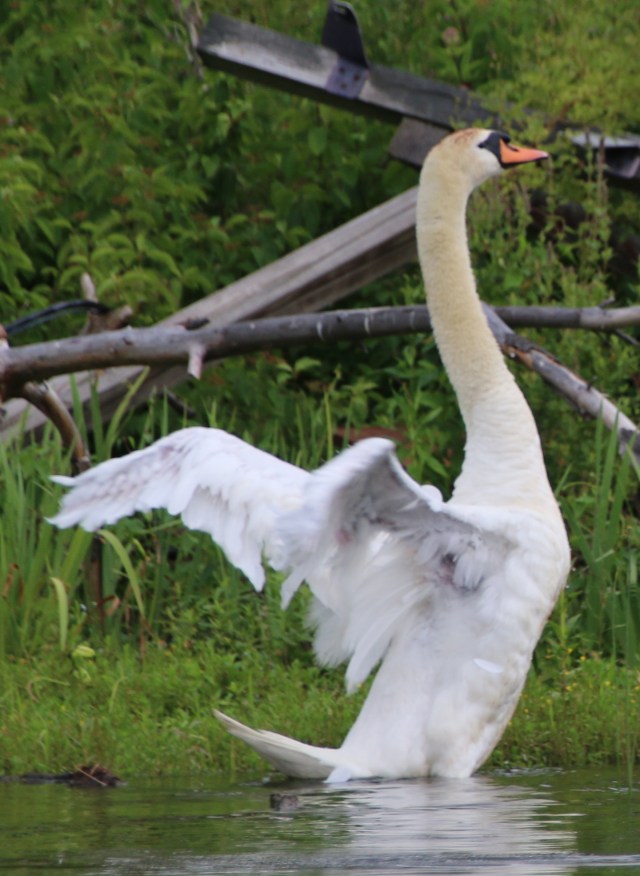
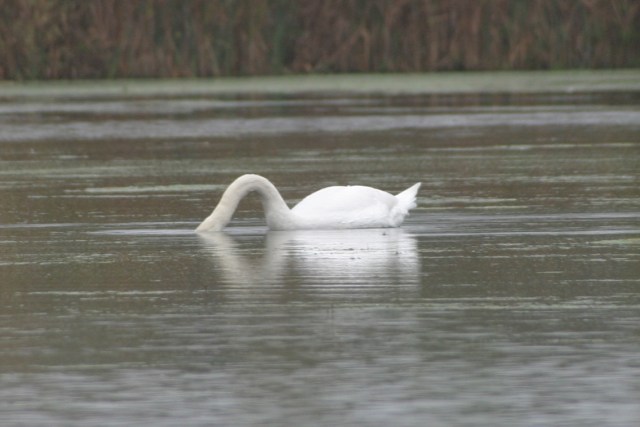
Not mine, the swan’s.  I have been seeing and photographing a lot of these critters lately and the phrase ‘swan song’ came to mind.  What’s that all about?

So I dove into the internet to find out what I don’t know.  It was lots.  For one thing, the name ‘swan’ fits the phrase.  It comes from the Indo-European root swen (to sound, to sing).

IMG_4086cWe all know the term swan song means a final performance, or act, or gesture, upon dying or retirement or otherwise withdrawing from whatever it was we were doing.  It is used mostly for performers of all stripes, and public figures, but not exclusively.

So where does it come from:  It comes from the sound of a dying swan, according to legend and lore, and even a small bit of science.

The legend’s so old that the debunking came way back in AD 77  (way before Snopes, by the way).   In ancient Rome, Pliny the Elder wrote in Natural History:  “Observation shows that the story that the dying swan sings is false.”

But why ruin a good story with facts, right?  Playrights, poets and other authors continued to use the swan song imagery long after the Pliny pronouncement, right up to today.

Chaucer wrote: ‘The Ialous swan, ayens his deth that singeth’ [The jealous swan, sings before his death].  And Shakespeare tossed this into Merchant of Venice in 1596: ‘Portia: Let music sound while he doth make his choice; then, if he lose, he makes a swan-like end, fading in music.’

The actual term ‘swan song’, with its current figurative meaning, doesn’t crop up in print until the 18th century. The Scottish cleric Jon Willison used the expression in 1767 when he referred to “King David’s swan-song.”

Having a bit of fun with it, the poet Samuel Taylor Coleridge (1772-1834) wrote:

Swans sing before they die; ’twere no bad thing

Did certain persons die before they sing.

 Farewell tours can aptly be called swan songs. And one must of course mention the apparent longest of those, that of Nellie Melba, whose swan song consisted of an eight year long string of ‘final concerts’ between 1920 and 1928. This led to the popular Australian phrase – ‘more farewells than Nellie Melba’.

She has some competition.  Cher started her farewell tour in 2002. It went on for more than two years and I am still not sure she’s done.  Then there’s Paul Stanley and Gene Simmons of Kiss, who changed their minds during their farewell tour and decided they liked the money and applause too much to quit.

But I digress.  There is some biological backing for the swan song legend. North America’s trumpeter, the eastern Mediterranean whooper and the Arctic tundra swans have an additional tracheal loop within the sternum, which causes a drawn-out series of notes as the lungs collapse upon death.   German zoologist and naturalist Peter Pallas proposed this in the late 1700s as the basis of the legend.

And, finally, there is this vivid anecdote: Zoologist D. G. Elliot reported in 1898 that a tundra swan he had shot and wounded in flight began a long glide down whilst issuing a series of “plaintive and musical” notes that “sounded at times like the soft running of the notes of an octave.”

Just try getting that image out of your brain.

IMG_5456cIMG_5323c

IMG_5961c

All photos by Ron Haines.

Posted in Nature, Offbeat | 3 Comments

All Aboard!

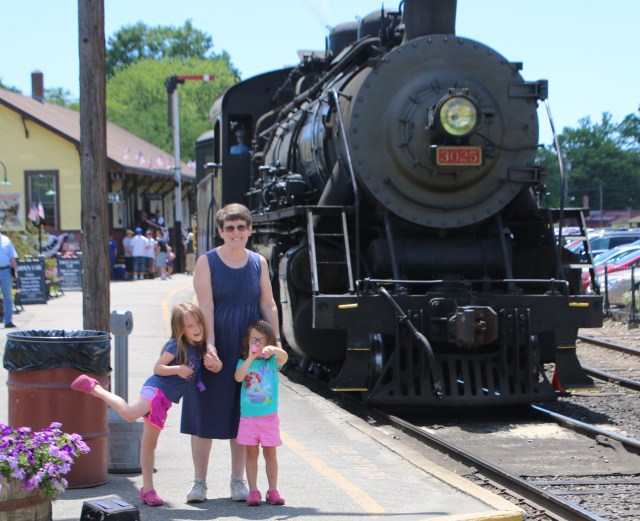
Sue, the grandkids and I took an hour-long ride on the Essex Steam Train the other day.  It runs up the  Connecticut River valley from Essex to East Haddam and most of the trip is right along the river.  With the steam whistle blowing and the bell ringing and the wind coming through the open windows of the vintage coaches, it is just the thing for a summer morning in the Northeast.

IMG_5123c

There was plenty to see and do along the way.  Waving at the cars that had to stop at the crossings was fun, and we spotted a nesting osprey on a piling in the Deep River Marina.  A game played by the announcer, a sort of cross between a Scavenger Hunt and I Spy, was a hit with the kids, keeping them looking out the window for what the loudspeaker told them to spot along the tracks.

If you’ve lots of energy you can make a whole day of it by getting off at Ferry Road for the walk down to the Chester-Hadlyme ferry for transport across the river to tour Gillette Castle and disembarking at the Deep River Landing for a one-hour boat ride.

We kept it to just the train however, and it coincided nicely with the youngsters’ attention spans and our elderly energy levels. Free whistles for the girls for participating in the spotting game and lunch at Micky D’s on the way home capped things off nicely.

We were in a state park the whole way, as I found out later.  The story goes back to the 1870s, when The Valley Railroad Company started running passenger and freight service the 44 miles between Old Saybrook and Hartford.

Over the decades, problems common to short line railroads all over the country– economic depressions, mergers, buyouts, and the loss of passengers and freight to automobiles and trucks—took over.  The last passenger boarded in 1933 and the freight stopped in 1968.

Penn Central, which owned the line then, planned to tear up the tracks and dissolve the railroad, but fortunately preservation-minded folks got involved and by 1970 the State of Connecticut owned the right-of-way, calling it the Connecticut Valley Railroad State Park, a mostly linear, 136-acre property.

The modern-day Valley Railroad Company leases the park from the state and offers a nice 19th century railroad experience, including an 1892 railroad station, steam locomotives, and vintage trains of historic cars.  Just sitting in the shade at the station looking at the old Pullmans, dining cars, engines and cabooses is pleasant.

And a funny coincidence here:  Note that the number on the engine in the photo above is 3025.  I owned a Lionel train with a similar looking engine back in the 1950s.  The number of that engine was just one digit off: 2025

Posted in Grandchildren | Leave a comment

Contoocook for the Fourth once again

Made it to the Fourth of July parade in Contoocook, NH, again this year.  I missed it last year because the Fourth fell on a Saturday, and I go trash paddling on the first Saturday of the month.  I did make it in 2014 though.

The attraction?  My brother and his wife live in Contoocook, so I use that as home when I trash paddle in New Hampshire.  And if you’re there on the Fourth of July, you have to see the parade.

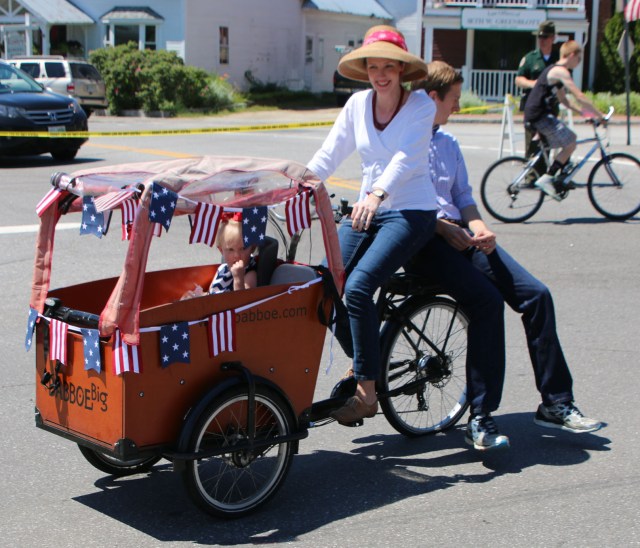
A 30-minute kids’ parade kicks off at 11:30.  For a kid with a decorated trike or scooter it’s a fun walk for a few blocks with cheering fans on both sides of the street and a motorcycle patrolman leading the way.

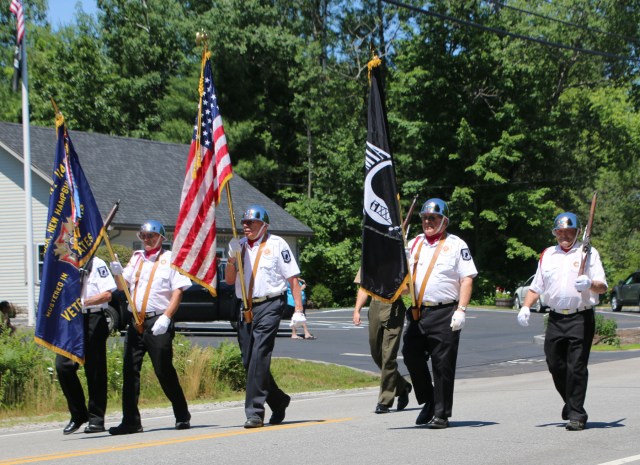
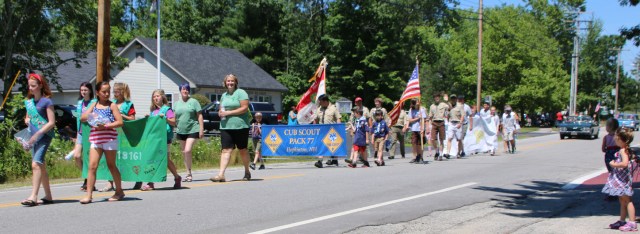
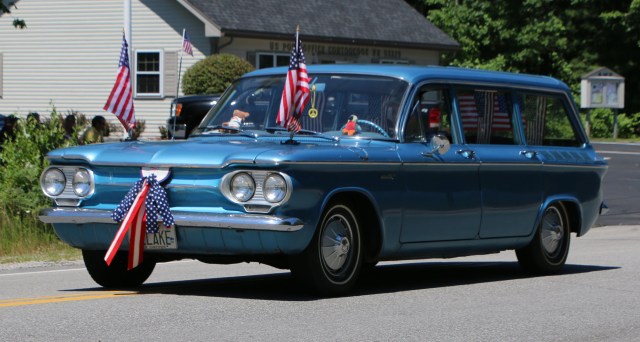
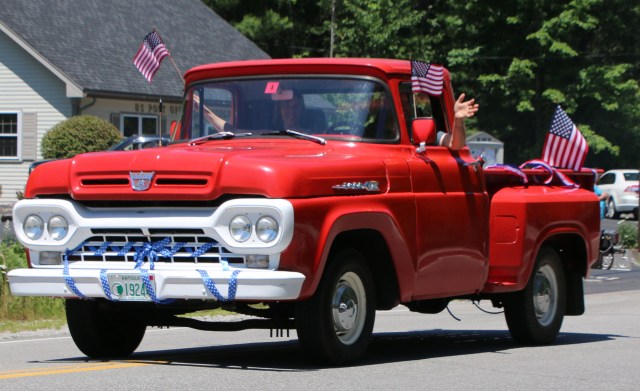
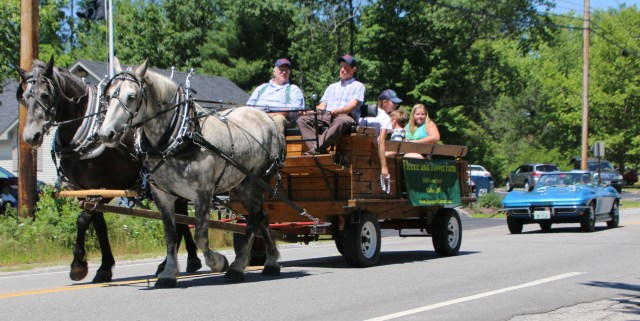
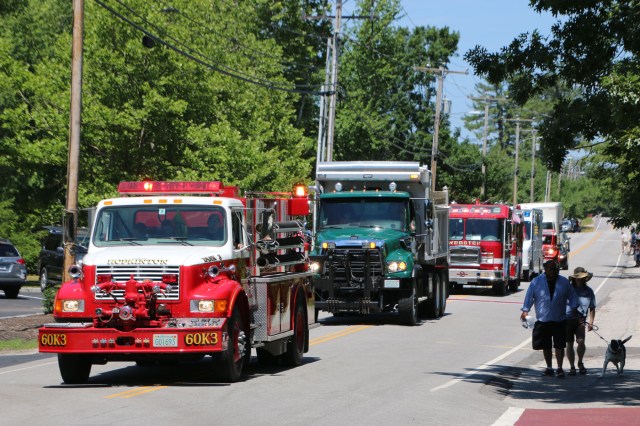
The main event starts after that.  It’s a short, fun parade, a row of veterans with flags, a band on a trailer, the Girl Scouts and Boy Scouts,  a few vintage Corvairs, some older cars, a local horse-drawn farm wagon, several fire engines and the public works’ dump truck.  It goes by in a flash, the kids along the route pick up the candy flung out to them, ears ring from the sirens, and then the road opens back up and traffic resumes.

It’s a frustrating half hour delay if you’re trying to get through town by car at the time, I am sure.

But it’s just a simple good time when sitting in the shade with family and friends along the parade route.

And trash paddling?  That’s the monthly on-the-water trash pickup sponsored by the flatwater paddling section of the Appalachian Mountain Club New Hampshire Chapter.

IMG_5177c

The granddaughters get a chuckle out of a pre-parade selfie taken by their father.


Some other parade photos:

IMG_5201ccIMG_5208cIMG_5213cIMG_5226cIMG_5229cIMG_5230cIMG_5234cIMG_5243cIMG_5245cIMG_5248cIMG_5250cIMG_5251cIMG_5252cIMG_5254cIMG_5257cIMG_5260c

Posted in Appalachian Moutain Club, Grandchildren, Photos mostly, Trash Patrol | 3 Comments

The mural of the story

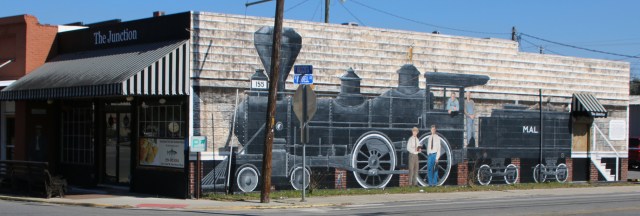
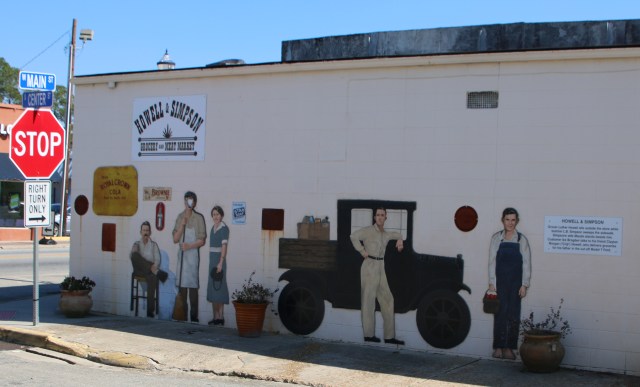
I drove through Lakeland, Georgia, a while ago on my way to somewhere and spotted a large painting on the side of one of the buildings.

IMG_2825c

This is the first one that caught my eye.

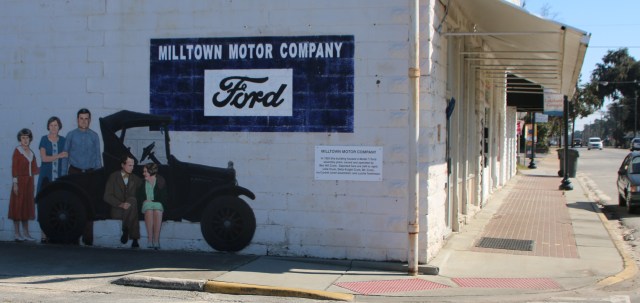
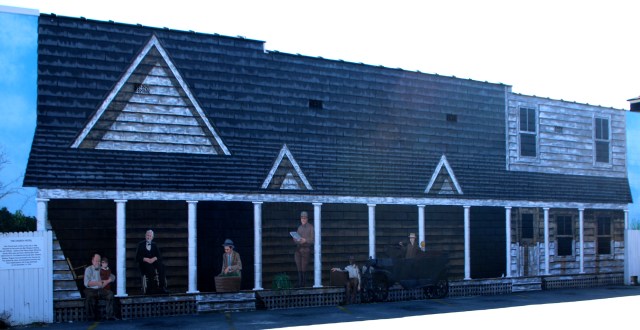
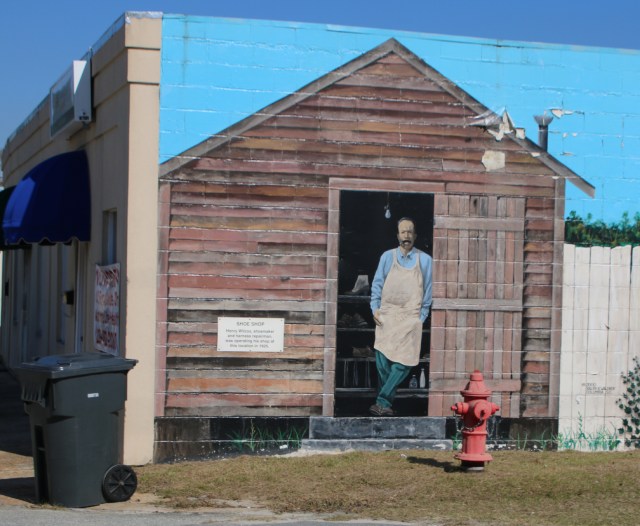
I turned off the main drag and came around the block to take another look and along the way spotted three more large murals, including one on an old gas station that has been recycled into a restaurant.

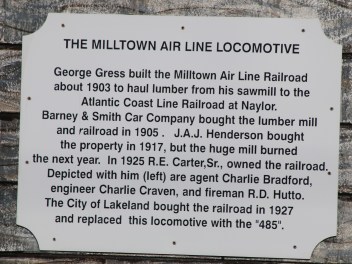
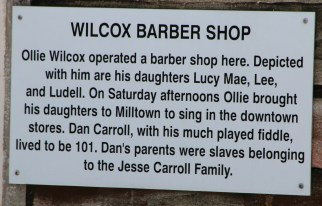
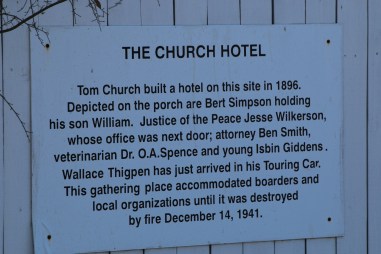
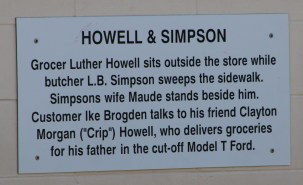
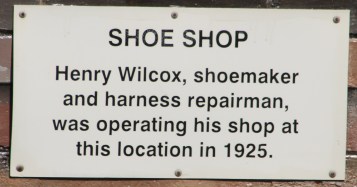
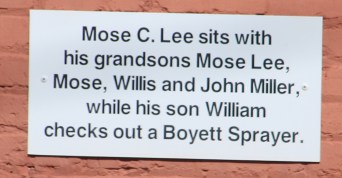
Turns out I’d landed myself smack in the middle of “Georgia’s Historic Mural City.”  I IMG_2797cspent an hour or so wandering about, reading the plaques and taking photos.  There are some 30 murals in all, spread over a five-block area.
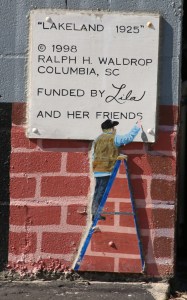
The murals are there because of local matriarch Nell Patten Roquemore, whose grandfather, Bob Patten, and father, Lawson Patten, founded the Patten Seed Company, best known today as the producer of the popular Super-Sod.

A working mother of five, Roquemore served on the city council following her retirement from the U.S. Postal Service, where she was postmaster in Lanier County from 1955 to 1968.

On a visit to Orangeburg, S.C., she noticed what appeared to be some people standingIMG_2902c along the street. She didn’t give them a second thought until someone told her they were murals, the work of Ralph H. Waldrop, a Columbia, S.C. muralist.  The idea was born.

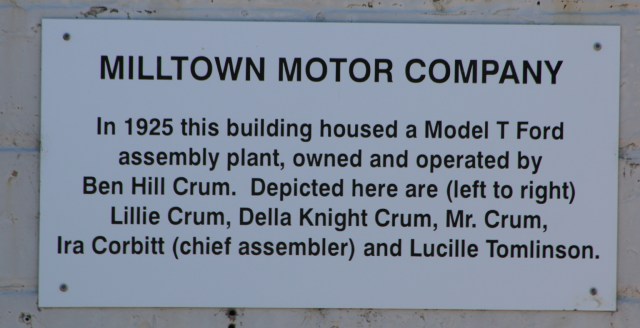
Armed with private donations and one $10,000 state grant, Roquemore commissioned Waldrop to begin work on the Lakeland murals in 1998.  All of the artwork depicts actual people and businesses around town in 1925, the year Lakeland shed its former name, Milltown.

As Roquemore, who was born in 1924, put it: “It gives me a good feeling to walk downtown and see people I knew.”

It all may seem old and dusty, but this town keeps its history IMG_2858cproject in tune with the times.  There was a major restoration of all the murals just this month and that most modern of items, the QR code, is plastered liberally around town for smart phone users to find out what it’s all about.


Many more photos below.  All by Ron Haines, all rights reserved.


This slideshow requires JavaScript.


IMG_2863cIMG_2870c


IMG_2843cIMG_2844c


IMG_2809cIMG_2811c


IMG_2800cIMG_2804c


This slideshow requires JavaScript.


IMG_2897cIMG_2795c


IMG_2862c


IMG_2891cIMG_2892c


IMG_2883cIMG_2876c


This slideshow requires JavaScript.


IMG_2889c


This slideshow requires JavaScript.


IMG_2813c


Posted in Offbeat, Photos mostly, Road trip | 9 Comments

Lights…Camera…Action!

I bought this piece of yard art last year on my way from Connecticut to Texas.  I found it in a shopyard next to the highway, lying out in the open with its brethren, all rusted and crummy looking.

IMG_4651c

They put so much salt on the road in the winter, the shopowner explained, that there’s nearly a mist of it in the air all the time and it eats away at the metal pieces.  About like living at the seashore.  He hadn’t gotten around to cleaning them up and repainting them yet, so I got it cheap.

I put it on the bike rack along with the huge sheet metal blue heron I’d picked up somewhere else. And they all rode along with me for several thousand miles.  The inside of the car was my sleeping quarters on this trip, so there was no room in there for large pieces of yard art.

Back in Connecticut a few weeks later, some Rustoleum spray cans turned that ugly thing into this attractive eye catcher.  Whirlygigs I have, and I have seen but not purchased the balancing thingies out there, so this is by far the most unique piece of moveable yard art I own.  Not wind powered, it takes a gentle push on each of the three pieces to get things moving.  Gives the grandkids something to do when they drop by.  And once in motion it is mesmerizing. 


Oh, forgot to mention that I finally own a camera that takes video.  Move over Cecil B.

Posted in Grandchildren, Road trip, Yard art | 6 Comments

The best one yet

I take a lot of photos of blue herons.  They are huge, easy to spot and therefore an amateur nature photographer’s dream subject.

I have a 300-millimeter lens that helps overcome the distance they want between me and them and a good digital camera that give me lots of pixels when it comes to cropping.  And I have also learned patience; moving along slowly and waiting quietly for something to happen.

All that said, a canoe is not a very stable platform to shoot from, and it’s just darn hard to get the crisp focus that makes the difference between a great photo and an average one.

I finally got a photo this weekend that made even me happy.  It was on the Quabaug River in West Brookfield, MA.

Enjoy…I call it Lunch on the Fly.

IMG_4279c

Posted in Nature, Paddling | 5 Comments

Found another one!

I recently stumbled across another great reuse of an old gas station.  This one, in Putnam, over in Connecticut’s Quiet Corner, is a CrossFit 860 (for the area code) fitness center.  You can see the entire collection of recycled gas stations here.

This slideshow requires JavaScript.

Posted in Gas stations, Road trip | 2 Comments