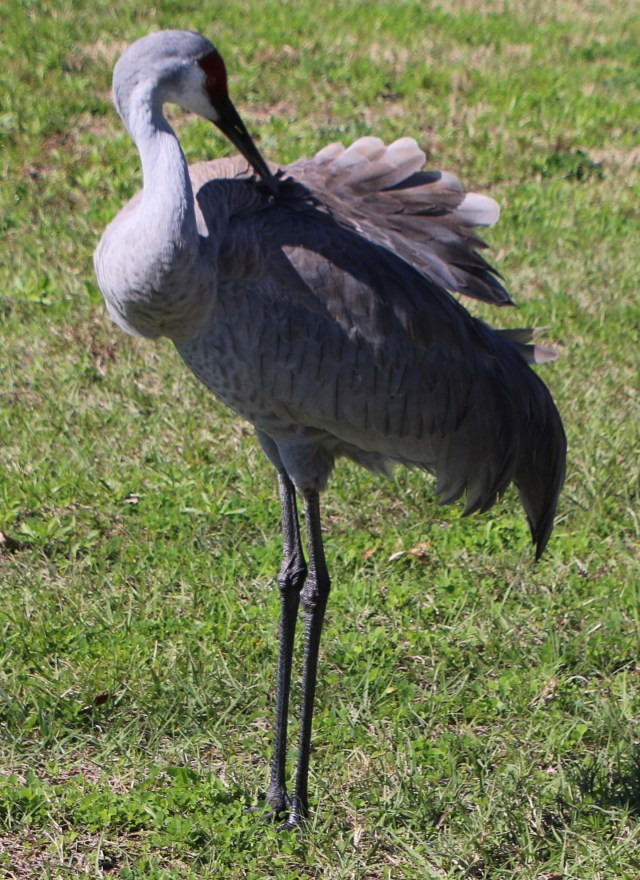
Sandhill crane, somewhere in Florida (Photo by Ron Haines)
Earlier installments of this photo saga are here, here, here and here.
Sandhill crane, somewhere in Florida (Photo by Ron Haines)
Earlier installments of this photo saga are here, here, here and here.

Time to quack like a duck and get the flock out of here! Said at the end of every day as I recall. I heard it at the National Enquirer, and then years later at the Globe.
UPDATE: Friend and colleague Steve Plamann recalls the quote more accurately than I did above. Says Steve: “‘You know what the ducks say, Let’s get the flock out of here.’ Every. Single. Day.”
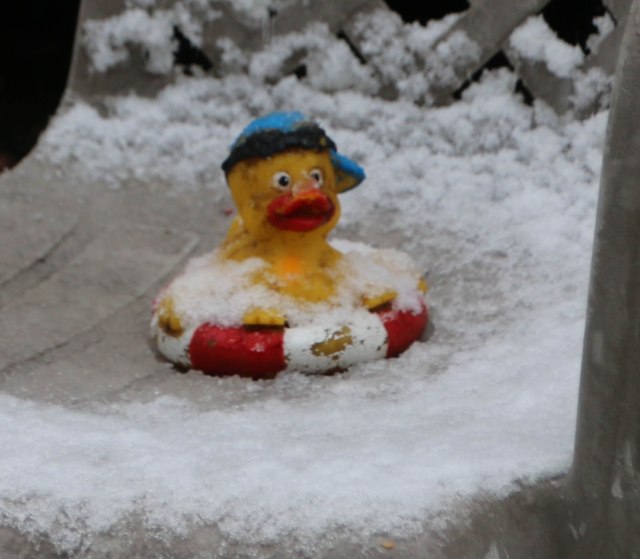
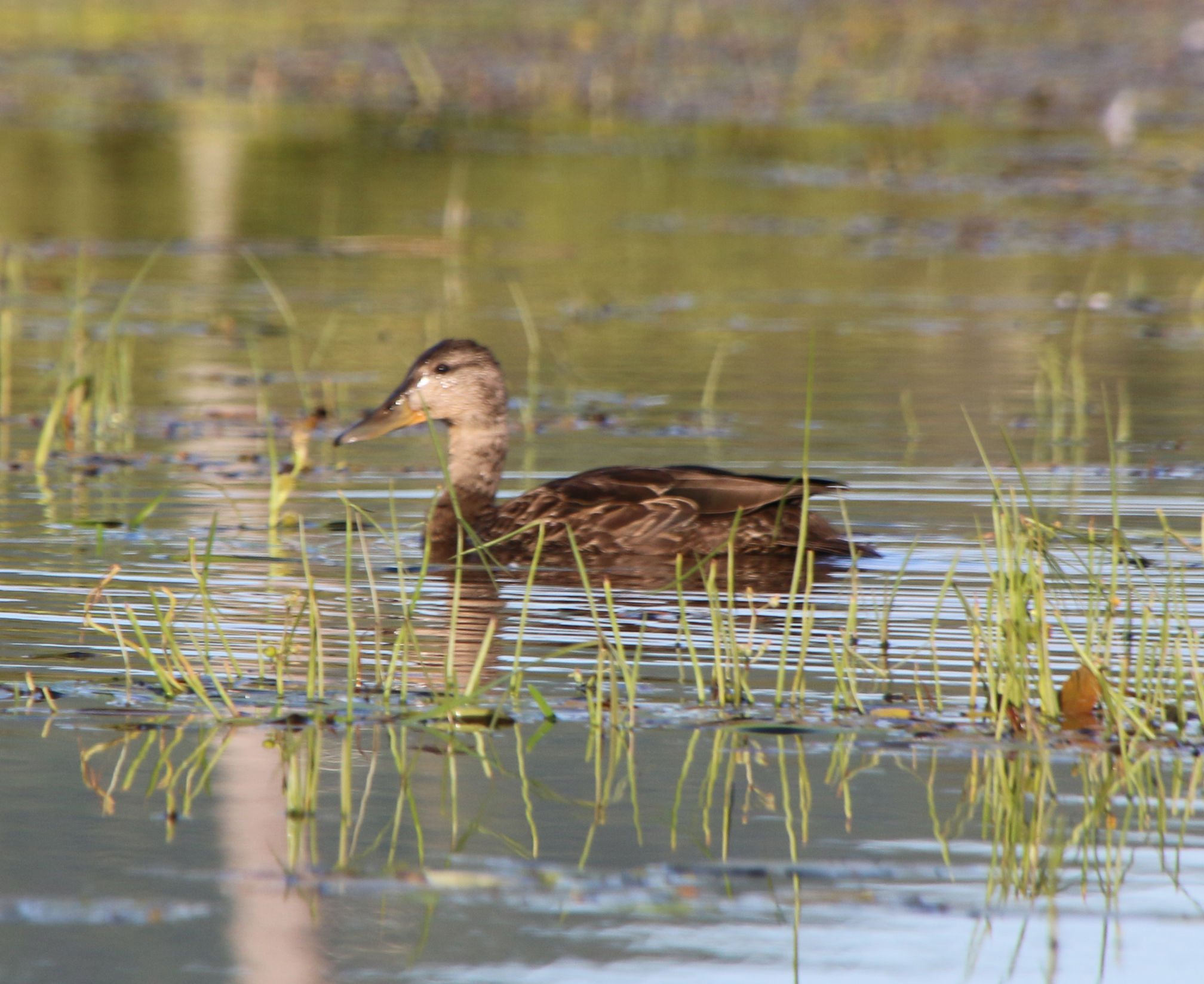
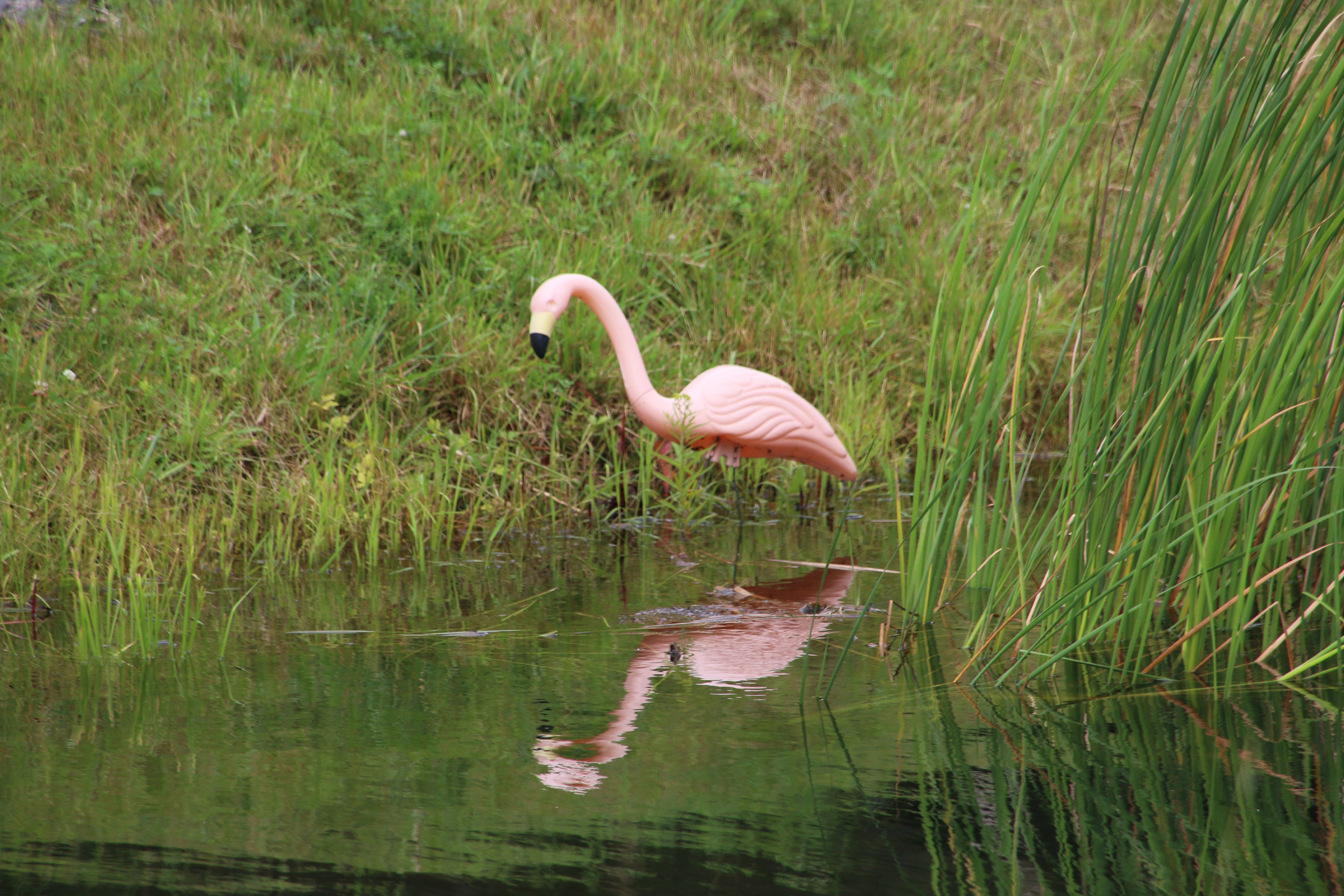
Charlie Montgomery never met the duck below, which I found on a trash paddling trip in New Hampshire, but I am sure he would have liked him. He’s become a small yard ornament in Connecticut, even when it snows.

I found a couple more great recycled gas stations recently.
I especially like the one in Hartford that is now a cemetery headstone company with the upbeat motto: “It’s Later Than You Think.”
See the entire reused gas station collection here.
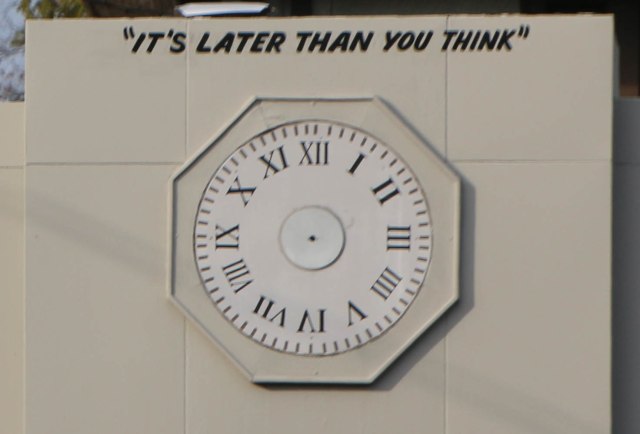
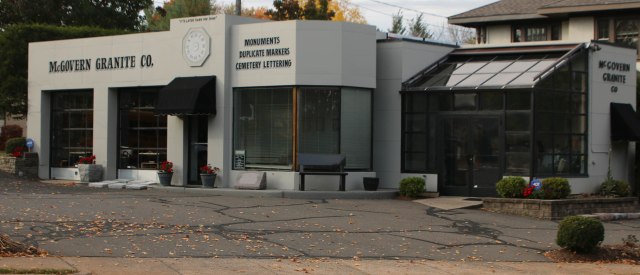
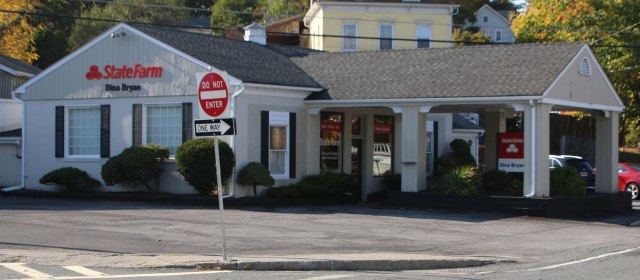
The two photos above are at the McGovern Granite Company in Hartford, CT. Below is a State Farm office in Walden, NY. (Photos by Ron Haines)

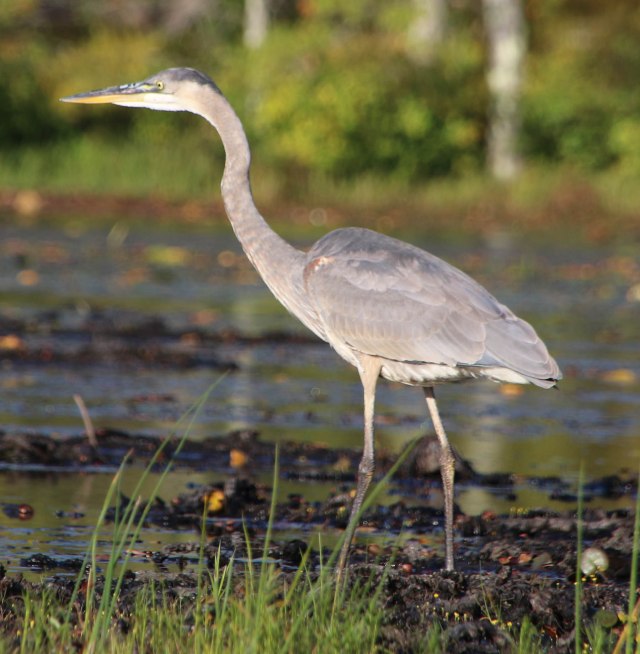
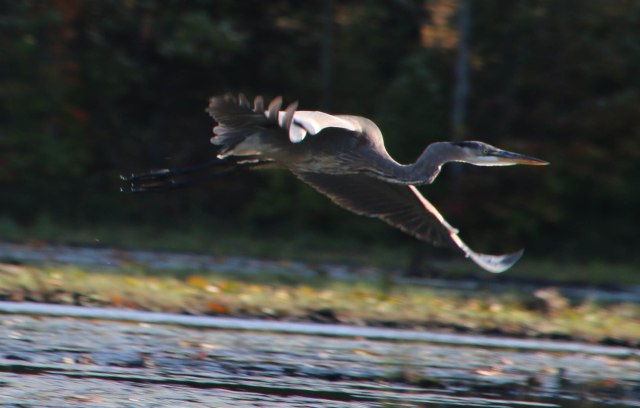
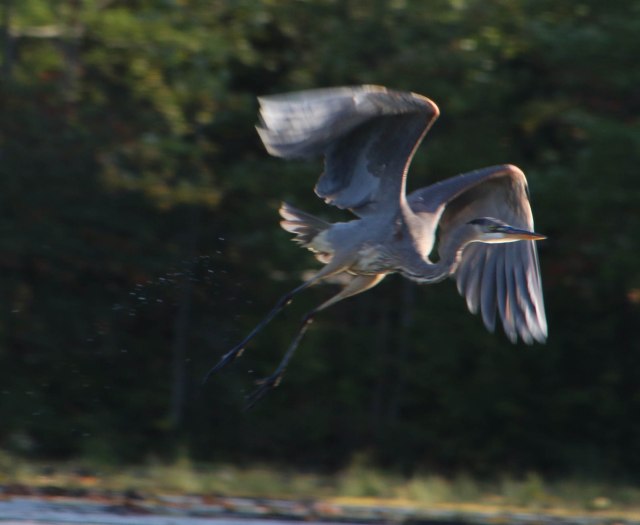
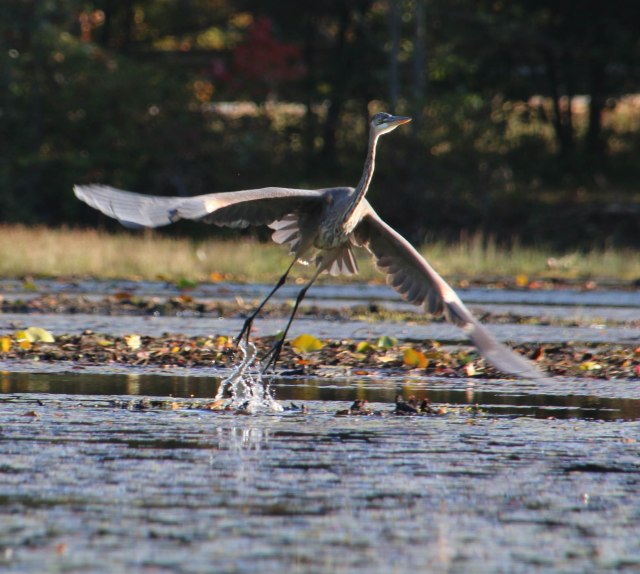
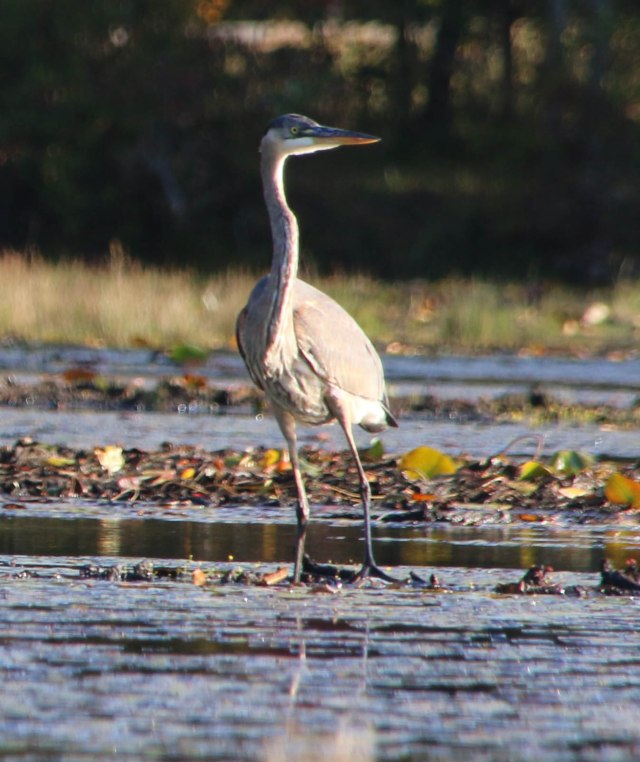
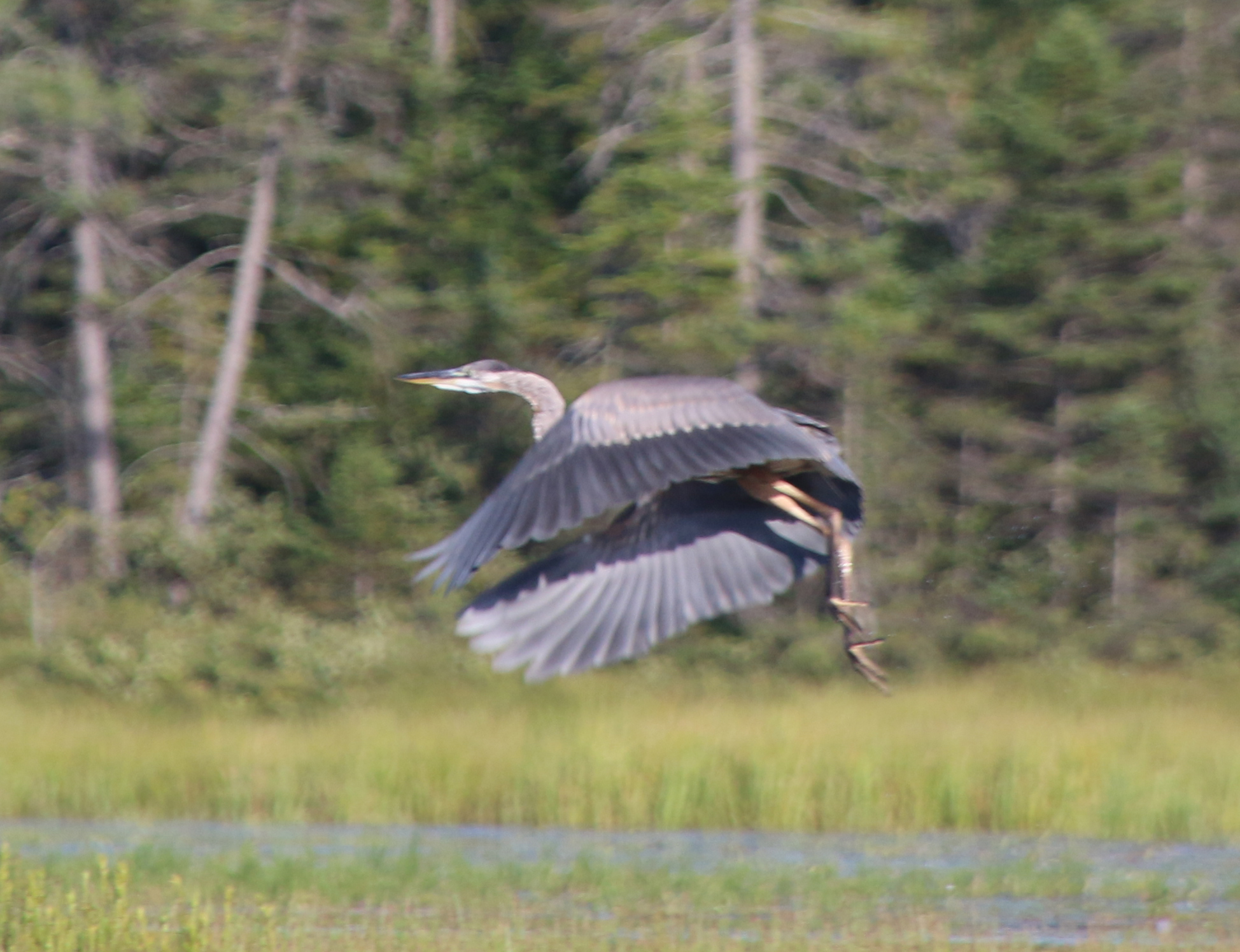
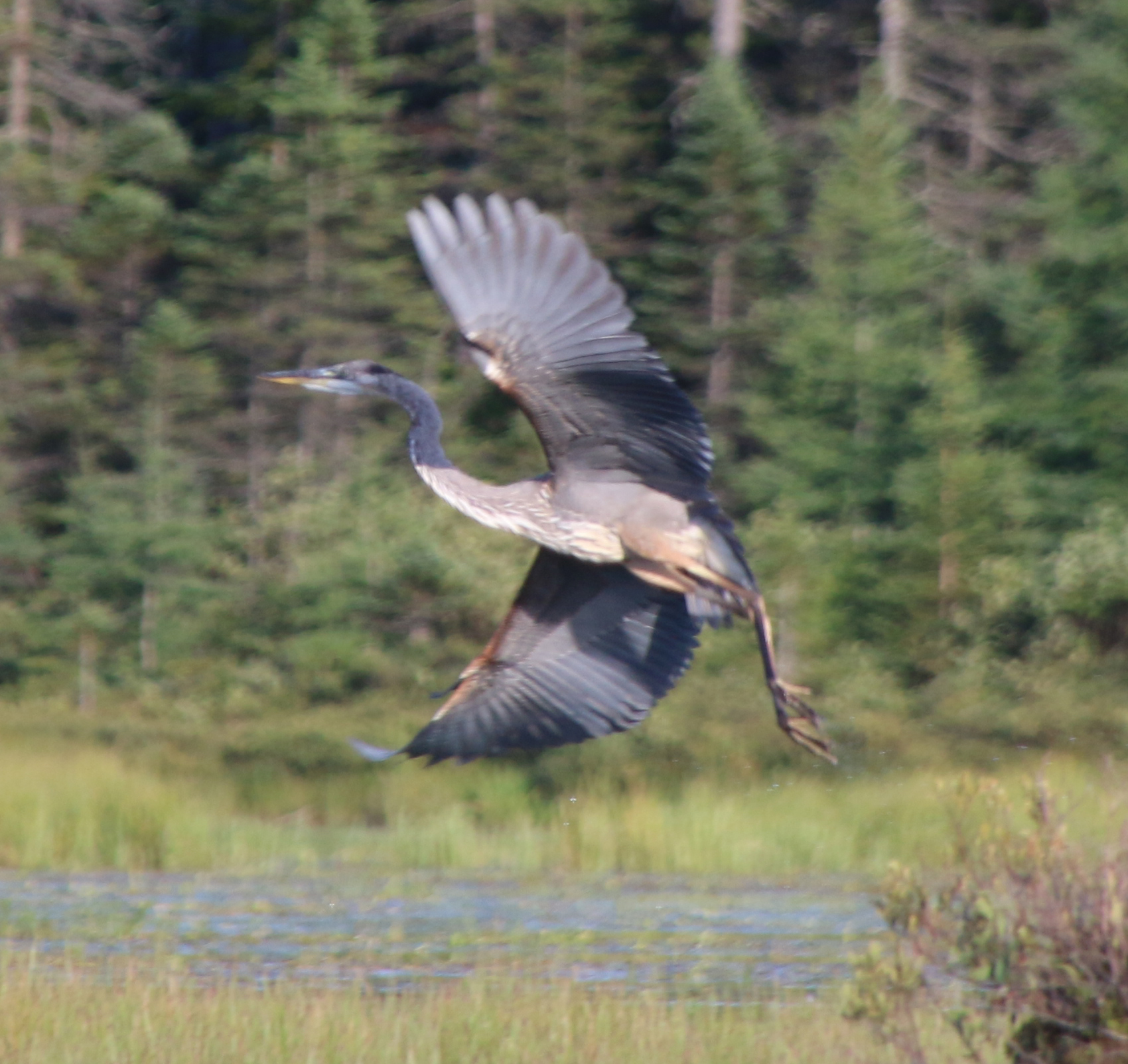
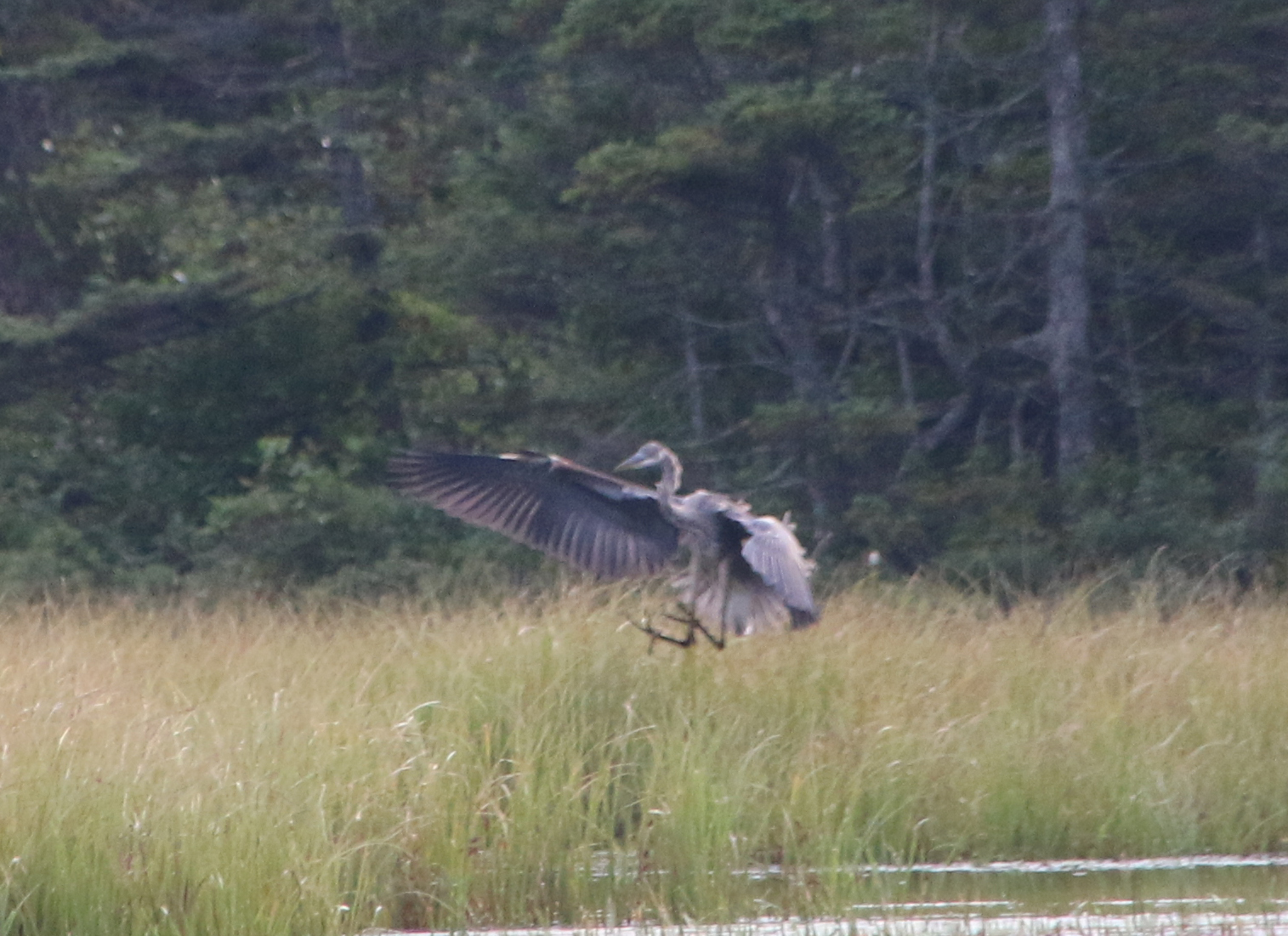
This is the first time I’ve been mooned by a blue heron. This one is on Pine Acres Lake, a small, shallow body of water near the eastern Connecticut town of Hampton.

It’s beginning to get chilly up here now, highs in the 60s and lows in the 40s, but as long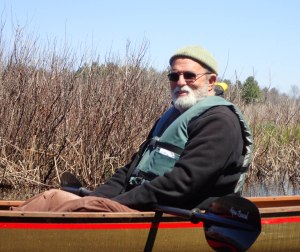 as I get a bit of sun, the paddling’s still OK if I bundle up a bit.
This heron got me to wondering when and if they migrate south for the winter. The short answer is they do and they don’t. Or, better put, they don’t have to. The key is open water for fishing. As long as they have that they will happily hang around in the winter.

This map confuses the issue further. At the north and south extremes there is migration, but in the middle many just stay put.
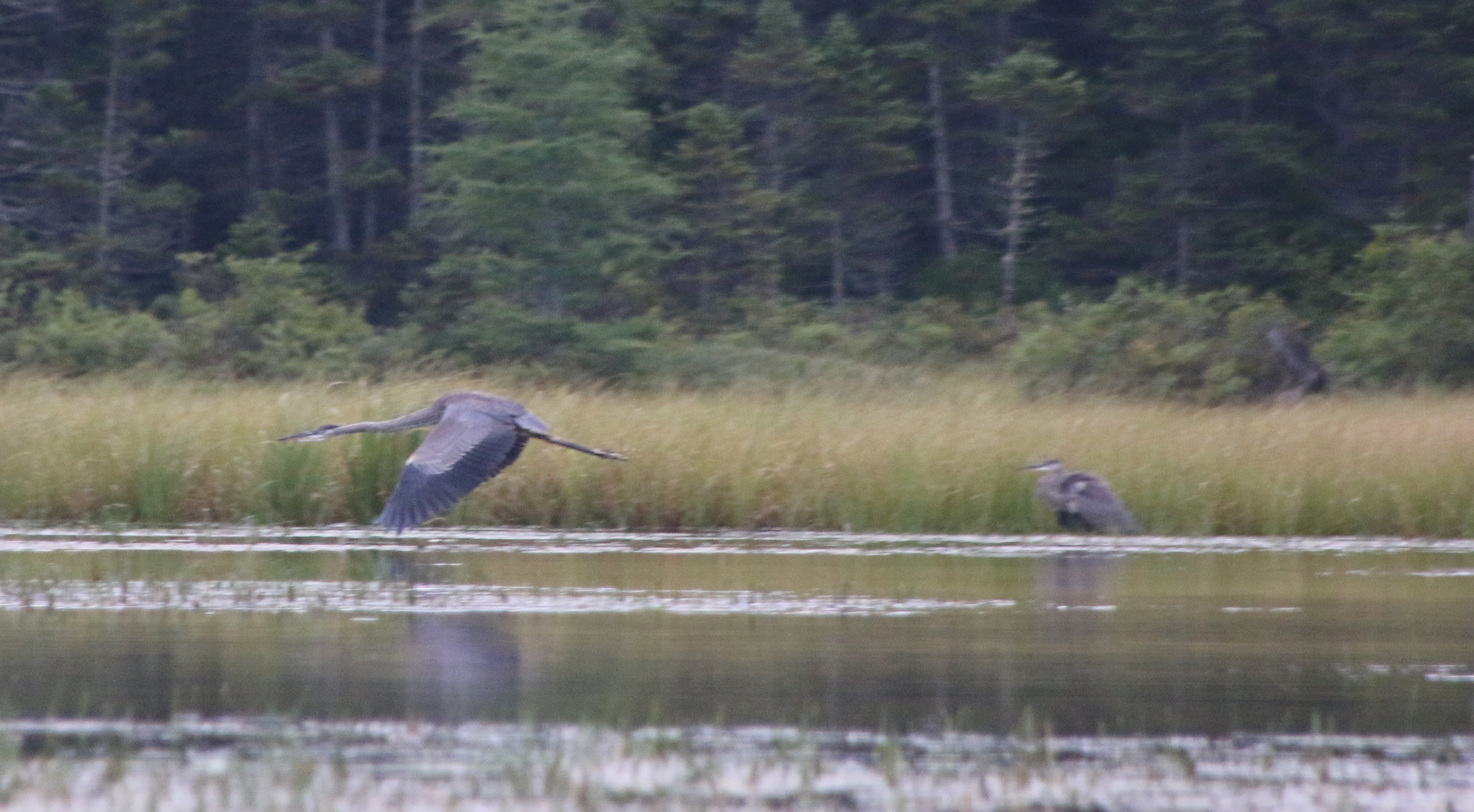
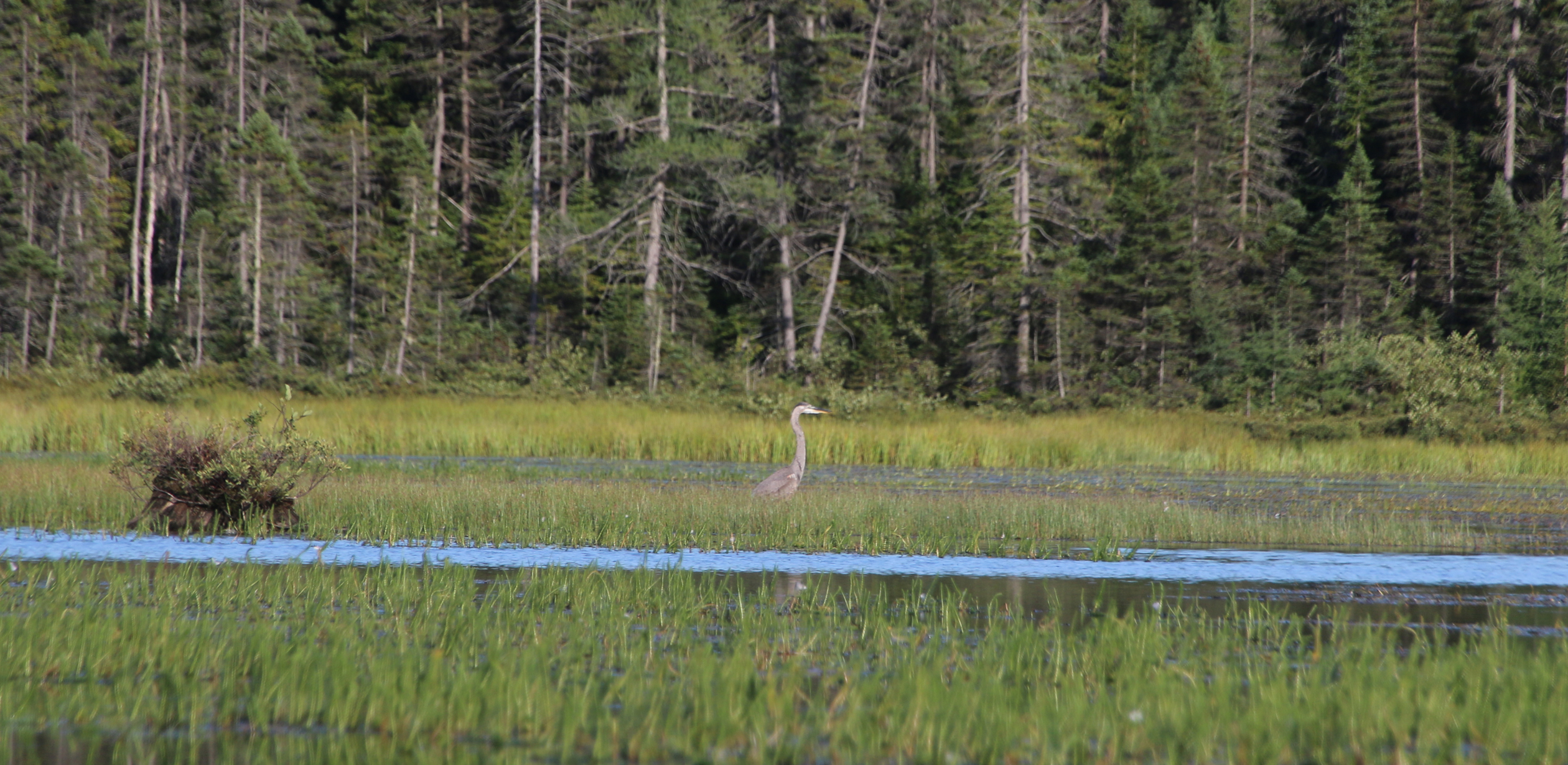
Meanwhile, here are some other heron photos from Pine Acres the other day.

As much as one might abhor the thoughtless touristy tradition of driving through a hole that’s been hacked into a majestic redwood tree, one has to admit that the iconic photo of a car doing just that has planted the redwoods and sequoias into the psyche of generations of Americans who probably wouldn’t to this day know just what they are.
So on a road trip this summer in northern California, seeing the redwoods up close and personal was right up there on my to-do list. Hey, I remember those postcards from the ’50s.
But oddly enough, the photo that’s stuck in my mind from childhood of an old car driving through a tree isn’t even of a redwood. It’s called the Wawona Tree, and is a giant sequoia located in the Mariposa Grove over in Yosemite National Park, about 500 miles southeast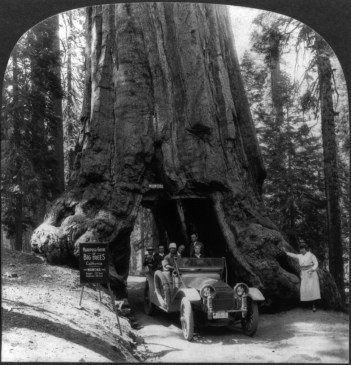 of Redwood National Park.
The Wawona tree was cut in 1881, enlarging an existing fire scar. Two men, the Scribner brothers, were paid $75 for the job. Created by the Yosemite Stage and Turnpike Company as a tourist attraction, the tunnel became immensely popular. Visitors were often photographed driving through or standing in the tunnel. Its construction was part of an effort by the Park Service to increase tourism in the age of the automobile.
It stood, 227 feet tall and 26 feet in diameter at the base, until 1969, when it was toppled by heavy snow load. It remains where it fell and today is known as The Fallen Tunnel Tree. No kidding.
Giant sequoias and redwoods are closely related, but differences are notable. Sequoias grow singly or in scattered groups along about 250 miles on the western slopes of the Sierra Nevada in central California and the redwoods are found near the Pacific Ocean along the northern California coast in a more or less continuous belt about 450 miles long and 15 miles wide. The giant sequoia is the largest tree in the world in volume and has an immense trunk with very slight taper, while the redwood is the world’s tallest tree and has a slender trunk.
I didn’t go see the sequoias. There wasn’t enough time to make that kind of massive detour on this road trip.
But I did see some redwoods along the aptly named Avenue of the Giants, and of course visited the three existing drive-through-the-redwood tourist attractions (plan on $5 a carload).
The first one I came across is about 180 miles north of San Francisco in the Drive-Thru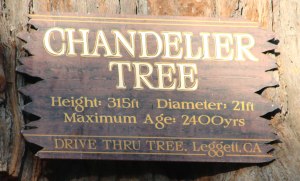 Tree Park, a privately-owned redwood grove that has been operated by the same family since 1922. In 1937, a tunnel was carved in one of the larger trees, a massive 315-foot tall, 21-foot diameter, 2,400-year-old specimen, and the Chandelier Drive-Thru Tree was born. It’s in Leggett, CA, where Route 1 joins Route 101 after swinging inland a bit from the coast.

Chandelier Tree (Photos by Ron Haines)
Next up was the Shrine Drive-Thru Tree in Myers Flat, CA, about 40 miles up the road. This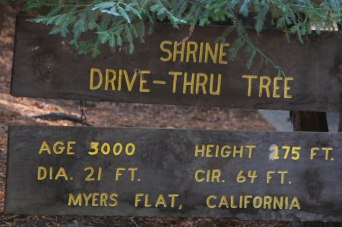 is a ‘chimney’ tree. The trunk’s been hollowed out, probably by fire from a lightning strike more than a century ago. Spared from logging likely because it didn’t have any useful wood, it has survived as a tourist attraction, with heavy cables (installed in 1942) to keep it precariously upright and a widened hole in the natural split in the trunk to accommodate cars. According to one source, it is 78 feet shorter, 3.8 feet narrower, and more than 490 years younger than the sign next to it states.
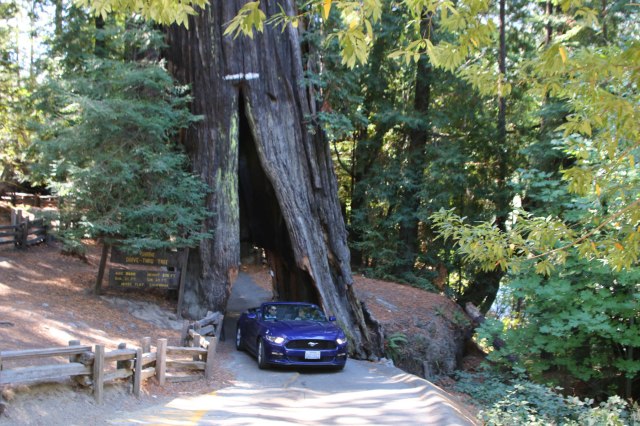
Shrine Drive-Thru Tree (Photos by Ron Haines)
A little more than 100 miles further north, near Klamath, CA, was the third tunnel tree I visited. Called the Tour Thru Tree, it is the youngest, at about 725 years old, and it’s pretty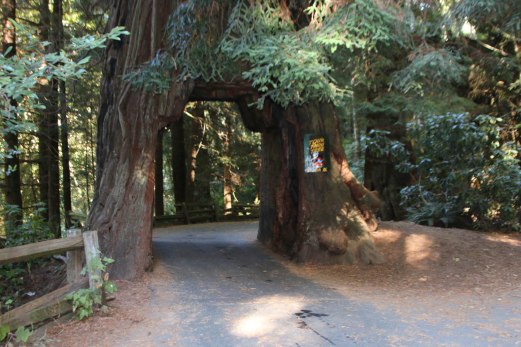 battered. Scared by fire and its top the victim of storms, it is not unlike lots of other survivors in redwood land. But this one had a tunnel bored through it in 1976.
The absolute best part of my trip through redwoods territory was a slow lazy drive along the Avenue of the Giants, a 31-mile, meandering, two-lane road that goes through the densest portion of the old redwood forest and is completely within the Humboldt Redwoods State Park.
Stretching from Garberville up nearly to Fortuna, it parallels Route 101 and winds along the Eel River. Even without the surrounding 50,000 acres of redwoods it would be a nice scenic drive. With the redwoods it is just spectacular. All those who want to go through the area in a hurry are over on freeway-like Route 101, leaving the ‘Avenue’ for those who want to travel slowly, stopping often to just stroll among the huge trees and even do a U-Turn once in a while to drive twice through a particularly nice section.
Stopping places abound and if you need a coffee or a snack there are several small towns along the way, complete with some interesting shops to browse as well.
Here’s a slide show of some of what I saw along the ‘Avenue:’
The history of the redwoods is not unlike the history of many of our country’s natural places: Somebody wakes up one day and says, ‘Hey, maybe we better do something before all of this is gone!’
Logging hit the redwoods hard in the 1800’s. In just 60 years, over two million acres of old growth redwood forest had been reduced to a few hundred thousand acres. By the 1890s nearly all the redwoods were in private hands.
Fortunately, folks did start waking up—the Save the Redwoods League was formed in 1918—but it still took decades to stop the lumbering juggernaut.
The League was formed to buy redwood tracts for preservation and it bought over 100,000 acres between 1920 and 1960. The majority of these were North Coast redwood groves and the California Department of Parks and Recreation created state parks with these lands.
By the 1960s, logging had consumed nearly 90 percent of all the original redwoods. Redwood National Park was established in 1968, securing some of the few remaining stands of uncut trees. Expansion of the park since then has included restoration of logged-over land and protection of Redwood Creek.
In 1994, the federal and state governments agreed to jointly manage all the parks for the best resource protection possible and today they are designated a World Heritage Site and are part of the California Coast Range Biosphere Reserve, designations that reflect worldwide recognition of the parks’ natural resources as irreplaceable.
There is still lumbering in the area of course. I drove past the Humboldt Redwood Company in Scotia, CA, with its piles of cut wood and unmilled lumber. Makes one wonder what it would have been like to see the massiveness of the historical full-tilt lumbering industry in its heyday in the area.
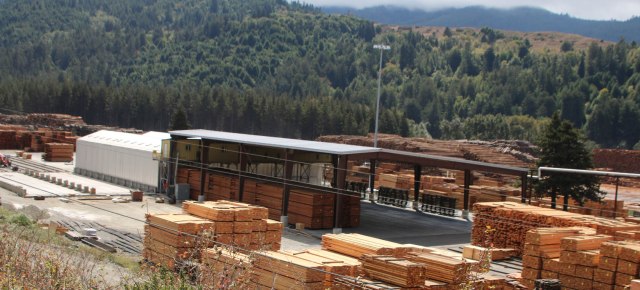
Humboldt Redwood, Scotia, CA (Photo by Ron Haines)

Weed. In marketing parlance, it’s a great name for a California municipality to have on the eve of the November 8 vote on Proposition 64, a bill to legalize the recreational use, possession, cultivation, and sale of marijuana.

Some T-shirt entrepreneurs are already cashing in on the name. (Photo by Ron Haines)
This in a state that has already legalized medical marijuana and where recreational marijuana possession of up to one ounce is an infraction, similar to a traffic violation, with a $100 fine.
Wonder what Abner Weed would think of it all? He founded the town, and the local lumber mill, back in the late 1800s after discovering that the area’s strong winds were helpful in drying cut wood. By the 1940s the city boasted the world’s largest sawmill.
By the 1980s, however, what had once been a thriving logging and wood products industry was on the wane, to be replaced by a reliance on tourism. With three rivers and a few mountains nearby, Weed is also a mere 10 miles from popular Mount Shasta, a prominent northern California landmark and the second-tallest volcano in the Cascade Range. Fishing, skiing, biking and hiking are popular in the area.
The place was nearly wiped out in 2014 by the fast-moving Boles wildfire, which in a matter of hours spread to 200 acres and damaged or destroyed some 200 structures.
It has a small bit of literary fame from Steinbeck’s Of Mice and Men. It’s the town from which the mildly retarded Lenny and his friend George fled in Chapter 1.
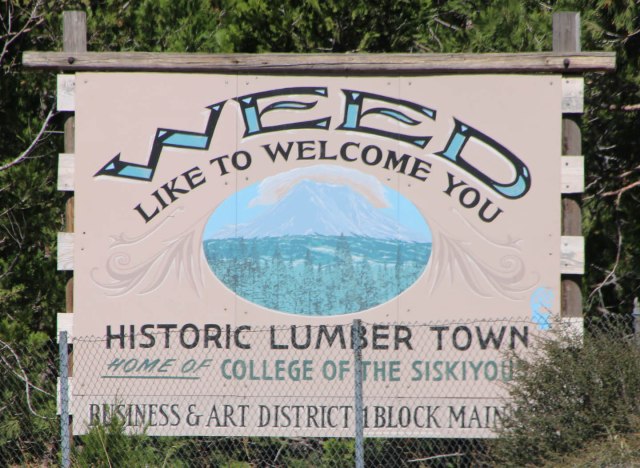
That portrayal conflicts a bit with its motto: Weed Like to Welcome You.

This chiropractic office in Eugene, Oregon, is one of several great recycled gas stations I found on my recent trip along the coast of northern California and southern Oregon. See those and others right here.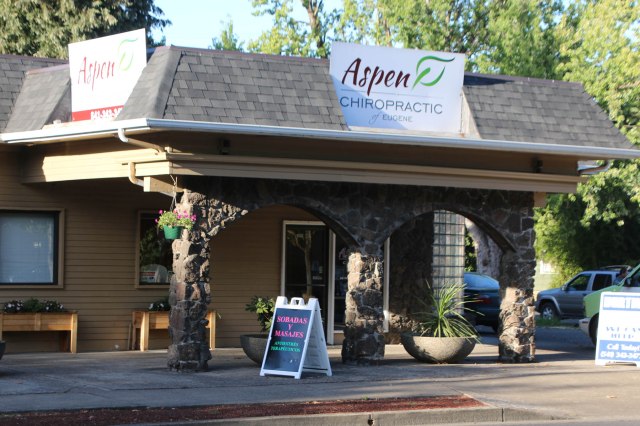

I usually don’t stop for lunch on the road, but by mid-afternoon, especially in the summer, I am always on the lookout for an ice cream stand.
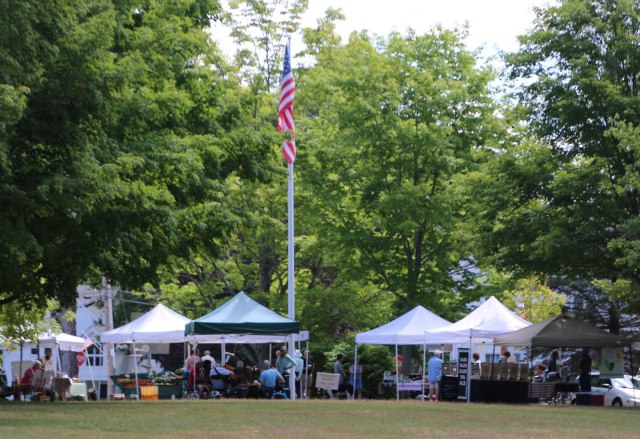
That thought was on my mind when I drove into tiny Hardwick, Massachusetts on Route 32A a few weeks ago on a meandering ride back to Connecticut from brother Rick’s house in New Hampshire.
The place was so small I knew there wouldn’t be an ice cream shop—or any other commercial establishment for that matter.
But as I approached the town green I spotted a kid with his parents walking along and the kid was eating what looked like ice cream out of a white container with a plastic spoon. Where did he get that, I wondered.
 As I rounded the green I noticed a group of people, a cluster of shade tents and the sound of music. I parked and got out. A small farmers’ market: a cheese and beef seller, produce vendor, a pastry tent, a handmade soap tent, and a guy with homemade ice cream. And as a plus there was a small band and a woman painting pet portraits.
It was a perfect pit stop: homemade ice cream and a fresh fruit pastry to eat, a bench to sit on, shade to enjoy, a band to listen to, and, if I had needed it, a bathroom in the nearby town hall.


First a I saw a moose in the water in northern New Hampshire, and now an elk in the wild in northern California.
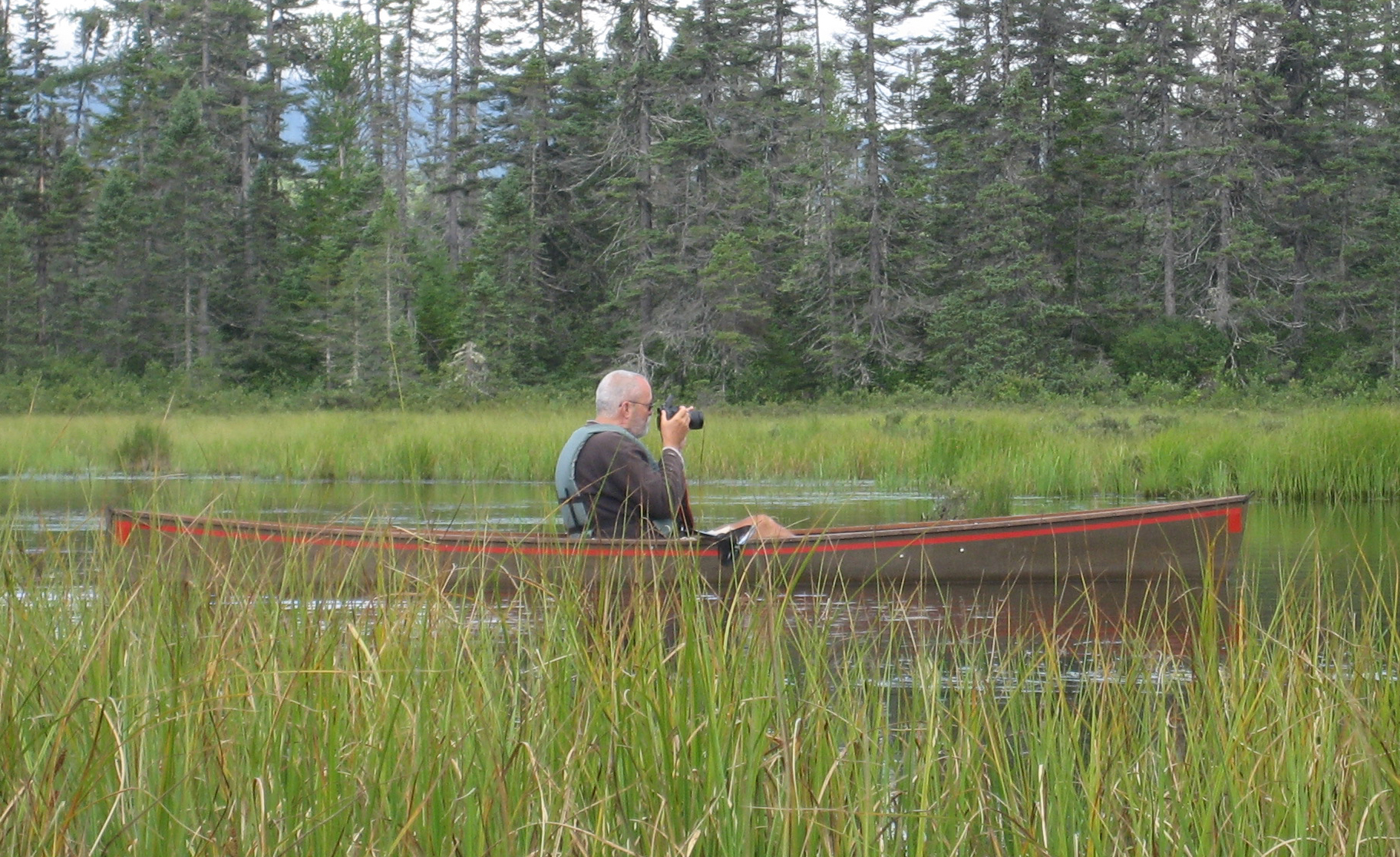
Spotting the moose required lots of planning and patience, getting up one day before the sun and paddling along quietly in the canoe at sunrise for and hour or so, watching and waiting. 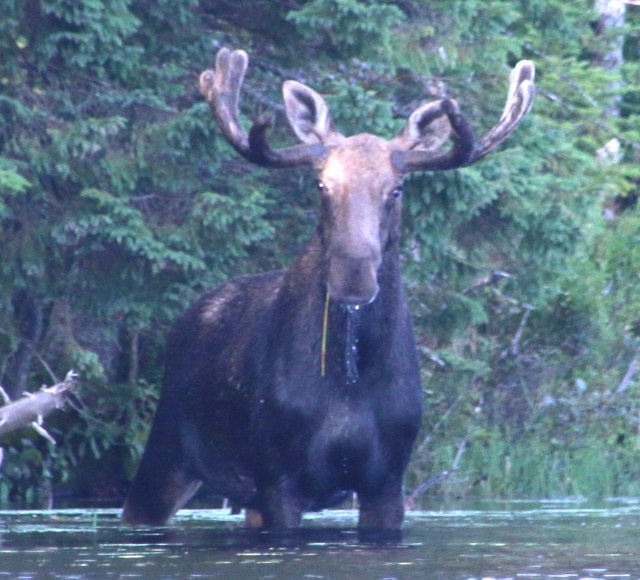
Seeing an elk required none of that.


The elk was just there, in a field, with a bunch of females. All I had to do was get out of the car and take some photos. There was even a sign along 101 near Orick, CA, alerting me: “Elk Meadow, turn left ahead.”
And unlike the moose, which quickly melted back into the woods when I spotted it, the elk seemed to relish the attention, walking around and checking out his females before lying down in the tall grass for a rest.
Once you’ve seen them, moose and elk are pretty dissimiliar. Both from the deer family, moose are larger than elk and have large droopy necks and lips. The wide, flat antlers of a moose are distinctly different than elk antlers, which are thinner and very branched, much like those of a regular deer.
Moose are solitary animals, while elk live in matriarchal herds.
What about the human variety? There are about a million of each and they eat and party and support a number of charitable and social programs.
I’m talking about the Loyal Order of Moose and the Benevolent and Protective Order of Elks, of course.
Both are very serious fraternal/social/charitable organizations, with roots back to the late 1800s.
Dr. John Henry founded the Moose in 1888 in Louisville, Kentucky, as purely a men’s social club. Lodges were established in Ohio, Missouri and Indiana. But it foundered. By 1906 only two lodges in Indiana remained and even Dr. Henry had let his membership lapse. Then, member James Davis, an immigrant mill worker and labor organizer, envisioned the organization as a way of providing a social safety net for workers. He outlined his plan in a speech at the 1906 Moose national convention (7 delegates attended) and was appointed “Supreme Organizer.” The group flourished and by 1912 membership was at half a million and there were 1,000 lodges. James Davis, by the way, went on to become Secretary of Labor in the Harding administration.
Today, the Loyal Order of Moose, headquartered in Mooseheart, Illinois, supports the Mooseheart Child City and School for children and teens in Illinois, and Moosehaven, a 63-acre retirement community for its members near Jacksonville, Florida. Also, Moose lodges and chapters sponsor numerous sports and recreational programs and conduct approximately $75 million worth of community service (counting monetary donations and volunteer hours worked) annually. There are about a million male members worldwide and some 400,000 women in its female auxiliary, Women of the Moose.
The Benevolent and Protective Order of Elks began as a more fun place. It started in 1868 as a social club for minstrel show performers in New York and was called the “Jolly Corks.” It was established as  a private club to evade laws governing the opening hours of public taverns. Early members were mostly from theatrical performing troupes in New York City.
Things got more serious, however, after the death of a member left his wife and children without income. The club took up additional service roles, rituals and a new name, the Elks, by an 8-7 vote. The buffalo was runner up.
Today it is a major fraternal, charitable, and service order with more than a million members, both men and women. It is headquartered at the Elks National Veterans Memorial in Chicago. The Elks has never had an official female auxiliary, but since a mid-1990s court ruling, does accept female members.
Where does all this lead? Right to “The Honeymooners” of course, and Raccoon Lodge members Ralph Kramden and Ed Norton (“An Emergency meeting is an Emergency meeting—never a poker game. An Executive Meeting, that’s a poker game.”).
The rituals and nomenclature of fraternal orders like the Moose and Elks made them ripe for great satire. Here, for example, are some real Elks titles: the Grand Exalted Ruler, Grand Secretary, Grand Esteemed Leading Knight, Grand Esteemed Loyal Knight, Grand Esteemed Lecturing Knight, Grand Treasurer, Grand Tiler, Grand Inner Guard and Grand Trustees.
The fictional Raccoons, called variously in the show the International Order of Friendly Sons of the 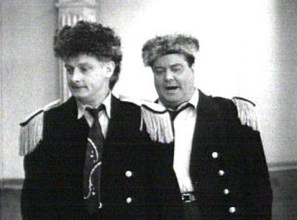 Raccoons, the International Order of Loyal Raccoons, or the Royal Order of Raccoons, had a great drinking toast: “Fingers to fingers, thumbs to thumbs, watch out below, here she comes.”
And the Raccoon official greeting involved touching elbows (first right then left), followed by a “Woooooo” sounding cry as they wiggled the raccoon tail on their lodge hat. They ended by chorusing: “Brothers under the pelt.” Find all this and more at http://raccoonfounders.weebly.com/index.html.
My only personal experience with either the Moose or the Elks has been slight; as a kid in Harvey, Illinois, I remember a friend whose father spent a lot of time at the local Moose Lodge.
My dad had an association with some sort of civic group, the Jaycees I think, for a short while. All I can remember about that is he got the short end of the stick in something involving them and we ended up with a goat living at our house. For a week.
I thought it was fun. He was not pleased.

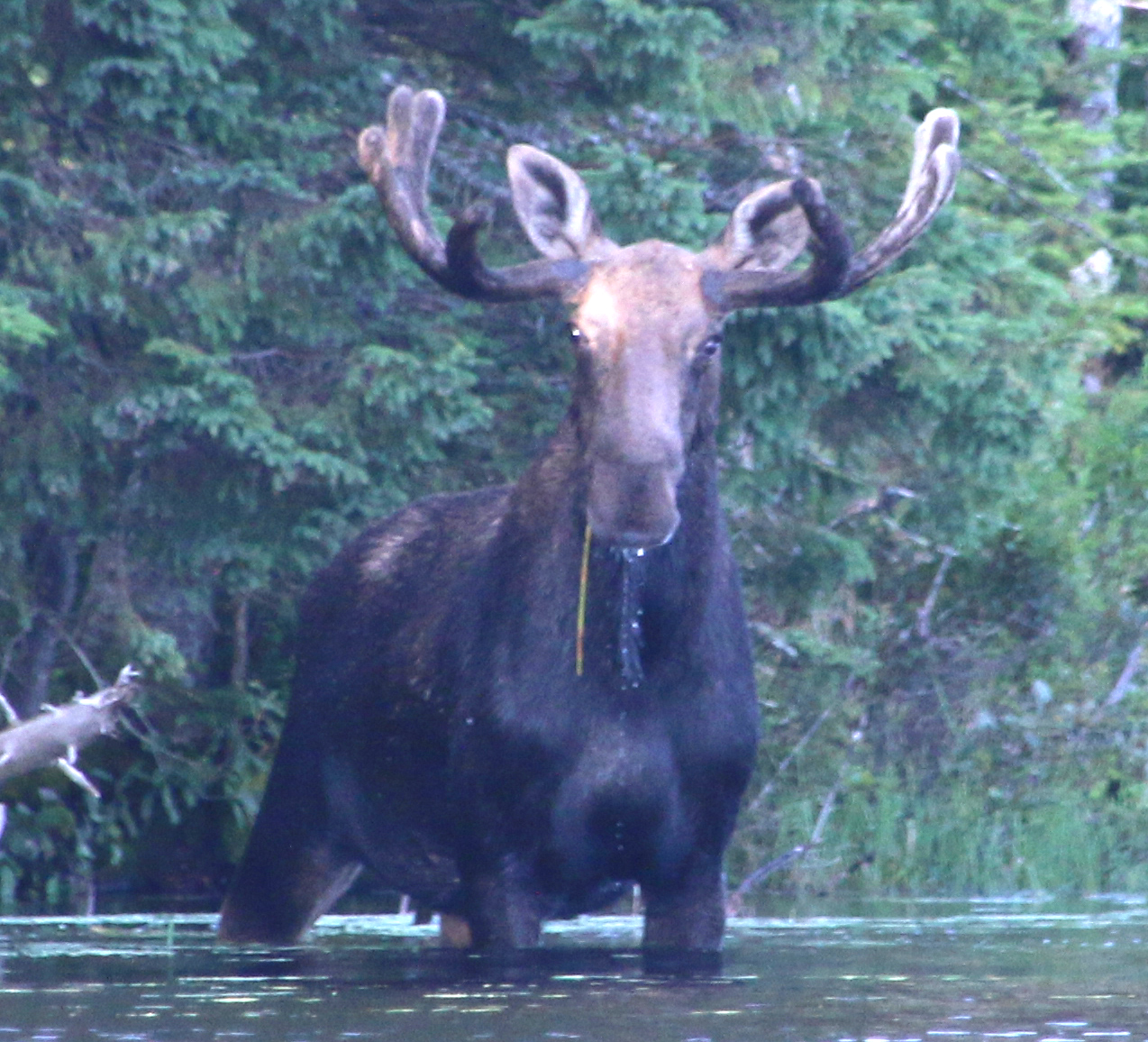
My goal this week was to find a moose in the wild and get a decent photo of it. Bingo! Here it is!
But first a bit of background:

First there was “Rocky and Bullwinkle” from my youth, a Saturday morning TV cartoon staple featuring the exploits of Rocky, the squirrel; Bullwinkle, the moose, and those Russian spies, Boris and Natasha. I remember an imaginary game we brothers would play, with Mom as Natasha and Dad as Boris.
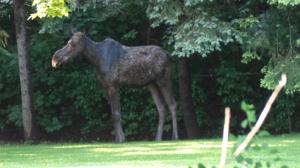
That’s when Sue spotted a 500-pound adolescent moose strolling through my daughter’s neighborhood in Manchester, CT. It came out from between a couple houses, walked across the street and disappeared between houses on the other side. There were several sightings around town that day. Unfortunately, it was hit by a car on the interstate highway south of town that night.
It was an unusual sight in urban Connecticut; there are only an estimated 100 moose in the entire state. It made the local evening news, that’s for sure.
Moose On The Loose, was one of the headlines of course, and the phrase quickly became an enduring signal for laughter in my family.
Even today, traveling up Spruce Street on the way home from school, the car is filled with words rhyming with moose in many phrases and sing-song. The six-year-old loves it and even the three-year-old joins in. Just think of all the words, real and nonsensical, that rhyme with moose and you get the idea.
It started with an invitation to paddle with Appalachian Mountain Club friends in Vermont for a day. That’s a bit of a trek from Connecticut for just one day, so plans for a multi-day road trip started spinning through my head. How about seeing if there’s a good spot to paddle and find a moose while I’m up north? Research followed.
It was important to me that I be in my canoe on the water when I spotted my moose. That was the best way to see one the way I’d always envisioned; belly-deep in the shallows, water and weeds dripping from the mouth.
There were some northern Vermont possibilities and some over in Maine, but a small body of water in northern New Hampshire a few miles south of the Canadian border drew my attention: reputedly better than the places in Vermont, but not nearly as far out of my way as northern Maine.
So I chose East Inlet, a 60-acre lake north of Pittsburg, up near the New Hampshire-Canada border, in the same area where the Connecticut River originates. According to one account: “In the evening, moose wade belly-deep in the water of this long, narrow, dammed-up creek section. Also expect to see great blue heron, waterfowl, and possibly otter, beaver, and mink.”
And that account didn’t mention the loons. How could I resist? Ever the optimist. I set aside a day to see my moose, and tentatively reserved a few hours the second day if I hadn’t spotted one. If I failed this year, a longer trip to northern Maine would be in the cards for next year.
I let my paddling friends down here in Connecticut know my plans in case anyone wanted to come along. And I dropped a line to my friend Leslie, a Florida paddling buddy who lives in up in northern New Hampshire, only two hours south of East Inlet.
It took a day or so of leisurely driving to get there, following the Connecticut River part of the way.
I was figuring to spend Monday and maybe part of Tuesday looking for a moose, but I arrived in Pittsburg about noon on Sunday, ahead of schedule. I arranged for my lodging and set off for East Inlet, a couple miles off of Route 3 down a pretty bumpy dirt road. The trail included a narrow plank bridge over the Connecticut River, a fast-moving, rock filled stream about 20 feet wide at that point.
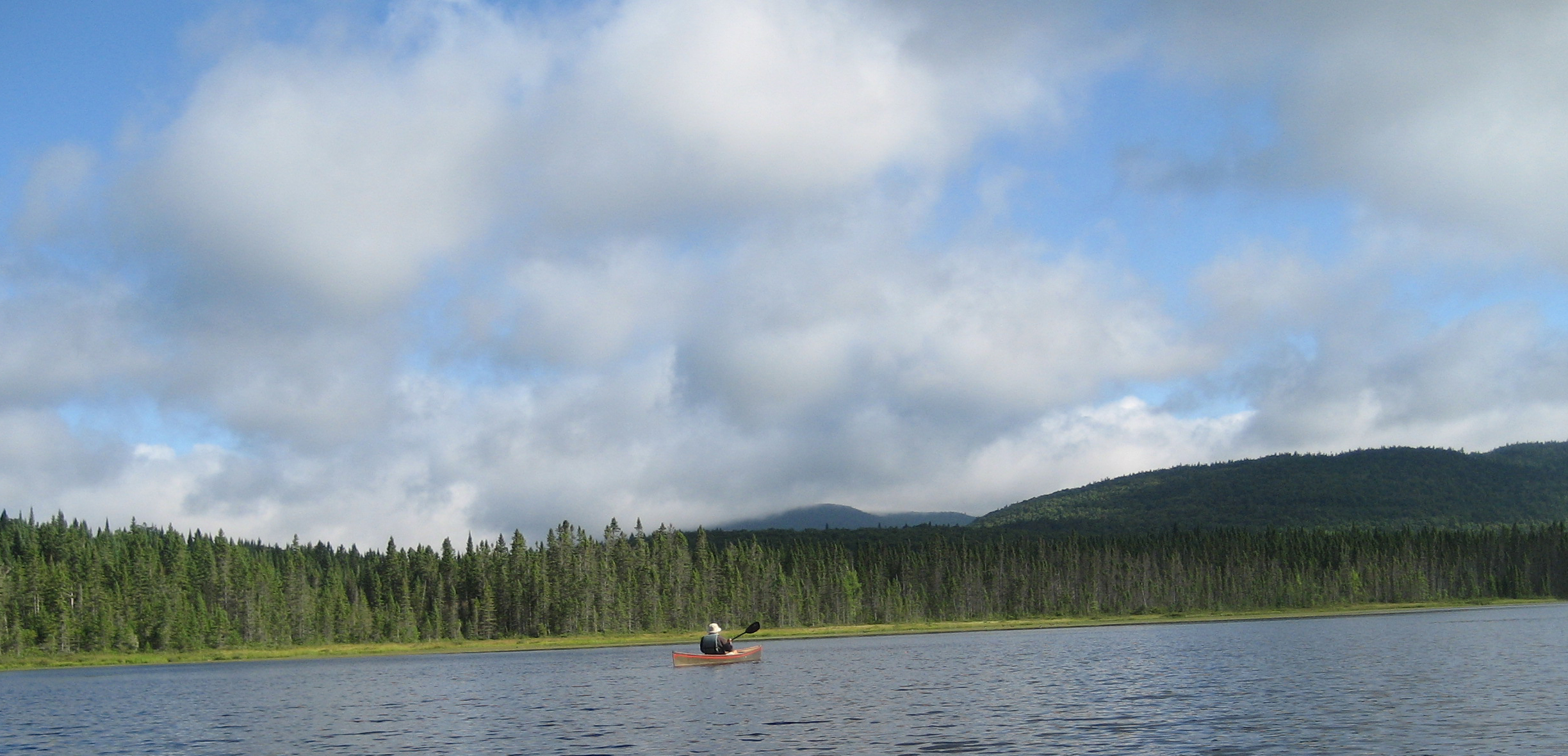
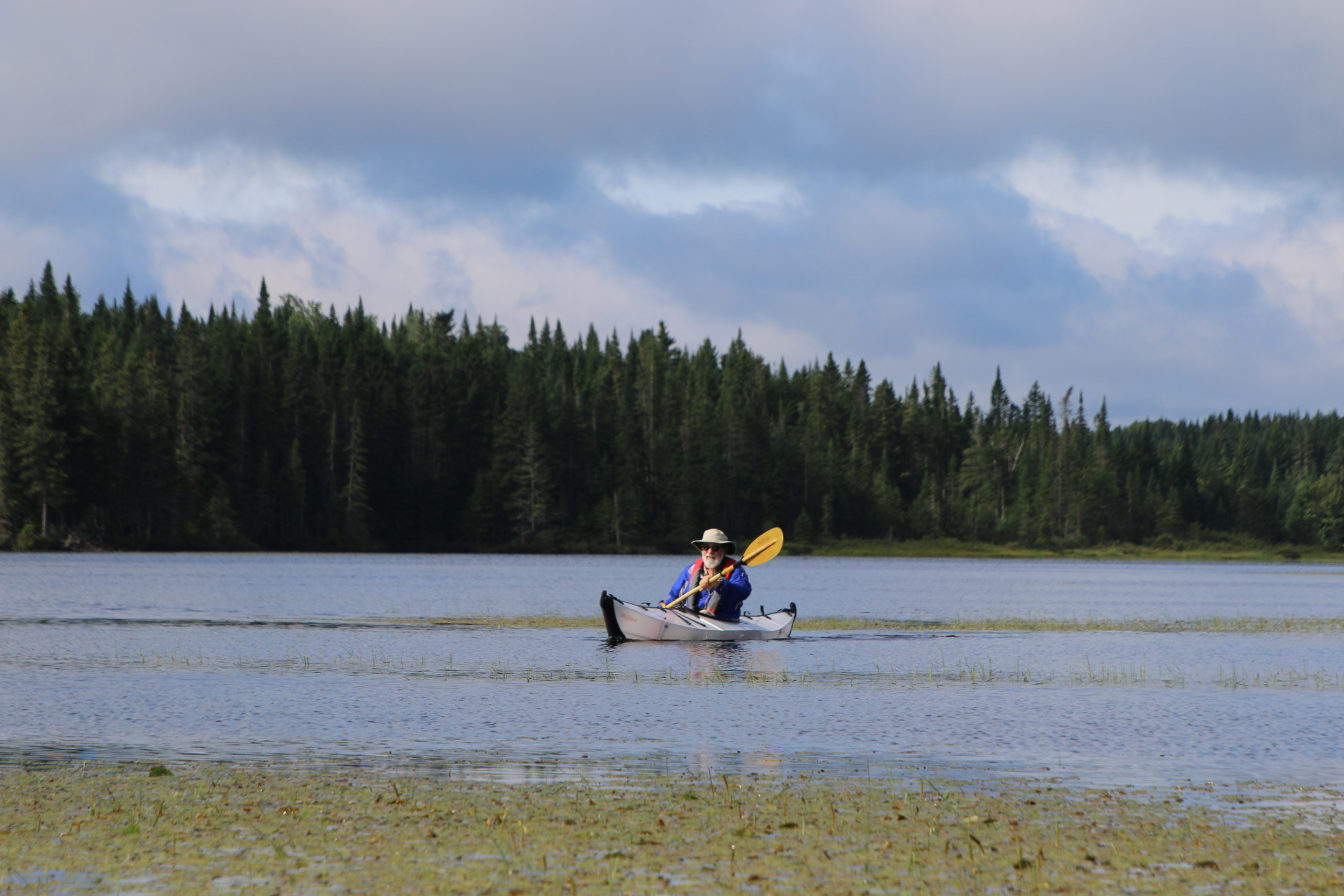
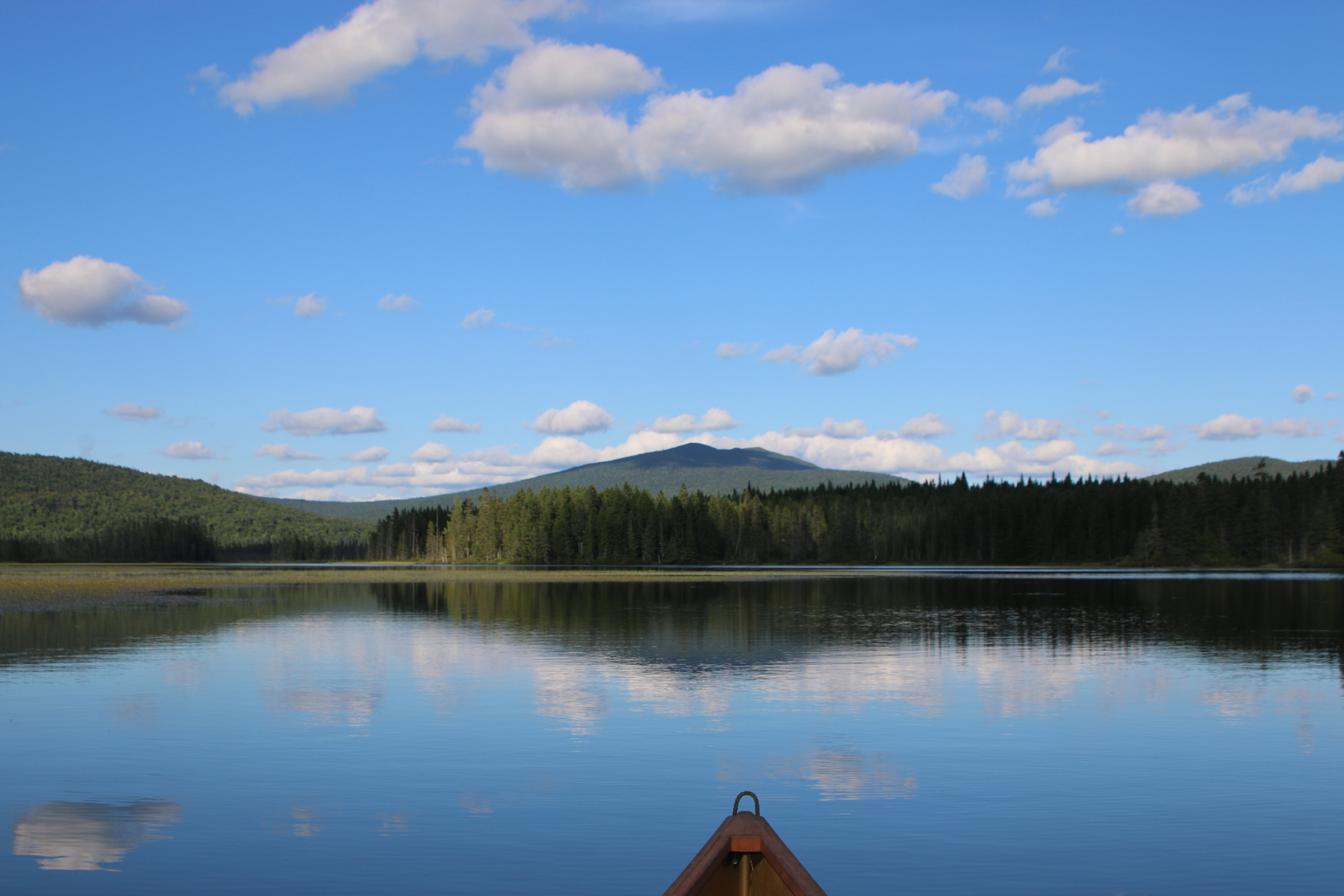
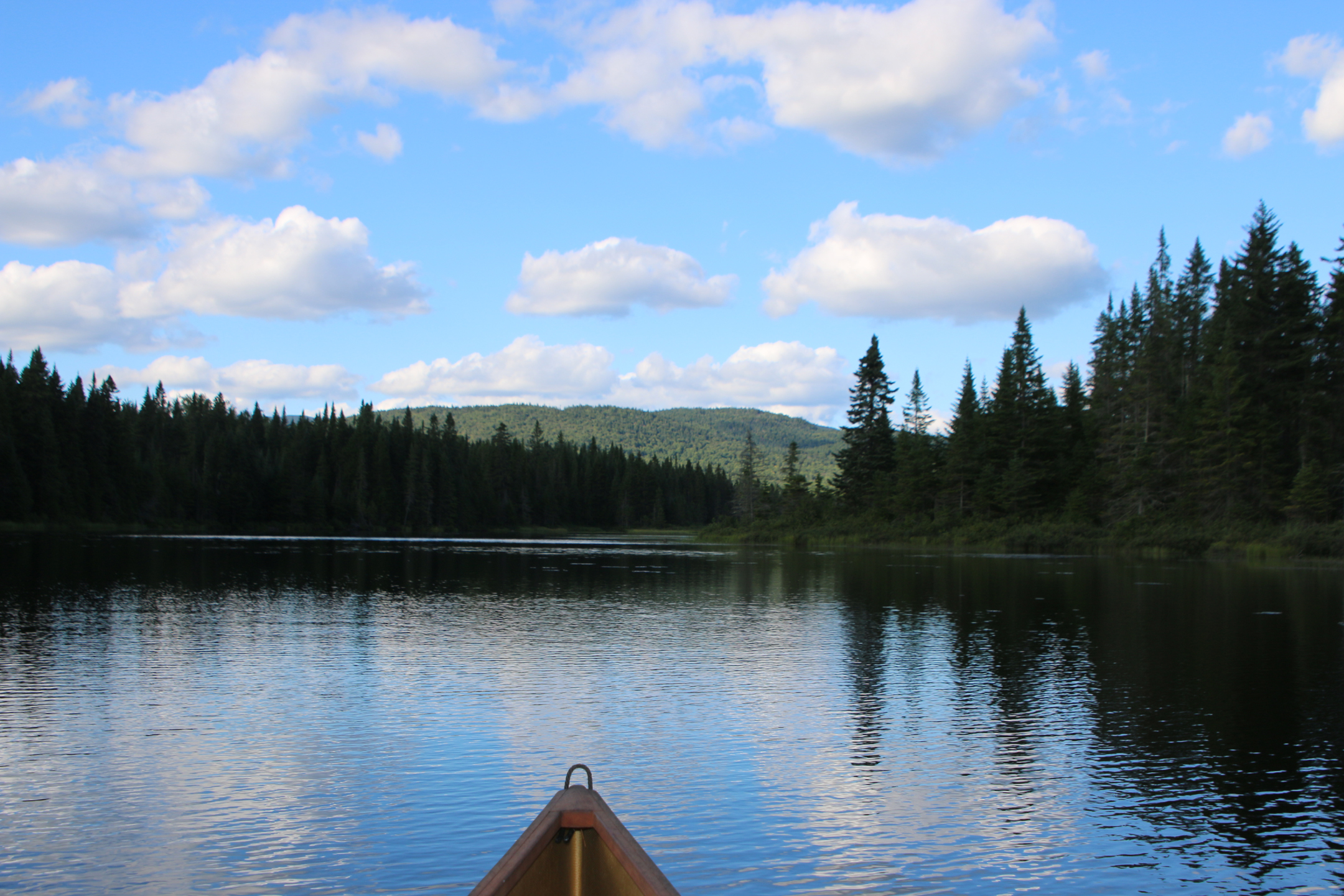
The haunting cries of a loon, mirror-smooth water and tree-lined shores captured me immediately. The setting was really beautiful, both in sight and in sound. I was ready to go. I quickly unloaded the boat and shoved off.
As I drifted along, pushed by a very slight breeze, the silence was overwhelming. It’d been a long time since I’d been out of doors in a silence so complete I could hear my stomach gurgle. I was rewarded that day with the sound of a moose, but not an actual spotting of one.
The very loud crashing and splashing in the water some ways behind me in the tall weeds near the shoreline was unmistakably a moose. Certainly not an alligator. I didn’t get turned around fast enough to see the source of the racket, however.
A rain shower and blustery winds chased me off the water for the day right after that, but my spirits were high. There are moose here! And I still had all day Monday for the hunt.
At the crack of dawn the next day I was out on the water. As I drifted along, enveloped by the quiet, I heard a lot of splashing behind me. All I could think of was another paddler, a loud, clumsy one. But I knew I was alone.
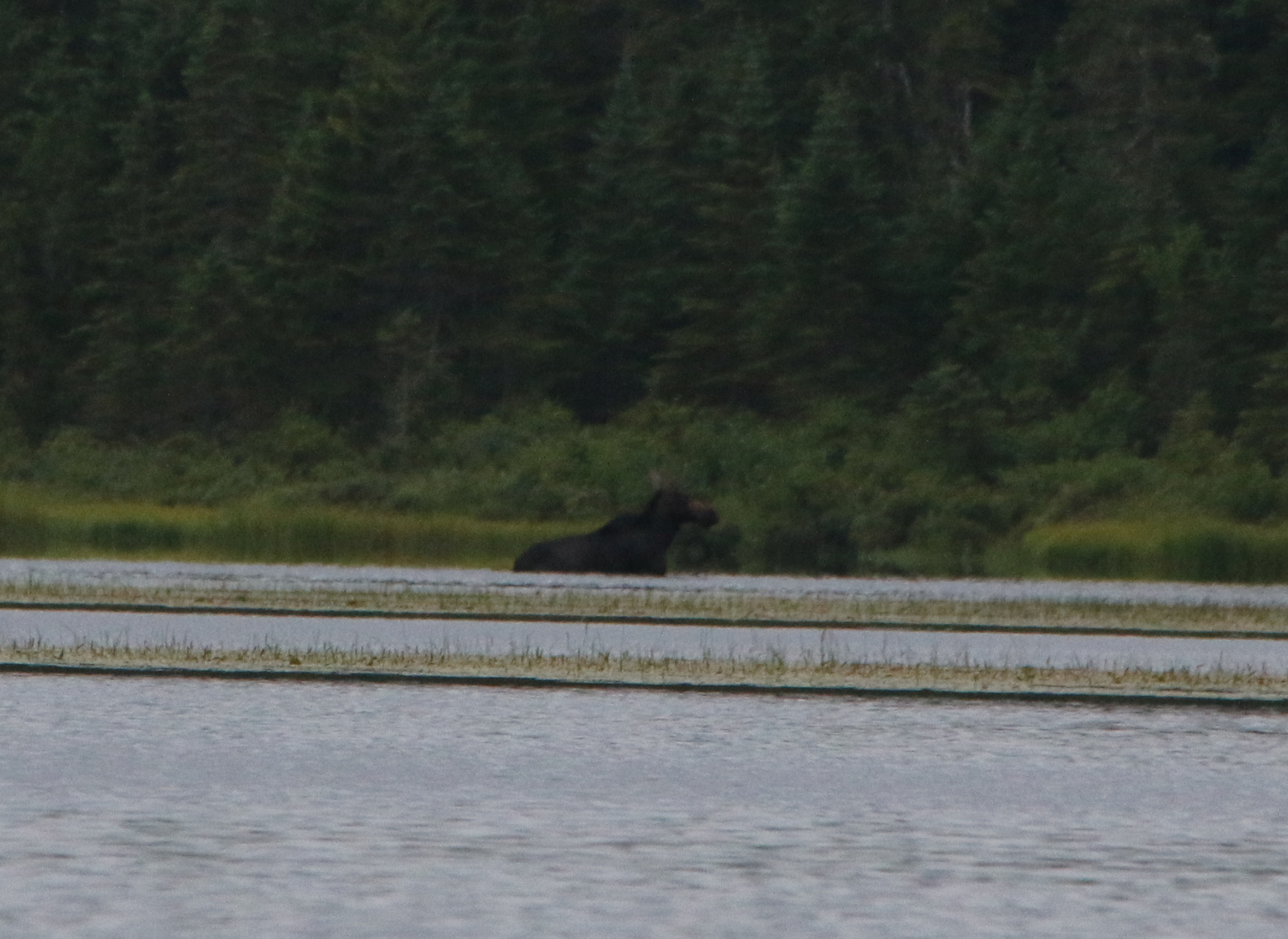
I swung around and there it was: a big moose swimming across the lake. A long ways away, but unmistakably a moose. I shot off a few frames, pushing the limits of my 300-mm lens. I was pumped, barely halfway down the lake, not even an hour into the day, and I’d already seen a moose.
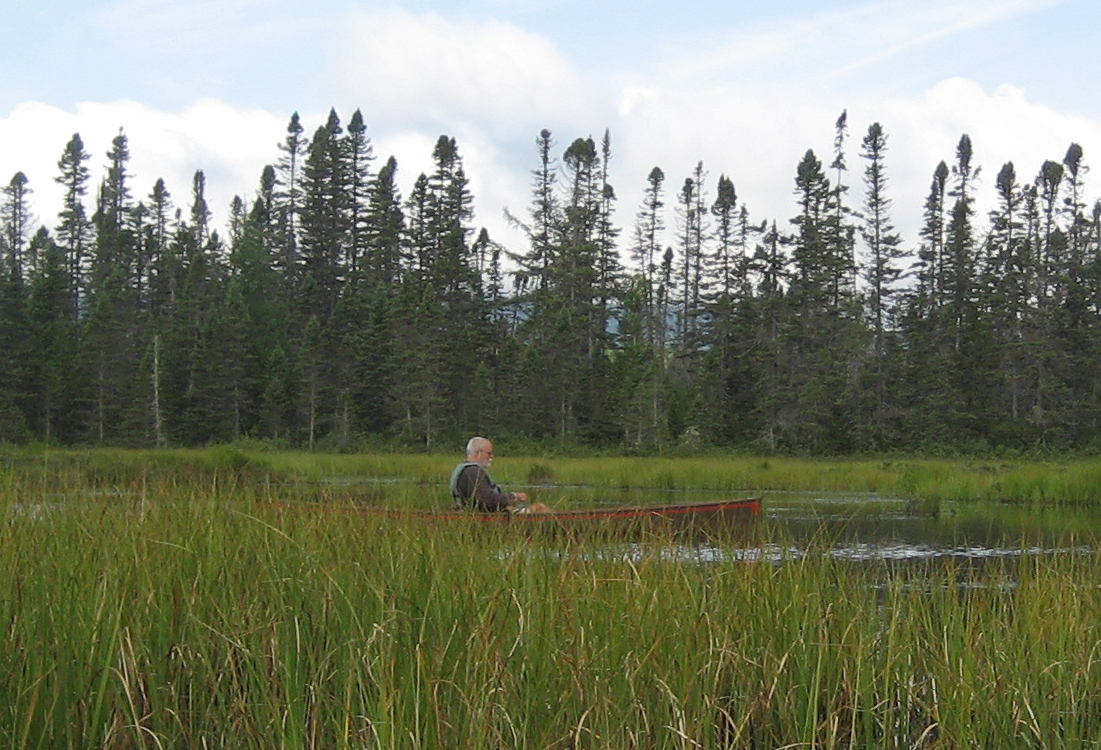
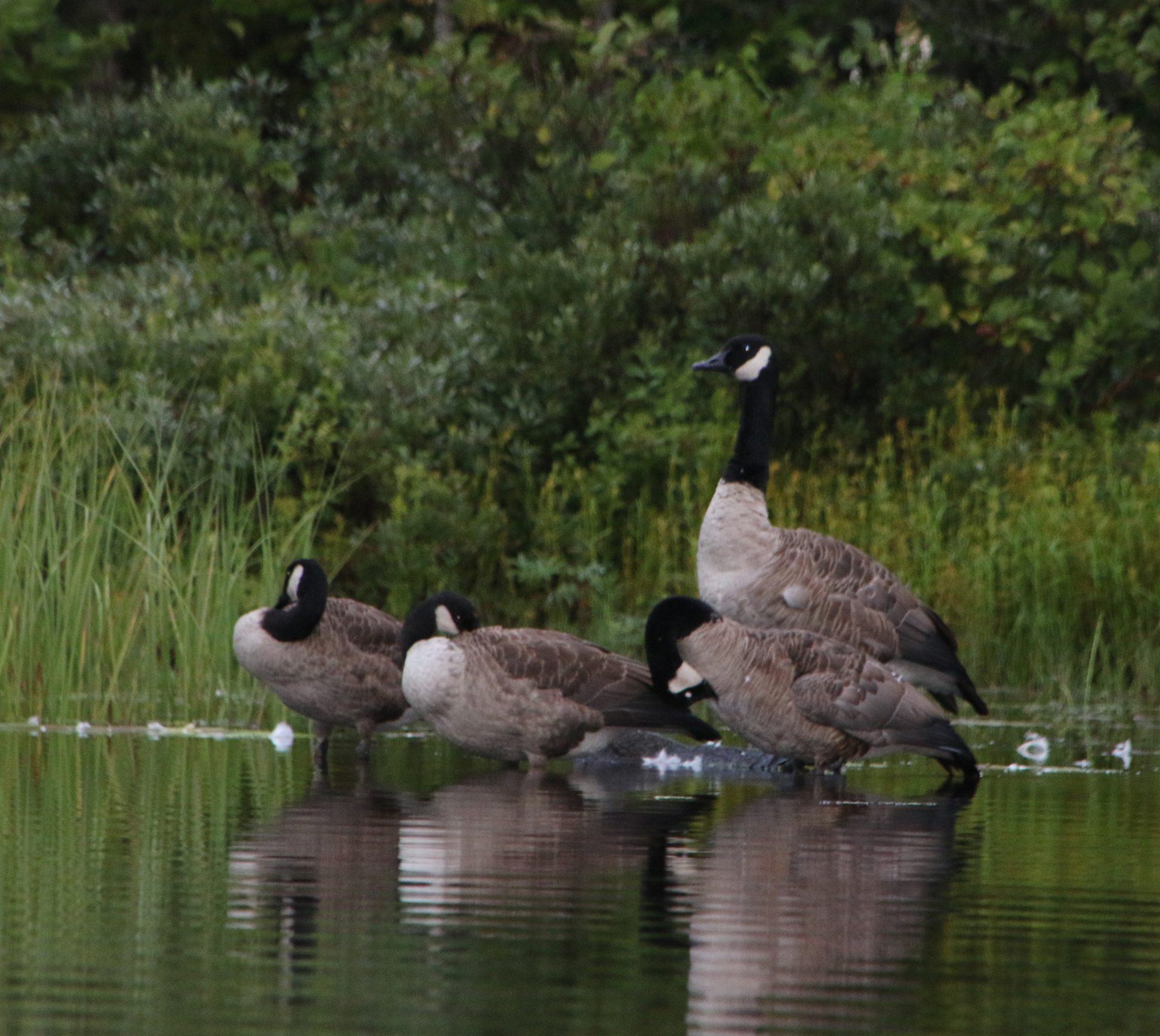
So I happily continued, poking around in the weeds, stalking a pair of blue heron, watching the geese and keeping my antennae up for a moose. A short while later I was just sitting quietly in the boat drifting along when I looked straight ahead at the trees along the nearby bank.
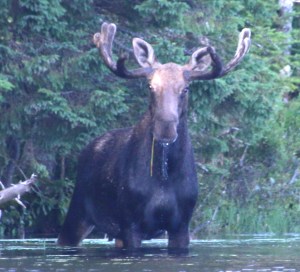
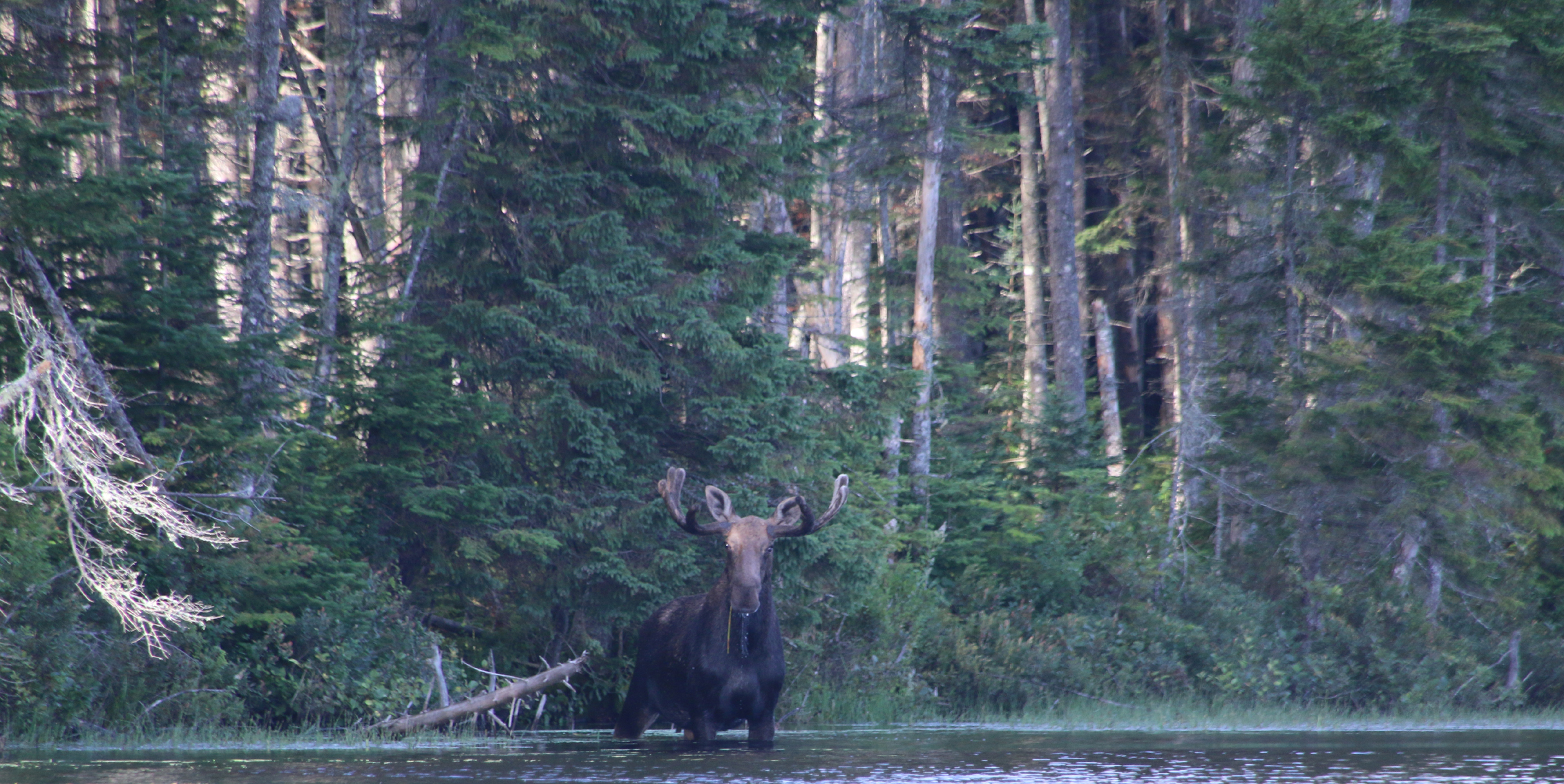
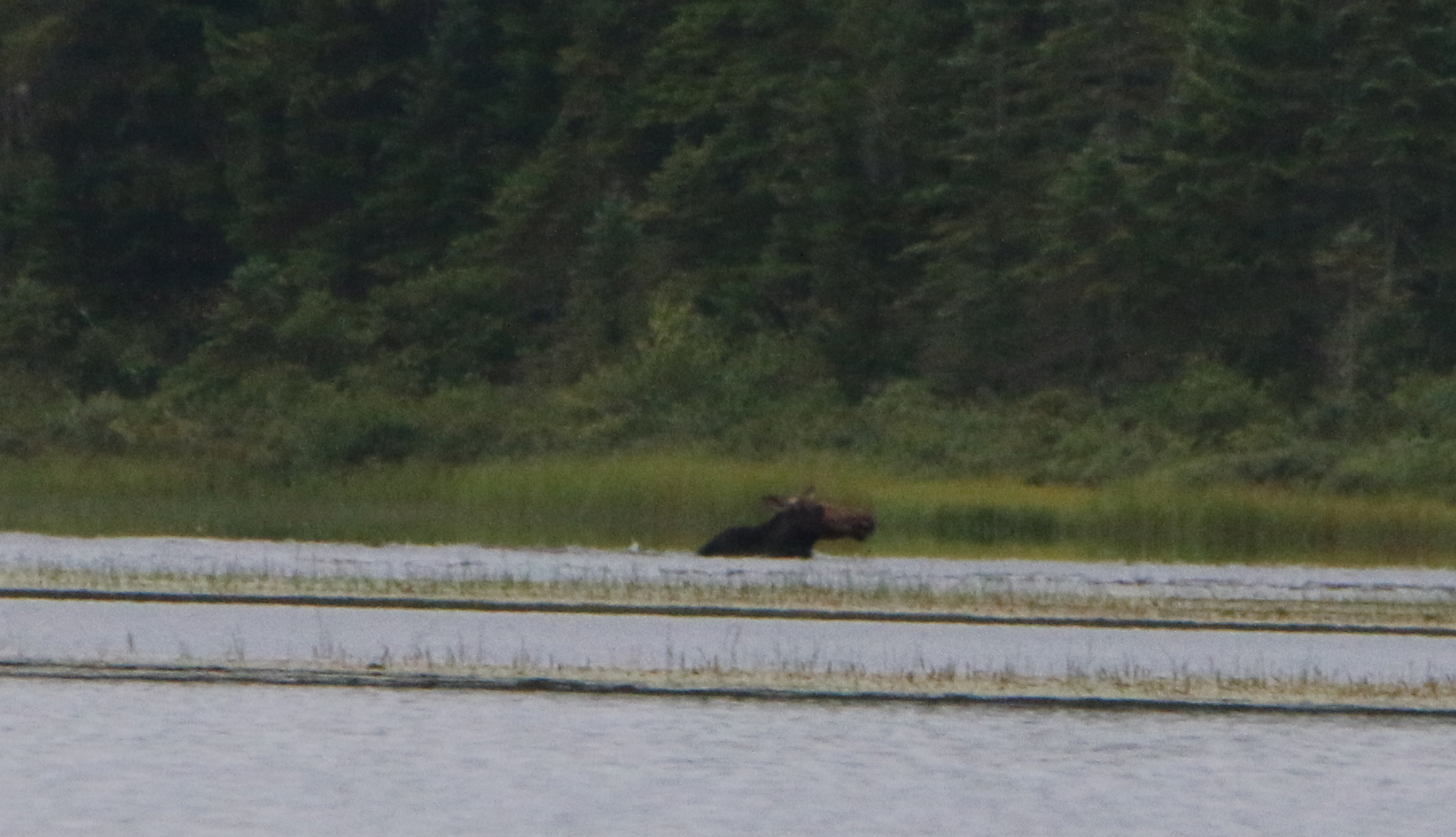
Standing there in belly-deep water, looking right at me and nearly blending into the trees behind him was a large moose, antlers and all, water and weeds dripping from his mouth, just as I had imagined one should look.
Carefully I grabbed the camera and got a few frames off. I picked up the paddle and started trying to get closer, but he slowly turned around, climbed the bank and disappeared into the trees. I was at a disadvantage; he’d seen—more likely heard—me before I spotted him.
But I was also very lucky. I had been out less than two hours and already had some great photos in the bag.
As I paddled back to the launch to meet up with friend Leslie, who had driven up to join me from Bethlehem, I was more than happy. The pressure was off, as Leslie later put it. My goal had been met early on.
We explored the lake together for a couple hours. We didn’t see another moose, but for Leslie, who has seen moose several times while hiking, and even around his house, it didn’t matter.
After a nice paddle and a lunch break overlooking the water, Leslie headed for home and I went back to the motel for a nap. I went out paddling again that evening and thoroughly enjoyed the wildlife and the quiet and the sunset, but did not see, or hear, another moose.
It didn’t matter; the moose gods had made my hunt a great success and I was happy.

History, Travel, Sports, Art, and Nonsense
Improvise, Adapt, Overcome ... and never ever give up.
Traveling one day at a time
Mississippi River - Source to Sea - Solo … but never alone.
Horses & Other Interests
I love a person, it's people I can't stand
Hear it straight from a self published author: A new post every Saturday!
Family, Running, Paddling, Life
...and where it's taken me.
...and where it's taken me.
Fitness, Adventure and Art on the High Seas!
...and where it's taken me.
...and where it's taken me.
Notes, thoughts, excerpts
. . . at least from where I'm standing.
News for those who served with the Peace Corps in Eritrea and Ethiopia.
A little red pen goes a long way.
News, Tips & Website Tutorials
 The Urge to be Someplace Else