I scream, you scream, we all scream for…

My life’s come back to ice cream.

At home as a kid in Kankakee, Illinois, it was an evening ritual to have a bowl of vanilla ice cream with chocolate sauce and some peanuts while sitting in the living room with mom, dad and the brothers watching TV.

The ritual I think, was started by dad, and he certainly kept it going, usually being the one to initiate the filling of the bowls every evening.

I can still hear the spoons scraping every last bit from those sturdy plastic bowls. The sound certainly brought Rusty, the family dog, to his feet. He waited patiently as in turn each of us would finish and place our bowl on the floor for him to lick clean.

In recent years I’ve gravitated back to that ritual, minus the brothers and the parents and the family dog, of course. And I don’t even have the TV watching involved, as I usually have my nightly ice cream snack in bed reading a book.

My ice cream habit started rebounding a few years ago when I began spending summers in the northeast.  I joined a bunch of paddling groups and started going out two or three times a week.

img_1489c

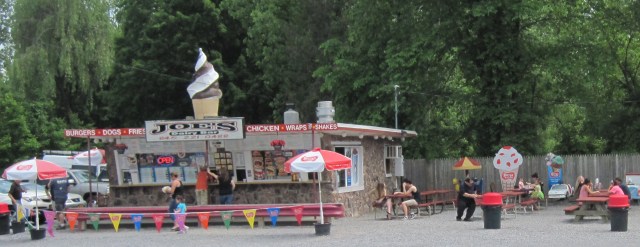
With some of my friends, stopping off at a nearby ice cream stand after the paddle was part of the outing.

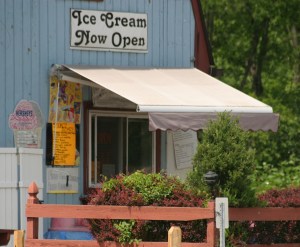
And even if others didn’t come along, I started stopping off on the ride home at the iceimg_6541c cream stands that the rural northeast offers in plentitude, the ones that are only open during the season. A small building, with an ordering and serving window and lots of outdoor seating, perfect for a snack and some sitting on a summer afternoon or evening.

And it was there that I discovered flavors. Gone was the vanilla with a bit of sauce and peanuts, bring on the peanut butter and the chocolate chunks, not to mention the candy bar spinoffs.

In my second summer season in the northeast I also took a look at the ice cream shelves in the supermarket. Plenty of great flavors, and great prices too. Big Y, a big supermarket  chain I go to, stocks three major brands and at least one of them is on sale every week. Ice cream became a nightly snack.

That second year I came back to Florida at the end of the summer with my ice cream habit firmly back in place.

But on my first shopping trip to Publix I was sorely disappointed: a dearth of interesting flavors and prices about double what I’d been used to up north.

And forget about numerous small ice cream stands along the rural roads with their nice umbrellas and picnic tables. There just aren’t any.

Maybe ice cream doesn’t mean the same to Floridians as it does northerners. With warmth all year round having some special place to go to for a cool treat and a bit of socializing just isn’t as important, I guess. And with all the air conditioning everywhere in Florida, the thought of sitting outside in the shade with a bowl of ice cream to cool off does seem sort of silly.

I guess maybe it takes a four-season place to develop a populace eager to sit outside and eat ice cream and say hi to the neighbors on a warm summer evening. Probably because it’s a special thing that can’t be done all year round.

I’m hooked on it.

Posted in Offbeat, Paddling, Road trip | 6 Comments

When you’ve got an itch…Part 7

IMG_5457c.jpg

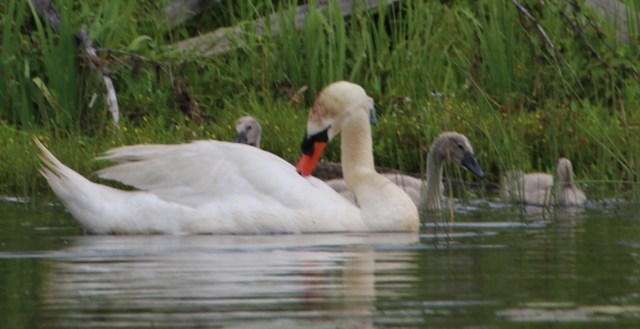
I spotted this fellow succumbing to the urge to itch last summer at Barton’s Cove, a nice little wide spot in the Connecticut River near Gill, MA.  It’s a great place for wildlife spotting and thus a favorite paddling spot for me.  Go here for more information about swans and also you can explore the links to more itches.

A couple more photos:

img_4305c

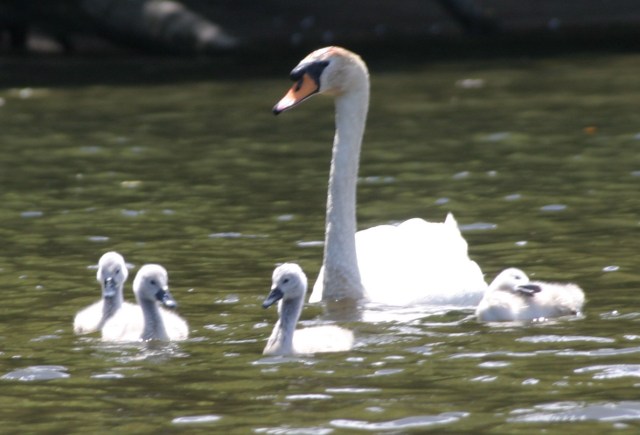
Some cygnets at Barton’s Cove.  (Photo by Ron Haines)


img_4337c
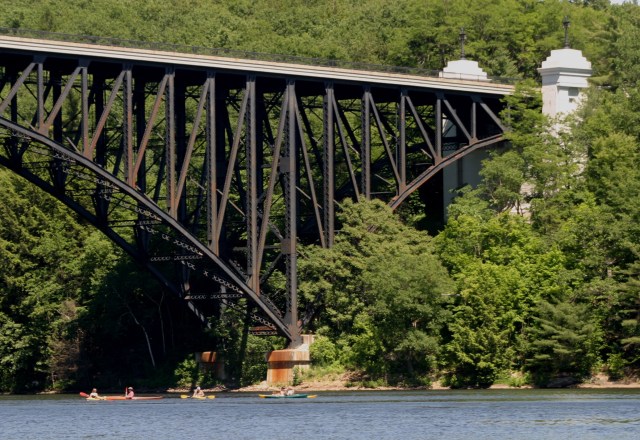
The bridge at French King Gorge. (Photo by Ron Haines)


Posted in Uncategorized | Leave a comment

Hitting all the sweet spots

I had one of those days yesterday that touched nicely on a lot of the sweet spots of my life these days as a happy retiree.

It began with a nice, longish drive in the early morning on foggy highways in south and central Florida, just me and my coffee and my cd’s, with one canoe on the top of the car and the other on the trailer behind me.

I was on my way to a tranquil, three hour paddle amongst gigantic cypress trees and an abundance of osprey, vultures, alligators and other wildlife at Blue Cypress Lake. Four deer greeted me along the the old road off of State Road 60 to Middleton’s Fish Camp, where I would launch.

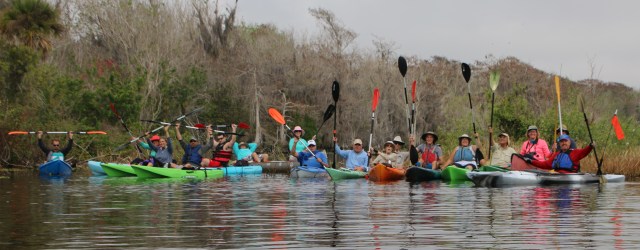
My day included meeting up there with about 20 other Sierra Club paddlers.  The group was large, but so was the paddling area.  One could link up with others for a chat, or strike off alone if in need of solitude.  There is hardly any urban noise at this place, just an occasional high flying jet or the sound of a boat a mile or so away.  Plenty of bandwidth for the sounds of nature to reach the ear.

img_1338c

I got the group together at the beginning so I could get this shot, but after that, everyone could scatter wherever they wanted.  There’s plenty of paddling room at this place.  (Photo by Ron Haines)

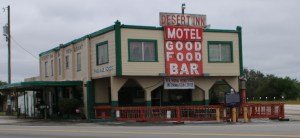
After the paddle I enjoyed a leisurely late lunch at the Desert Inn in Yehaw Junction with IMG_2729cfour old friends.  Now there’s a sweet spot!
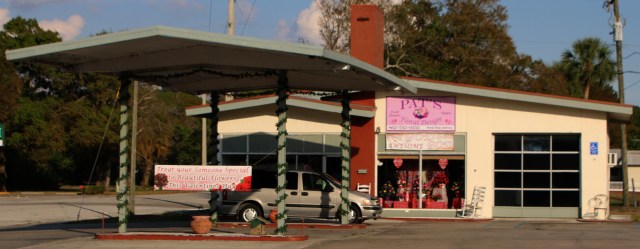


And my day ended, fittingly enough, with the discovery of another recycled gas station in Okeechobee on the way home.  It is now a lovely floral shop.

Here are the photos:

img_1545c

This old gas station in Okeechobee, FL, is now Pat’s Floral Design (Photo by Ron Haines)

me-and-alligatorc

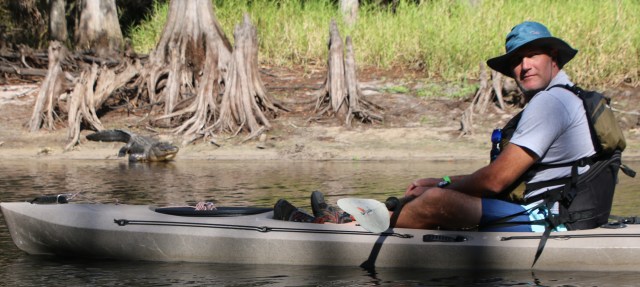
Yes, it’s me and my buddy.  (Photo by Manuel Monteiro)

Above, my lunch partners; on left Randy and Sabrina Carle and on right Lisa Hanley and Mike Fitzpatrick, in my Grumman canoe.  (Photo by Ron Haines)

img_1375cimg_1543cimg_1530cimg_1485cimg_1449cimg_1436cimg_1395cimg_1346c

Posted in Uncategorized | 6 Comments

When you’ve got an itch…Part 6

This is the loon edition.

Loons are wonderfully interesting birds, fun to watch, really pleasant to listen to, and not nearly as plentiful as other types of waterfowl I see on the waters of the Northeast.

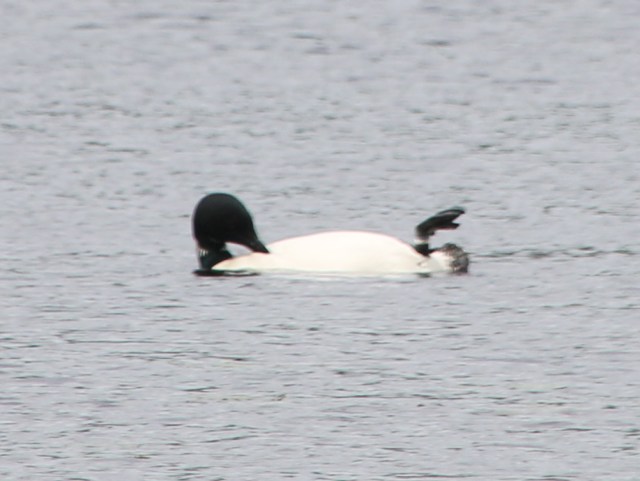
It’s the only waterfowl I have ever seen to practically roll over on its back to deal with an itch on its stomach. (In reality this one is probably just cleaning its feathers, but I prefer the alternative fact: scratching its belly.)

img_6862c

Yes, that is a foot sticking up in the air.  (Photo by Ron Haines)

I took this photo at East Inlet in New Hampshire up near the Canadian border.  (Here’s why I was up there)

Loons are heavy birds with very large feet and, like an airplane, they need long runways to take off. They run awkwardly across the water surface for approximately a quarter of a mile to pick up enough speed to take fight.  Watching one take off is fun.

And because of their weight and the fact that their legs are so far back on their bodies, they really can’t walk very well and seldom try. In fact, their inability to walk is likely where the name came from: either the Old English word lumme, meaning lummox or awkward person, or the Scandinavian word lum meaning lame or clumsy.

(I so wanted the name to somehow be linked to good old loony, as in loony bin, but found no support for that.  Loony seems to have come simply from the shortening of the word lunatic.)

What these birds can’t do on land they amply make up for in the air and water.  Their large wings can get them up to 75 mph, and they can vanish underwater to find food or escape danger without leaving a ripple and reach depths of 200 feet or more, propelled by their large webbed feet.

New Hampshire loons head eastward in the winter over to the Atlantic Coast where there is open water.  They do so because the interior lakes freeze over and if they stayed they’d become trapped by the ice, unable to take off.  So basically, migration involves getting to the nearest body of water that won’t freeze over, no matter where they live in the warm season.

How do they adapt to salt water?  They have salt glands in their skull between their eyes that remove the salt from the water and fish they eat and excrete it from ducts in their beak.

In late winter, they have a complete molt; losing all their feathers at once, instead of one or two at a time like most birds, because they need a complete set of flight feathers to hold up their heavy bodies. So for the two or three weeks it takes to drop the old feathers and grow new ones they cannot fly.

By April or early May, resplendent in their brand new black and white breeding coats, they are back in the inland ponds and lakes. Biologists suspect that loons return to the same general area where they were born, often returning to their very own birth lake.  Loons will typically arrive on New Hampshire’s lakes and ponds just after the ice melts, sometimes on the very next day!

img_6846c

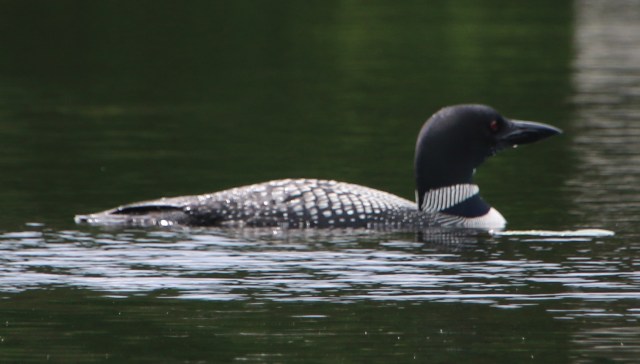
Here’s one with regular plumage.  The heavy body rides low in the water.  (Photo by Ron Haines)

There is one anomaly though. In their first migration, loons do not return to their breeding area for three years on average, says Andrew East, who has studied loons as a field biologist in Wisconsin and other states. Scientists are trying to understand where loons go during that time.        Seems a good time to use the looncam!

Contrary to popular belief, pairs seldom mate for life.  Indeed, a typical adult loon is likely to have several mates during its lifetime because of territorial takeover. Each breeding pair must frequently defend its territory against “floaters” (territory-less adults) trying to evict at least one owner and seize the breeding site. A third of all territorial evictions among males result in the death of the owner.  It’s a loon-eat-loon world out there.

I think the best thing about loons is the plantive wailing and yodeling sounds they make.  I don’t even need to see the bird to be entranced.  Just to look out over a small pond bordered by deep woods and hear that call is enough to make me want to just sit down and enjoy where I am.  Here are some sounds for you.

And if you want to see the rest of the itches, start here.

Posted in Nature, Offbeat | 6 Comments

Gone before I could get there

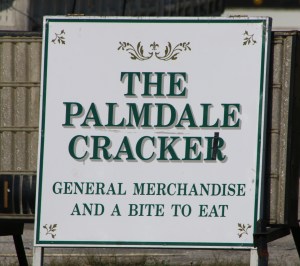
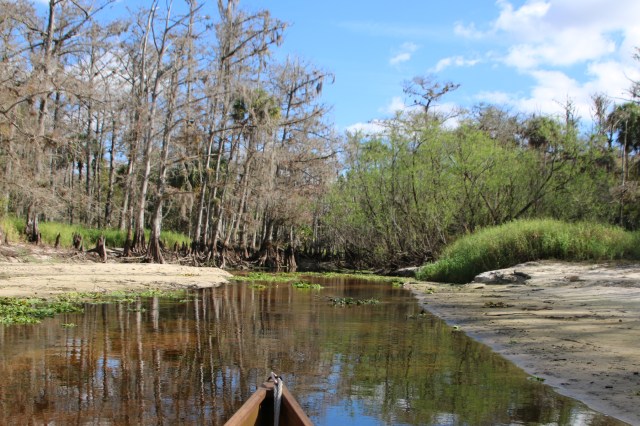
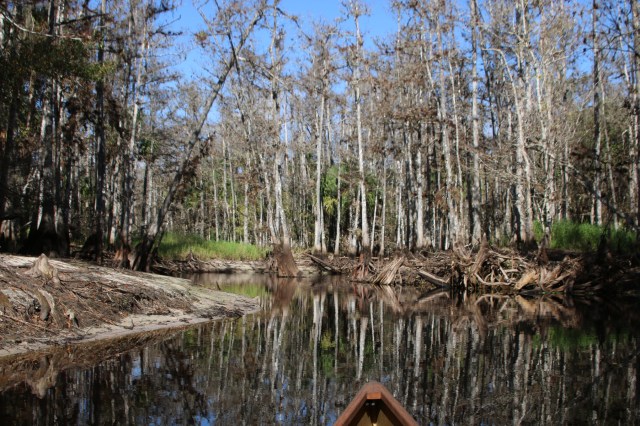
I recently drove over to Fisheating Creek for a paddle with the alligators and planned onimg_0806c stopping in at an interesting rural country store/restaurant for a late lunch in nearby, very small, Palmdale, Florida (population just under 600). The Florida Backroads Travel website calls the place Not Near Anything.
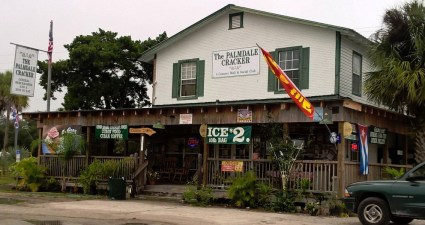
The Palmdale Cracker (“A country mall and social club”) opened about a year ago in an historic, 1920s-era building and had been gathering decent comments from customers. It ranked 4.5 out of 5 with TripAdvisor, which called it #1, in a town that had just one restaurant.

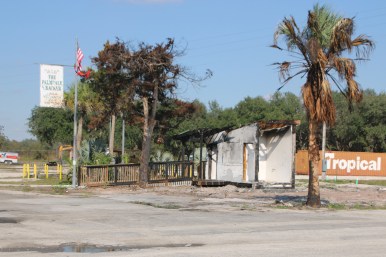
Alas, I got there too late.   It burned to the ground about two months ago.

The building had been over the years a post office and a general store.  As the only place for miles around, it was a welcome break for truckers and motorists traveling on U.S. 27. And, as a genuine Old-Florida-flavored attraction for tourists, it fit in nicely with the still-open Gatorama (“Fast Hands or No Hands”), just south of town.  The nearby Cypress Knee Museum, another of those hundreds of places that dotted the roadside along U.S. 27, is long gone unfortunately.

Larry Taylor, who says he spent years getting the government approvals needed to get the store and restaurant off the ground in the old building, has launched a Go Fund Me page with an eye on raising $150,000 to rebuild.  To date he has $225.

Before and after photos below:

palmdalecimg_0803c


The word cracker, by the way, originally referred to the Florida cowboys of the 1800s and today mostly just means a Florida native whose family has lived in the state for many generations.

And thinking of crackers leads me easily back to Fisheating Creek, a piece of natural Florida that’s been around for a long time and one I hope stays just the way it is for a long time to come.  It was long owned by Lykes Brothers Inc., which attempted to close it to the public in the 1980s, but a 1998 court ruling that it is a navigable waterway and therefore owned by the state kept access open for the public.

Enjoy the photos.

img_0735cimg_0732cimg_0780cimg_0766cimg_0787cimg_0762cimg_0751cimg_0708cimg_0691cimg_0679cimg_0672cimg_0671cimg_0771c

Posted in Nature, Offbeat, Paddling, Photos mostly | 11 Comments

Hay is for horses

And also cattle, sheep, goats and small critters like rabbits and guinea pigs.

And even, as I discovered on a recent ride through rural Alabama, for yard art.

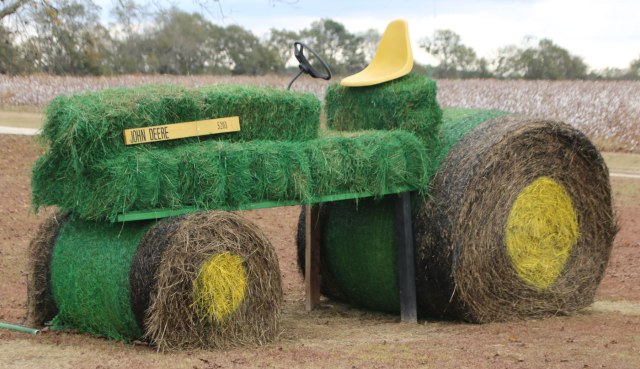
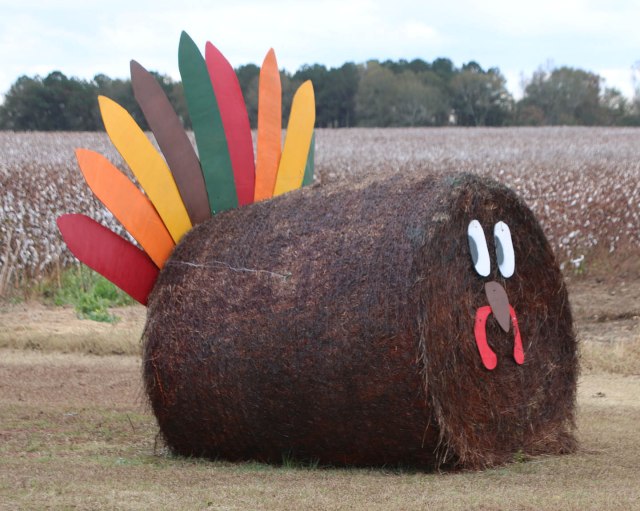
This turkey and John Deere tractor were fashioned from round and rectangular bales of the stuff and proudly displayed in the owner’s front yard along US 84 near the small town of Opp (slogan is “City of OPPortunity”).  Population is close to 7,000. Nearly a fifth of the families there are below the poverty line.  OPPortunity seems to have passed by this place.

And in case you were wondering, hay is not the same thing as straw.

Hay is usually the combination of several grasses and grains like alfalfa, brome, and timothy; clover and rye are often components also. Hay is cut when its source is still green, capturing nutrients in the cut-off plants.  Hay, in other words, is the primary product, and is used for feeding animals.

Straw on the other hand is basically the byproduct when other plants are harvested.  It is made from the leftover shafts of grains like rye, oats, and wheat, after the seed heads have been cut off. It is used as livestock bedding, as fuel, and sometimes as part of a food mixture.  It has little nutritional value.

Websites about using straw as a building material abound, and most warn not to confuse it with hay, which is lousy as a building material.

Growing hay looks simple.  Let the grasses grow long, cut it and bale it and you’re done.

Not so.  Here’s a brief description of what can go wrong: Hay is very sensitive to weather conditions, particularly when it is harvested. In drought conditions, both seed and leaf production are stunted, making hay that has a high ratio of dry coarse stems that have very low nutritional values. If the weather is too wet, the cut hay may spoil in the field before it can be baled. The hay may also develop rot and mold after being baled, creating the potential for toxins to form in the feed, which could make the animals sick. It also has to be stored in a manner to prevent it from getting wet. Mold and spoilage reduce nutritional value and may cause illness in animals.

If you wish, you can use hay bales to enter a whole other universe.  Just click here.

img_9673cimg_9677c

Posted in Uncategorized | Leave a comment

Three beauties

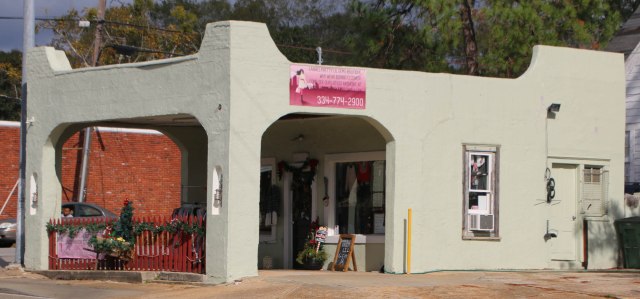
Took a quick road trip last month to Arkansas to see some relatives (Sue’s side) and found three very nice recycled gas stations.

Two of them were in Ozark, Alabama (population is about 15,000, including nine registered sex offenders).  One is now a clothing boutique and the other is a floral and gift shop.

I spotted the stations as we passed through the town on the way to Arkansas, but it was already too dark for photos.   So we stopped on the way home and combined photo taking with an ice cream lunch at a nice place on the town square.

The third building in the photos below is a very nice brick corner classic that is now home to a mower and tractor business.  It’s in tiny Evergreen, Alabama (population 4,000).  Founded in 1819 and incorporated in 1873, its early years were filled with lousy luck. In 1882, a tornado destroyed  every building except for the Episcopal church. In 1895, fire destroyed every business and house located on the east side of the railroad and five days later, fire destroyed every business and house on the west side. The Conecuh County Courthouse there burned in 1868, 1875, 1885, and 1895.

Go here to see my entire collection of recycled gas stations.

(All photographs by Ron Haines)

img_9704cimg_9689c

img_9655c

Posted in Uncategorized | Leave a comment

When you’ve got an itch…Part 5


img_2789c

Sandhill crane, somewhere in Florida (Photo by Ron Haines)

Earlier installments of this photo saga are here, here, here and here.


Posted in Uncategorized | Leave a comment

A Charlie Montgomeryism

Time to quack like a duck and get the flock out of here!  Said at the end of every day as I recall.  I heard it at the National Enquirer, and then years later at the Globe.

UPDATE: Friend and colleague Steve Plamann recalls the quote more accurately than I did above.  Says Steve: “‘You know what the ducks say, Let’s get the flock out of here.’  Every. Single. Day.”

Charlie Montgomery never met the duck below, which I found on a trash paddling trip in New Hampshire, but I am sure he would have liked him.  He’s become a small yard ornament in Connecticut, even when it snows.

img_9061cc

Posted in Uncategorized | 3 Comments

It’s later than you think

I found a couple more great recycled gas stations recently.

I especially like the one in Hartford that is now a cemetery headstone company with the upbeat motto: “It’s Later Than You Think.”

See the entire reused gas station collection here.

img_9051cinset

img_9048c

The two photos above are at the McGovern Granite Company in Hartford, CT.  Below is a State Farm office in Walden, NY. (Photos by Ron Haines)

img_9030c


Posted in Uncategorized | Leave a comment