This sign stopped me

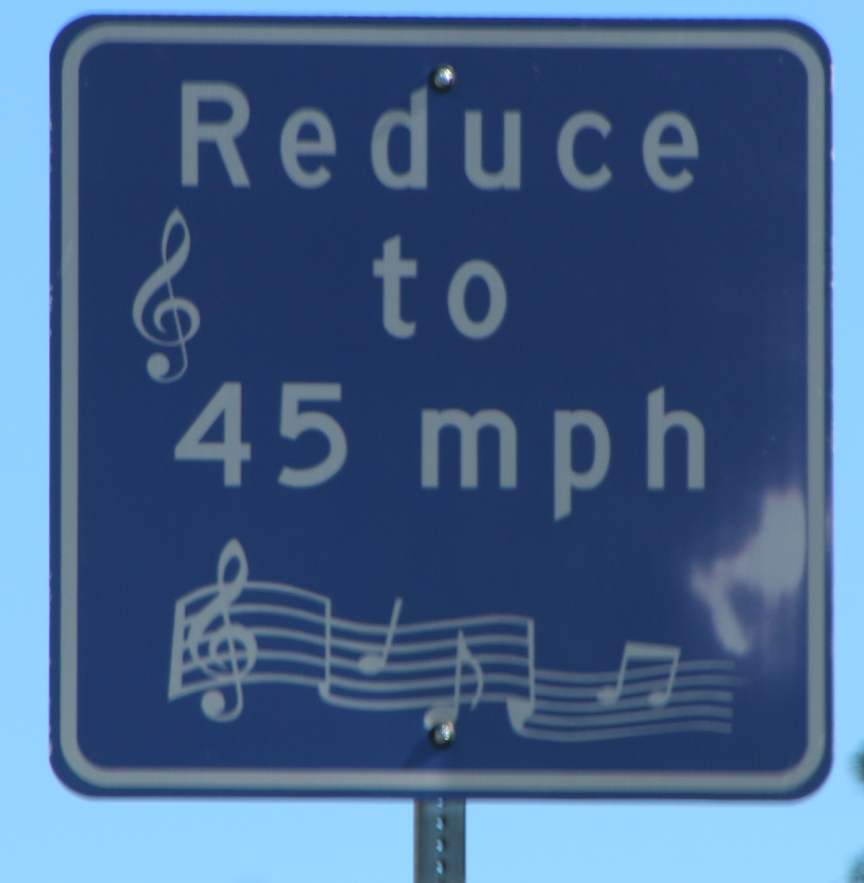
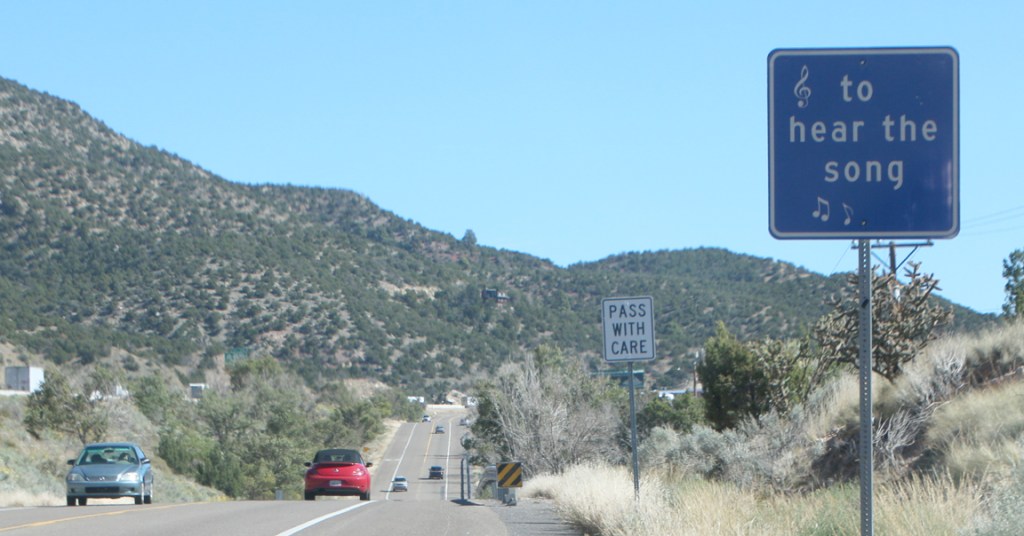
I was just moseying along on old, two-lane Route 66 east of Albuquerque, New Mexico, a few years ago and I encountered this sign.

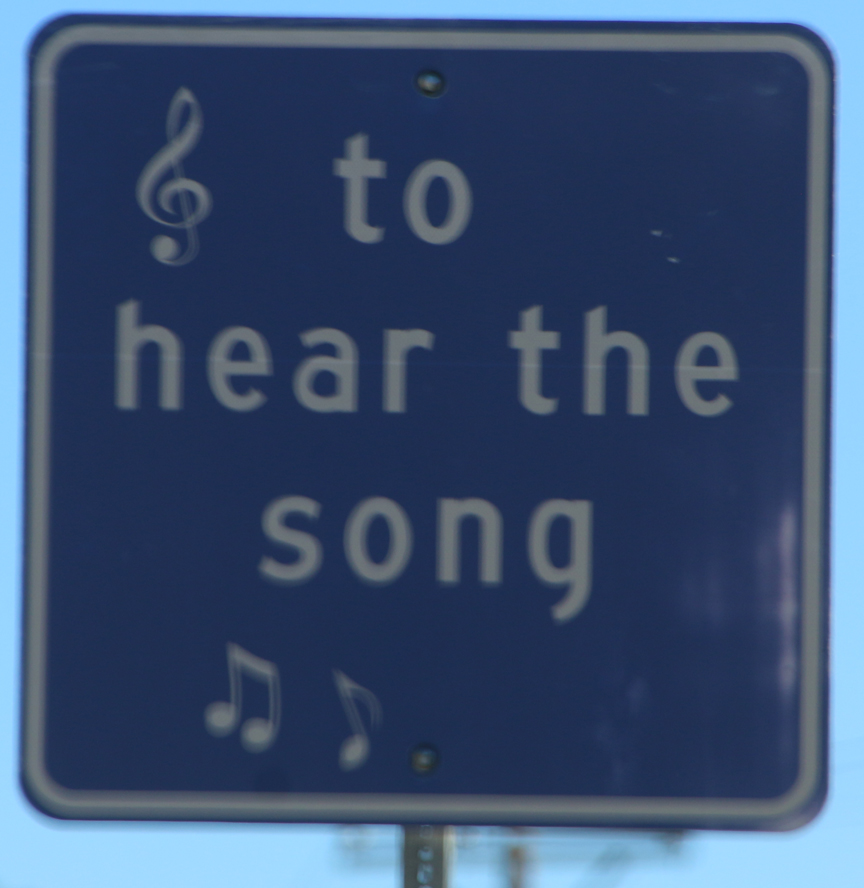
And then just past it, this one.

And then they were in my rearview mirror.

I took a u-turn.

On the way back I noticed some ridges in the pavement on that lane just past the signs and quickly realized what I had nearly missed.

A musical highway!  So I did as the sign said.  Drove a steady 45 mph with the right hand tires on the long strip of rough pavement, and my wheels drummed out the notes of the National Anthem!

Technical description: A musical road is a road, or section of a road, which when driven over causes a tactile vibration and audible rumbling that can be felt through the wheels and body of the vehicle. This rumbling is heard within the car as well as the surrounding area, in the form of a musical tune.   Musical roads are known to currently exist in Denmark, Hungary, Japan, South Korea, the United States, China, Iran, Taiwan, and Indonesia.

And here’s how it all happens, in case want to know: Each note is produced by varying the spacing of strips in, or on, the road. For example, an E note requires a frequency of around 330 vibrations a second. Therefore strips 2.4 in apart will produce an E note in a vehicle travelling at 45 mph.  (I lifted that straight from Wikipedia, and no, I do not understand it)

The first known musical road, appropriately called the Asphaltophone, was created in 1995 in Denmark.

Unfortunately, the musical stretch I encountered in tiny Tijeras, New Mexico, back in 2018 is silent now.  Funded by the National Geographic Society and coordinated by the state department of transportation as an effort to get folks to slow down, it was not maintained well.  Over the years, the ridges wore down or were paved over and the signs have been removed.

But it lives on.  Here’s the YouTube link.

PS.  The one remaining musical road in the US that I am aware of is on South Donahue Drive in Auburn, Alabama, and plays “War Eagle,” the fight song of the Tigers of Auburn University.

Tijeras, New Mexico. All Photos by Ron Haines
Posted in Uncategorized | 4 Comments

More than it’s cracked up to be

There’s a good deal more to the crack in the Liberty Bell than my mind has absorbed in its 78 years on this planet. 

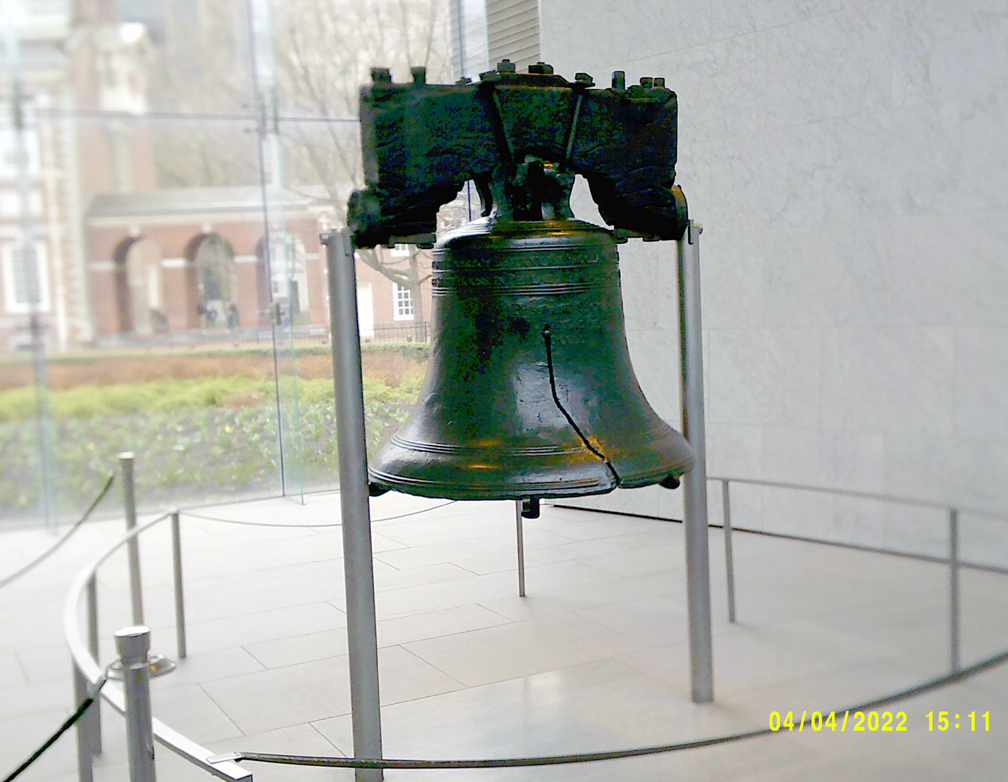
And, as is usually the case, what prompted this foray into the facts was a recent visit and a photo.  The Digital Cameraoccasion was a road trip in March with daughter Jennifer.  The ride from Connecticut to Florida included a brief, rainy stop in Philadelphia, home of the bell of course.  It was the only thing I cared to see there.
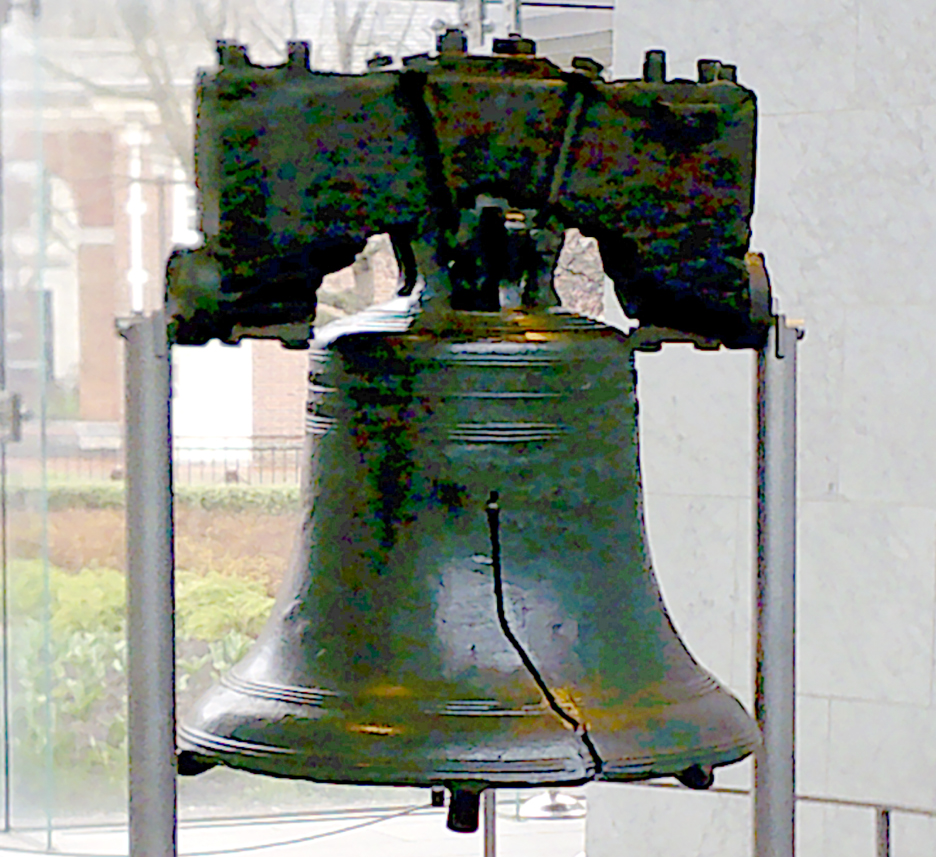
I don’t recall anything specific in school about the crack in the bell.  In my mind the bell is a symbol of liberty and over the years it developed a crack, period.  The reality is a lot more interesting than that.

One account that made it into the consciousness of most folks, and indeed even into popular media and school history texts, is that the crack occurred when the bell was rung on July 4, 1776, to celebrate the signing of the Declaration of Independence.  

The fact that the announcement of the signing wasn’t made until four days later, July 8, didn’t stop the myth from grabbing hold.  Nor did the fact that this tale did not originate until about 75 years AFTER the signing of the document. Nor even did the fact that the bell wasn’t even in Philadelphia in 1776.

But why let the facts get in the way of a good story, right? And this is indeed a good one.  

It starts with aGeorge Lippard Philadelphia newspaperman named George Lippard, who specialized in what he called “historical fictions and legends,” which he defined as “history in its details and delicate tints, with the bloom and dew yet fresh upon it, yet told to us, in the language of passion, of poetry, of home!”
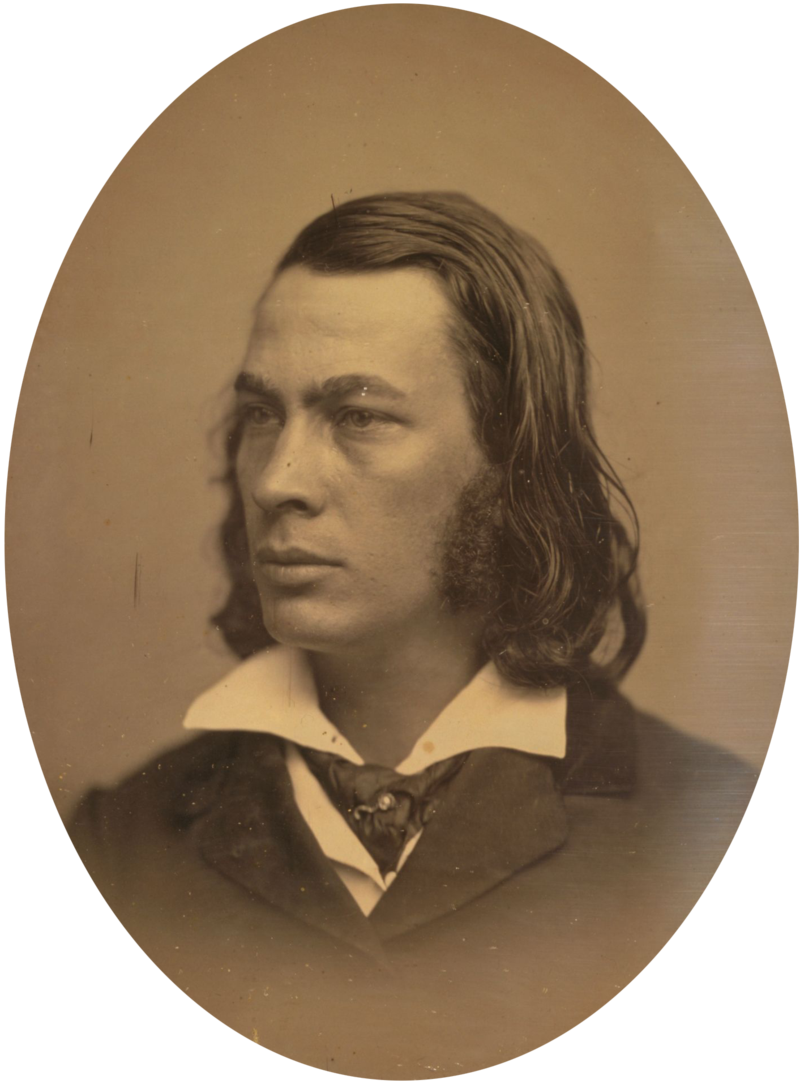
Lippard’s 1847 short story, “Fourth of July 1776,” depicts an aged bellman on July 4, 1776, sitting morosely by the bell, fearing that Congress would not have the courage to declare independence. At the most dramatic moment, a young boy appears with instructions for the old man: to ring the bell. 

I must also add that this same story introduced an unidentified “tall slender man… dressed in a dark robe” whose stirring speech inspired the faint-hearted members of the Second Continental Congress to sign the Declaration of Independence. 

Why note that?  Because in a commencement address at Eureka College in 1957, President Ronald Reagan quoted from “historical fiction” writer Lippard in talking about how a speech by an anonymous delegate was the final motivation that spurred delegates to sign the Declaration in 1776.  Similar in my mind to Justice Samuel Alito calling upon the debunked theories of jurist and marital rape supporter Sir Matthew Hale in the recently leaked draft opinion on Roe V Wade.

The myths and false narratives just keep on giving, don’t they?  Dredging them up to reinforce one’s beliefs seems to have become a popular pastime.

But let’s get back to reality…

The bell was delivered in 1752, ordered up from what is today Whitechapel Bell Foundry in London to replace the one that had been used for alerts and proclamations in Philadelphia since the city’s founding in 1682.

At the initial test strike of the clapper, the rim cracked.  Not an auspicious beginning.  Two men from the Mount Holly Iron Foundry in New Jersey offered to recast it, and they did, melting it down and adding some copper to the mix to reduce brittleness. 

The newly recast bell was unveiled in March of 1753.  It didn’t break, fortunately, but the sound was awful.  John Pass and John Stow, the two workers from Mount Holly Foundry, quietly melted it down and recast it once again. 

The new one was rung later in 1753.  The sound was deemed satisfactory, and it was installed in the steeple of the State House.

The bell then entered a pretty mundane phase of life.  Not yet famous, it became simply one of many bells around the country used on celebratory occasions, to announce public meetings, and even, for a while, to summon worshippers to services while their own building was under construction.  Indeed, in 1772, there were citizen complaints that the bell was rung too frequently.

During the Revolutionary War it spent nearly a year hidden under the floorboards of the Zion German Reformed Church in present-day Allentown during the British occupation of Philadelphia.  Returned to the city in 1778, it was in storage for seven years until being hung on an upper floor of the State House.

Are you paying attention to the dates here?  This bell wasn’t even in Philadelphia in 1776!

Back in action in 1785, it resumed ringing in the auspicious and the boring.  Ownership of it passed from the state to the city of Philadelphia in 1799 with the move of state government to Lancaster.

It was still not famous.  Remember, Lippard didn’t write his tale of the aged bellman until 1847, 48 years later.

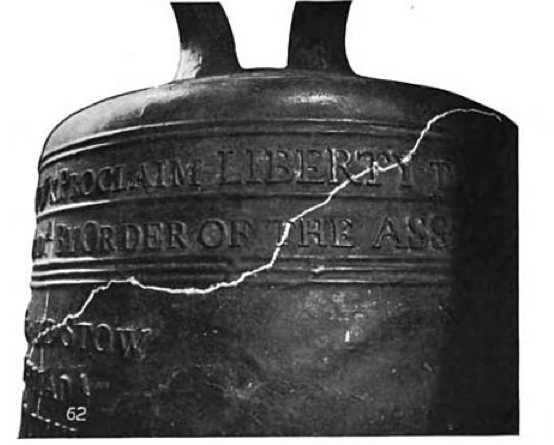
And there was no crack yet, at least one that anyone noticed.   A hairline crack appeared sometimeBell hairline crack between 1817 and 1846, most likely in the 1840s.  The wide, visible and iconic crack that we see today is actually the result of attempts to stabilize the fracture so that the bell could continue to be used.  The crack itself continues  to the right above the visible crack to the top of the bell,  
It finally was silenced for good in 1846, stilled forever before it even became famous.

As the 1847 Lippard account of the crack grew to be widely accepted, the fame of the bell grew.  By 1885, the Liberty Bell was widely recognized as a symbol of freedom, and as a treasured relic of Independence, and was growing still more famous as versions of Lippard’s legend were reprinted in history tomes and schoolbooks.   It was on tour seven times from 1885 to 1915, traveling by train and making numerous viewing stops.  After coming back from a Chicago trip with a new crack, further trip proposals were met with greater opposition.  Philadelphia allowed a final trip, to San Francisco, in 1915, and refused further tour requests.

It lost one percent of its weight during its touring days, much of it to the bell’s private watchman, who had been cutting off small pieces for souvenirs.

One final Liberty Bell note.  The second US human space flight in 1961 was in a Gus Grissom-piloted Mercury capsule dubbed Liberty Bell 7.  The bell-shaped craft even carried a painted-on replica of the famed crack.  Coincidentally, the mission developed a “crack” of its own:  A prematurely opening hatch on splashdown put Grissom in danger.  He got out, but the craft sank three miles to the bottom of the ocean, not to be recovered until 1999.
Digital Camera

Posted in Uncategorized | 2 Comments

A pair of gems

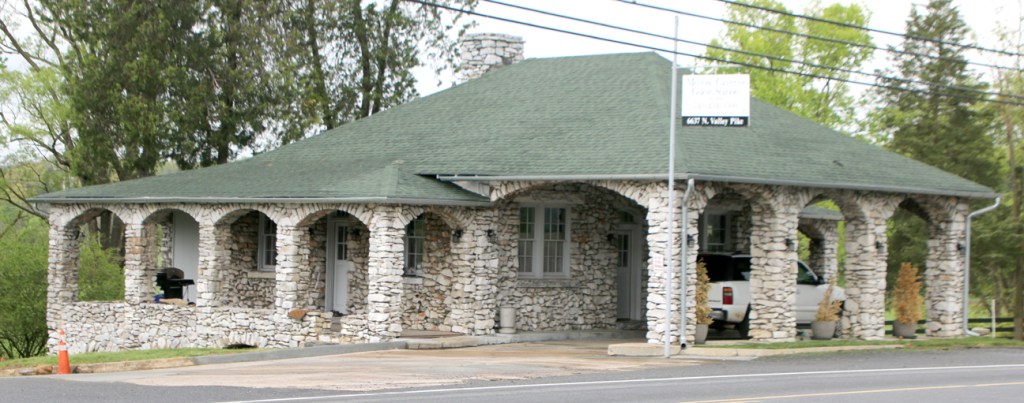
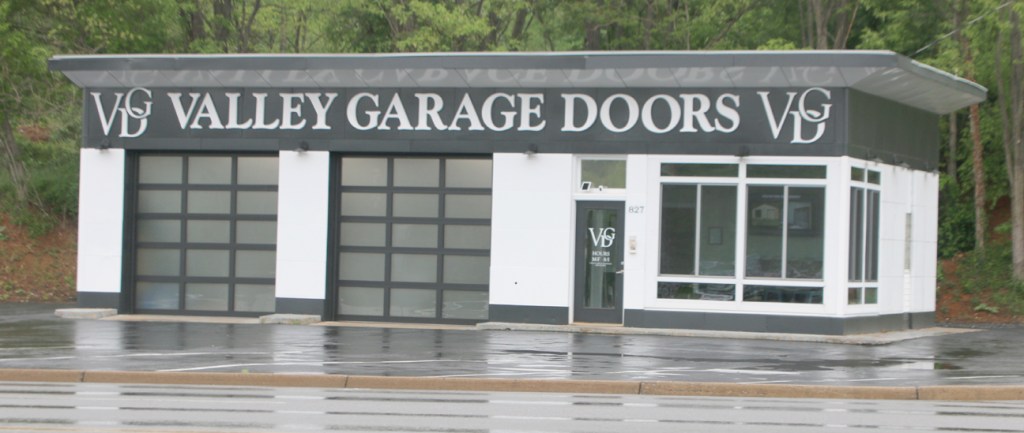
A rainy, off-the-interstate ride through northwestern Virginia this month yielded a pair of really nice old recycled gas stations. 

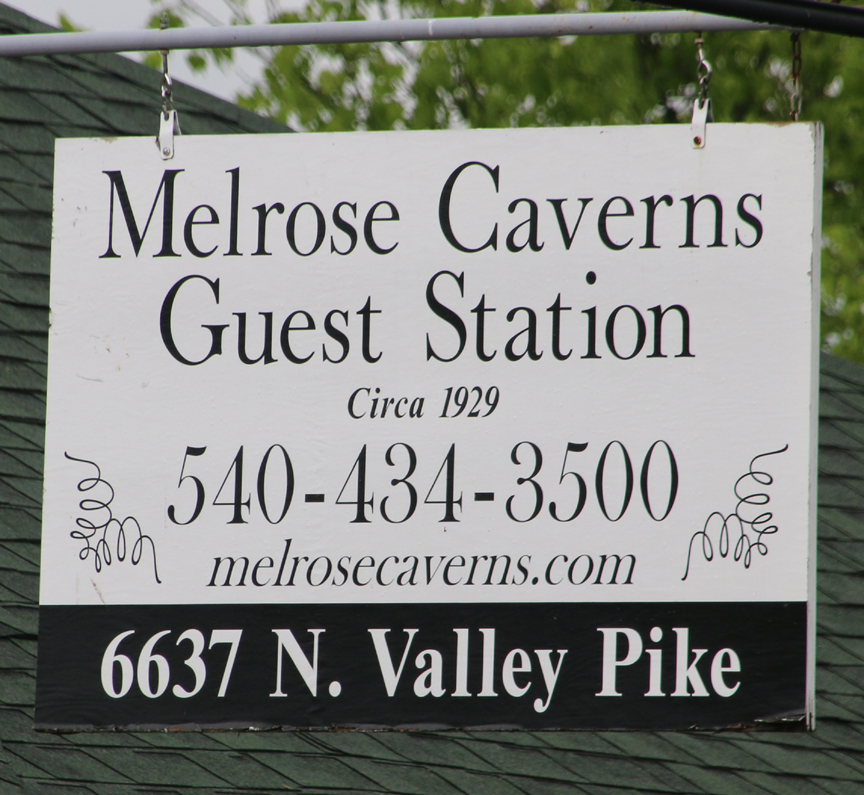
The first, a nice stone classic with a terrific side porch, was in Harrisonburg, VA.  It’s now the Guest Station of the Melrose Caverns attraction.

The second is home to Valley Garage Doors in Staunton, VA.   It’s a great building to showcase the product.

Click here to see my whole collection of recycled gas stations.

Posted in Uncategorized | 4 Comments

Hay there!

Hay there!

Back to the many ‘World’ capitals theme that I’ve touched on before.  Here’s more evidence they should be taken with a grain of salt.

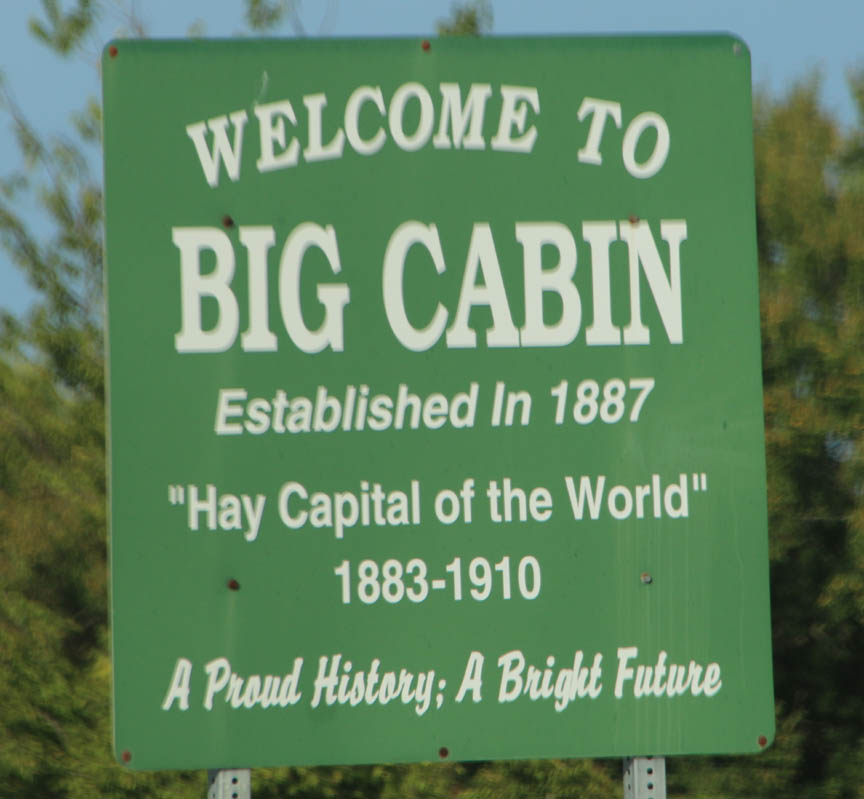
I came across this sign along Highway 69 just outside tiny Big Cabin, Oklahoma, on my travels a while ago.

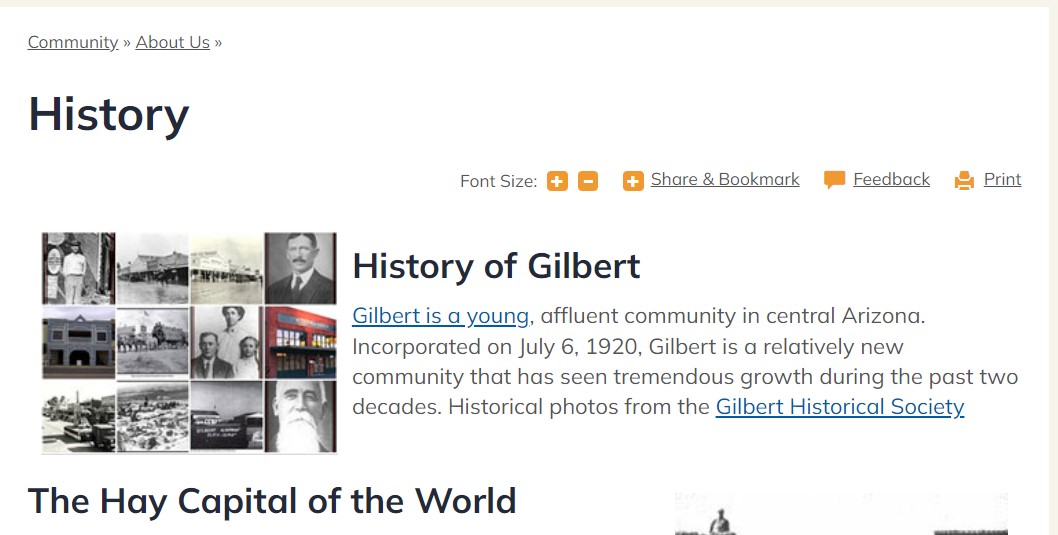
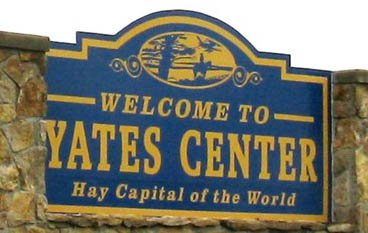
 And yes, a bit of research shows several other burgs claiming the same thing.   Here they are: Gayville, South Dakota; Gilbert, Arizona; Yates Center, Kansas; and Inola, Oklahoma.

In case you really want to get into the weeds, the difference between hay and straw is explained here.

I was happy, by the way, to NOT encounter Big Cabin’s other claim to fame.  At one time the town derived fully three-quarters of its income from speeding tickets.

Posted in Uncategorized | Leave a comment

Four Corners

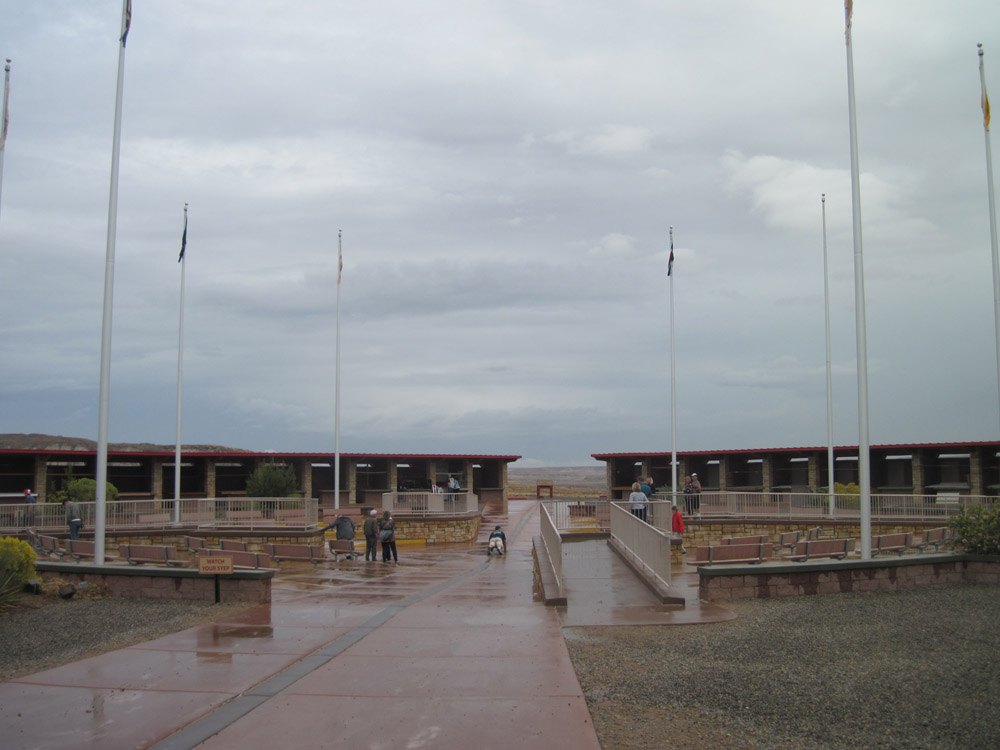
It was one of those ‘gotta go there’ moments and even though the famed Four Corners in the Southwestern US was several hundred miles out of my way, I went.

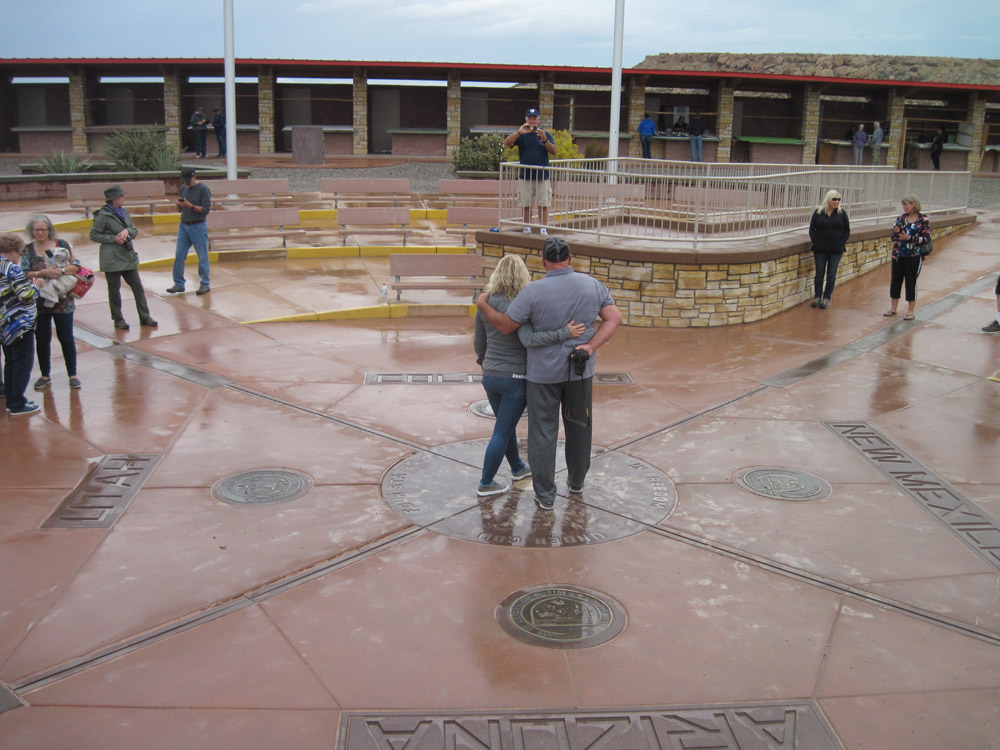
It’s just what it says it is, the juncture of four states—Arizona, Colorado, New Mexico and Utah.

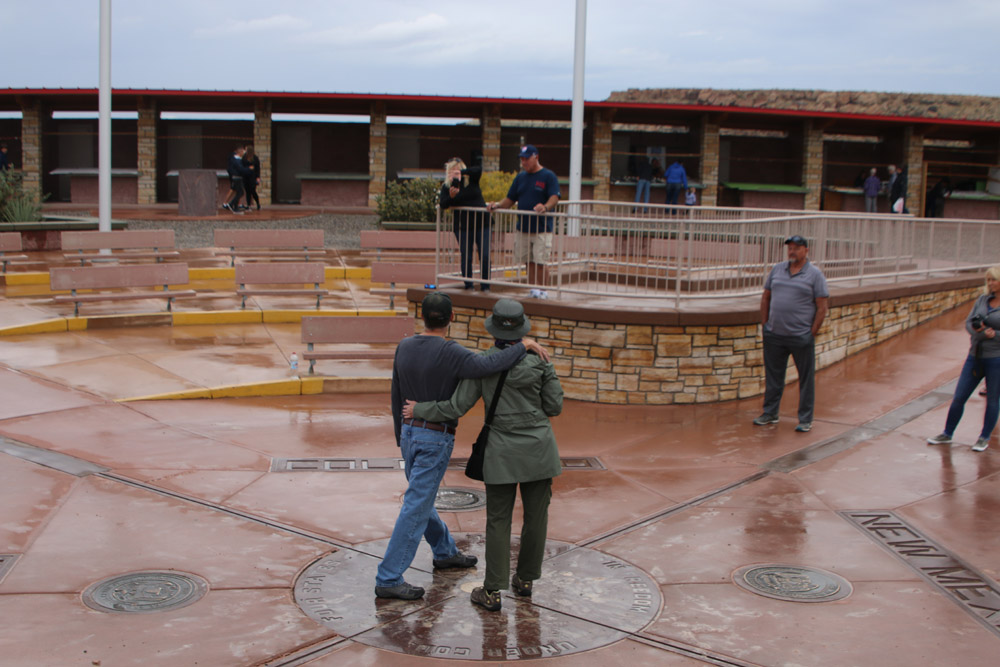
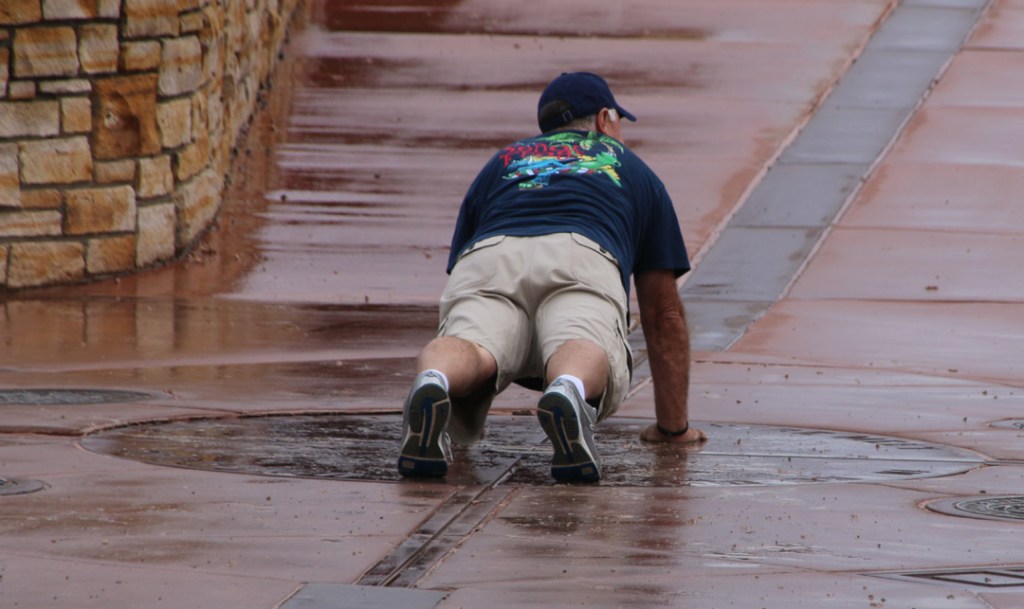
And the Four Corners Monument is just what it should be—a shrine to the intersection of two straight lines on the pavement, so one can put an appendage in each quadrant and indeed be standing in four states.

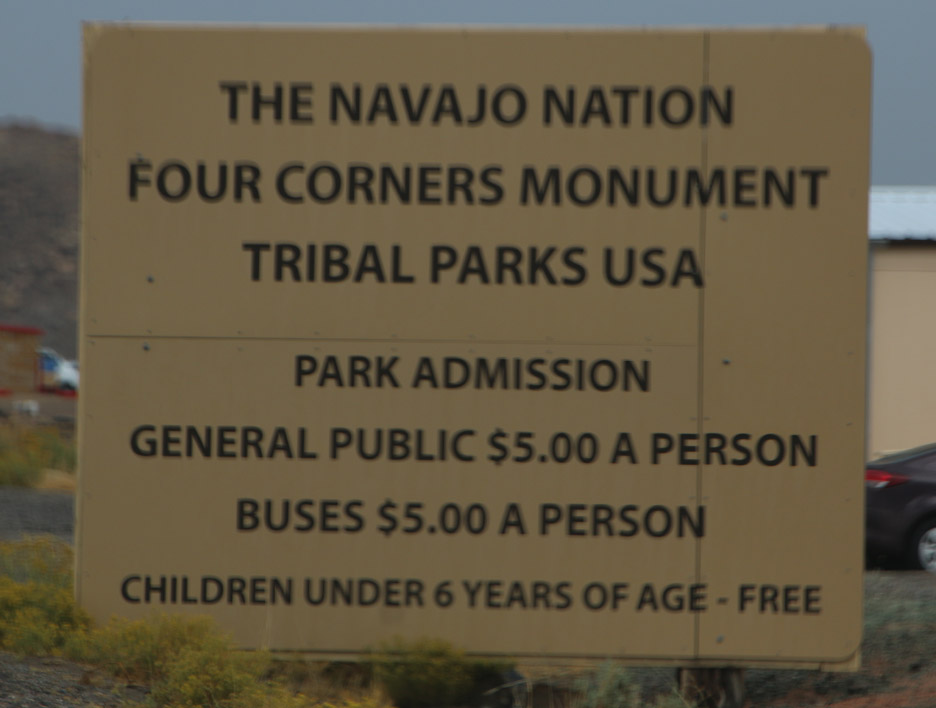
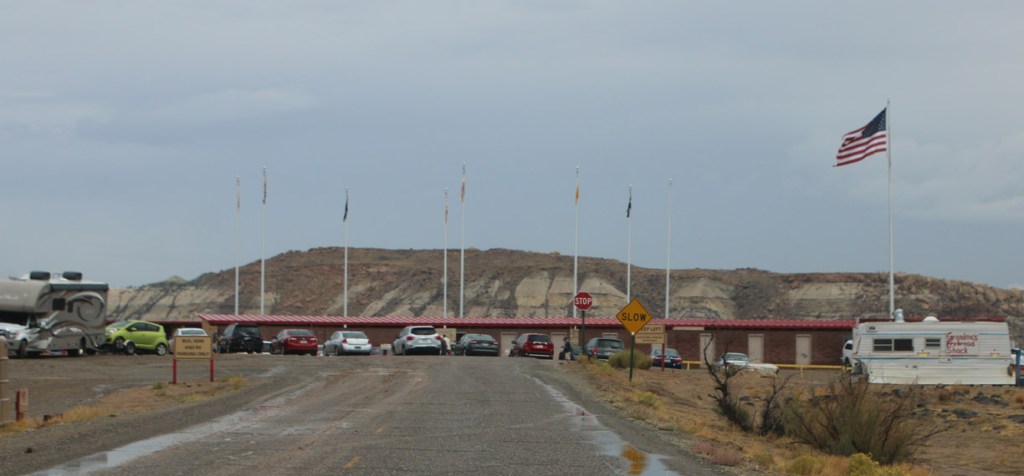
Surrounded by mostly empty Southwestern-themed Native American souvenir booths on the chilly, rainy and muddy day I happened by, that crosshairs landmark is the only place in the US where one can do that.

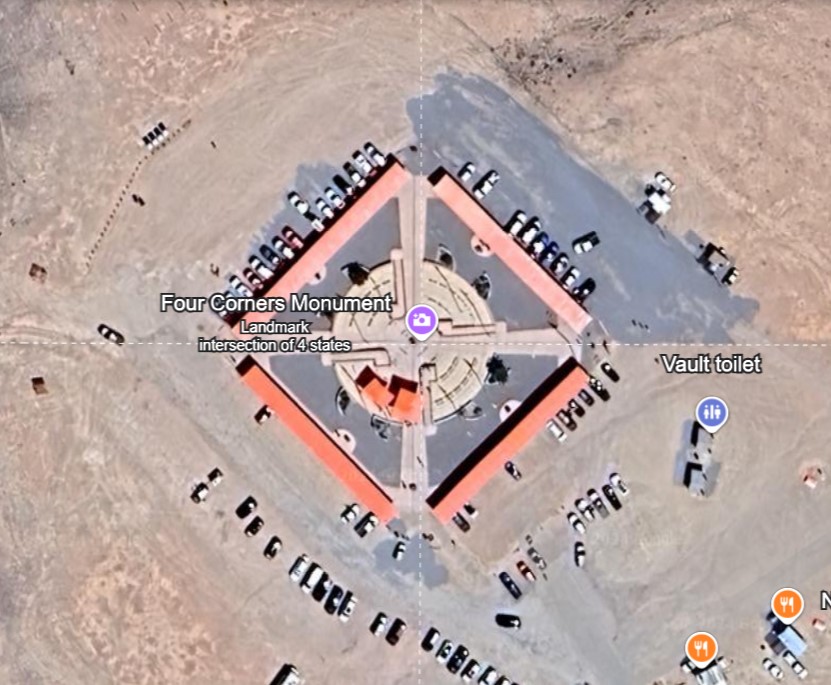
Here’s a Google Earth bird’s eye view of it and below that are some photos I took on my quick visit.

Posted in Uncategorized | 5 Comments

The best thing since sliced bread

This blog post has sat under my nose for about fifty years.  Just kidding.  My blog’s only been around for ten years.

To explain, it was 50 years ago that I lived in Davenport, Iowa, as a reporter and city editor for the local paper (called the Times-Democrat when I arrived and renamed the Quad-City Times during my stay).

But it was only just recently that I discovered Davenport is the hometown of the man who invented sliced bread!330px-Bix_Beiderbecke_cropped

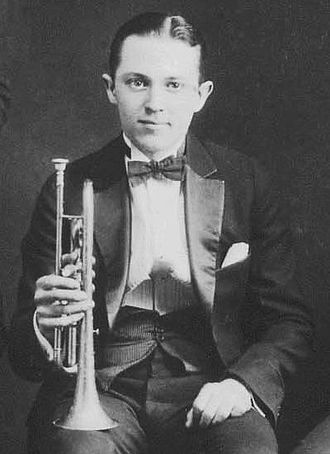
Davenport doesn’t boast as much about this, obviously, as it does about another native son, Bix Beiderbecke, the famed jazz cornetist.

The annual Bix Beiderbecke jazz festival was a big deal when I was in town, and probably still is, but I heard nary a whisper when I lived there about Otto Frederick Rohwedder, the man who invented the machine that gave us that great saying: “The best thing since sliced bread.”

There’s even a museum for the musician!  Where’s the sliced bread statue?

There aren’t many inventions that have had that kind of impact on our language over the years.

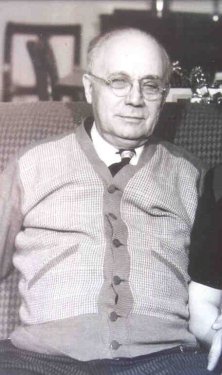
Otto_Frederick_RohwedderAfter graduation from Davenport public schools, Rohwedder studied optometry in Chicago and later apprenticed as a jeweler.   He became the owner of three jewelry stores in St. Joseph, Missouri, and used his talent with watches and jewelry to invent new machines.

In 1912 he started toying with the idea of a machine that would slice bread. He even did some market research, interviewing over 30,000 housewives “for the purpose of determining a thickness of slice which would be most nearly universal in acceptance.”

Convinced he could do it he sold his jewelry stores to finance the project and moved back to Davenport.  By 1916 he was building a prototype, but it all came to a halt in 1917 when a factory fire destroyed everything, including his blueprints.

It took him years, but he found more funding and by 1927 had a machine that not only sliced bread but wrapped it.  Rohwedder encountered some hesitation among bakeries about the machine, and he asked a friend, Frank Bench, who owned a nearly bankrupt bakery in Chillicothe, Missouri, to try it out.  Bread sales were up 2,000 per cent in a couple weeks and Rohwedder had no trouble interesting other bakeries after that.

W. E. Long, owner of the Holsum Bread brand, then a cooperative of independent bakeries, promoted the packaging of sliced bread in 1928.

Wonder Bread came along two years later and by 1933 American bakeries produced more sliced than unsliced bread.

Ten years later the march of bread handling progress came to a halt with a short-lived ban on sliced bread as a wartime conservation measure.  To stay fresh, went the argument, a sliced loaf must have a heavier wrapping than an unsliced one, thereby using up too many resources deemed valuable for war.

Pushback was swift, loud and widespread. Popular opinion ended the ban in just seven weeks.  Wrote a distraught housewife in the New York Times: “I should like to let you know how important sliced bread is to the morale and saneness of a household.  My husband and four children are all in a rush during and after breakfast. Without ready-sliced bread I must do the slicing for toast—two pieces for each one—that’s ten. For their lunches I must cut by hand at least twenty slices, for two sandwiches apiece. Afterward I make my own toast. Twenty-two slices of bread to be cut in a hurry.”

Of course, the official reason for lifting the ban didn’t mention the public outcry:  Said Food Administrator Claude R. Wickard, when he rescinded his order: “Our experience with the order leads us to believe that the savings are not as much as we expected, and the War Production Board tells us that sufficient wax paper to wrap sliced bread for four months is in the hands of paper processor and the baking industry.”

“Sliced Bread Put Back on Sale; Housewives’ Thumbs Safe Again” was the New York Times headline.

So, what on earth did we say before ‘The best thing since sliced bread’ came along to describe one’s enthusiasm for something new?

I don’t know, but here’s this:  A 1928 advertisement for sliced bread advertised it as “the greatest forward step in the baking industry since bread was wrapped.”

Posted in Uncategorized | 3 Comments

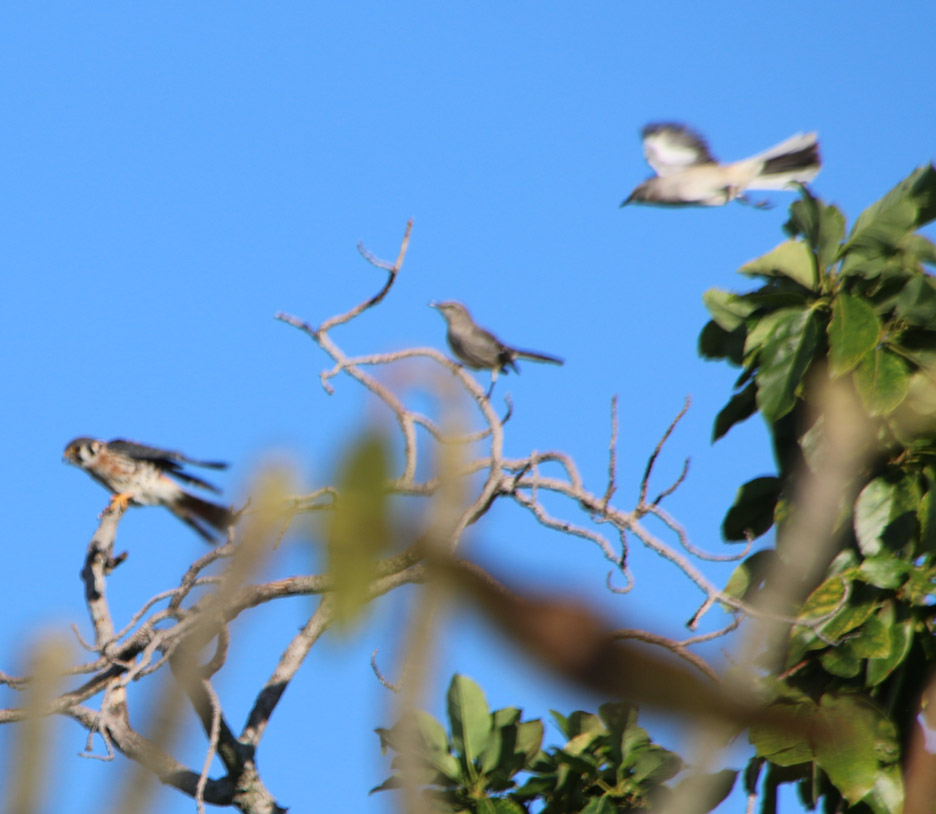
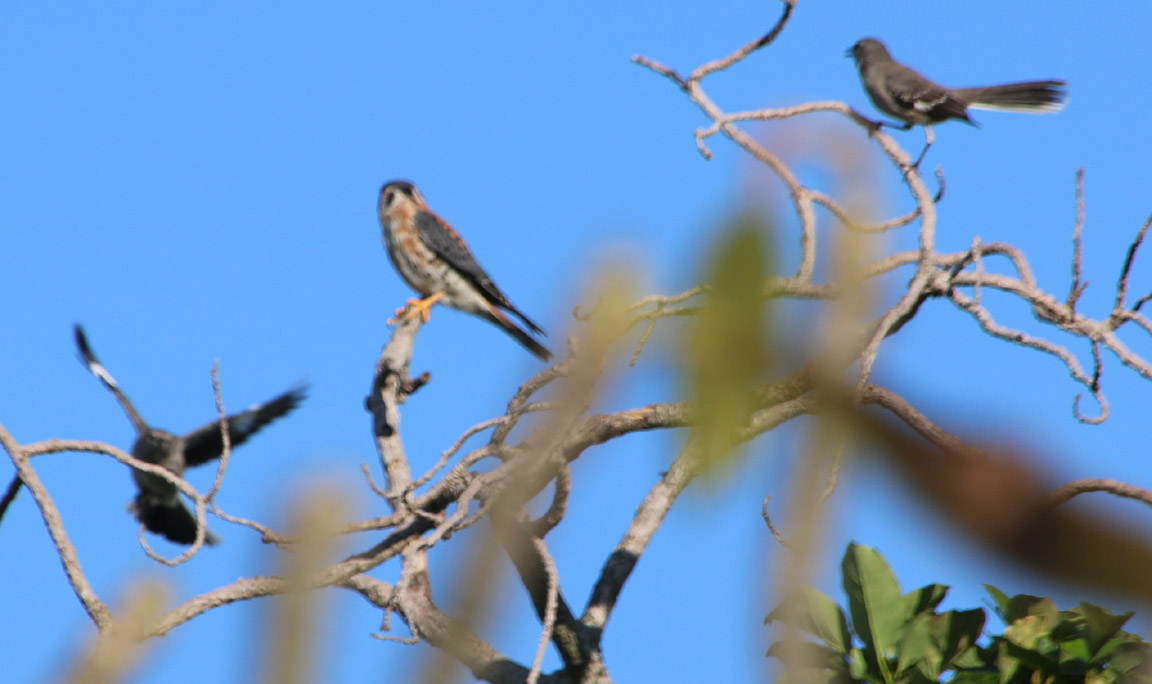
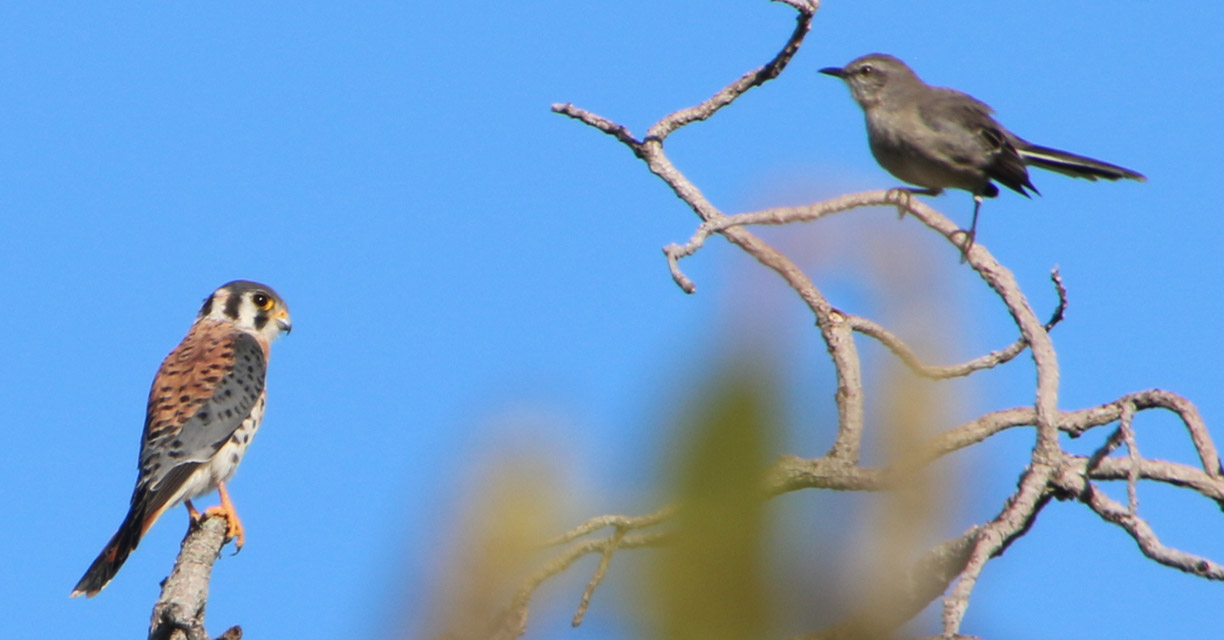
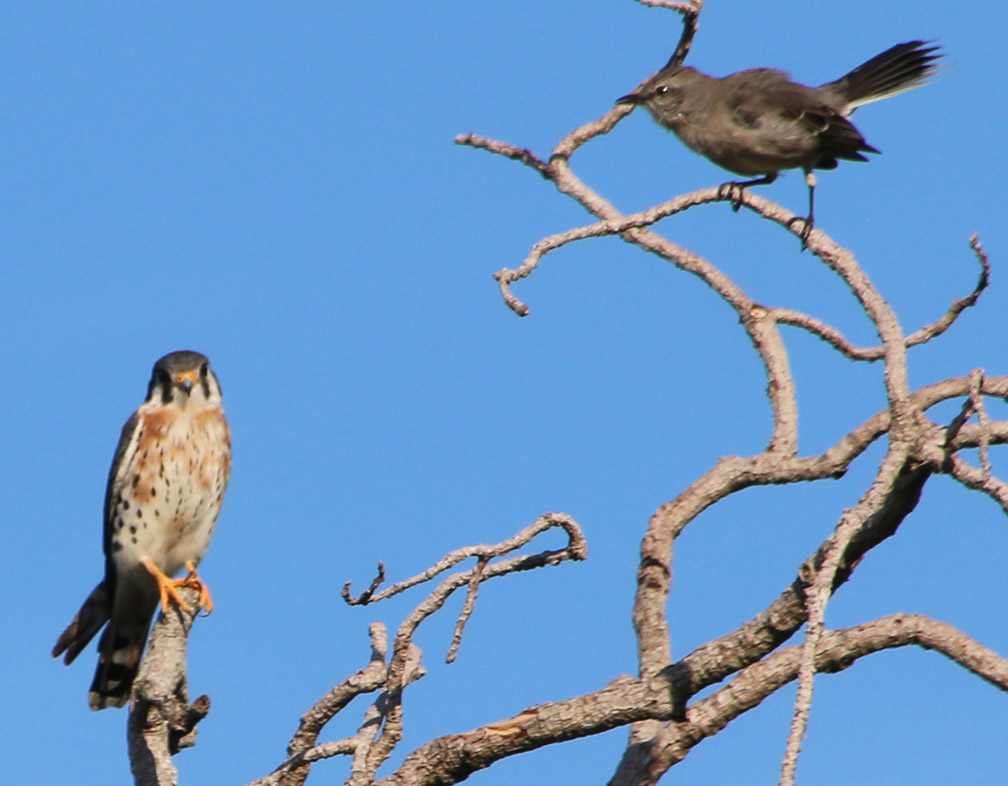
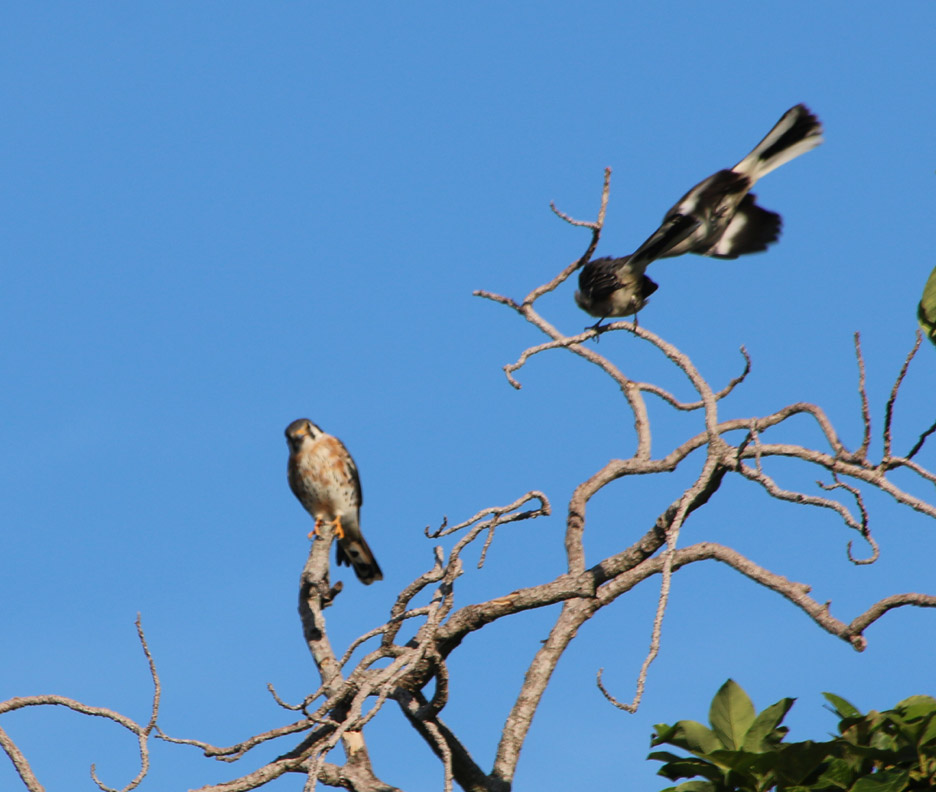
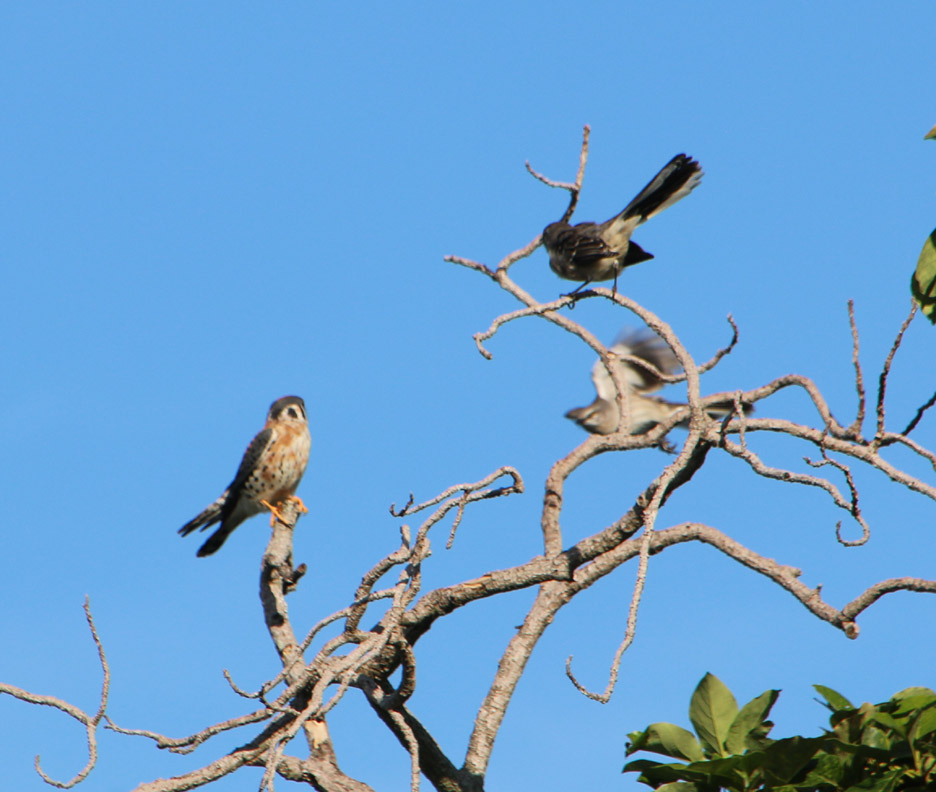
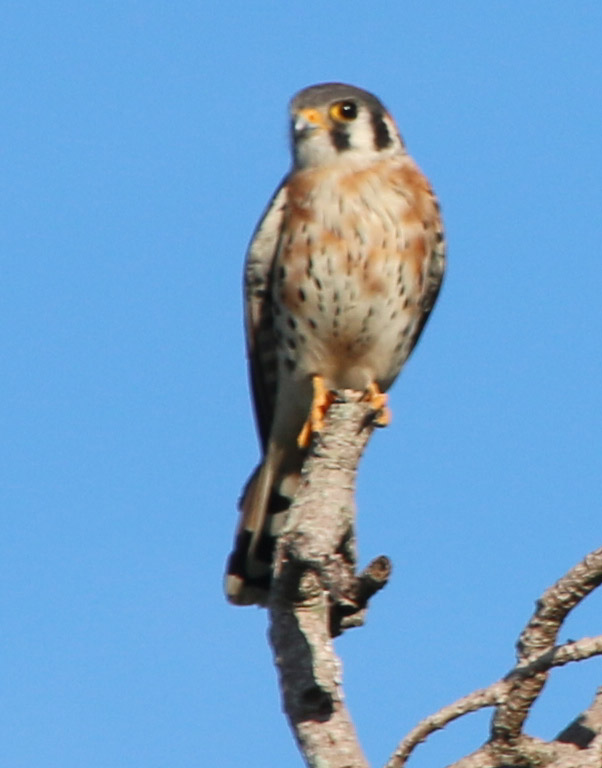
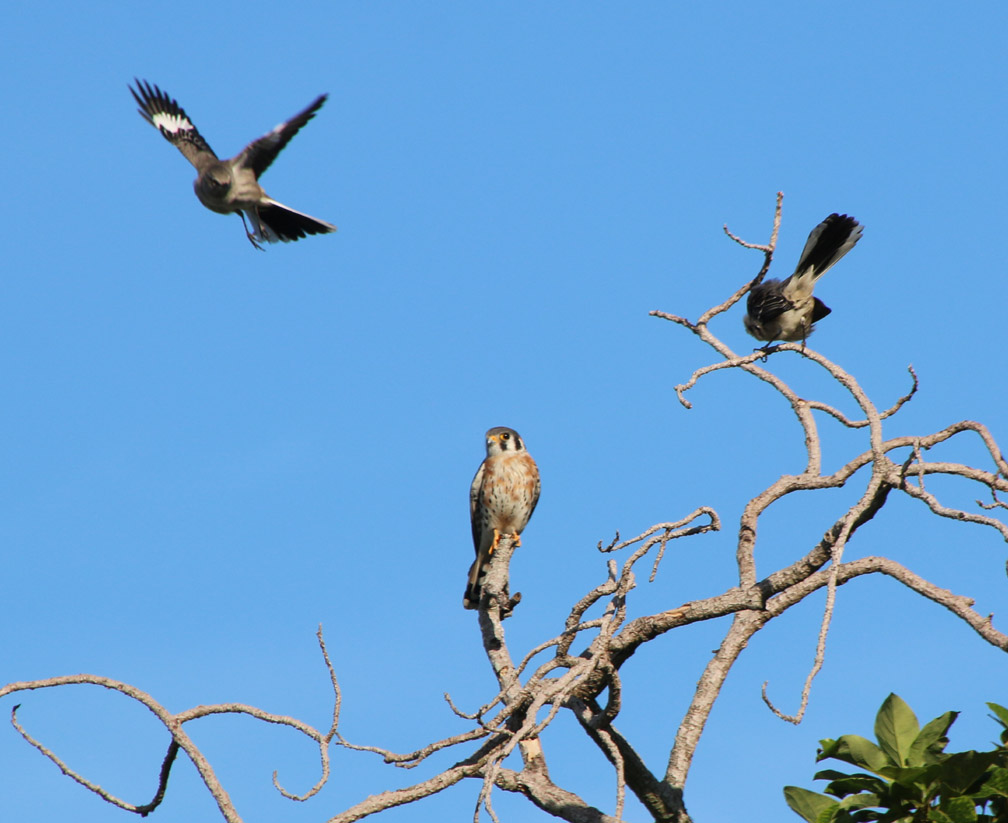
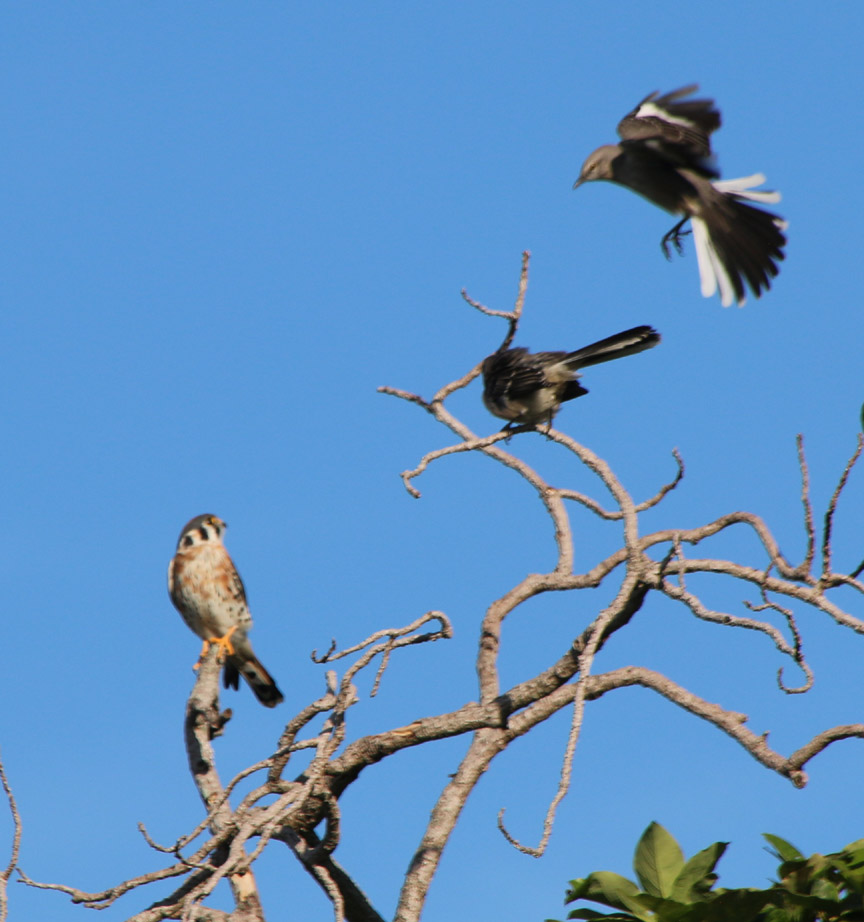
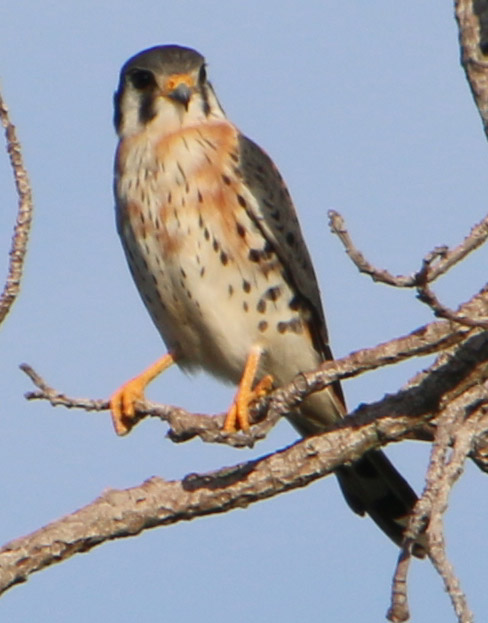
Mockingbirds vs American kestrel

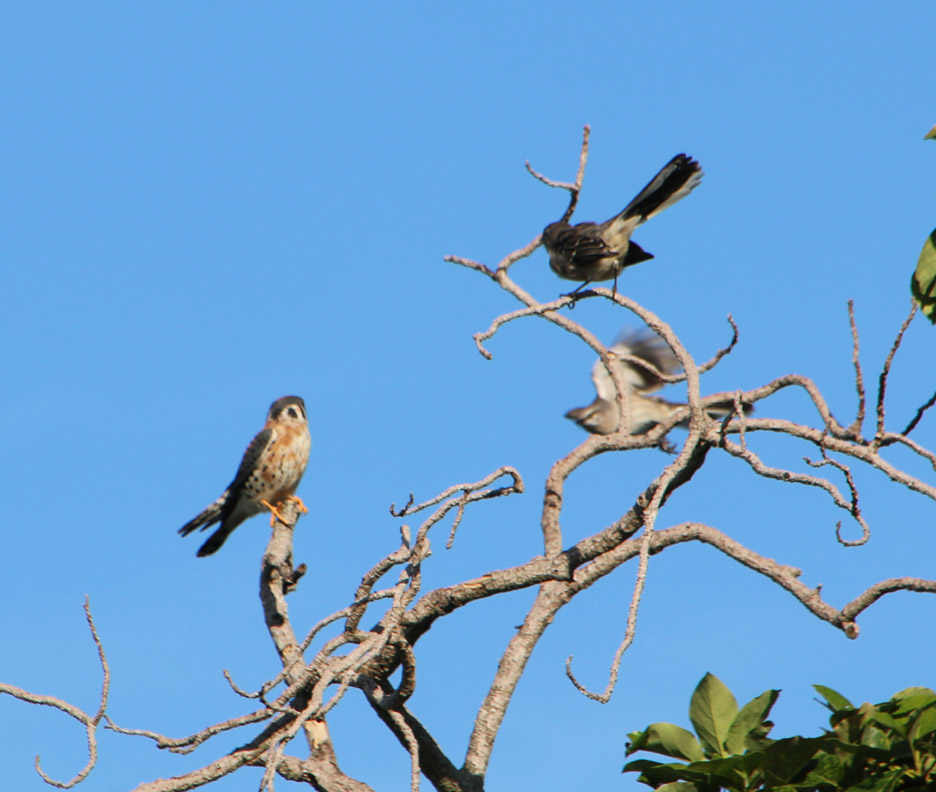
These two mockingbirds definitely did not want this American kestrel hanging around my yard, but all the dive-bombing they did hardly fazed it.

The kestrel sat there unruffled for a few minutes, then dropped quickly out of sight behind the house—to grab a lizard for lunch I hope—and did not come back.

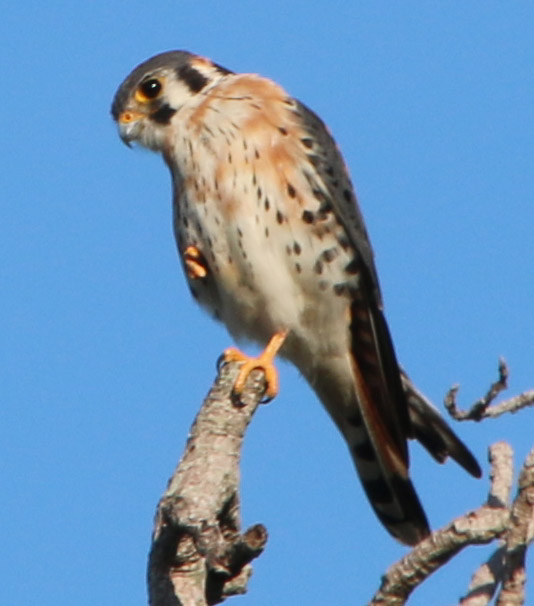
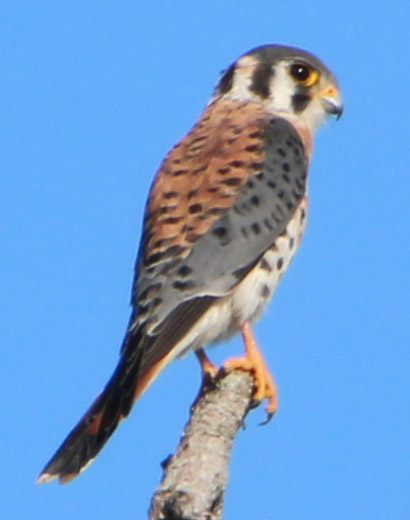
The American kestrel is actually a falcon and is North America’s smallest raptor.  It generally hunts in an energy-conserving fashion, sitting up high somewhere until it spots a mouse, lizard, grasshopper or a small bird to pounce upon.

Mockingbirds of course are the karaoke champs of the bird world. The one we see, the northern mockingbird, carries the moniker Mimus polyglottos. The Greek word polyglottos means “multiple languages.” And they can get very aggressive, especially if there is a nest at stake.

Did you know that a group of mockingbirds is called a mockeroserous?

Poet Walter J. Wojtanki had this to say about that in 2016:

Sounds quite prehistoric
rather almost reptilian,
a mockingbird cotillion
will bear your silly name.
Birds of a feather flock to-
gether, but this many-tongued
mimic is an odd gimmick with wings.
It will make a mockery of things!

© Walter J. Wojtanik – 2016

Here are several photos of the kestrel on his own and the encounter with the mockingbirds. Just click on any one to scroll through the larger versions.

Posted in Uncategorized | 2 Comments

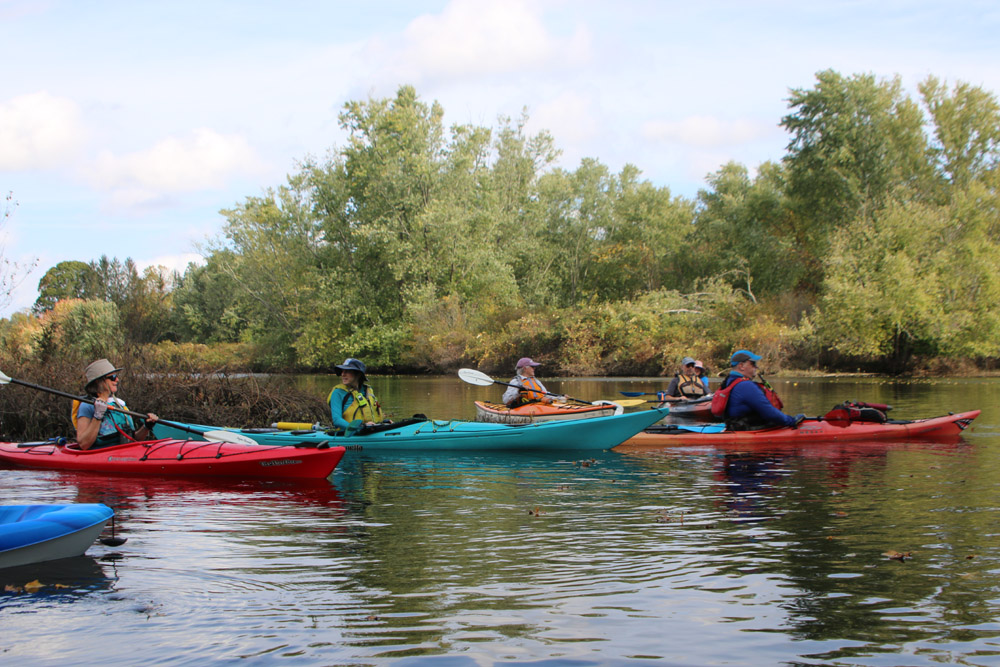
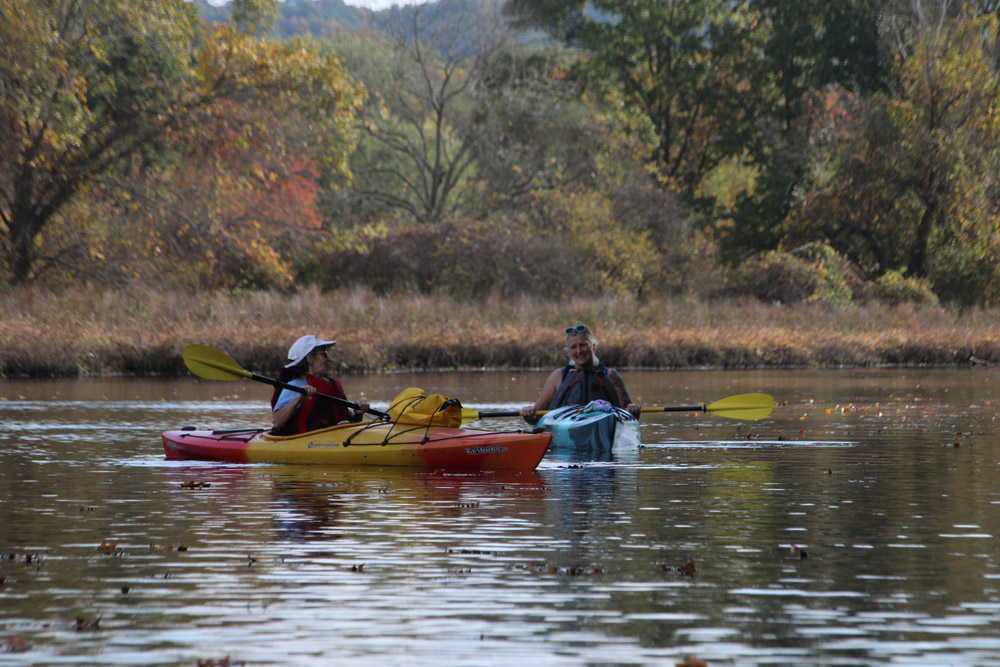
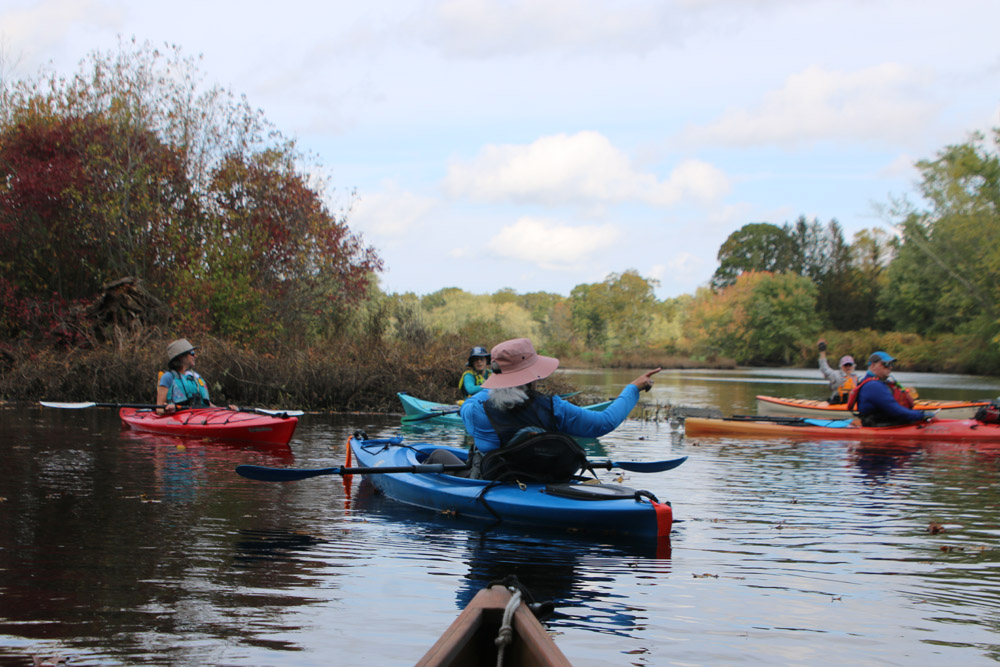
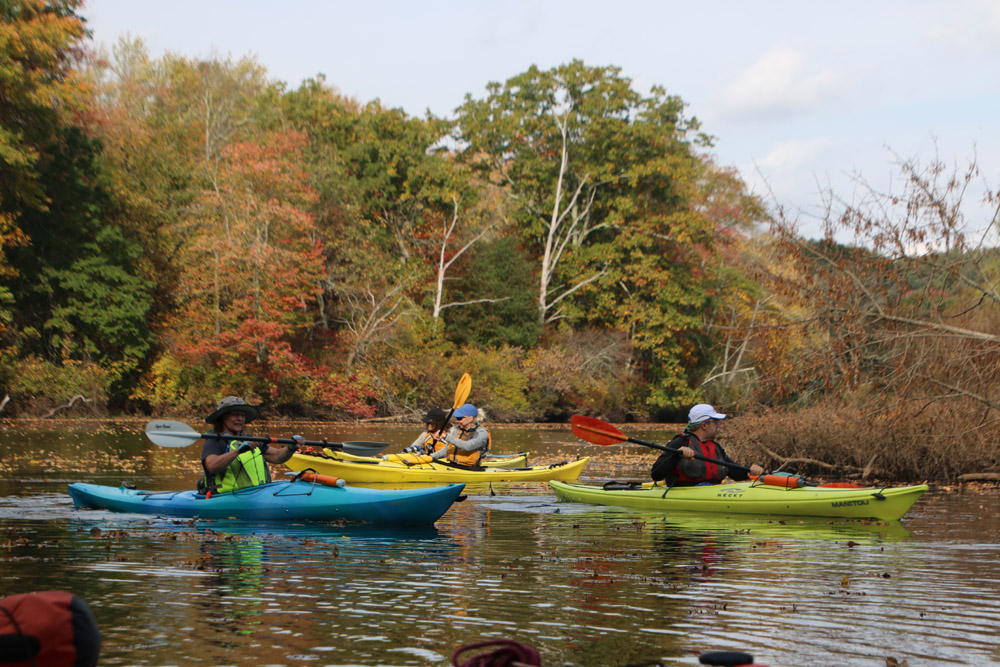
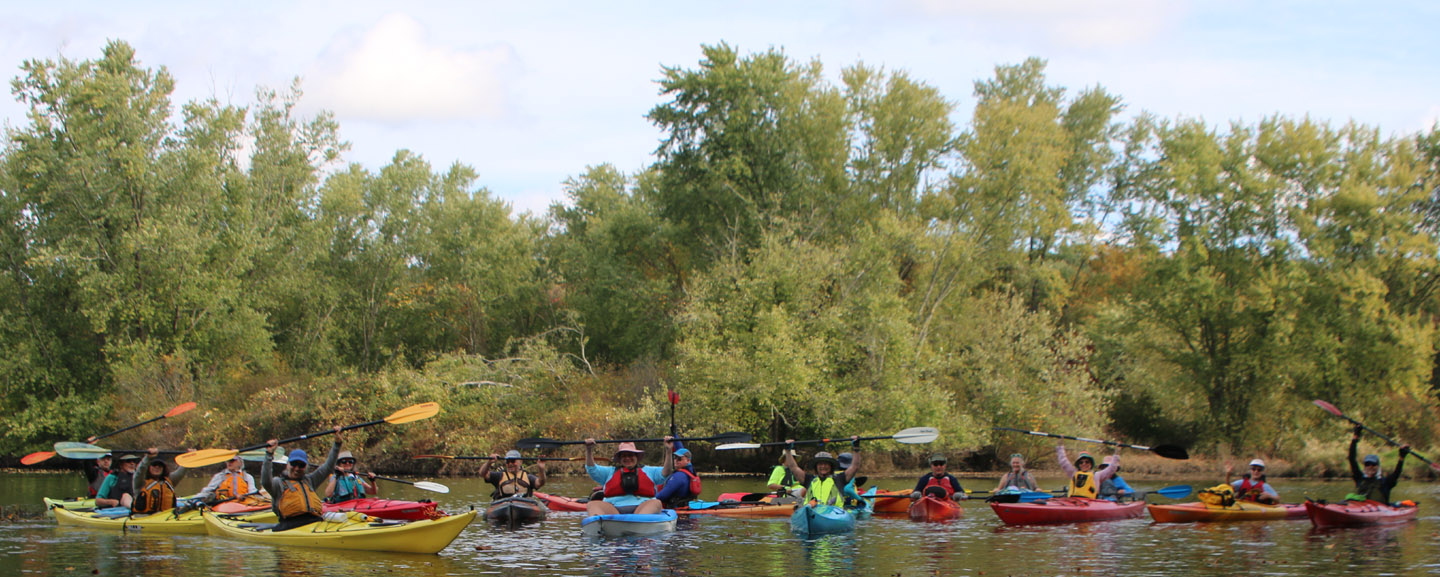
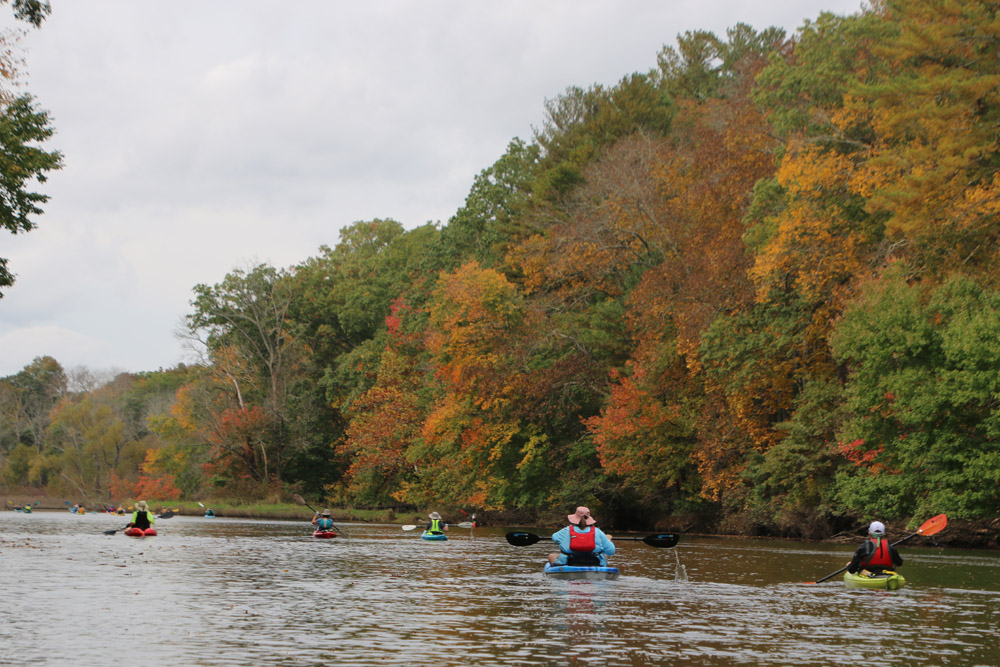
Northeast paddle season winding down

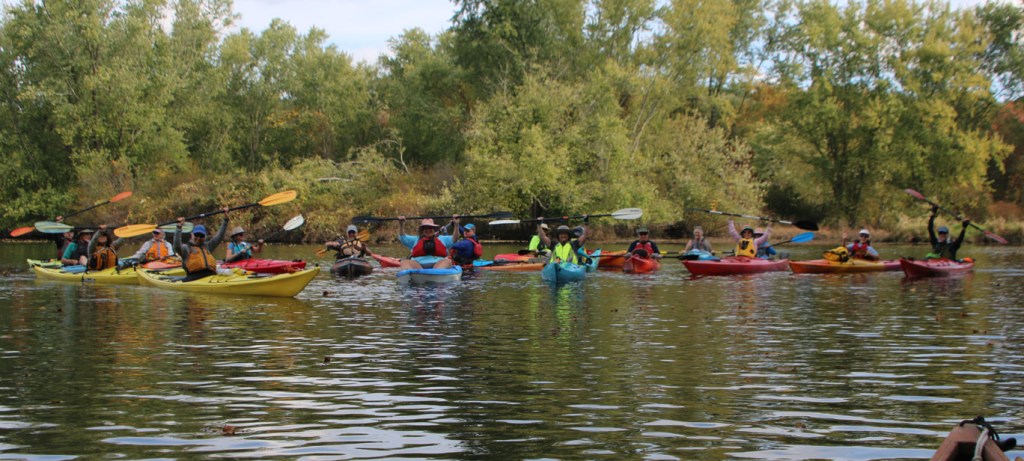
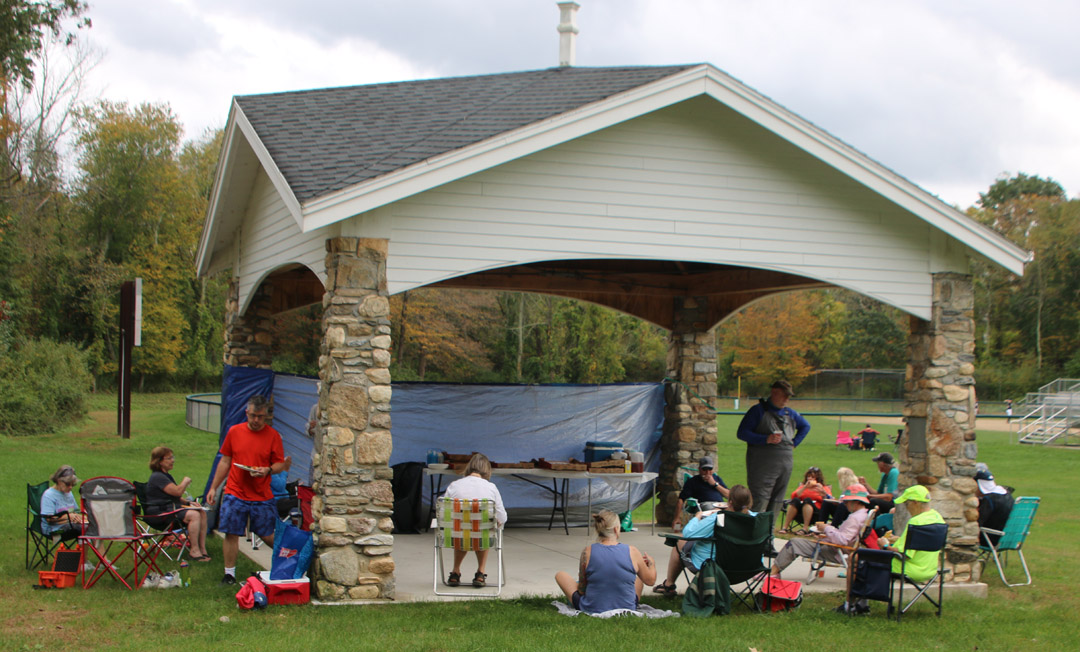
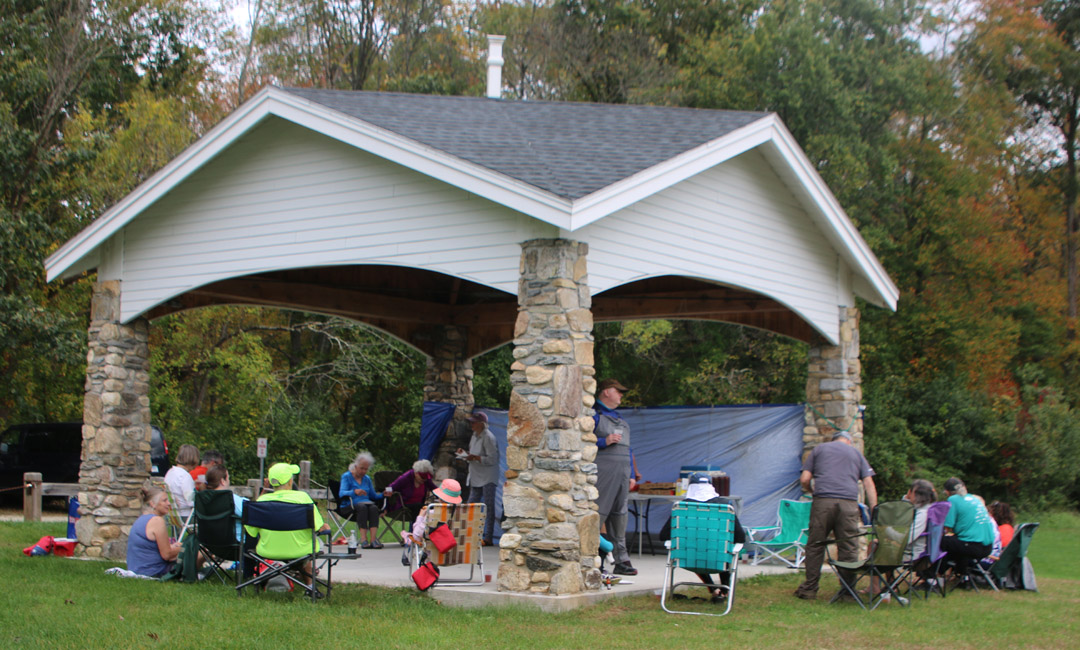
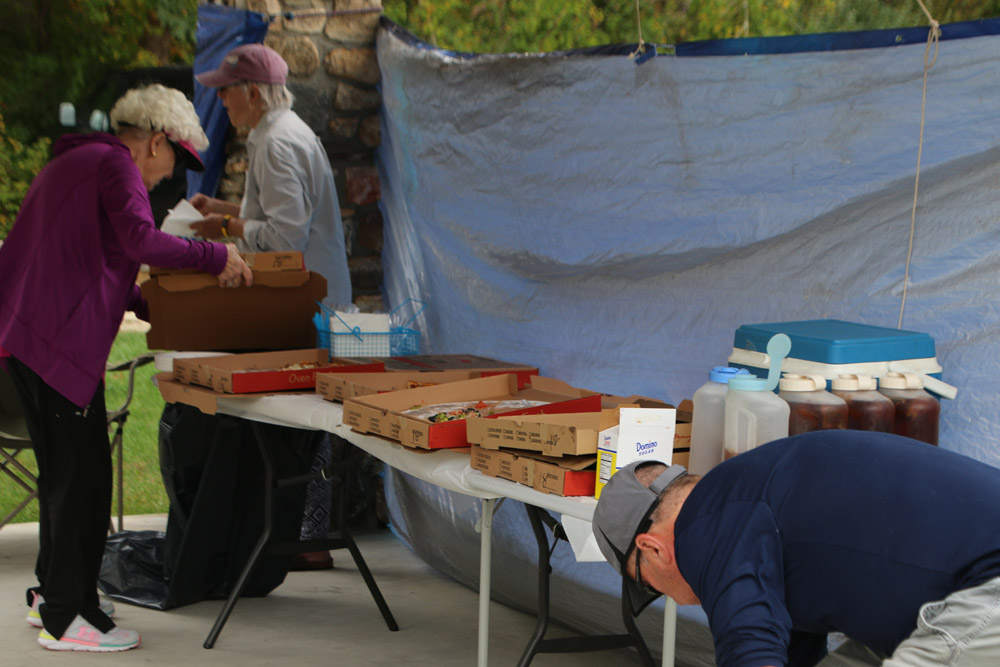
I know I’m getting to the end of my paddling season up here when the Paddle and Pizza Party for the Paddle Killingly Meetup Group rolls around.

This year’s was a repeat of 2020, eating outdoors because of Covid.  Only this year our clever organizers came up with a huge tarp to block the wind from blowing the pizza boxes off the table. 

Our last time indoors at Classic Pizza, just up the street from where we paddle, was in 2019, when granddaughter Margeaux came along with me.  

The fall colors are just now starting to show and I may go paddling a couple more times before heading south, but I am truly a wimp.  When it gets much below 70 and stays cloudy and windy I’d rather be inside looking out the window.

Posted in Uncategorized | 2 Comments

Connecticut Pumpkins

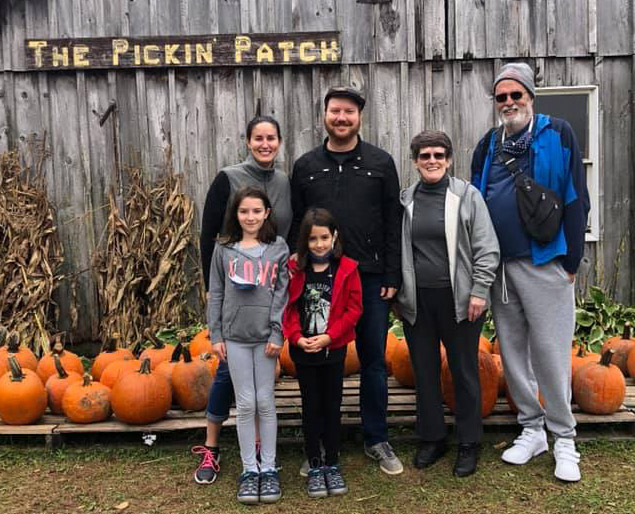
It’s been a long while since I’ve updated the M and S photos on this website, so these from the local pumpkin patch this week will do quite nicely. As you can see, it’s more than just the pumpkins that’ve been growing around here.

It was my first encounter with a deep fried Oreo cookie. That’s what M has in her hand. She and I agreed there was nothing not to like about them.

Click on any photo to scroll through the large versions.

Posted in Uncategorized | 2 Comments

Rushmore and Crazy Horse

A couple of sizeable mountain carvings caught my interest during a western road trip a few years ago but it wasn’t until I did some research recently that I found out just how intertwined they are.

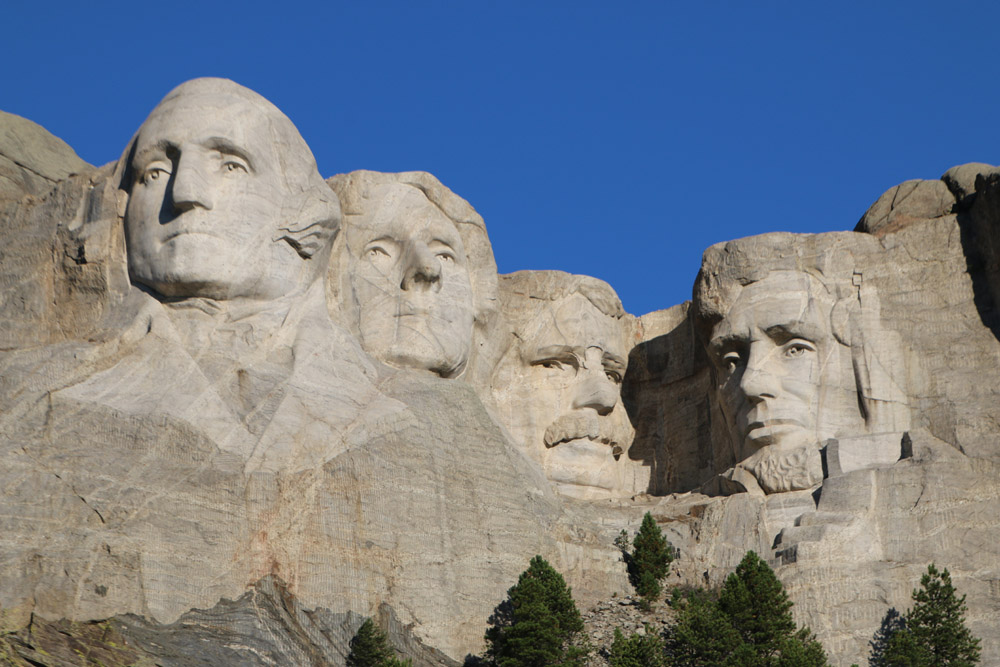
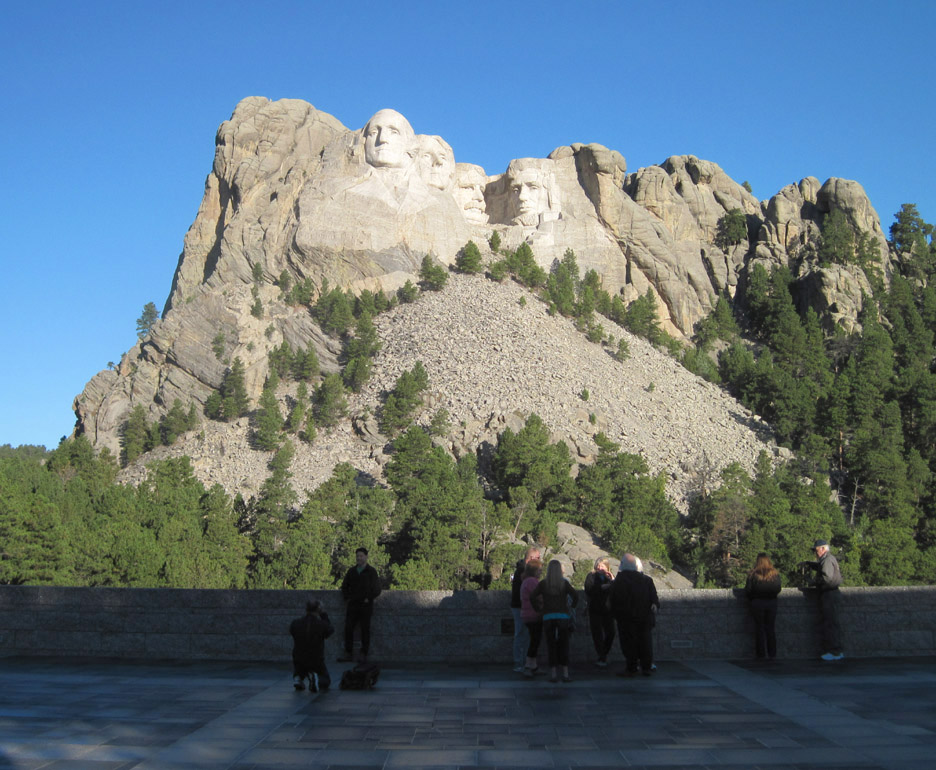
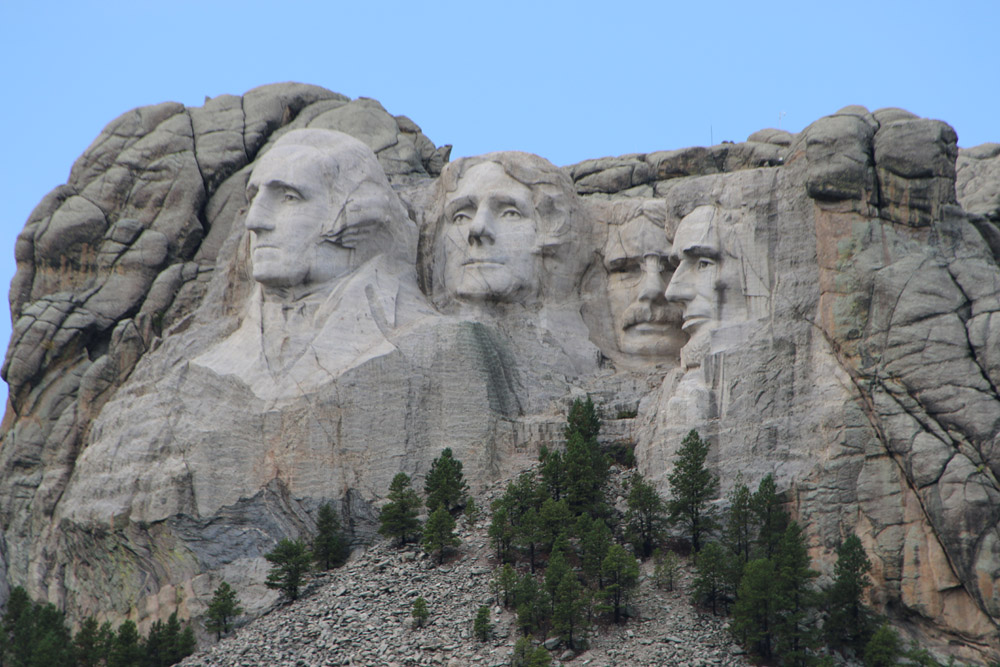
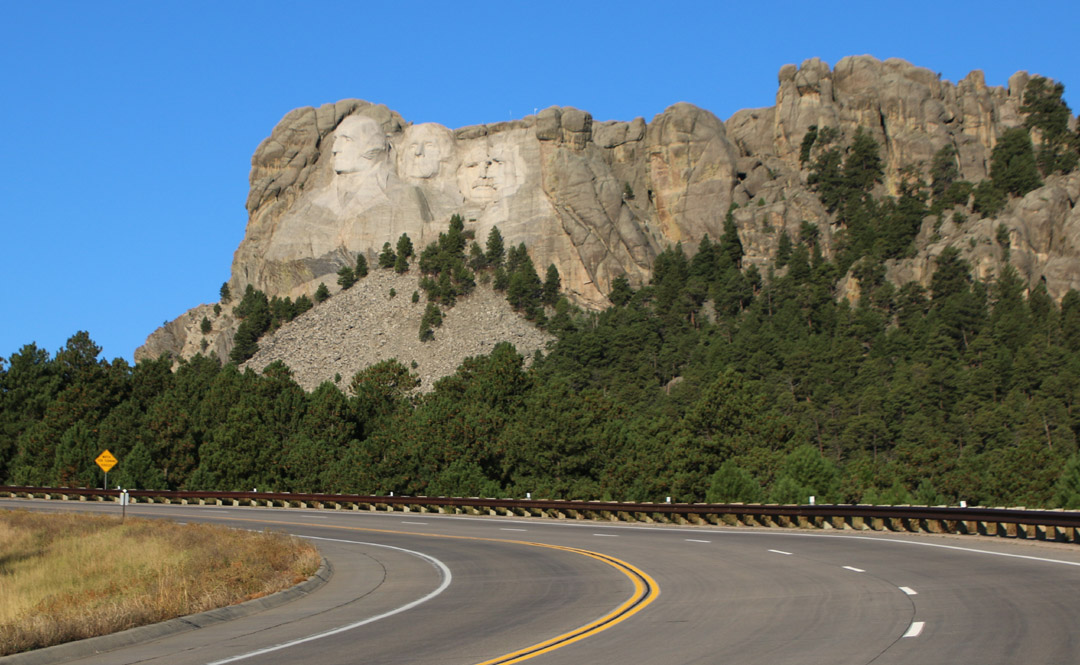
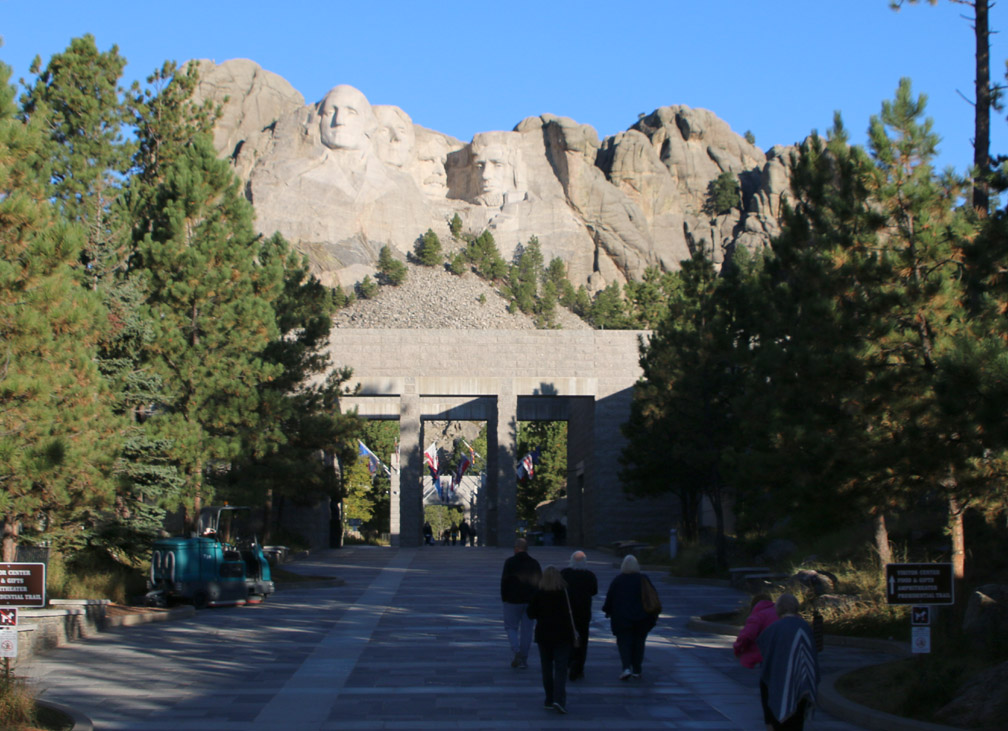
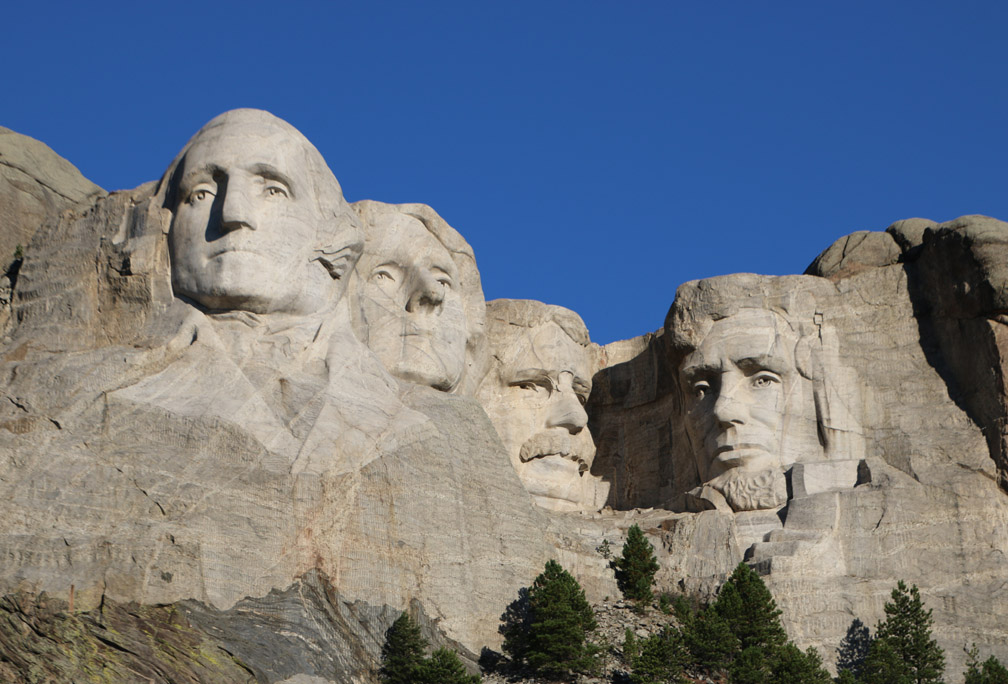
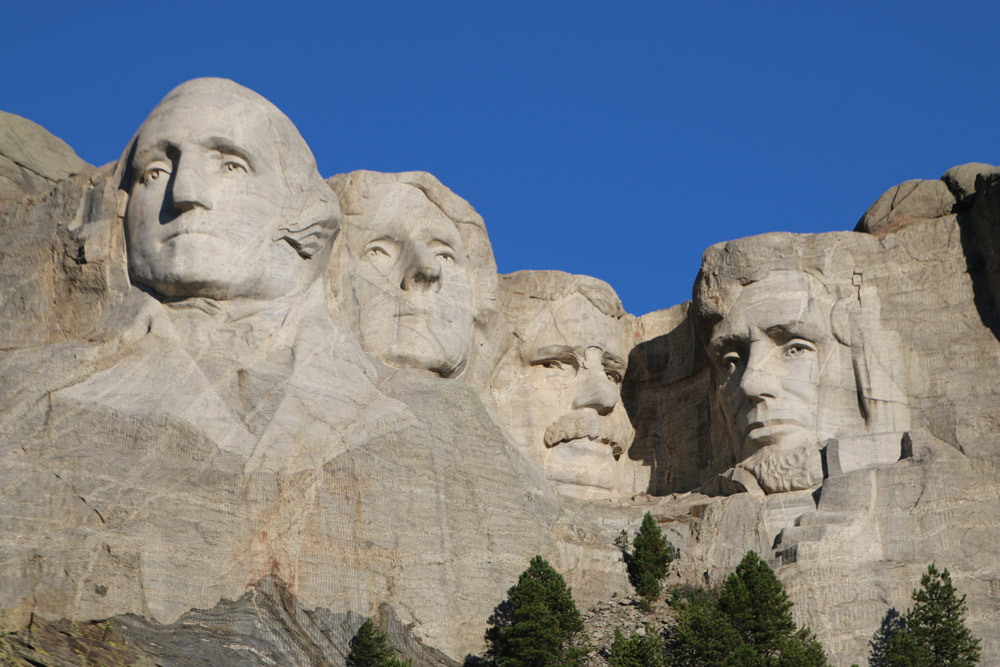
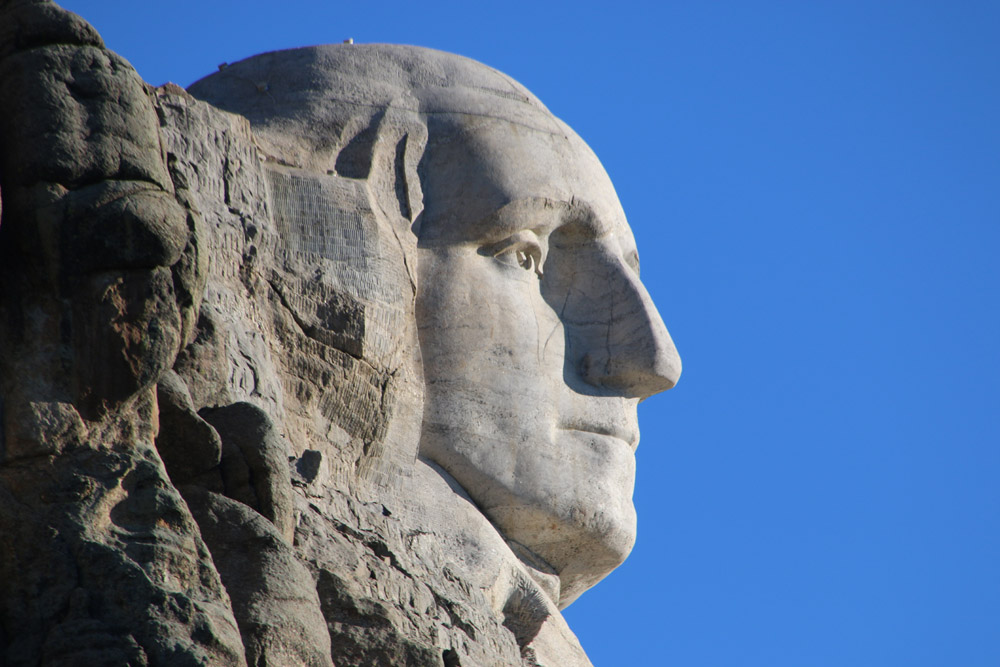
One of them, of course, is Mount Rushmore, the huge iconic stone carving of four former presidents in the Black Hills of South Dakota.  It’s just outside the town of Keystone, a settlement of some 300 persons that serves the traveling needs of the millions of tourists a year the site attracts.  Work on the monument started in 1927 and it was completed in 1941.

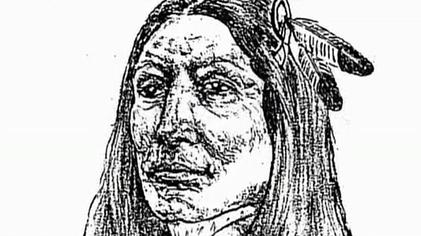
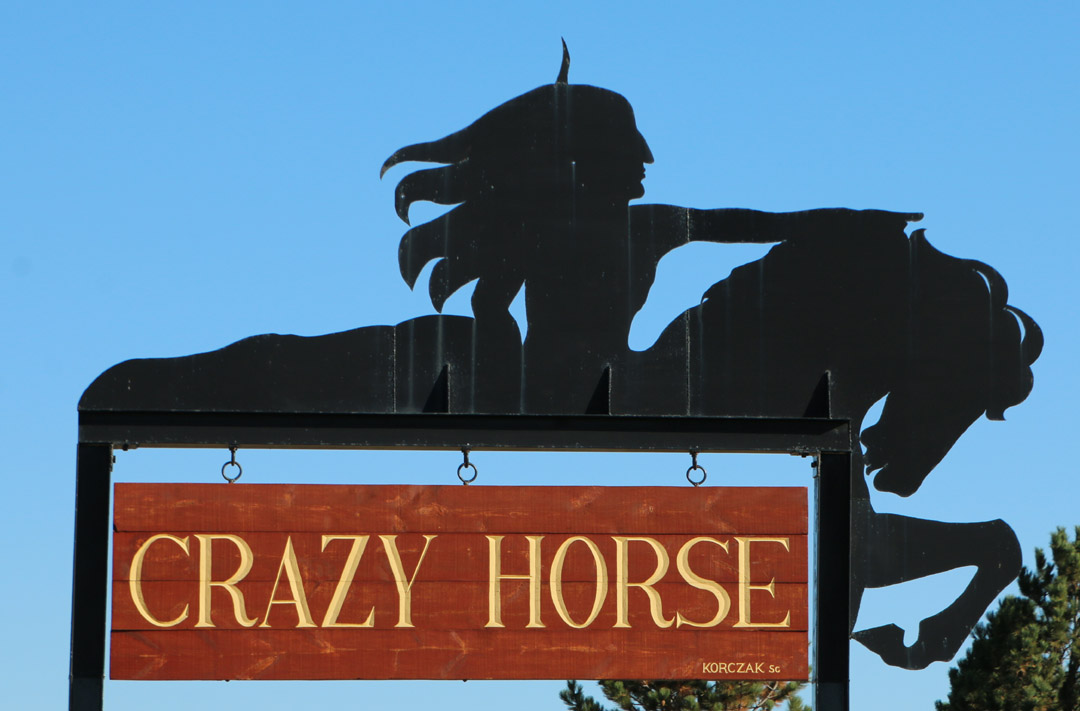
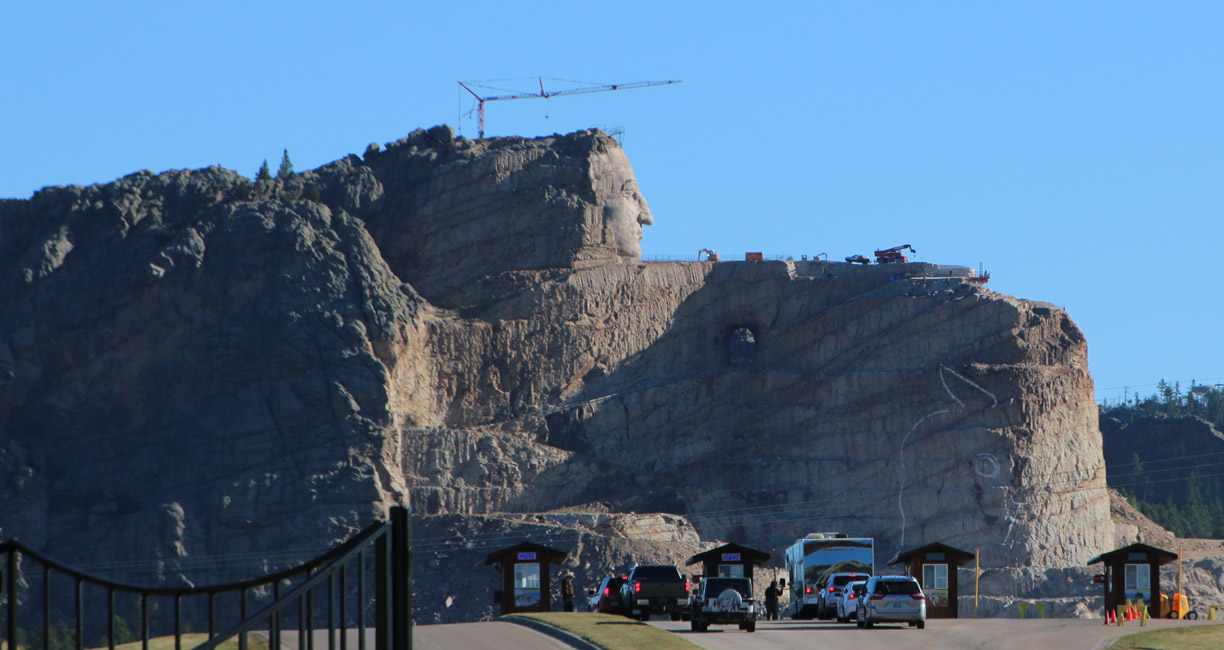
The second is just 17 miles away, also in the Black Hills, and is called the Crazy Horse Memorial.  It will depict the Oglala Lakota warrior Crazy Horse, riding a horse and pointing to his tribal land.  Work there started in 1948 and is far from finished.  Only Crazy Horse’s head and face have been completed and dedicated.

When finished, the Crazy Horse Memorial will dwarf Mount Rushmore; Crazy Horse’s head alone is bigger than the four presidential heads combined.

Here’s where the intertwining begins:  If the person who had come up with the concept of Mount Rushmore had had his way back in the early 1900s, the face of Crazy Horse would be among those looking at us from Mount Rushmore today instead of slowly taking shape over on Thunderhead Mountain.  

Yes, South Dakota state historian Doane Robinson had American West heroes in mind when he conceived of carving figures into a Black Hills mountain to attract tourists.  He was thinking along the lines of explorers Lewis and Clark and their guide Sacagawea, Buffalo Bill Cody, and a couple of Oglala Lakota chiefs, Red Cloud and Crazy Horse.

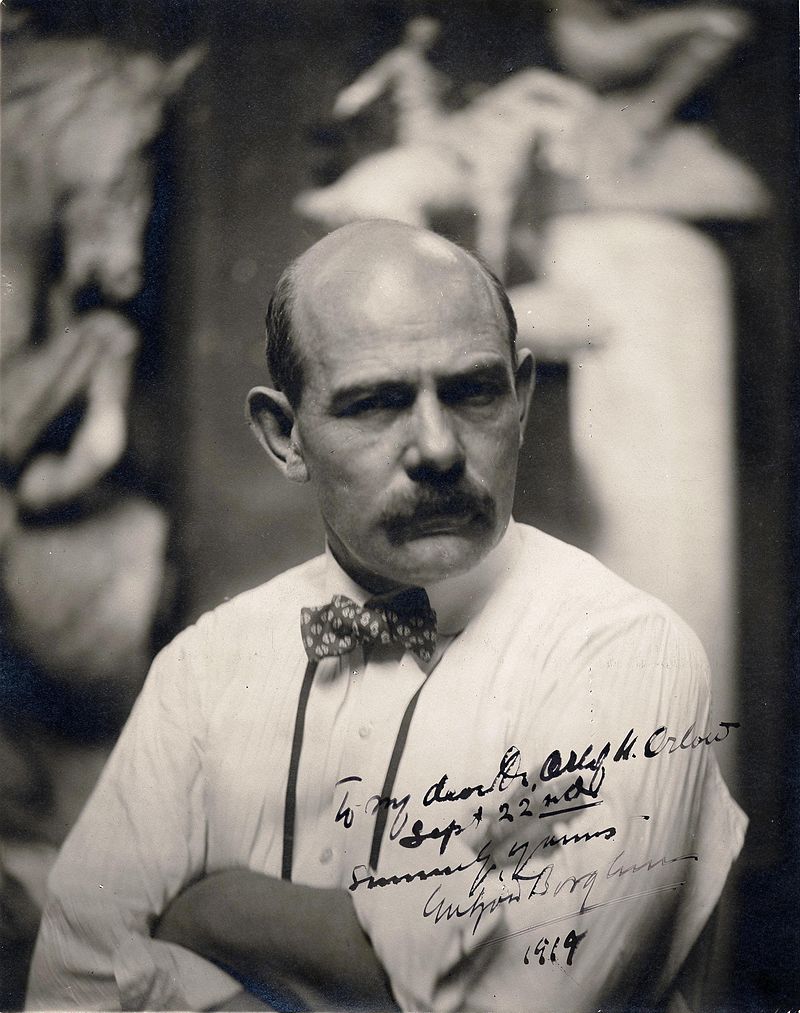
Robinson’s notion of a mountainside carving gained traction, but when noted American sculptor Gutzon Borglum got involved the subjects changed.  He was fascinated with gigantic scale and themes of heroic nationalism and his pieces around the country were increasing his popularity. 

Borglum’s opinions mattered.  He thought the western heroes appeal was limited and that the subjects of the sculpture should have broader interest.  He chose the four presidents, George Washington, Thomas Jefferson, Theodore Roosevelt and Abraham Lincoln. That’s the plan that got approved and national funding followed.

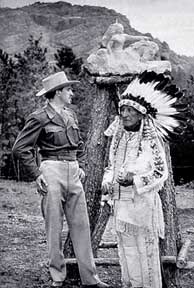
Efforts to get Crazy Horse up there continued, however. Henry Standing Bear, an Oglala Lakota chief and well-known statesman and elder in the Native American community, and his brother, Luther Standing Bear, continued to press for the inclusion of Crazy Horse.

In 1931 Luther wrote asking sculptor Borglum to include the Lakota chief.  He got no reply. The brothers’ campaign to authorities to force Borglum to include Crazy Horse went nowhere.

In 1939, Henry Standing Bear wrote the Department of the Interior proposing the trade of some farmland he owned for the use of the barren Thunderhead Mountain as a place to memorialize Crazy Horse.    The government agreed. Henry Standing Bear, who did not want to use any federal funds for the project, started looking for private funding and a sculptor.

Conveniently, a Polish-American sculptor, Korczak Ziolkowski, whose national reputation was on the rise, was available.  He’d been hired by Borglum to work on Rushmore, but they had a falling out when Ziolkowski realized he wouldn’t be the primary assistant.  That job went to Borglum’s son, Lincoln. 

Henry Standing Bear wrote to

Ziolkowski, saying, “My fellow

chiefs and I would like the white

man to know the red man has

great heroes, too.”

Ziolkowski met with the leaders shortly afterward and began planning a monument. Everything got put on hold during WWII, in which Ziolkowski served from 1943 until 1945, but in 1948 work began.

From the beginning the memorial seemed to become a Ziolkowski project.  Ziolkowski moved to the area at the outset and married and raised a family there and lived there until his death in 1982.  Through the years, his 10 children and several grandchildren have been involved.  Even today his widow and a daughter hold two of the three executive positions of the Crazy Horse Memorial Foundation, the non-profit that controls the project.

Some controversy has shadowed the monument.  Naysayers have touched on several points: Henry Standing Bear commissioning the work without consulting family members; the fact that Crazy Horse himself didn’t even allow himself to be photographed, much less would want to be so memorialized; the amount of control Ziolkowski and his family have had over the project, and the mere idea of altering sacred lands with a sculpture.

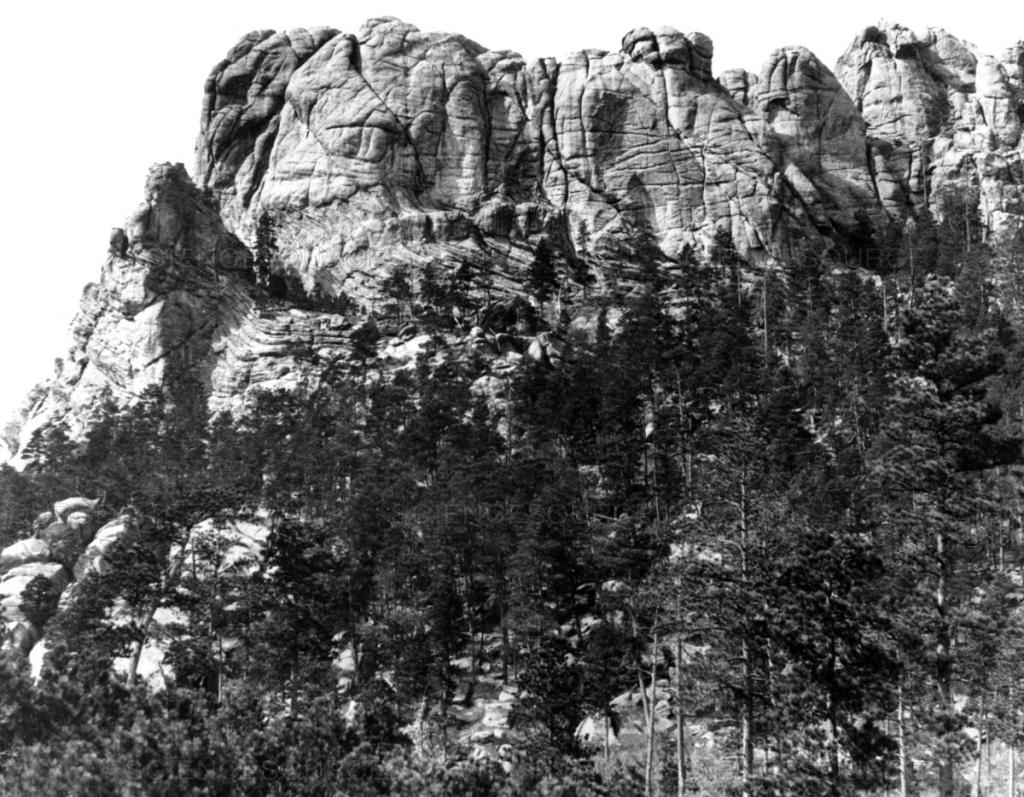
The Mount Rushmore project was not without some friction also.  Under the Lakota Sioux it was known as Six Grandfathers and was included in the Black Hills territory confirmed to belong to the Indians in an 1868 Treaty.

The discovery of gold and the push of western settlers resulted in a series of military campaigns from 1876 to 1878 and the United States claimed control of the Black Hills portion of the reservation, a claim that is still disputed under the terms of the 1868 treaty.

The mountain went by a variety of names– Cougar Mountain, Sugarloaf Mountain, Slaughterhouse Mountain and Keystone Cliffs. 

Lore has it that Charles Rushmore, a wealthy investor who frequented the mountain on hunting and prospecting trips in the late 1800s repeatedly joked with colleagues that the mountain should be named after him.

But it’s also true that Rushmore donated $5,000 to the sculpture project just five years before the United States Board of Geographic names recognized the place as Mount Rushmore in 1930.

And the question of who was going to be depicted on it continued.  In addition to the campaign to include Crazy Horse, there was a failed bill in Congress to include the likeness of Susan B. Anthony.  Other proposed additions have been JFK and Ronald Reagan.  Barack Obama was asked about being included one time, but said he thought his ears were too big. 

An engineering study in 1989 confirmed a 1941 opinion that there is not enough stable rock on the mountain to add another figure.

There goes my chance to be up there, I guess.

Below are photos of Mount Rushmore and of the Crazy Horse Memorial. Click on any image to scroll through larger versions.

Posted in Uncategorized | Leave a comment