Those creepy things again

I’ve written about these things before.  But that was when I saw them up north.  I don’t know why I’d never seen them in the south, or why it never occurred to me they would be down here.  I guess I’d never paid attention.

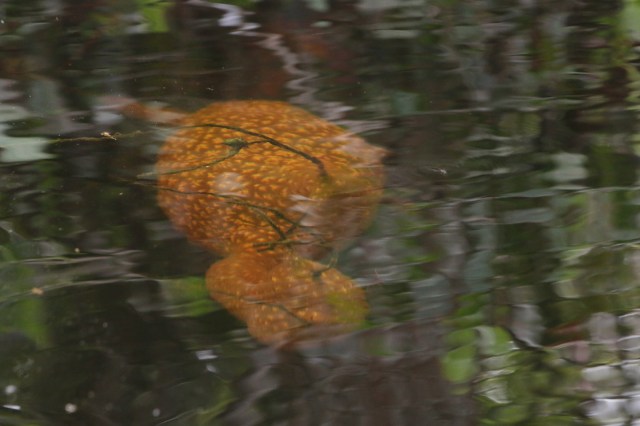
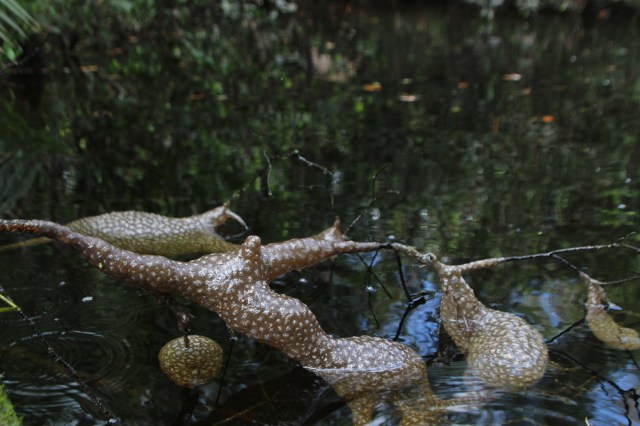
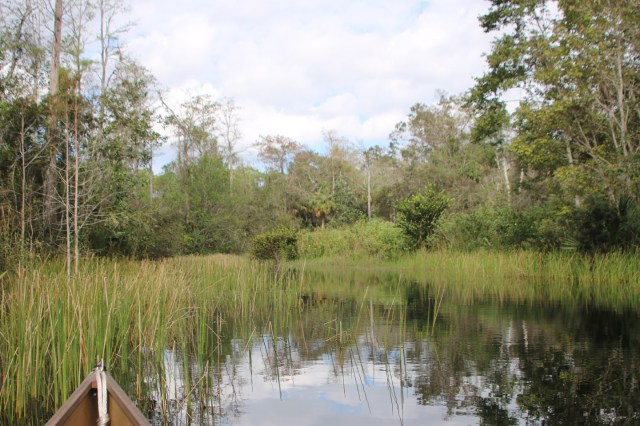
Well, they are here in Florida.  Yes indeed.  I happened upon these magnificent bryozoan (Pectinatella magnifica), a family of small filter feeding invertebrates that live as colonies in aquatic habitats, while paddling the backwaters of the Loxahatchee River out at Riverbend Park in Jupiter.

They’re usually found under the surface, clinging to tree limbs that have fallen into the water.  In one of the photos below I used my paddle to pull the branch to which the colony was attached out of the water to grab a few shots.

And I must conclude by pointing out that while perusing the scientific papers in preparation for this blog post (I go all out for my readers), I found the following notation in a 2009 paper published in the Italian Journal of Zoology  entitled “First report about freshwater Bryozoa in Florida (Lake Apopka).”

You may not think it excuses my lack of knowledge of bryozoan in Florida, but I think it does.  Here the notation:

“Knowledge regarding bryozoan diversity and distribution in Florida is poor and it concerns exclusively the finding of Urnatella gracilis (Hull et al. 1980), whereas studies on bryozoan distribution in the northeastern USA are numerous.”

Enjoy the photos.

IMG_0087cIMG_0088cIMG_0097c

IMG_0109cIMG_0075cIMG_0016cIMG_0032cIMG_0040cIMG_0049cIMG_0060cIMG_0062cIMG_0053cIMG_0057cIMG_0083cIMG_0084c

All photos by Ron Haines.

Posted in Nature, Photos mostly | Leave a comment

Wide streets and Eskimo Pies

Lots of towns have some claim to fame. Usually it’s proclaimed on a sign or billboard on the way into town.

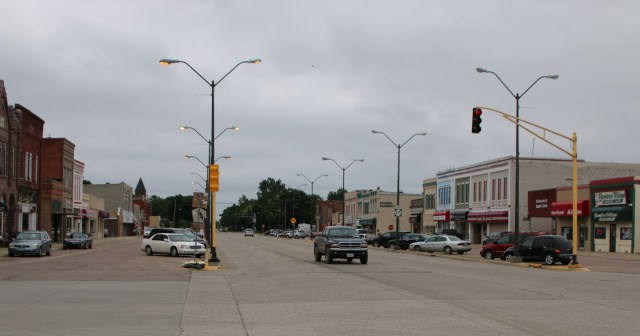
Onawa, IA, has two claims and uses banners on streetlamp poles to do the boasting.

The Eskimo Pie one caught my eye first. And soon after that I saw the Widest main street boast.

Widest Street

IMG_0105c

Onawa, Iowa (Photo by Ron Haines)

It turns out, however that width is in the eye of the beholder,  how you measure it, and who you’re rooting for. A small bit of research turns up five other towns in the U.S. making the same claim: Greenwood, SC; Keene, NH; Plains, KS; Newburgh, NY, and New Orleans (Canal Street).

Onawa’s main street—it’s actually called Iowa Avenue—was platted wide because at the time it was thought a railroad would be built through town. That never happened.

In the 1980s, in the midst of a bit of claiming and counter claiming on the part of some of the towns boasting of wide main streets, students from the Onawa School District tackled the measuring project

“One of the girls and her dad went down late at night and measured the street from storefront to storefront,” said Jo Petersen, a former school district coordinator, and came up with 157 feet.

Eskimo Pie

The Eskimo Pie claim is a bit more clear cut. In case you’ve forgotten your childhood, it’s a bar of ice cream covered in chocolate and wrapped in tin foil.

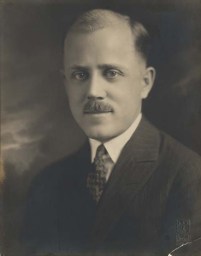
Now part of the Nestle stable of products, it was created in Onawa in 1920 by Christian

Christian_Kent_Nelson

Christian Kent Nelson

Kent Nelson, a Danish immigrant who taught school and owned a candy store in town.

He says he was inspired to create it when a boy in his store was unable to decide whether to spend his money on ice cream or a chocolate bar.

Nelson, then 25, experimented and came up with a dipping machine so he could adhere melted chocolate to a bar of ice cream. He started marketing them as “I-Scream Bars.”

In 1921 he filed for a patent and partnered with a chocolate producer for mass production.  By 1922, through franchising and licensing the formula to other manufacturers, they were selling a million pies a day, obviously a lot of them to out-of-towners. (In the 1920s, Onawa had a population of about 2,500, only some 300 fewer than it has today.)

So, who’s the chocolate producer Nelson teamed up with? It was a fellow by the name of

Russell_Stover_Portrait_Painting

Russell C. Stover

Russell C. Stover, an Omaha chemist, entrepreneur and candy company employee. It was he who devised the formula for the chocolate shell that hardens on exposure to cold and holds the ice cream contents within. Stover’s wife, Clara, is credited with coming up with the name Eskimo Pie.

And yes, after selling their share of the business to Nelson in 1924, Russell and Clara went on to form Russell Stover Candies.

Posted in Offbeat, Road trip | 1 Comment

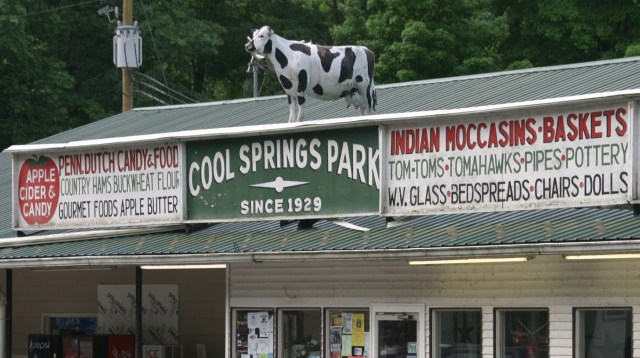
Cool Springs Park

Only twice in my life have I been in a store so filed with every conceivable item that I couldn’t think of what I could ask for that they might not have.

Cool Springs Park in Rowlesburg, WV, was one of them.

The place is a combination restaurant, gas station, grocery store, pharmacy, gift shop,card produce and flower stand, souvenir emporium, fishing and hunting equipment outlet, hardware store, junk shop and mid-1900’s amusement park that’s been in business since 1929.

As one newspaper reporter put it, “Cool Springs Park is a mixture of lunch counter, general store and the attic of your crazy old uncle who never threw anything away.”

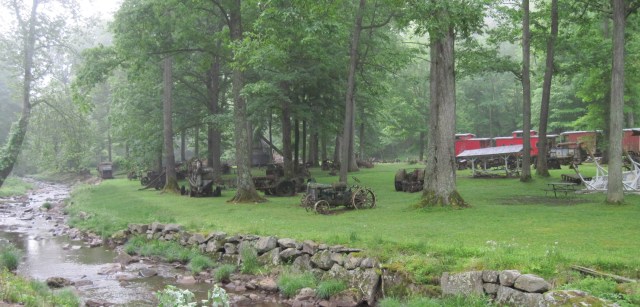
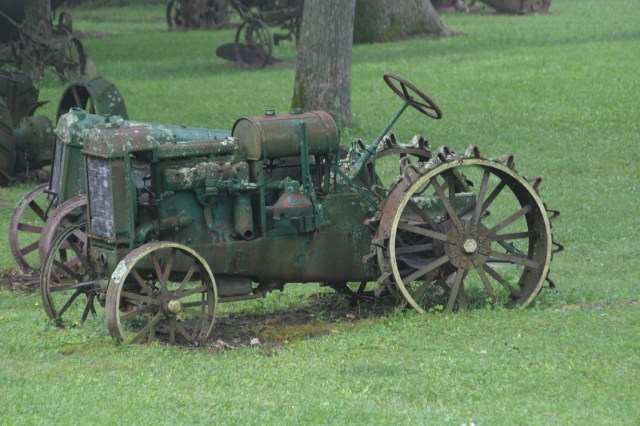
It was cold and drizzly the day I happened upon it, so I didn’t talk a walk around the grounds, but it looked like the kind of place a family could spend a few pleasant hours exploring in nice weather.   There’s plenty of old farm equipment and machinery, train cars, animals, ponds, toys and picnic tables to keep everyone entertained.

Inside was amazing, items packed on shelves filling every conceivable space and merchandise hanging on the walls all the way up to the high ceiling. I spent about an hour just wandering around.

Add in the buckwheat cakes and foot-long hot dogs that are available all day and you have all the elements of a relaxing, interesting pit stop.

Enjoy the photos.

By the way, the other spot I’ve encountered that had everything I could imagine in it was a jam-packed second-hand store that took up the first floor of a run-down, two-story building in a very small, block-long downtown somewhere.

I remember congratulating the proprietor on his collection of stuff and asking about the history of the place.

“I bought this building ten years ago when my wife told me I’d have to empty all my stuff out of our garage,”  he replied. “I moved everything over here.”

Cool Springs Park, Macomber, W. VA.

Cool Springs Park, Macomber, W. VA.

Cool Springs Park, Macomber, W. VA.Cool Springs Park, Macomber, W. VA.

Photos by Ron Haines

Posted in Offbeat, Road trip | Leave a comment

Sometimes it’s very subtle….

I have this quirky little collection of pictures going on.  As I travel I  take photos of old gas stations that have been repurposed into some other business, or in some rare cases, into a residence.  I also photograph vacant ones if they have a bit of character.  And occasionally I photograph one that is simply slowly falling apart.

These things are usually not very hard to spot.  For the older style ones there’s usually an overhang that’s integral to the roofline of the building, such as the classic below in Brinkley, AR.  Located right in a residential area, it is used occasionally for the meetings of a civic group.  I think it would make a great little house.


IMG_0318cc

Brinkley, Arkansas (Photo by Ron Haines)


Another huge clue to spotting old stations, of course, is the pump island.   And even if the pump island has been paved over there’s usually a rise or indentation in the pavement that tells you it was dug up, or covered over.

And even without an overhang or remnants of a pump island, it’s often pretty obvious, as in the case of the beauty below in Bloomfield, CT.  The large door frames usually give it away.


Bloomfield, CT. (Photo by Ron Haines)


So most of the time I can easily recognize the building’s original purpose, snap the photos and be on my way.  Sometimes, though, I have to check to be sure.

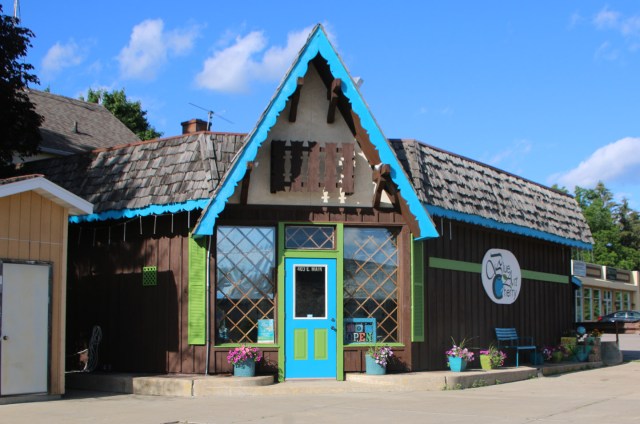
In the case of the one below, in Reedsburg, WI, I wasn’t sure.  But there was something about that A-shaped roofline in the front that reminded me of the classic old Phillips Petroleum stations, so I took the photo anyway and checked with the gallery owner by email later.  Yes, it used to be a gas station.


IMG_5083c

Reedsburg, WI. (Photo by Ron Haines)


I know I’ve missed some that were lacking the obvious signs, or, more accurately, had clues that were so subtle I was oblivious to them.  I came across a case of this a month or so ago.

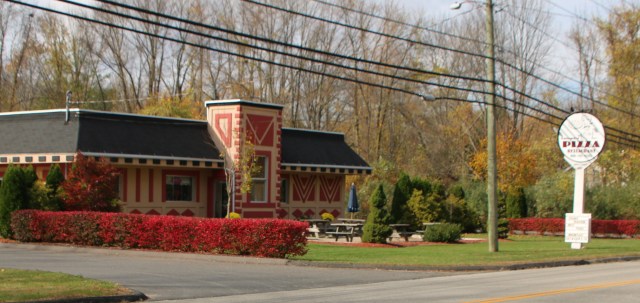
There’s a pizza restaurant in Coventry, CT, that I have passed by a hundred or so times in the last few years, and indeed have eaten at once or twice,  but had never recognized as a former gas station.

The building’s been drastically changed over the years as it morphed from a gas station (Tomassi’s Texaco) to an appliance salesroom to a liquor store to an ice cream parlor and then to a pizza restaurant.  The structure as it is today lacks the clues that usually guide me and the pump islands were long ago landscaped over, but there was one thing about the place that had remained constant through the years.

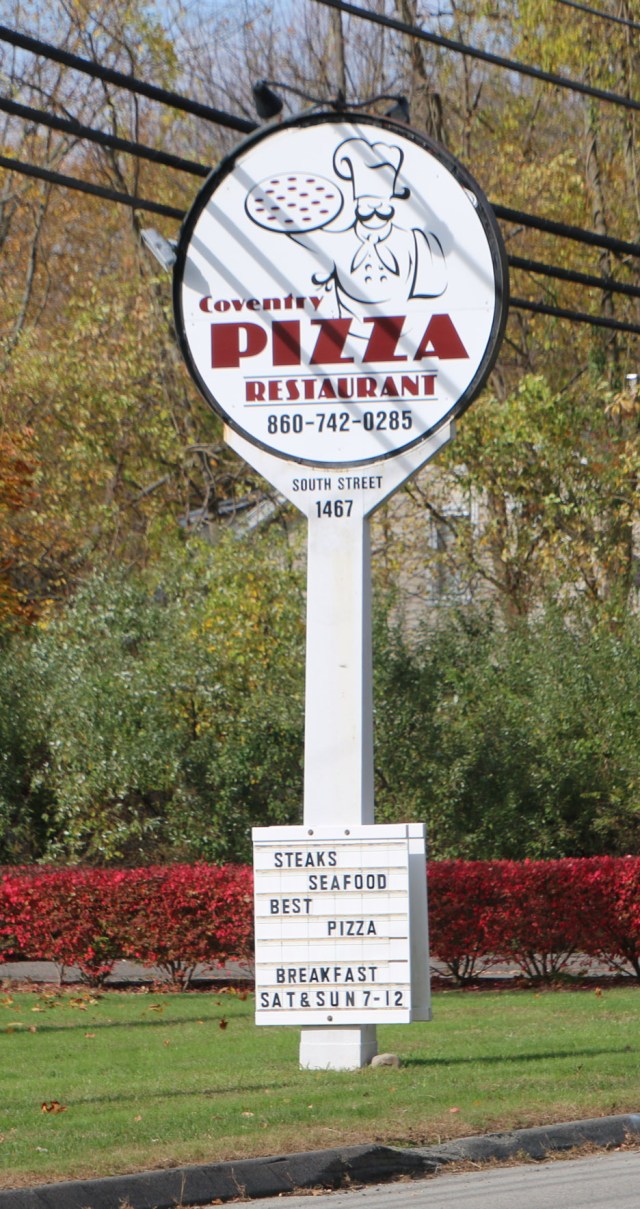
How did I find out?  I don’t remember how I got there, but one day last month I was reading a history of old service stations in Coventry written by Bill Jobbagy and I came across these words:  “The present sign in front of Coventry Pizza was originally the Texaco sign.”

Yes, Coventry Pizza, a long stone’s throw from the two lake houses I rented in Coventry for a few years, used to be a gas station!  They stopped pumping gas there in the mid 1980s and the pump islands were landscaped over years ago, but the sign remained.

So here’s a photo of it with the sign, the oh so subtle sign.

IMG_9519c


IMG_9518c

Above is the Coventry Pizza sign today.  Below is  an actual Texaco sign at a restored station in Buckley, IL.  (Photos by Ron Haines)

IMG_0448ccc


Go here to see my entire collection of photos of recycled gas stations.


Posted in Gas stations | Leave a comment

Bingo!

Sometimes things come together so nicely that you just have to stop and savor it.

That happened to me not too long ago on a road trip through Santa Cruz, when my love of front porches and my quest for cheap motel rooms collided sweetly on a beautiful California evening.

As was my routine that road trip, I had stopped for a late afternoon ice cream/wireless access break and logged onto hotels.com to see what I could find in the way of thrifty accommodations in Santa Cruz, where I planned to spend the night.  (Yes, I still travel with a laptop…no smartphone yet)

I usually don’t plan things so far in advance, but I was trying to do my daughter a favor by using her hotels.com login to book a room and therefore earn her some rewards points.

The ‘rewards,’ however, as she has remarked, don’t add up to much when I travel.  That’s because I’m aiming for rooms in the $30-$50 bracket.

I have this thing about motels.  I don’t like to spend a lot of money for a place to sleep.  I camp out a fair bit, sometimes going upscale in a KOA or similar, so I can have a swimming pool, and often in town parks, where the prices start at zero and sometimes get as high as $10.

But I didn’t have the camping trailer with me on this trip. So I used the ‘less expensive first’ filter on hotels.com that afternoon and found a few possibilities in Santa Cruz.

In addition to price, I look for free wireless and someplace where the rooms open right onto the parking lot.  I haven’t liked walking down a hallway to my room since my days in a college dormitory.  I also pay attention to what part of town I am in.  I don’t mind a bit of grit with my surroundings, but too much and the nocturnal noise levels can get bothersomely high.

I settled on a National 9 Motel on Plymouth Street.  It’s part of a small regional chain with about 25 locations in California, Nevada, Wyoming, Utah, New Mexico and Colorado.

And it has a great slogan:  “The Best Mornings Begin At Nine”

So when I got to Santa Cruz that evening I headed over there, checked in and drove the short distance from the office to my room.  The motel consists of more than one building with parking slots scattered about.

I parked in the spot the clerk told me to use and looked out the windshield at my room.


IMG_2071c
Photo by Ron Haines


WOW!

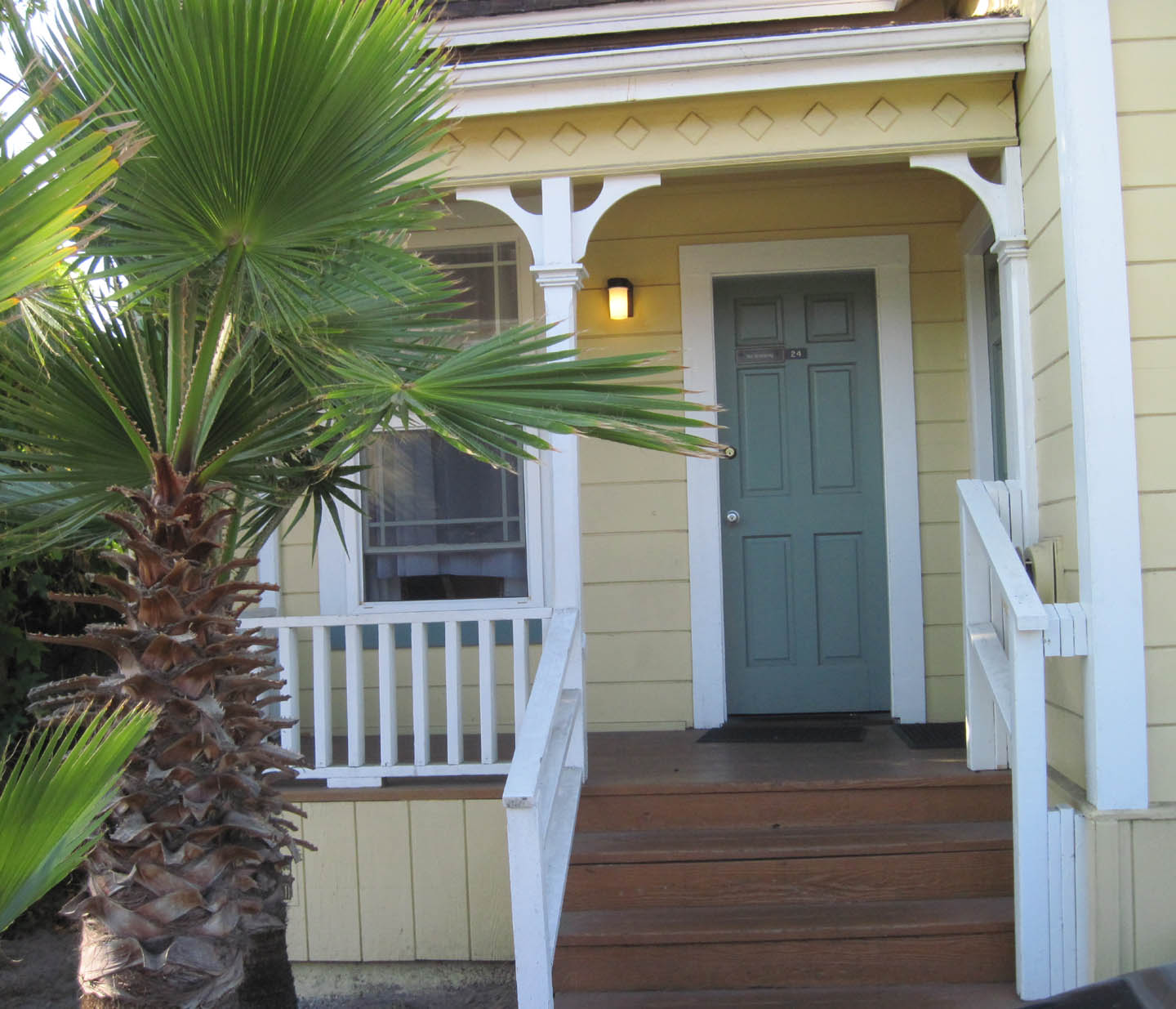
A motel room with a front porch!  I couldn’t believe my luck.  The first thing I did was move a chair from the room out onto the porch, put my feet up on the railing and just sit there. (I am assuming you know what I think of front porches.  If you don’t, read this.)

Yes, the room was a postage stamp and the bathroom even smaller and I had to hang a towel over the side window to keep the street lamp from shining in all night, but the bed was comfortable and that front porch made it all good, so very good.  If I hadn’t been on a schedule I’d have stayed another night just to be able to call that place home for a bit longer.

I realized in the morning when I looked around that I had really lucked out.  The main part of the motel is a dull, boring, L-shaped, two-story building, with a row of doors upstairs and down.

I had ended up in a portion of an adjacent small house that had been incorporated into the motel operation at some point and that’s why it had the front porch.  I was almost in the nearby residential neighborhood.

Isn’t it great when everything falls into place?

Posted in Porches, Road trip | 2 Comments

Seeing pink elephants

I’ve been drunk in my life.  Many times.  But I had never seen a pink elephant.

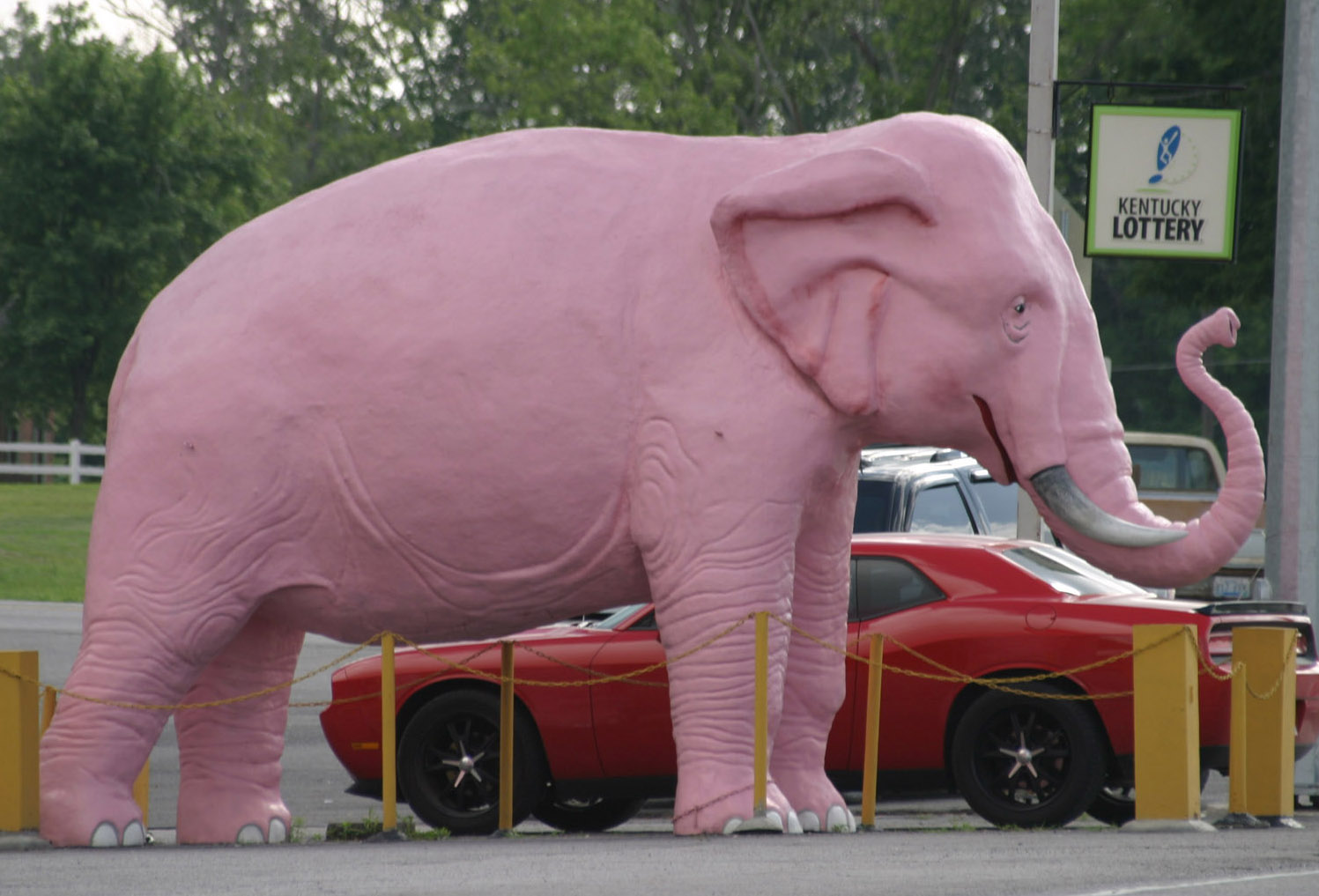
Guthrie, KY

Until one day, stone sober, I came across this one in Guthrie, Kentucky.

It appears to be the mascot for a gas station.  And my guess is that it’s also a great landmark for the 1,500-some folks living in Guthrie when they give directions.

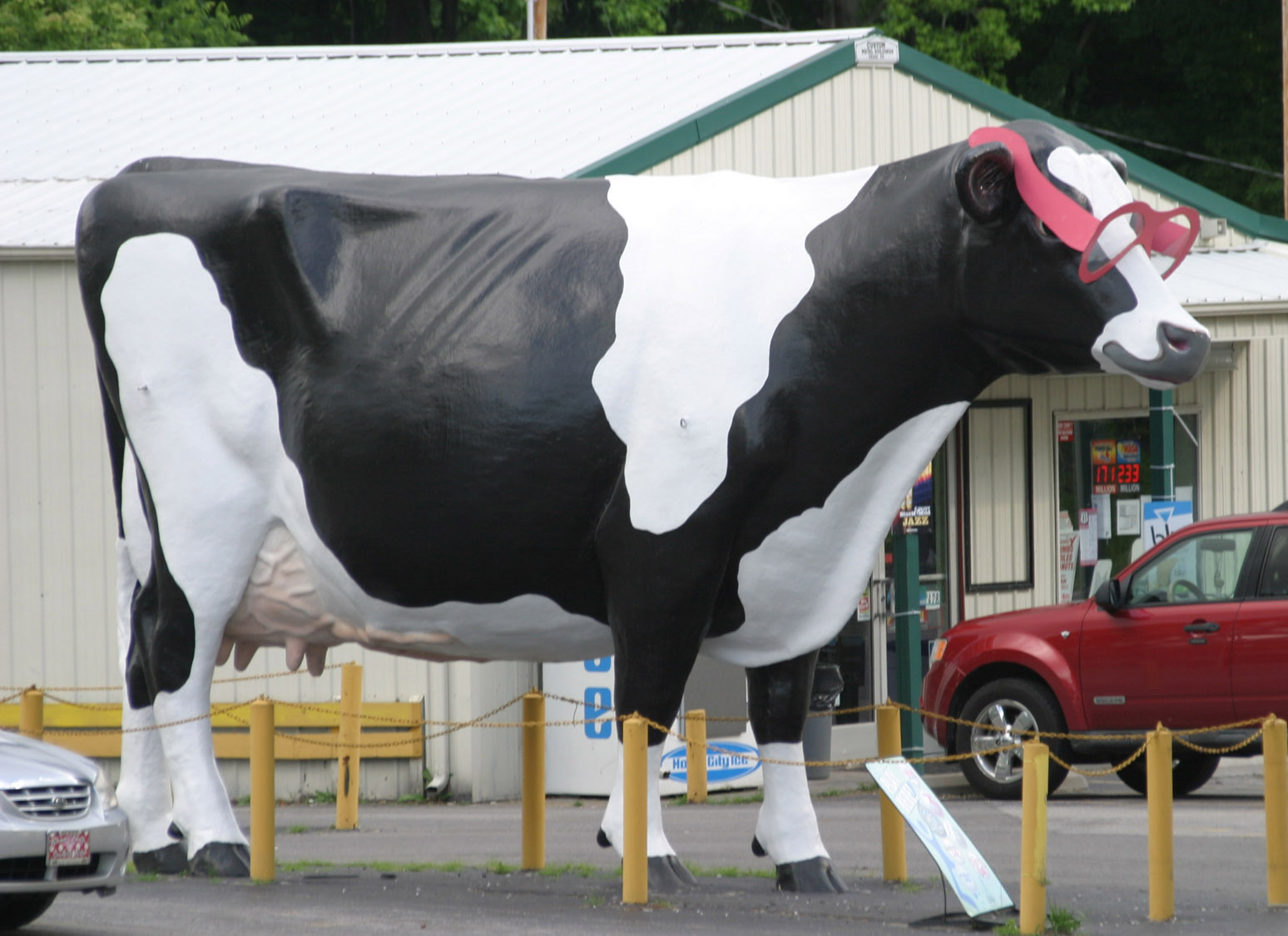
Situated at the site of an 1840s-era stagecoach stop, Guthrie also has a huge cow with glasses, located just down the road from the pink elephant.

Guthrie, KY

And that little burg is also the birthplace of All the King’s Men author Robert Penn Warren.

Other than that, this line from the town’s website seems to sum it up:  “Nestled outside of Clarksville, TN, in the state of Kentucky, the City of Guthrie is waiting to be discovered.”

So what’s a pink elephant doing in a nice little town like Guthrie?  I haven’t the foggiest idea, but I have discovered that large plastic pink elephants aren’t all that rare in the US.  This website lists about 20 of them.

And how did they end up being what a drunk sees?    For a long time those who chose to imbibe to excess reported seeing snakes during their alcoholic hallucinogenic state.  Why did pink elephants replace them?

There was even a physiological explanation offered for the snakes.  In 1902 a doctor in London treating sufferers of delirium tremens from too much alcohol examined the eyes of patients with an ophthalmoscope and found that the minute retinal blood vessels were congested.  The vessels appear black and are projected into the field of vision, where their movements resemble squirming snakes, he reported.

But the seeing of snakes eventually become a pretty hackneyed alcoholic description, and writers started making increasingly elaborate modifications to the standard drunken scenarios. They changed the snakes to rats, monkeys, giraffes, hippopotamuses or elephants – or combinations thereof; and added color – blue, red, green, pink – and many combinations thereof.

An early known example was one of Henry Wallace Phillips’ “Fables of our Times” which referred to a drunken man seeing a “pink and green elephant and the feathered hippopotamus.”

In 1913, Jack London, in the autobiographical John Barleycorn, describes an alcoholic “…who sees, in the extremity of his ecstasy, blue mice and pink elephants.”

Eventually, according to the thinking of those who spend time thinking of the origins of things in our language, pink elephants emerged as the popular favorite.  They became the animal of choice in drunken hallucination descriptions.

But all that still doesn’t answer the question of why pink elephants, does it?  How did we come to know about pink elephants.  It turns out that the color comes from white elephants, which weren’t really white.

We can thank showman extraordinare P.T. Barnum and his hankering for a white elephant for introducing America  to the concept of a pink elephant.  The existence of albino, or ‘white’ elephants had been known for hundreds of years in Asia.  They were rare, sacred and much prized in the Southeast Asian monarchies of Burma, Laos, Thailand and Cambodia.

Here’s the rub:  Although described as white, and depicted in drawings as white, they were actually a soft reddish-brown, turning a light pink when wet.

As P.T. Barnum found out.  After much effort and a lot of money he convinced the King of Siam to send over a white elephant and he found out it was really a dirty grey in color with a few pink spots.

As one reporter at the time put it: “He has got a pink patch across his face and trunk, little pink dots on the outside of his ears, yellow toe-nails and a handsome pair of tusks. Standing in front of him, a person would believe that he was a pink elephant dotted with slate-colored spots . . . .”

As with everything that P.T. Barnum did, the arrival and display of what he had billed as the “Sacred White Elephant of Burma” and the subsequent realization that it was sort of pink in actuality, received massive publicity, and, the theory of word origins goes, introduced the ‘pink elephant’ concept to the American populace in the mid-1800s.  And it became a handy euphemism for an alcoholic hallucination in subsequent years.

And why does the term ‘white elephant’ mean something useless and hard to get rid of, a meaning that’s been around since the 1600’s, way before P.T. Barnum?  It all goes back to those Asian monarchs and the rare albino elephants.  They were sacred and prized, remember.  And elephants were then and still are very expensive to maintain.  A crafty monarch would often gift someone with a white elephant, especially someone he didn’t like very well and someone for whom he knew the maintenance of the beast would be a huge financial burden.

Now you understand the true meaning of those white elephant gift party games, right?

But back to the pink elephants for a moment, to wrap this up.

Does anyone remember good old Sarah Palin?  Well, she introduced a whole new meaning for pink elephant during her vice presidential campaign.  She, quite seriously, used the phrase “pink elephants” to refer to conservative women.  Playing on the elephant being the Republican Party symbol and pink being the stereotypical feminine color, she warned Washington of a “whole stampede of pink elephants.”  Now there’s a vision to stir the soul and rally the troops!

I’ll bet there are a lot of Republican women who are happy that that concept didn’t stick, about as happy as are all those Democrats that Sarah Palin didn’t stick.

Posted in Offbeat, Road trip | 1 Comment

Can you cut the mustard?

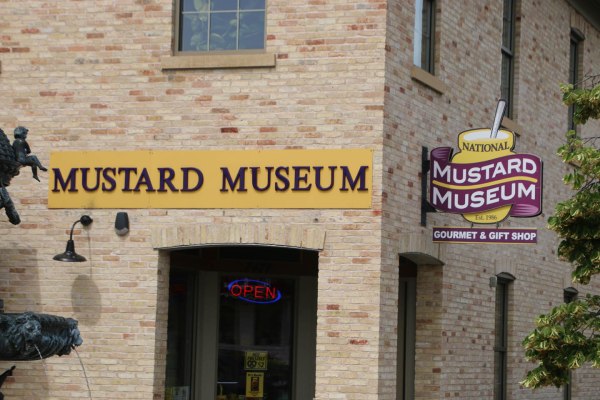
The National Mustard Museum was a must visit during my recent whirlwind tour of IMG_5090coffbeat places in the Midwest.
Why?

For the simple reason that mustard has become a standing joke with me and granddaughters Margeaux and Simone.  It started a year or so ago when I said I didn’t like mustard.  We were probably having hot dogs or something.

It’s been a running gag ever since, popping up now and then.  It’s usually in the context of “We know what to get you for your birthday, Grandpa,” or somesuch.  It’s one of those pleasant jokey things we have in common and use to amuse each other with once in a while. The utterance ‘mustard’ never fails to get the three of us laughing.  They have a similar thing going with Sue and her dislike of marshmallows.

So that’s why I couldn’t resist a visit to the National Mustard Museum in Middleton a suburb of Madison, the capital of Wisconsin. The small town calls itself ‘The Good Neighbor City,’ has a population just under 20,000, and is supposedly named after a town in Vermont, though I couldn’t find one with that spelling in the Green Mountain State.

The museum, located in the heart of historic Middleton, turned out to be a great place.

It’s a very serious place, with its thousands of brands and flavors and mustard pots from all over IMG_5192cthe world. But it’s downright delightfully hilarious at times with its several tongue-in-cheek exhibits.  And there’s the totally unexpected.  When I bought a sampler box in the gift shop I got to squeeze the store’s large ooga horn (see it in photo at right).
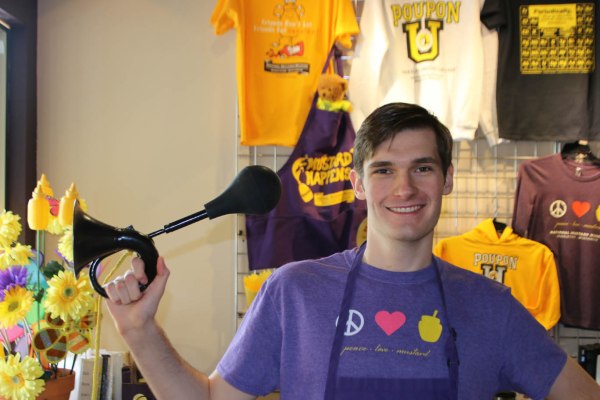
What a sweet sound!

My sampler box had eight flavors and we made good use of them at a mustard tasting session with family in New Hampshire, complete with homemade soft pretzels.

The museum was the brainchild of Barry Levenson, who started collecting mustard while he was an assistant attorney general for Wisconsin.  One night in 1986, despondent because his Boston Red Sox had just lost the World Series, he was wandering the condiment aisle of an all-night grocery store.    As he passed the mustards, he heard a deep voice say, “If you collect us, they will come.”

The final straw came later when he was in Washington, D.C, to argue a case before the Supreme Court.  At the hotel he spied a mustard jar on a discarded tray and pocketed it.  “I argued a case before the Supreme Court with a mustard jar in my left pocket,” he says. “We won.”  In 1992 he left the law and opened the museum

Today it boasts about 6,000 mustards, from all 50 states and 70 countries, hundreds of
IMG_5108c

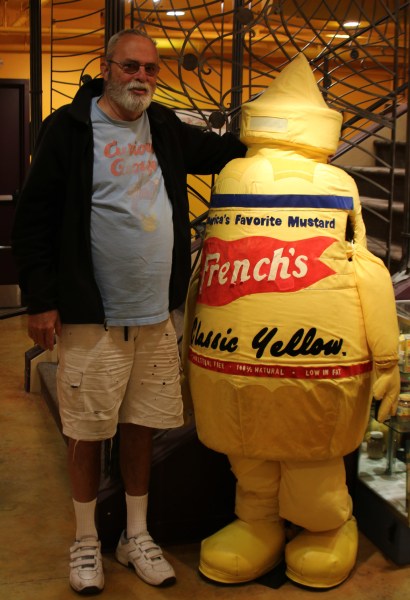
Me and a buddy at the museum

mustard pots and other mustard memorabilia, a well-stocked gift shop, and the ever popular Poupon University: “Lowering the bar in higher education.”

And a modest online store: “If you can’t find it here you won’t find it anywhere.”

And a newsletter, The Proper Mustard, “Yellow Journalism at its Best.”

You see what I mean about the place.  It’s serious, but fun.  It’s in that vein that I now omit all the boring stuff about the history of mustard (it’s been around since before 1800 BC) and all that, and go right to the point of all this:  Why does the term “cut the mustard” mean to succeed or of high quality?  Amazingly, the most probable explanation makes literal sense, in several ways.

Mustard stalks are thick and stringy, hard to chop.  Mustard seeds are small and shiny, tough to cut with a knife.  And finally, this:  Back in the day, mustard was made in large oak barrels, and as the barrel matured a thick leathery crust formed at the top.  This had to be very carefully removed before the contents could be tested, for if a piece of crust fell into the mustard it would lose some of its distinctive flavor.   Over the years a specialized tool was developed, with a blade that had a very thin and extremely sharp leading edge, widening in the middle and tapering but not sharp at the back edge, allowing it to skim most of the crust off, leaving a only a very thin slice.

And the mustard maker, the Mustardeer, could tell by a look at the blade if his assistant hadn’t sharpened it properly, and on such an occasion would hand it back with the comment, “this doesn’t cut the mustard.”

I will leave you with this:  Remember Grey Poupon mustard from the ads with the friendly folks in the neighboring Rolls-Royces?  Developed in the 1860s, the name comes from two men, Maurice Grey, who had come up with a machine that dramatically increased the speed of Dijon mustard production, but who needed financing, and Auguste Poupon, another Dijon producer, who supplied the money.  They lived, of course, in Dijon, France.

Mark your calendar:  National Mustard Day in 2018 falls on August 4.

Some random museum photos:

This slideshow requires JavaScript.

Here are some of the mustard pots on display:

This slideshow requires JavaScript.

And a bit more of the always present humor of the place:

This slideshow requires JavaScript.

A comic strip from the place, from back at the beginning of it when the museum was in Horeb, WI:

This slideshow requires JavaScript.

And finally, a slide show of the sampler box I bought and all of us up at Rick Haines’ house in New Hampshire for the homemade soft pretzels and mustard tasting party:

This slideshow requires JavaScript.
Posted in Offbeat, Road trip | 5 Comments

Look out below!

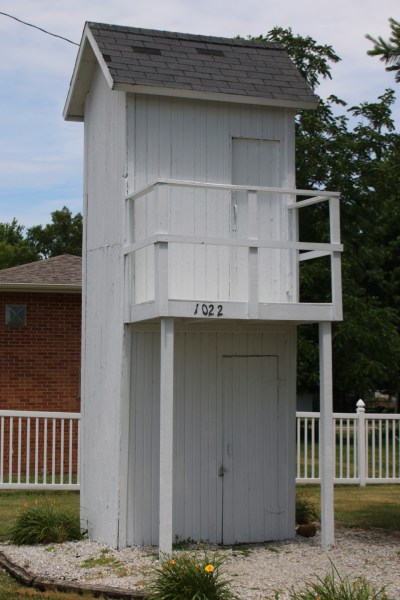
Believe it or not, this is actually the second two-story outhouse I have encountered in my life.  I discovered the first one, which I actually used,  nearly 50 years ago and in another country.

But more about that later.

This one’s right here in the US of A.  It’s in tiny Gays, Illinois (it’s growing though, havingIMG_4520c jumped from 260 souls in 2000 to a whopping 657 in 2010).
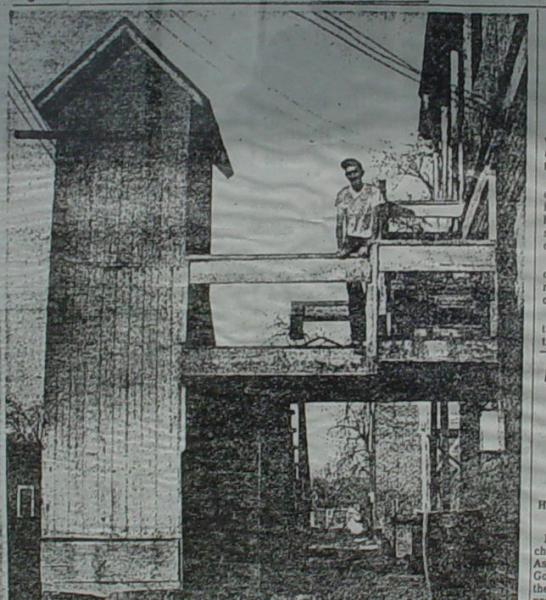
Now standing alone in a small park at the corner of North Pine and Front streets, the outhouse  was attached to a two-story building when it was built in the late 1800s.  Downstairs was a general store and upstairs were apartments.  The upstairs portion of the outhouse was for the apartment dwellers and the downstairs part for store patrons.

As you can see in the old photo below, a walkway on the second floor outhouse3connected it to the building, which was torn down in 1984.

So, how did that work, you may wonder.  This was a four-holer, two upstairs and two downstairs.  No, one didn’t have to worry about something dropping from above.  The upstairs and downstairs holes were offset, with the upper ones closest to the back of the tower. The waste from the top floor dropped behind a false wall into a pit at the bottom, out of sight, if not sound, of folks using the lower level.

Below is an overall view of the park, and photos of all the newspaper clippings posted in the kiosk and the stone honoring Gene Goodwin, a town official who made it his mission to preserve the outhouse.  (All photos by Ron Haines)

Once there were two-story skyscrappers all over the place, built usually for the convenience of folks who lived or had bedrooms on the second floors.  There are still a handful of these around. And I did run across some stories of a second story being built on outhouses in regions where deep snow was a constant problem in the winter.

With the advent of piped plumbing, of course, facilities on upper stories became architecturally much simpler.

And now to my personal experience with a two-story outhouse.  It was in Sheno, Ethiopia, of all places, back in 1967.

Sheno was at that time a very small town about 55 miles northeast of Addis Ababa on the then-gravel Highway One, which linked Addis with Asmara in Eritrea, in the north.   The bus ride to Sheno took half a day or more as I recall.  Today, with the roads paved, I am sure it is quicker.

My Peace Corps volunteer friend and colleague, Bob Hazlett, was stationed there.  I couldn’t find any figures online, but I would guess that in 1967 there were not more than a couple hundred residents, and way more than that on market day.  The population there in 2005 was 10,000, double the figure from 1994.

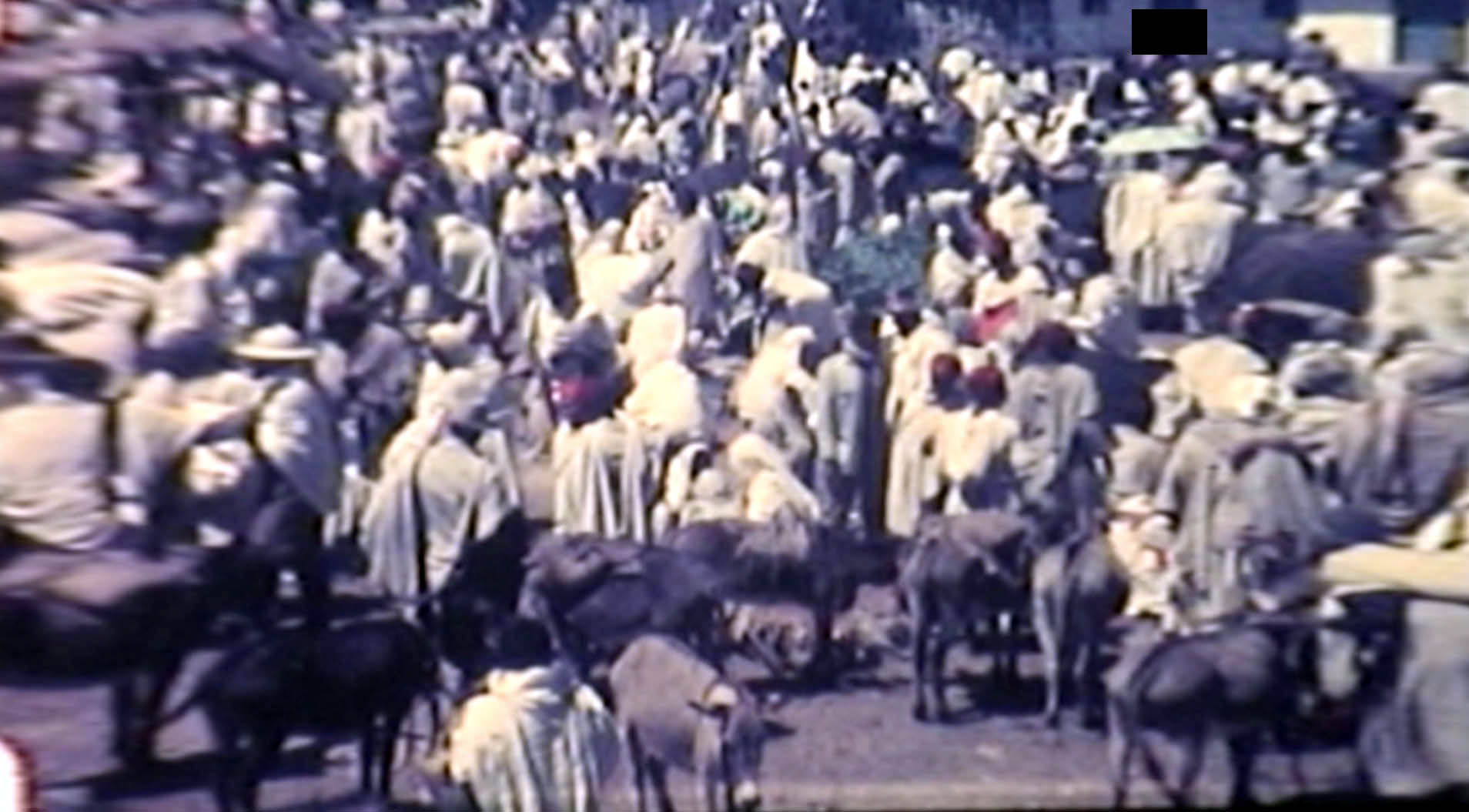
Bob rented the upper floor (two rooms) of a two-story, mud-walled building.  His place overlooked a huge dirt field that on Saturdays was the site of a massive market that drew thousands of sellers and buyers.  He had a terrific view of the action.

Screen Shot 2013-04-20 at 11.49.59 AMc

A screen grab from movie film that I shot from the window at Bob’s place of the packed weekly market in Sheno in 1967.

His landlord, trying hard to please the new foreigner in town, built a slender, two-story addition to the structure when Bob moved in.  It was Bob’s very own two-story outhouse, with a hole on the top floor and a pit way down at the bottom of the first floor.

No, Bob does not have a photo of that.   I asked him just the other day.

And no, we never asked the first floor residents what they thought of the arrangement.

Posted in Offbeat, Road trip | 3 Comments

Can you ear me now?

The Midwest means corn to most folks, just no getting around it.  This past June when I was there, the stalks weren’t yet high enough to block the view of the wide plains and vast sky of the region.  As an Illinois native, my recollection of those two-lane roads in late summer is that it was like traveling through tunnels of corn, with not much else to be seen.  Makes for pretty boring driving.

Also as an Illinois native, before driving age and probably somewhere well under the age of ten, I used to sell sweet corn from my Grandpa Haines’ fields next to the Calumet River to folks in my neighborhood—for a whopping 50 cents a dozen.  I’d hit my likely customers one day and take orders and the next day I was back on the sidewalk with my red wagon full of freshly picked corn, delivering the goods.

And I also remember helping out at the small farm stand my aunt and uncle organized under a billboard on busy Halsted Street a block from the cornfield in Harvey, about 20 miles south of downtown Chicago, and traveling nearby neighborhoods with my uncle with a trailer of corn behind grandpa’s tractor selling door to door.

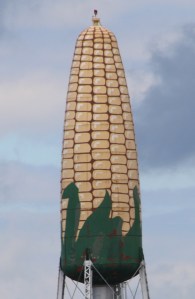
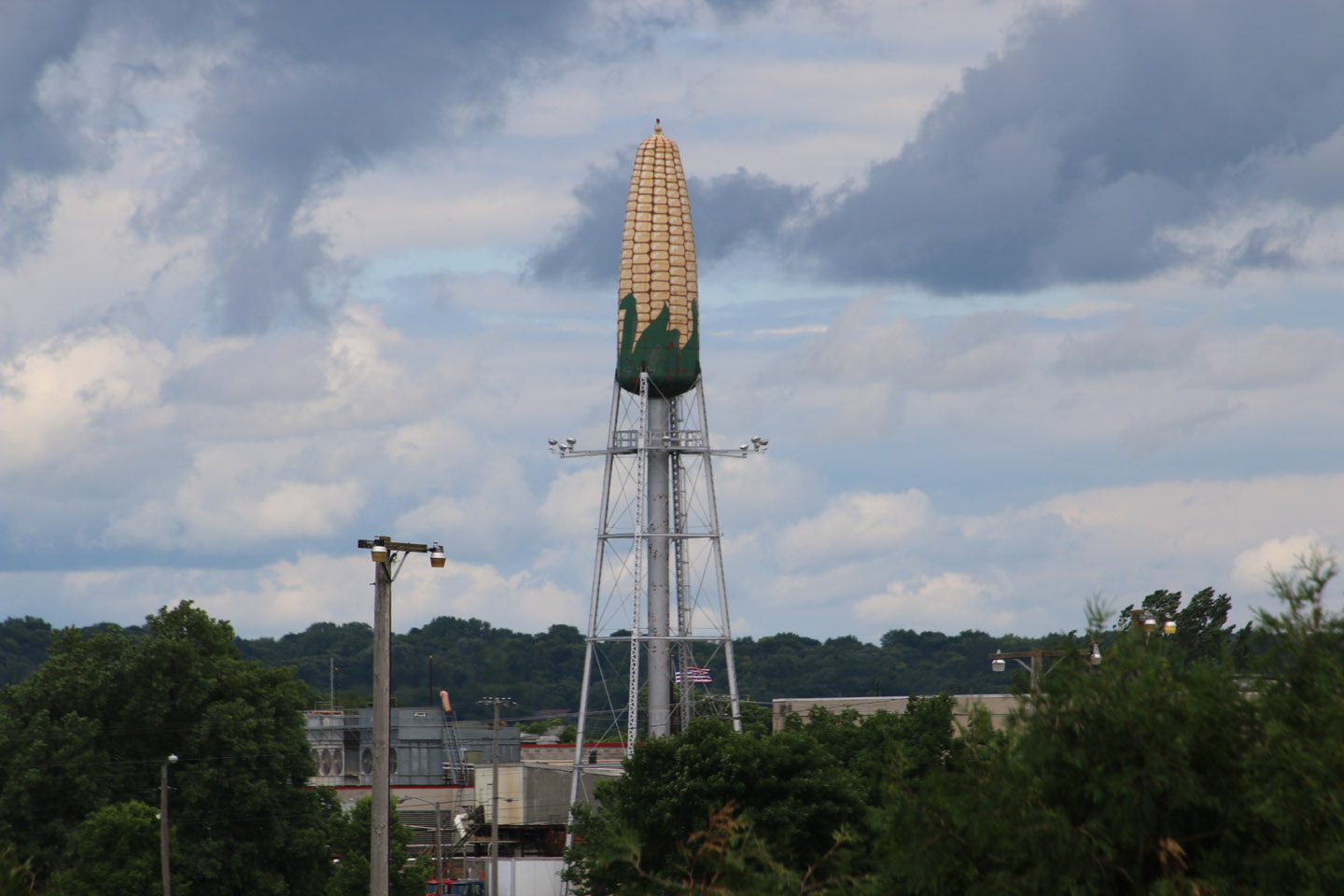
Enough with the fond memories.  This year there was this one ear of corn that stuck IMG_4721cright up at me.  It’s actually a 50,000-gallon water tank at the Seneca Foods Plant in Rochester, MN.  I knew it was there but didn’t know the precise address and figured I would just drive into town and find it.  And that’s what happened.  I spotted it pretty quickly as I hit the outskirts of town and just kept aiming for it.
It’s not just a water tank painted to look like an ear of corn.  It was actually built in the shape of an ear of corn back in 1931, when the industrial complex was the Libby Food Plant.  It is now an historical relic and, well-lit at night, serves as the same kind of tourist attraction and town landmark that the Libby Food executives planned it to be back in the Depression.

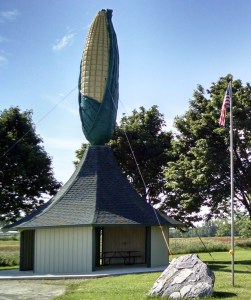
About 180 miles west and a bit north of this Memorial-Park-Web-PicCtower is a 25-foot fiberglass ear of corn atop a gazebo.  It’s at Memorial Park in Olivia, MN, which built the structure in 1973, the same year it declared itself the Corn Capital of the World, a designation affirmed by the Minnesota State Senate in 2004.
The birthplace of modern hybrid corn seed production, Olivia is home to nine seed research facilities and annually celebrates Corn Capital Days in late July with a parade, corn cobb toss and other activities.  I missed it this year.

Ever had a nagging question about corn?  I’ve had one for a long time:  How did the phrase corny joke get started?

So I waded through reams of internet words about the history of corn (first domesticated 10,000 years ago, yada yada yada) and the hybridization of corn and even the use of corn-related terms to mean rural, hick, backwards.

But how it got used to mean a very simplistic, adolescent, funny-but-at-the-same-time-not-funny, joke eluded me for a while.  Until I came upon this explanation:  In the early 1900’s seed companies started sending printed catalogues to farmers to advertise their goods.  Sprinkled among the ads were jokes and cartoons, usually pretty low quality ones.  They became known as ‘corn catalogue’ jokes and that was soon changed to ‘corny.’

Makes sense to me.

IMG_4718c

The ear of corn water tower in Rochester, MN, was pretty easy to spot.  (Two photos by Ron Haines. Third is courtesy of Olivia, MN)

Posted in Uncategorized | 4 Comments

This is not a Motel 6

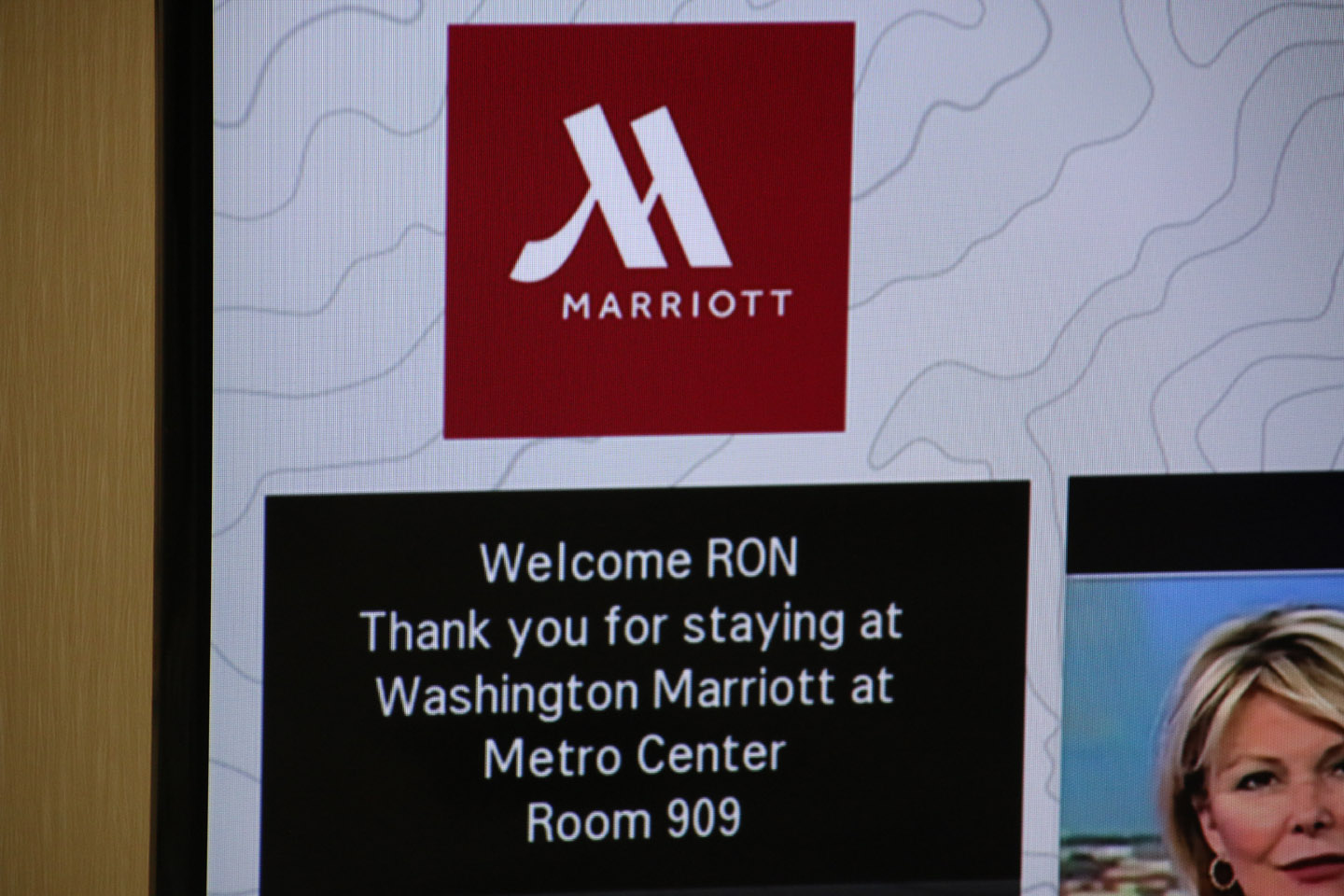
A sign that you’re not at a Motel 6 is when this pops up when you turn the TV on:

IMG_8515c

Yes, a huge cut above my normal on the road accommodations, courtesy of the Sierra Club.  I was there last week in my role as a member of the Awards Committee, helping out at our annual Awards Ceremony.  For more about all that, take a look at the committee’s Facebook page.

Other signs of course are the fluffy towels, assortment of soaps and conditioners and the cheery ‘How can I help you, Mr. Haines,” when I ring the front desk.  And the multiple pillows.

As much as I do enjoy lapping it up when someone else is paying, I just cannot justify that cost for a night’s sleep when I am footing the bill.

My four-by-eight-foot camping trailer works just fine, thanks.    And there’s always a Motel 6 around if it’s raining–or below 60 degrees overnight.


Posted in Road trip, Sierra Club | Leave a comment