Hemp vs. marijuana

There is a difference between hemp and marijuana, but apparently some folks don’t understand.

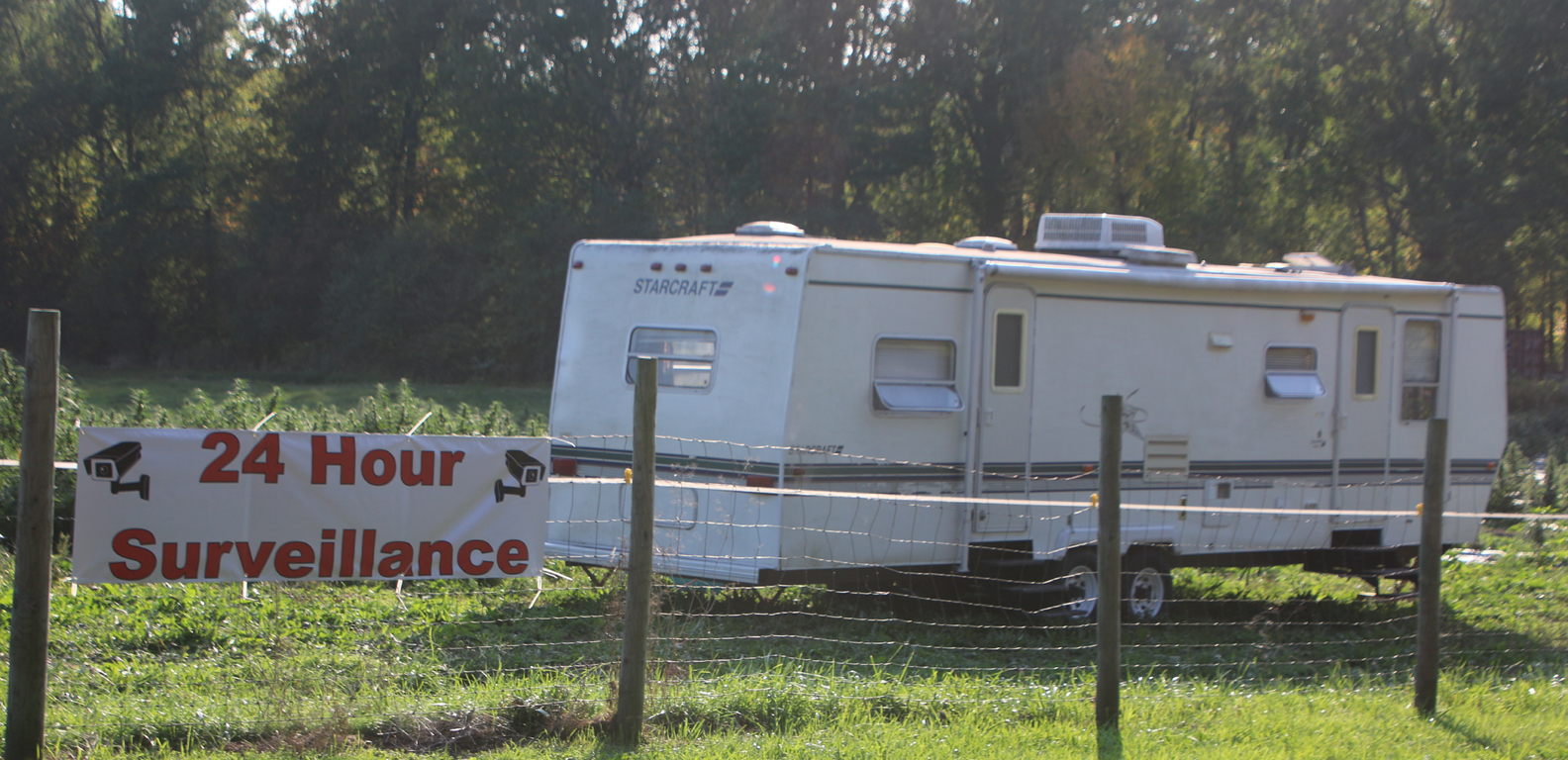
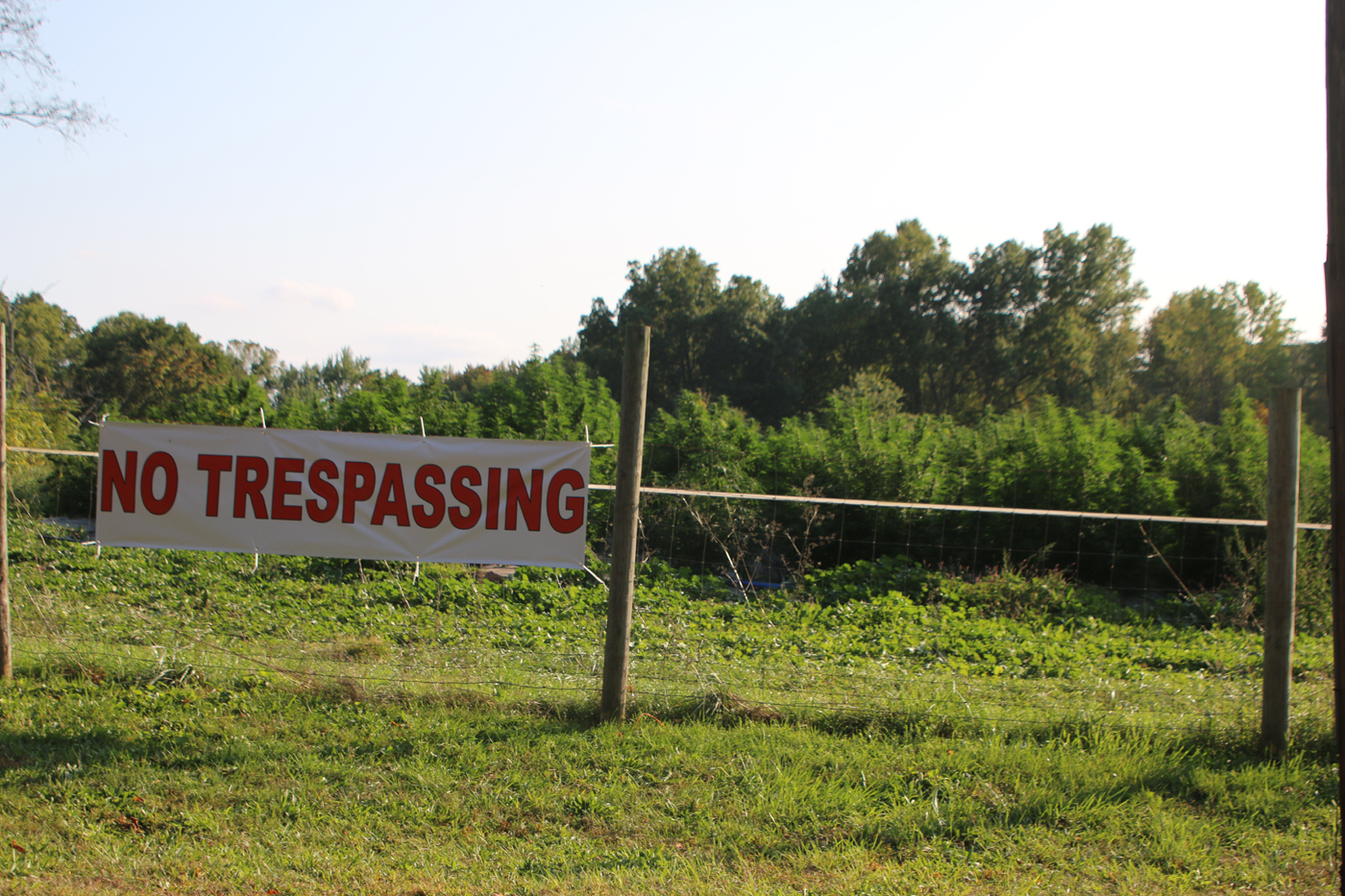
This hemp grower along quiet Mills Lane in Bloomfield, Connecticut, has had to underscore that point.

IMG_0344c

Yes, they are both in the Cannabis family, but hemp contains hardly any of the psychoactive compound, Tetrahydrocannabinol (THC), that marijuana does.

In fact, in order for hemp to be considered hemp, or “industrial hemp,” its flowers must contain just 0.3% THC, 33 times less than the least potent marijuana.   It’s still good for food, fiber, and fuel though.

Hemp also contains way more of another compound, Cannabidiol (CBD), than marijuana does.

CBD and THC are two of 113 identified cannabinoids in cannabis plants. Those two alone are very confusing these days. I can hardly wait until we start looking at the other 111.

You’d have to be living in a cave to not have seen CBD advertised these days in all kinds of ways, and minds as old and as out of touch as mine probably have that all confused with legal marijuana, getting high, medicinal pot and snake oil.

Let me attempt some clarification:

THC is the psychotropic drug we’ve known and loved for a long time. CBD, first identified in the 1940s, appears to have some medicinal uses and no psychotropic ones.

A CBD drug, Epidiolex, was approved in 2018 for treatment of two epilepsy disorders in the US. Cannibis is still a controlled substance, however and other CBD formulations are illegal to prescribe for medical use or to use as an ingredient in foods or dietary supplements.

Which has not stopped the entry into the marketplace of a wide variety of CBD-infused products making all sorts of medicinal-like claims. Hence my snake oil reference above.

So put that in your pipe and smoke it.

IMG_0350c

IMG_0340c

Posted in Uncategorized | 4 Comments

Steer clear of here..

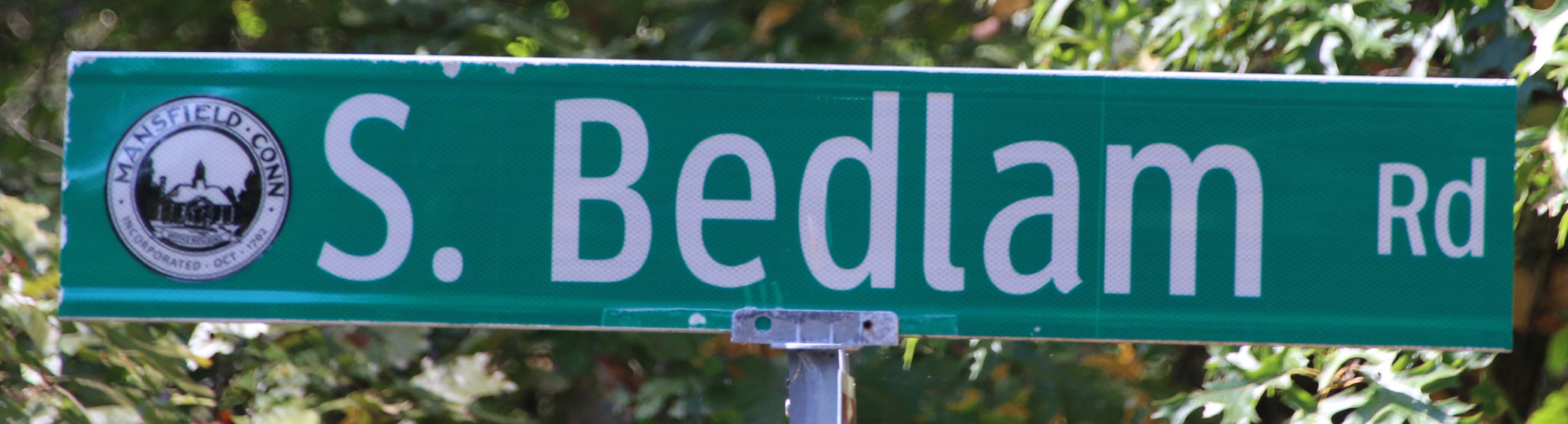
Here’s another road to avoid going down.

IMG_0334c

Bedlam Road, Mansfield Center, CT. (Photo by Ron Haines)

See some more of these here.

Posted in Uncategorized | Leave a comment

Do mothers no longer have maiden names?

It’s been ages since I’ve had to pick a “Security Question” on a website account.  I thought maybe that practice had finally gone the way of the corded telephone.

Nope!  It’s still around.  And even stupider than before.

I had occasion today to log into my account for Sunpass.  (Actually I needed to know the car’s plate number and it was easier to look it up on Sunpass than walk downstairs to the garage.)

Sunpass, for those who don’t know, is the highway toll system in Florida that very conveniently works NOWHERE ELSE.

Before I could get to my account, the recently revamped Sunpass website informed me I would have to choose and answer three “security questions.”

security questions

Screen grab from the Sunpass website.

I scanned the questions quickly, looking of course for “mother’s maiden name,”  “first pet,”  “town you were born in,” and the like.  You know…common rememberable things for which the answer just springs to mind, almost without effort.

Nope!  None of those!  As I looked down the list all I could think of was that I’d happened upon a Mad Magazine parody, or Saturday Night Live skit,  of “security questions.”  Just try reading through them slowly and thoughtfully without chuckling a bit.

If I can’t even come up with the answer to a question right now, quickly and easily, how in the hell am I going to remember it the next time I log in?

And I can’t remember ever reading of someone hacking a Sunpass account.  The only time Sunpass ever had a major computer SNAFU was when it just screwed up royally all by itself, without any help from hackers.  It went on for months and took them years to recover.

Let’s be honest, a Sunpass account isn’t of quite the importance, security-wise, as, say, my credit card account, which I can get into with my mom’s maiden name and where I was born.

So I went down the list.  “Who was your childhood hero?” was the ONLY one for which an answer sprang quickly to mind: “Superman.”

So I chose the childhood hero question three times and answered it with Superman all three times and hit “Submit.”

DING DING DING.  Can’t do that!  Can’t duplicate the questions!  Back to the drawing board.

I put my first choice again as the childhood hero question, with Superman as the answer.  For my second choice I put the “learned to cook” question with “Superman” as the answer.  For my third one I put the “first film” question in, and again put “Superman” as the answer.

Hit “submit” and BINGO!  I am in!  Now I have three questions and three easy to recall answers.

And then it dawned on me what a naïve dummy I have been for years.  I have been very dutifully picking security questions and honest, correct answers to them.  You don’t need to do that, you idiot, just pick any question and answer it with any word that you will remember!

When you hack into my Sunpass account, please add a few bucks to the balance.

The way they’re planning to pave over the wild parts of the state with concrete tollways to nowhere so a few developers and their paid-for politicians can make out like bandits I won’t be able to move around down there without a few extra quarters.


Posted in Uncategorized | 6 Comments

Thanks for the warning

Every so often a road sign helpfully lets you know where you do NOT want to go.  This one is in Comstock, CT.

IMG_8548c

You can see other helpful signs that I have found here.

Posted in Uncategorized | 2 Comments

When Amazon Prime looks good…

OK I will admit it.  I am a bit of a Luddite when it comes to ordering stuff online and having it delivered.

I still go to the pharmacy and pick up my prescriptions.  I still go to Costco, or whatever our favored warehouse outlet is these days, and I still go to Home Depot or Lowes for stuff.

I am still willing to drive to two or three places to find things.  Being retired, I am sure, has a lot to do with this because I do have a bit of free time.

My wife has an Amazon Prime membership.  I use it occasionally, but it is not my first go-to.  I had to use it recently for some special rivets to repair my granddaughter’s kayak.  I visited two big-box stores and a local hardware store  and couldn’t find what I needed—or even someone who understood what I needed—so I went online.

Fortunately I rarely need to go searching for something these days, because I am retired.

THAT’S WHAT RETIREMENT’S ALL ABOUT; YOU DON’T NEED TO FIX THINGS ANYMORE IF YOU DON’T WANT TO.

Occasionally, however, I do get pressed into service.

This time it was fixing some cabinets in daughter Jenn’s basement.  I needed five black, 4-inch barrel bolts.   Not an unusual item, like those special rivets for the kayak.

So, close by me there is a Lowe’s and a Home Depot.  I went to Lowe’s first.  They had two of what I needed.  After a five-minute wait to get someone to help me my question was simple: Do you have any more?  She had to call someone to help her find out if they had any more.  The answer was maybe.  So I said: Can you just tell me yes or no,  because if you don’t have any more I will go over to Home Depot.  The response was swift:  you better go to Home Depot.

So off to Home Depot I went.  I found the aisle I figured they would be on but couldn’t find them so asked an employee and he said he was on his way to help someone else and would come right back to me.

While I was waiting I continued to poke around the aisle and I found the bin they should be in.  Everything BUT them were in the bin and as I looked around it became obvious  to me that whoever was in charge of keeping Aisle 19 organized had been sleeping for a solid week because nothing was where it should be and stuff was stacked everywhere.

So I left the store, waving as I did so to the person who said he was going to come back and help me.  He was busy over at the pickup desk chatting with another employee.  And yes, in case you’re wondering, I sent an email of complaint to Home Depot, for whatever good that will do.

OK, I thought.  Time for Amazon Prime?  Nope, give the ‘local’ hardware store a try.  Not ‘big box,’ yes, but not that close to me either, maybe five times the distance to the big-boxers.  But what the heck, do it.  I went.  They had two of what I need.  Nope, they didn’t have any more.  Could order them though.

It just made no sense to me so I said no.  Go to a store to have them order something for me that will cost way more than what I would pay on Amazon Prime, including delivery, and then I have to drive back to the store AGAIN to pick it up?  No thanks.

There are other outlets of the big box stores and a few other small independent hardware stores I could get to—being retired and having acres of free time—but at some point I need to call it quits and order online and get it cheaper and right to my door.

And the point of this is that the measure for ordering online without getting into my car is getting shorter every time I have one of the experiences I have described above with the barrel bolts.  It gets shorter every time a store employee gives me short shrift and every time the item gets harder to find on foot than on line.

I go to online shopping reluctantly.  I like to shop in person.    I like the contact with sales people.  And I like that once in a while I find someone out to solve the same hardware problem that I am tackling.

Call me an old-fashioned shopper, but I am less so every day, as I get dragged and pushed into the present day.

Posted in Uncategorized | 2 Comments

Grandpa paddles while the grandchildren fiddle

Well, the title is catchy, but not quite accurate.  They weren’t fiddling, in the negative connotation of the word, at least. One was playing her violin and the other was playing her cello.

Specifically, M was playing her violin and S was playing her cello, FOR A SOLID WEEK, at the intensive, five-day Suzuki Camp at the Hartt School of Music at the University of Hartford.

And dad Ryan and Grandma Sue were there, each and every day!

And Grandpa?  Well, paddling might mean fiddling to some folks, to confuse the metaphor even more.

The bottom line is that yours truly totally got out of attending music camp each and every day, except for the ending performances, where the photos below were taken.

How did this all happen?  Let’s do the math.  Two children.  Each child must be accompanied by a parent/designated adult to all the classes and workshops.  Four adults:  Ryan: available and obligated; Jenn: full-time job;  Grandma Sue:  available and willing; Grandpa:  lots of fiddling to do.

So, here’s where things stood at the end of the week:

Ryan and Sue—pretty maxxed out.

Jenn—frazzled from a tough work week and planning and packing for a trip to Colorado.

Grandpa—three paddles in Connecticut and Massachusetts under his belt and feeling quite mellow, like he could easily face another week of fiddling around.

The grandchildren—same as always, rarin’ to go.

RETIREMENT:  It’s a tough job but somebody has to do it!

IMG_7960c

Simone’s Group

IMG_7964c

There she is.

IMG_7966c

Margeaux’s Group

IMG_7983c

There she is.

IMG_7917c

Ryan and his bass guested during the viola concert the evening before.


Posted in Uncategorized | Leave a comment

Borden Milk Company

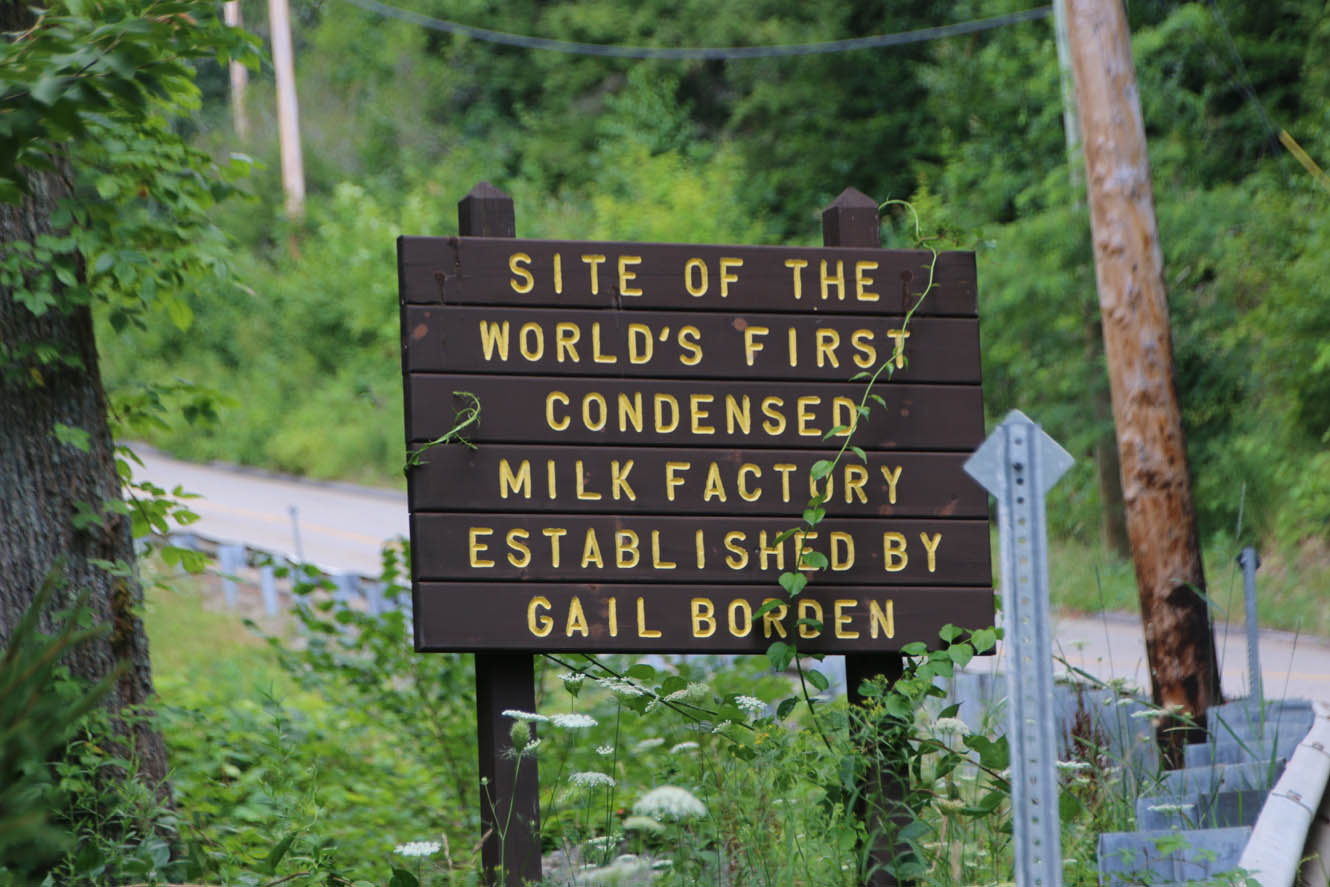
The name Borden is high enough in my memory banks that this sign caught my attention IMG_7716cas I navigated along Burr Mountain Road in Torrington, Connecticut, the other day on my way to check out the paddling conditions at quiet little Burr Pond.
Perched behind a guardrail along the narrow road, it sits in a thickly wooded area and is itself in danger of being overtaken by the growth.  Hidden in the woods, however, runs a small stream, complete with the waterfall which once provided the power for the world’s first condensed milk factory.

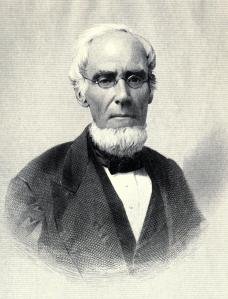
Gail Borden Jr. wasn’t from Connecticut.  He was born in New York in 1801 and lived in Gail_Borden biggerKentucky, Indiana, and Mississippi before following his brother and father to Texas in 1829, where he became a surveyor, a newspaper editor and a businessman/real estate agent.

And, along with all that, he was a tinkerer, experimenting with disease cures, food processing and mechanics.  He never made any medical breakthroughs and his terraqueous, sail-powered wagon never took off–in fact capsized, but his dehydrated beef product, dubbed the “meat biscuit,” was a modest hit, especially with pioneers headed west.

The meat did better in Europe however, and it was on a voyage back from business there in 1851 that set Borden on the path that today keeps him in my brain.  Disease had stricken the cows that were aboard to provide fresh milk.  The cows died, and so did several children who drank the contaminated milk.

Borden set about finding a way to preserve milk.  He was inspired by the vacuum pans used by the Shakers to condense fruit juice.  By 1856 he had obtained a patent for his process of condensing milk by vacuum.  In 1858 he teamed up with a New York financier and they formed the New York Condensed Milk Company–it wouldn’t be called the Borden Company until 1919.  Their first factory was in Burrville, where the sign stands today.

The Civil War in 1861 brought with it a large demand for the product from the Union Army.  Borden expanded and soon there were condensed milk factories in upstate New York and Illinois, then the dairy centers of the country.

The company thrived. Between 1927 and 1930, Borden Company bought more than 200

companies around the U.S. and became the nation’s largest distributor of fluid milk.  Elsie the cow came along in 1936, followed by husband, Elmer the bull, who became the symbol for the firm’s chemical division.

Following another wild acquisition period in the 1950s and then again in the 1980s, Borden became a massive holding company, with such food brands as ReaLemon, Wylers, Ronco Pasta, Cracker Jack, Beatrice, Meadow Gold, Wise Foods, Cremora creamer, and Campfire marshmallows, as well as such diverse products as PVC piping, printing inks, fertilizers, X-Acto knives and meat rendering.

The company began disintegrating in the 1990s, however, and it passed through a dizzying array of companies and venture capitalists before a final merger in 2005 meant Borden no longer existed, save for its brand name and a few isolated spinoffs.

Hexion Specialty Chemicals, as the final merged company was named, still owns the Borden name and Elsie the cow, which it licenses to a Mexican dairy company, Grupo Lala.   And the spinoffs?  They would include Elmer’s Glue and the use of Elsie on Eagle condensed milk products, which are owned by Smucker’s.  The food business is pretty incestuous!

Borden was no philanthropist as far as I know, but he does have a library named after him in Elgin, Illinois.  Here’s why.  Borden’s third wife was a former Elgin resident, a widow with two sons.  She described the area as beautiful and when Borden was expanding he decided to locate a factory there in 1865 and he eventually bought a house there too.

Many years later, 1892 in fact, when the town was looking for a library site, his stepsons bought a local mansion for that purpose, stipulating that it always be known as the Gail Borden Public Library.

In flashbackland, I recall always wondering, as I sat at the family breakfast table looking at Elsie the Cow on the Borden’s milk container, if there was any connection between that and the famed parent-slayer Lizzie Borden.

In fact, that very thought flashed through my mind when I saw this sign along Burr Mountain Road the other day.  Surely it’s a monument to Lizzie Borden, was my first thought. 81765-public_domain-wikimedia

Well, lo and behold, there is a connection!  Turns out that Lizzie Borden, and Gail Borden Jr. are fourth cousins!

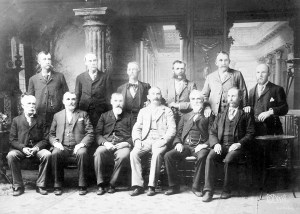
Lizzie, as you know, was charged with the 1892 axe murder of her stepmother and father.  Acquitted by an all-male and mustachioed Fall River, Massachusetts, jury after just 90 minutes, she Lizzie_Borden_Trial_Jurystayed in the area.

The court of public opinion was against her, however, and she remained an outcast until her death in 1927.  No one was invited to her burial.

At right are the gentlemen of the Lizzie Borden jury.

So try getting this out of your head:

Lizzie Borden took an axe,

And gave her mother forty whacks;

When she saw what she had done,

She gave her father forty-one.   

IMG_7720c

Posted in Uncategorized | 3 Comments

Robins and disposable diapers

I recently had the pleasure of watching a family of robins from egg-laying through leaving the nest.  The mother very conveniently built her abode right outside my Connecticut apartment’s second-floor bedroom window.

Robins are certainly devoted parents.  Though the female alone does the nest buildingIMG_6997v and the sitting, once hatching happens the feeding of these naked, needy and helpless offspring becomes a full-time job for the both of them, at least during daylight hours when I could see what’s going on.

The whole process from egg laying to fledging takes robins roughly a month, two weeks for the eggs to hatch and two weeks for the chicks to grow up and leave.

The gestation period for an elephant, by the way, is a year and a half.

The American robin’s formal name is Turdis migratorius. (That is not why this post has the word diaper in the title, however. Turdis is Latin for thrush, so stop snickering Mr. Bannister.  I will get to the diapers in a moment)

The state bird of Connecticut, Michigan and Wisconsin, robins settle in communal roosts of tens of thousands during in the winter, and pair off when back in their northern areas.

A well-known harbinger of Spring, they nest and breed early, late March or April, and I always thought that was it for the season.  So I was puzzled at seeing this new nest and family in mid-July.  Turns out that robin pairs are known to produce up to three broods in one year.  On average, only about 40 per cent of nests produce young robins and only 25 per cent of the fledged young make it to November.

The new and well-crafted nest in the tree outside my second-floor window was on a branch just a bit above my eye level, so I could not see inside it but it was obvious there was some egg-sitting happening.IMG_7025c

And after the hatching, I had a nice view of the three newborns as they stuck their heads up with their mouths wide open every time a new shipment of food arrived.

The heads, bare at first, grew downier as the days moved along.  The feeding was constant.  One or another of the parents always seemed to be perched atop the nest with the gaping mouths of the youngsters wide open below them.  Often one parent would be arriving as the other was leaving.

As one week moved into the next, they grew bigger, and louder, and more aggressive when food arrived.  The actual leaving of the nest took two full days.  I had noticed the afternoon before that they were really looking big and occasionally I’d see some wings flapping.IMG_7318cThat final day I woke up just before dawn.  The window was open and it was noisy out there.  It was still too dark to see anything, but there was a lot of calling and flapping a mere 15 feet from my window.  I dozed off after a bit and when I woke up again it was light enough to see that all three youngsters were standing up in the nest and flapping their wings occasionally.  Then they would settle back down for a spell.

The parents still came by with food during the final day, but spent a lot of time sitting on nearby branches shouting what I guess was encouragement.

About mid-morning one baby stood teetering and flapping on the edge of the nest and quickly hopped onto a nearby branch.  It took him several hours of hopping and flapping his way to an outer branch of the tree and then finally he flew off.

It was after lunch before the second one hopped out of the nest and another hour or so before he too flew off.

The third one was still in the nest at nightfall, like the last remaining adult child living in the parents’ basement.  He didn’t take off until the afternoon of the second day.

The old song “Rockin’ Robin” sprang to my mind during all this.  In my research I never Promo 2017found what it was about robins that inspired song writer Leon Rene to pen this, but I’m thinking it comes from the bird’s distinctive hopping walk behavior–and the alliteration.  Leon by the way seems to have been captivated by birds.  He also wrote about those swallows coming back to Capistrano.

And Rockin’ Robin, in case you’re interested, is also the moniker of professional wrestler (well, WWF) Robin Denise Smith, who retired in 1990, and of another equally un-famous celebrity, a singer/dancer in the rock band Radioactive Chicken Heads.

Oops, almost forgot that other Robin tune, “When the Red, Red Robin (Comes Bob, Bob, Bobbin’ Along).” Harry Woods wrote the words and music to that back in 1926.  It became the signature song for singer/actress Lillian Roth in the 20s and 30s, and even inspired the name of the Red Robin restaurant chain.

It began as Sam’s Red Robin in Seattle in 1969 because owner Sam was in a barbershop quartet that sang the tune a lot.  He was bought out eventually, his name was dropped and eventually there were little franchised Red Robins all over the place.

Now to the point of all this:  During my week of nest watching I noticed that one or the other of the parents occasionally had something white in its beak.  At first I thought it was a bit of a white flower or even a small bit of discarded bread.

And then I happened across this passage on a website:

“Nestlings produce a ‘fecal sac’ – a white bundle of poop wrapped in a clean, tough IMG_7288cgelatinous membrane – after each feeding.”  One of the parents can just pick that up and trash it.  A single nest can produce 60 to 70 such bundles a day.

Makes the term ‘sack of shit’ come to life, doesn’t it?

How convenient!  About the equivalent of a human baby pooping promptly after every meal and delivering a tidily wrapped disposable diaper to the kitchen garbage can, I guess. Wouldn’t that be nice?

Except for this icky factoid:  Because baby robins’ digestive tracts aren’t very efficient and there is often some nutrient value left in the sac, robin parents are known to eat them.

I once owned three dogs who had the run of a fenced-in yard.  They almost succeeded in completing such a closed circle.

Icky yes, but it kept the yard pretty clean.  Not as clean as a robin’s nest though.

All of the photos are below.  Just click on one and you can scroll through all them in a larger format.  (All Photos by Ron Haines)

Posted in Uncategorized | 1 Comment

A day of firsts

Today was a day of firsts for granddaughter Margeaux.

We tallied them up as we drove from the house in West Hartford over to quiet and small Lower Bolton Pond in Bolton, CT, for our first paddle outing together since the Mystic Harbor evening.

The bright red, cheap 8.5-foot sit on top kayak in the trailer behind us has been in our possession for a couple weeks.

But it had not been in the water. Until today.

We discussed the firsts as we drove: 1. The new kayak’s first time on the water.  2. Margeaux’s first time in the new kayak.    3. Margeaux’s first time in a boat all by herself.

It was a brief but productive paddle outing.  Dark clouds were visible to the west as we unloaded.

Another boater with a weather app on his phone said a band of thunderstorms was coming our way.

I made the call: Let’s get on the water and stick close to the launch so we can get off fast if the clouds get closer.

We did just that. Twenty minutes out and we were back at the ramp.  The raindrops were right behind us.  We sat in the car a bit, the boats still at the ready, but it became obvious this was not going to let up soon.  So we packed up as the raindrops pelted us and headed for home.

So, it was a short, but very successful, outing. Margeaux was comfortable in the boat and moved it where she wanted it to go with ease. Some photos below.

IMG_7649c

Complete with personal flotation device and emergency signaling device: following all the rules for Connecticut paddling.  (Photo by Ron Haines)

IMG_7642cIMG_7653c

Posted in Uncategorized | 4 Comments

Byways with warning signs

Another byway with a warning sign, this one in Exeter, Rhode Island.

An appropriate signpost I guess, given that this small settlement of 6,000 or so is the site of one of the best documented cases of vampire exhumation.  No, I do not know if the exhumation occurred on this particular road.Exeter, CT

The Mercy Brown vampire incident occurred in 1892 and wasn’t an isolated occurrence.  Indeed, it was part of the wider New England vampire panic that accompanied a large outbreak of tuberculosis in the late 19th century.

The cause of the disease, called ‘consumption’ because it appeared to consume the body, was unknown at the time.

Now known to be bacterial, the illness spread easily within families of course.  When one died, others soon took ill. Folks began to believe the deceased were draining the life from other family members.

So to protect the living the dead were exhumed.  A corpse was deemed to be feeding on the living, or “undead,”  if it seemed to be unusually fresh, especially if the heart or other organs contained liquid blood.

If so, the simplest remedy was to just turn the body over in its grave.  Or the fresh organs could be burned and everything reburied.  Decapitation was also performed, as well as inhaling the smoke or consuming the ashes of the burned organs.

Back to Exeter, Rhode Island.  Mary Eliza, the mother in the Brown family, was the first to die of the disease, followed in 1886 by eldest daughter Mary Olive.  Another daughter, Mercy, was then stricken and died, and soon son Edwin became ill.

Friends and neighbors believed one of the dead family members was a vampire and had caused Edwin’s illness.  Father George Brown was persuaded to allow exhumations.  It was done on March 17, 1892.

The bodies of the mother and daughter Mary Olive were suitably decomposed, but that of Mercy showed almost no decay, and still had blood in the heart.  (This sign that she was undead was probably because her body was stored in freezing temperatures above ground for two months after her death.)

Her heart and liver were burned and the ashes mixed with water to make a tonic, which Edwin drank.  His disease nevertheless progressed and he died two months later.

Sounds rather quaint in the context of today, doesn’t it?

Some perspective:

The oldest evidence of the disease has been found in the remains of bison in Wyoming dated to around 17,000 years ago.

In 2017, there were more than 10 million active cases and 1.6 million deaths from tuberculosis, making it the number one cause of death from an infectious disease.

More of my street warning signs are here.


Posted in Uncategorized | Leave a comment