
This blog post has sat under my nose for about fifty years. Just kidding. My blog’s only been around for ten years.
To explain, it was 50 years ago that I lived in Davenport, Iowa, as a reporter and city editor for the local paper (called the Times-Democrat when I arrived and renamed the Quad-City Times during my stay).
But it was only just recently that I discovered Davenport is the hometown of the man who invented sliced bread!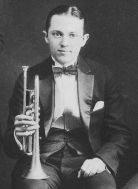
Davenport doesn’t boast as much about this, obviously, as it does about another native son, Bix Beiderbecke, the famed jazz cornetist.
The annual Bix Beiderbecke jazz festival was a big deal when I was in town, and probably still is, but I heard nary a whisper when I lived there about Otto Frederick Rohwedder, the man who invented the machine that gave us that great saying: “The best thing since sliced bread.”
There’s even a museum for the musician! Where’s the sliced bread statue?
There aren’t many inventions that have had that kind of impact on our language over the years.
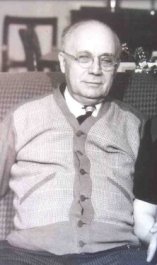 After graduation from Davenport public schools, Rohwedder studied optometry in Chicago and later apprenticed as a jeweler. He became the owner of three jewelry stores in St. Joseph, Missouri, and used his talent with watches and jewelry to invent new machines.
In 1912 he started toying with the idea of a machine that would slice bread. He even did some market research, interviewing over 30,000 housewives “for the purpose of determining a thickness of slice which would be most nearly universal in acceptance.”
Convinced he could do it he sold his jewelry stores to finance the project and moved back to Davenport. By 1916 he was building a prototype, but it all came to a halt in 1917 when a factory fire destroyed everything, including his blueprints.
It took him years, but he found more funding and by 1927 had a machine that not only sliced bread but wrapped it. Rohwedder encountered some hesitation among bakeries about the machine, and he asked a friend, Frank Bench, who owned a nearly bankrupt bakery in Chillicothe, Missouri, to try it out. Bread sales were up 2,000 per cent in a couple weeks and Rohwedder had no trouble interesting other bakeries after that.
W. E. Long, owner of the Holsum Bread brand, then a cooperative of independent bakeries, promoted the packaging of sliced bread in 1928.
Wonder Bread came along two years later and by 1933 American bakeries produced more sliced than unsliced bread.


Ten years later the march of bread handling progress came to a halt with a short-lived ban on sliced bread as a wartime conservation measure. To stay fresh, went the argument, a sliced loaf must have a heavier wrapping than an unsliced one, thereby using up too many resources deemed valuable for war.
Pushback was swift, loud and widespread. Popular opinion ended the ban in just seven weeks. Wrote a distraught housewife in the New York Times: “I should like to let you know how important sliced bread is to the morale and saneness of a household. My husband and four children are all in a rush during and after breakfast. Without ready-sliced bread I must do the slicing for toast—two pieces for each one—that’s ten. For their lunches I must cut by hand at least twenty slices, for two sandwiches apiece. Afterward I make my own toast. Twenty-two slices of bread to be cut in a hurry.”
Of course, the official reason for lifting the ban didn’t mention the public outcry: Said Food Administrator Claude R. Wickard, when he rescinded his order: “Our experience with the order leads us to believe that the savings are not as much as we expected, and the War Production Board tells us that sufficient wax paper to wrap sliced bread for four months is in the hands of paper processor and the baking industry.”
“Sliced Bread Put Back on Sale; Housewives’ Thumbs Safe Again” was the New York Times headline.
So, what on earth did we say before ‘The best thing since sliced bread’ came along to describe one’s enthusiasm for something new?
I don’t know, but here’s this: A 1928 advertisement for sliced bread advertised it as “the greatest forward step in the baking industry since bread was wrapped.”


 The Urge to be Someplace Else
So wonder what came before “The best thing since wrapped bread”?
LikeLike
Cornet is a musical instrument, coronet is a small crown.
LikeLike
Fixed, Chuck. Thanks for catching that. First time in my long life I’ve used that word in print I think.
LikeLike