
Actually they have two, but until the other day I wasn’t sure they had any at all.
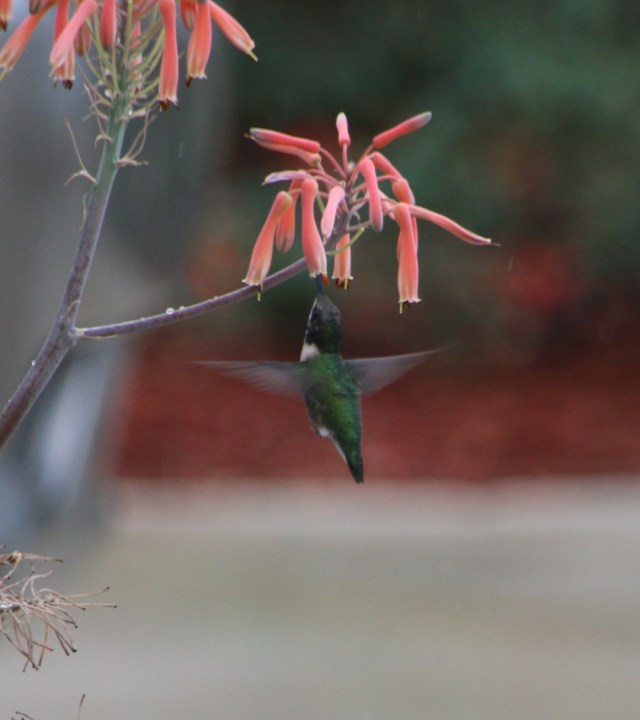
The only times I have seen hummingbirds is in flight, hovering or flitting about, legs tucked up tight and quite invisible.
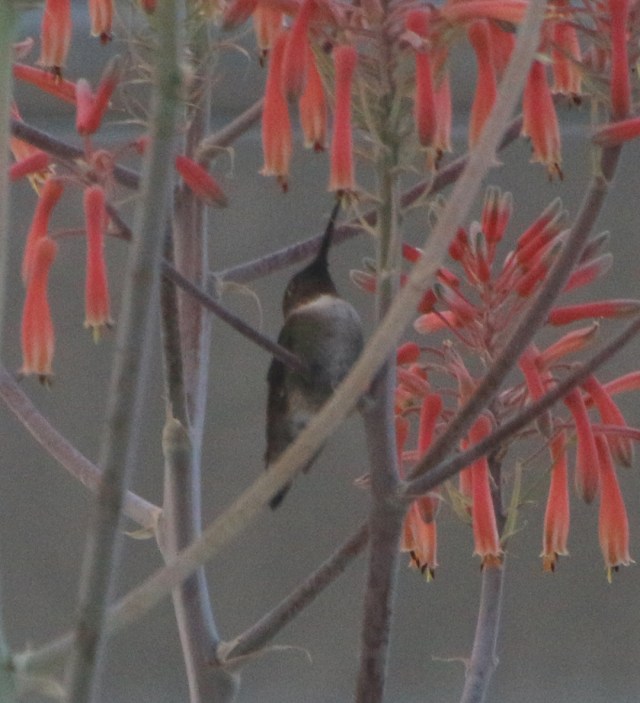
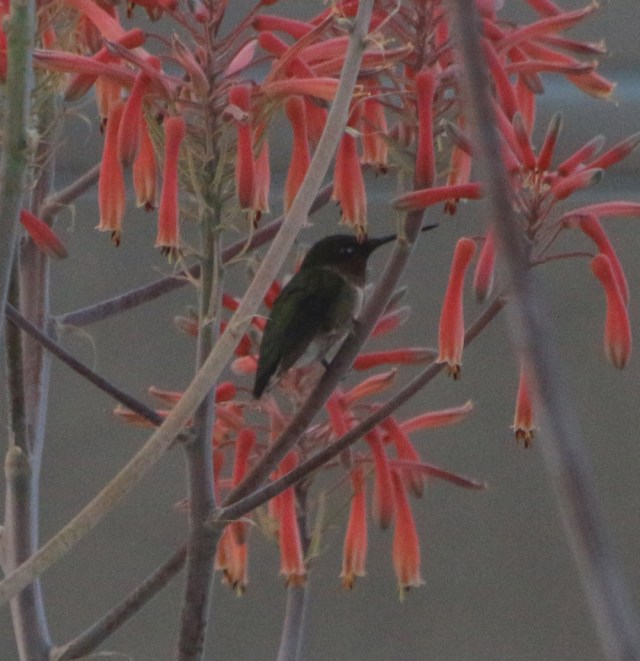
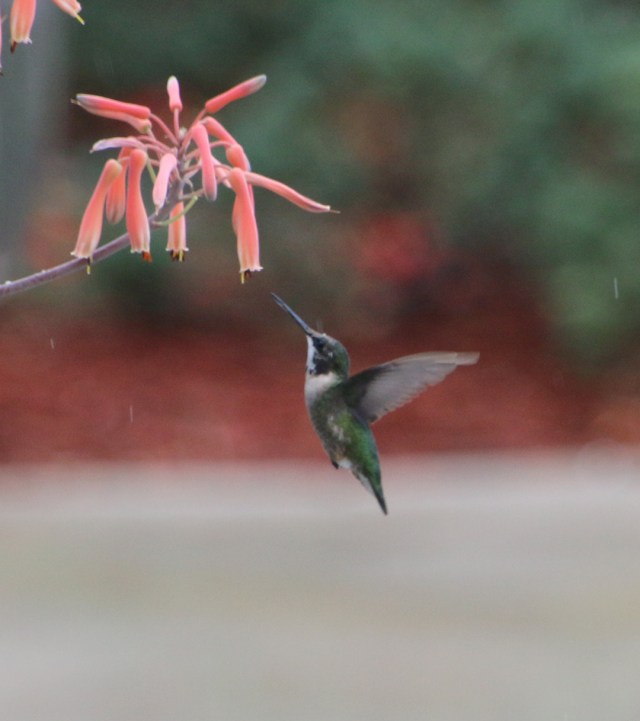
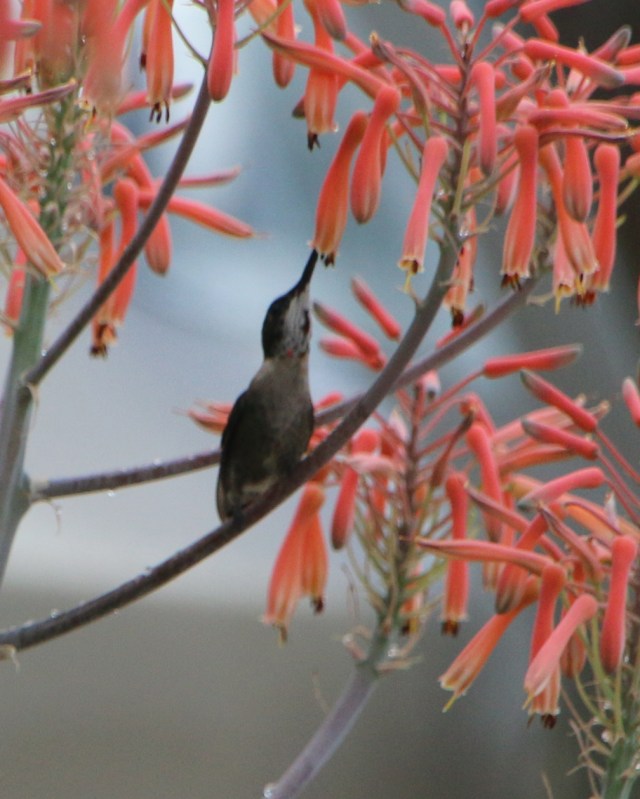
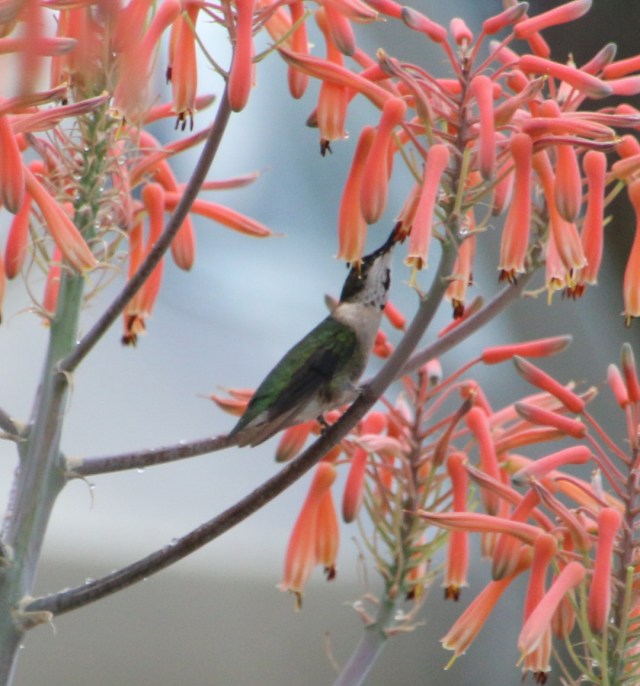
But I saw one recently actually standing on a branch, dipping into the flowers that were within reach. Lazy bastard, I thought at the time.
It turns out those legs aren’t of much use for anything BUT standing around, and occasionally moving sideways along a perch. The feet aren’t built right and the legs are too far back on the body to make walking possible.
But the wings of these tiny beings…wow… with from 12 to 80 beats per second those things can propel the bird up to about 34 mph, with a cruising speed of about 25. And distance? Some of these things migrate yearly from North America to Central America, often straight across the Gulf of Mexico, twice a year!
With a rate of metabolism higher than any other temperature-regulating animal, the hummingbird is a sugar-utilizing machine. Sugars consumed power 100 per cent of their metabolic needs (in comparison, human athletes max out at around 30 per cent).
When resting at night, they go into what’s called torpor, a sort of hibernation, during which its metabolic rate falls to a fifteenth of normal. But even at that reduced rate of metabolism a hummingbird will lose 10 per cent of its body weight overnight. Now that’s a hell of a weight loss program.
With all the nectar-drinking activity you see, one would think hummingbirds eat nothing else. Au contraire, they actually depend on insects. They are carnivores. The nectar is simply the fuel to power their insect-catching activity. And they still find the time and energy to build a nest and mate, to say nothing of all that migrating. Pretty damn busy creatures.
And speaking of drinking nectar, that long beak is not a straw. Inside the bill is a long forked tongue, with flits out and back in, lapping up the liquid. No, I do not have a photo illustrating that, just take my word for it.
Finally, thinking of taking someone’s word for it, I came across this sentence in my research:
“The hummingbird evolutionary tree shows ancestral hummingbirds splitting from insectivorous swifts and tree swifts about 42 million years ago, probably in Eurasia.”
Yeah, right. I’m as much a believer in the various sciences as the next guy, but wow, how can someone actually say that with a straight face, as if we knew for sure?
I leave you with a couple of jokes. If I don’t write them down I will forget them when I want to tell them to the grandkids next time I see them.
So why does a hummingbird hum?
Because he doesn’t know the words.
What do you get when you cross a hummingbird and a doorbell?
A humdinger.
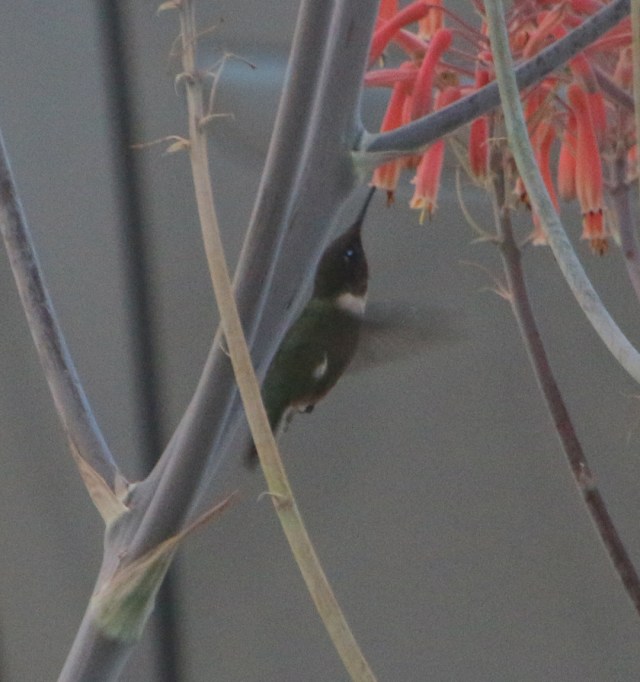
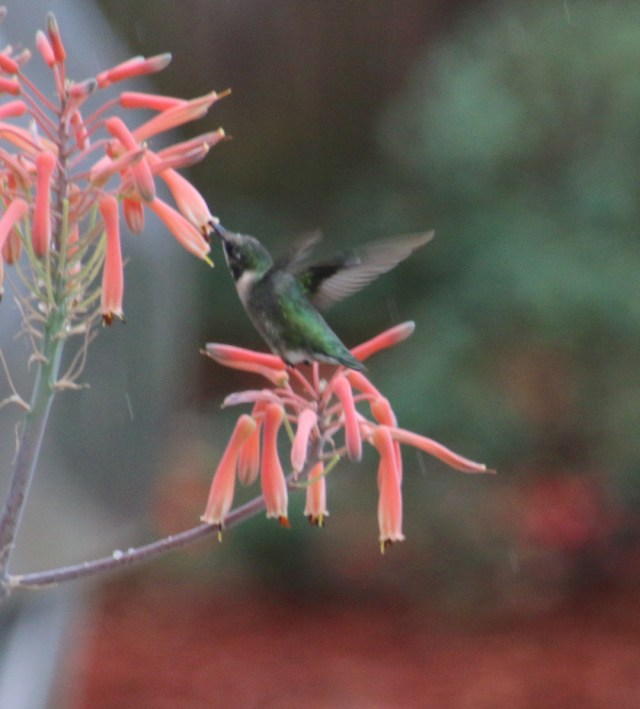
Below are some of the photos that got me to thinking about all this. They were feeding on the flowers of a nice aloe patch I have in the front yard, so I could shoot them from my chair WITHOUT USING MY LEGS! (All Photos by Ron Haines)


Gave me something to think about.
LikeLike
That explains why they spend so much time flying around my oak trees – catching bugs!! Love the color, looks like they’re getting their mating plumage.
LikeLike
Great story! I love hummingbirds, well birds in general.. :)
LikeLike